



Samsung Electronics unveiled the latest iterations of its foldable smartphones on Wednesday, as it aims to solidify its lead in the niche category that is expected to grow in the coming years.
The world's biggest mobile phone maker introduced the Galaxy Z Fold 4 and Flip 4 at its Unpacked event. The company is positioning the new devices to overtake its Galaxy Note in terms of sales and popularity.
Samsung's second Unpacked event of the year is also the first without any speculation on the Note, which was discontinued after Samsung announced a “brand new chapter” for its Galaxy devices earlier this year.
The Note's legacy, however, was kept alive when Samsung integrated its signature accessory, the S Pen stylus, in the high-end Galaxy S22 that was launched earlier this year.
“The next foldable devices offer unparalleled mobile experiences that meet the needs of our most dynamic users," T M Roh, president and head of Samsung's mobile business, said in a statement.
"Excitement for foldables continues to grow. We’ve successfully transformed this category from a radical project to a mainstream device line-up."
The division expects to post "solid profitability, with foldable products becoming mainstream as the company targets foldable sales to surpass that of the Galaxy Note series”, Seoul-based Samsung said in its second-quarter earnings report last month.
Samsung was not the first to release a smartphone with a foldable display — China's Royole unveiled the FlexPai during a low-key launch in 2018.
However, the South Korean company was the first to push out the device into the mainstream consumer market with the release of the Galaxy Fold in 2019.
The move enabled Samsung to beat China's Huawei Technologies to the draw, as the latter had to postpone the launch of its own foldable Mate X in the same year to conduct further testing after early testers raised concerns about the Galaxy Fold.
_________________________
Samsung Galaxy smartphones through the years from S to Fold and Flip
-
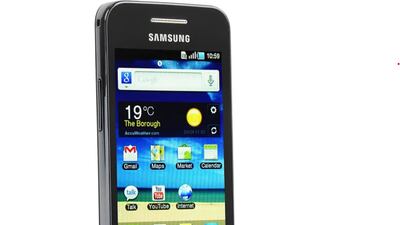
Samsung released its first Galaxy S phone in 2010, three years after the launch of the first Apple iPhone. It had a 4-inch (10.16 centimetre) Super AMOLED display and a five-megapixel rear camera. Photo: Samsung -
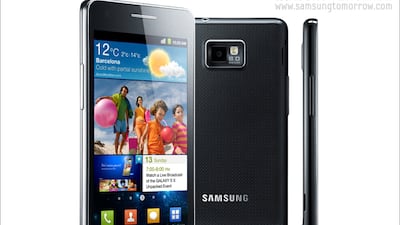
Samsung's Galaxy S2, released in 2011, looked, as you would expect, like a jump forward in terms of technology. The screen was slightly bigger, at 4.3 inches, while the rear camera was now 8MP. The device came with a dual-core processor. Photo: Samsung -
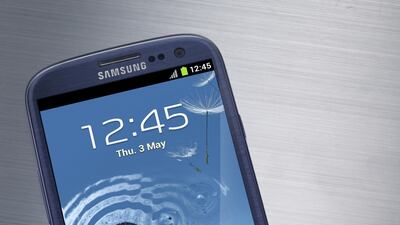
The Samsung Galaxy S3, which was released in 2012, was the first in the series to have an HD screen. The new design had a more rounded shape. It ran on the Android 4.0 Ice Cream Sandwich operating system. Photo: Samsung -
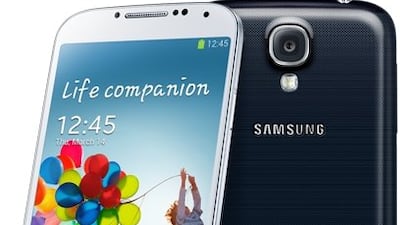
Samsung's Galaxy S4 was released in April 2013 and felt like a real competitor to the iPhone. Its processing power was increased, the screen was enlarged to five inches and the rear camera to 13MP. Photo: Samsung -
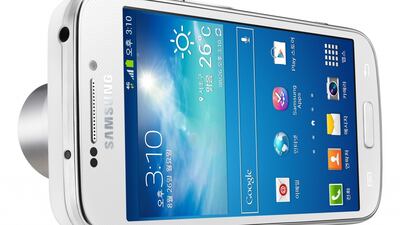
Ah, some innovation ... the Samsung Galaxy S4 Zoom came with an optical zoom lens on the back. Quirky, and not necessarily practical. Photo: Samsung -
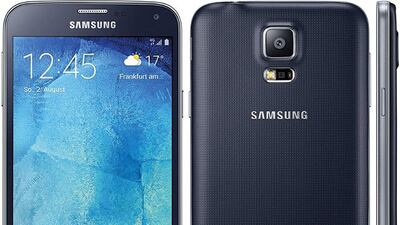
Samsung's Galaxy S5 arrived in 2014 and came with a plastic back which didn't feel particularly advanced. However, the phone itself had a 5.1-inch screen which produced beautiful colours (for the time). The S5 had a heart-rate monitor, was water-proof and had a 16MP rear camera. Photo: Samsung -
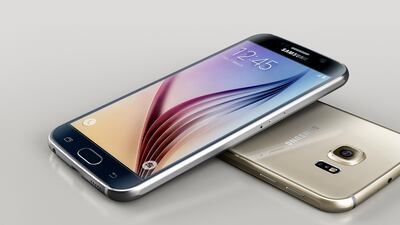
There was a big change in store for the Samsung Galaxy series in 2015. It launched the Galaxy S6 and S6 edge at the same time. Photo: Samsung -
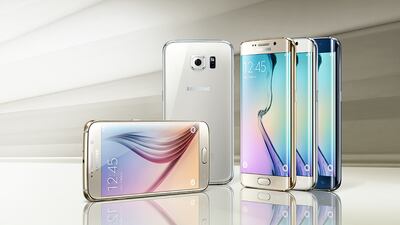
The Samsung Galaxy S6 edge was full metal and had two curved sides extending the screen. This was a big jump and a step ahead of Apple. Photo: Samsung -
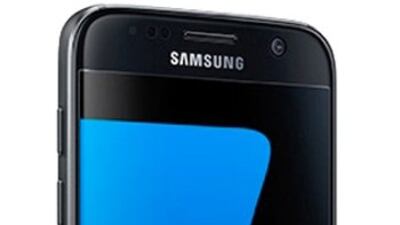
Samsung's Galaxy S7 came in 2016 and incorporated Samsung Pay. The 2K screen resolution was impressive. The edge version offered a wraparound display. Photo: Samsung -
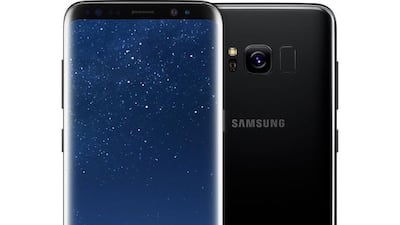
Both Samsung Galaxy S8 models had curved sides. A fingerprint button was moved to the back while a button on the side was introduced for voice assistant Bixby. Photo: Samsung -
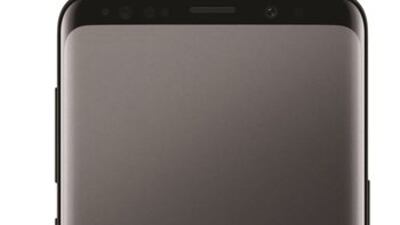
The Samsung Galaxy S9 arrived in 2018 and had a much stronger battery than the S8. Otherwise, it was a very similar product. Photo: Samsung -

Samsung's Galaxy S10 was released in 2019 and came with a triple-camera system. It had a punch-hole camera on the front and an UltraSonic fingerprint sensor. Photo: Samsung -
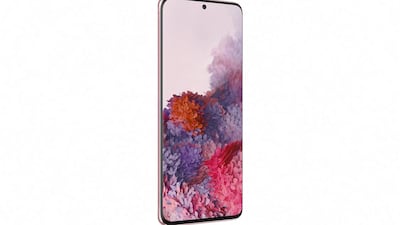
Samsung's 6.2-inch Galaxy S20 was 2020's offering and there were two other versions — the 6.7-inch S20+ and the 6.9-inch S20 Ultra. The phones were 5G-enabled. The S20 and S20+ came with 64MP cameras while the S20 Ultra came with a 108MP camera. Photo: Samsung -

The Samsung Galaxy S21 series came with bigger batteries, advanced computing, greater energy efficiency, improved cameras and enhanced privacy features. Samsung added a stylus to the S21 Ultra — a first in the series. Photo: Samsung -
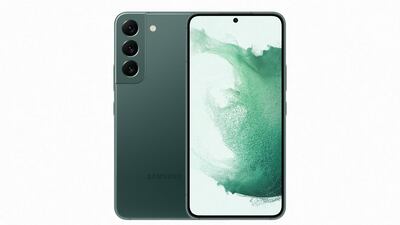
Samsung's Galaxy S22 was unveiled in February 2022, with the S22, S22+ and S22 Ultra, the last of which featured a slot to hold the S Pen, the signature accessory of the Note series. Photo: Samsung -

The Samsung Galaxy Note 3 was first launched in 2011 with its big screen and stylus functionality. The series continued until the Note 20 in 2020, when the stylus was moved to the S series. Photo: Samsung -
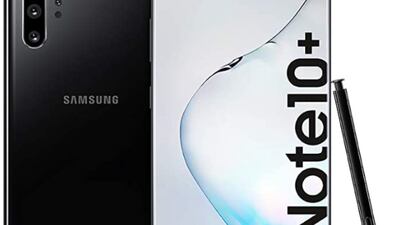
The release of the Note 10 in 2019 marked the first time Samsung offered a Plus model of its Note. It had a 6.8-inch display. Photo: Samsung -
The Galaxy Z Flip came in March 2020 and was like turning back time, with phone makers having tried flip phones many years before. It uses a hybrid glass coating called an Infinity Flex Display. Pawan Singh / The National -
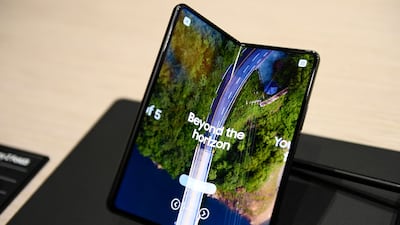
The Samsung Galaxy Z Fold was first unveiled in March 2019. It opened out horizontally to create a 7.3-inch tablet-style screen. AFP


_________________________
However, foldable smartphones still have a long way to go.
Shipments of the devices — which include both fold and flip phones — stood at 7.1 million in 2021, almost quadruple the 1.9 million units shipped in 2020, according to the International Data Corporation (IDC).
Still, it was only enough for a 0.5 per cent market share in the overall industry. Traditional smartphones accounted for 99.5 per cent of the total with more than 1.34 billion shipments last year, the research company said.
Even with a projected 70 per cent compound annual growth rate through to 2025, foldables would still only eke out less than a 2 per cent market share by then out of 27.6 million shipments, IDC said.
Samsung is dominating the category. The global foldable smartphone market grew by more than 111 per cent annually to 1.5 million units in the first quarter of 2022.
The Korean company extended its market share to 65 per cent, from 51 per cent a year ago, widening the gap between it and second-placed Huawei, according to Counterpoint Research.

There are a number of other folding devices in the market, most notably Huawei's Mate X series and Motorola's Razr. Oppo, Xiaomi and Huawei's former unit Honor also have their own versions.
Orders for the devices have opened. Samsung also said that customers in South Korea who order will receive a non-fungible token (NFT), the full benefits of which will be announced at a later date.
This marks the first time a Samsung device is being associated with an NFT. It is unclear if this pre-order bonus will be extended outside South Korea.
Samsung Galaxy Fold 4
The fourth iteration of Samsung's flagship foldable device retains its 7.6-inch (19.3-centimetre) main inner display but a design revamp has made it wider. Its cover display remains at 6.2 inches (15.74cm).
The company said there are across-the-board improvements in processing (14 per cent faster), graphics (59 per cent) and neural units (68 per cent).
In perhaps the most significant upgrade to its camera. The Fold 4 now has a 50-megapixel main sensor, compared with the previous models, which had 12MP. Samsung also promises better performance in night and low-light conditions.
The Fold 4 starts at Dh6,849, and will come with storage sizes of 256 gigabytes, 512GB and one terabyte — the last of which is offered exclusively on Samsung's website.
Samsung Galaxy Flip 4
Samsung's third Flip — the company skipped a 'Flip 2' last year to align the Galaxy Z series' naming conventions — also broadly retains its aesthetics, with a 6.7-inch (17cm) inside display and a 1.9-inch (4.8cm) outer screen.
Processing (8 per cent faster), graphics (58 per cent) and neural (62 per cent) performance also receive upgrades.
The Flip 4 starts at Dh3,849, and will come in three storage sizes — 128GB, 256GB and 512GB. Samsung famously slashed the price of the Flip 3 last year by about half, compared with the original Flip, as it aimed to entice more users.
It will be interesting to see if the new Flip can continue with its momentum: the device accounted for 51 per cent of foldable sales in the first quarter of 2022, the third straight quarter it has led the market, according to industry tracker Digital Supply Chain.
The Fold was second, also for the third consecutive quarter.
Both Fold 4 and Flip 4 come with all-day battery life and fast-charging capabilities.
Galaxy Watch 5
Samsung also unveiled two new digital timepieces, the Galaxy Watch 5 and Watch 5 Pro, as it aims to take on Apple in the smartwatch category.
The Android Wear OS-powered devices now feature faster charging and improved health sensors, with 16GB of internal storage. The Watch 5 sports an aluminium case while the higher-end Pro has a titanium case.
Global shipments of smartwatches rose 13 per cent to about 33.7 million units in the first quarter of 2022, according to Counterpoint.
Apple continued to dominate the market, with a 36 per cent share, while Samsung strengthened its hold on the second spot with about 10 per cent.
Galaxy Buds 2
The Galaxy Buds 2 constitute Samsung's attempt to take on Apple's AirPods and the rest of the vast true wireless stereo (TWS) headset market.
The audio device offers up to 29 hours of battery life and has improved sound quality and active noise cancellation.
Global sales of TWS devices — or hearables — grew by about a quarter to about 300 million units in 2021, with Apple's AirPods having a leading 26 per cent share of the market, according to Counterpoint.
Samsung was third with 7 per cent, behind Xiaomi with 9 per cent.

