

The transfer of power in the UK from Keir Starmer to his successor, in all likelihood, Andy Burnham, may only take weeks, but it has sent alarm bells through the property industry, which fears delays will derail deals.
Experts have warned that a hold-up in housing policy risks stalling the market in the same way as the much-delayed autumn budget put a brake on sales before introducing a mansion tax on homes worth more than £2 million ($2.6 million).
There have already been reports of buyers demanding a 'Burnham discount' as they seek to negotiate better deals to reflect potential changes in the market.

Mr Starmer’s resignation as Labour leader and Prime Minister on Monday means developers must wait to see which policies will remain or be ripped up.
Matthew Robertson, co-founder and chief financial officer of developer Valouran, said Mr Starmer's resignation brings yet another period of political uncertainty. Mr Burnham would be the country's seventh Prime Minister in the decade since the Brexit vote. “Uncertainty has a direct and immediate cost to the property market,” he told The National. “When people don't know what's coming, they wait. We saw this play out ahead of the Autumn Budget last year, when the market effectively stalled in the run-up to it. Buyers pause, deals are deferred, and the Treasury loses out too because there is no tax intake when no one is buying or selling.”
House prices in the most upmarket parts of London dropped significantly in 2025 as speculation about what property taxes Chancellor Rachel Reeves would introduce weighed heavily on homeowners.
Mr Starmer’s imminent departure, which could come as soon as mid-July if no one steps forward to take on Andy Burnham, has paved the way for the new Makerfield MP to enter Downing Street, but little is known about his policies.
Becky Fatemi, Executive Partner at UK Sotheby’s International Realty UK, said as soon as the lectern was dragged out on to the street in front of 10 Downing Street for Mr Starmer’s resignation speech, the market immediately began assessing what it meant for wealth, property and investment.
Maskells
“Buyers and investors can cope with almost anything if they know what they're dealing with. What they dislike is uncertainty,” she said. “We saw this ahead of last year's Budget, when transactions slowed and many buyers chose to wait for clarity.
“A prolonged handover risks putting the market into a holding pattern once again. At the top end, where purchases are often discretionary, confidence is everything.”
It’s not just the delay but what comes next that concerns her.
“There is also the prospect of a double whammy: uncertainty over future policy, followed by concern about the policies themselves. If Andy Burnham becomes Prime Minister, many buyers will question what his long-standing support for property tax reform means for higher-value homes. The concern is simple: higher costs make the UK less competitive, reducing investment and encouraging globally mobile wealth to look elsewhere.”
Jamie Freeman, director at property buying adviser Haringtons UK, said the market has already spent the better part of two years in a “holding pattern” because of elections, budgets, policy leaks and constant speculation.
“Buyers, sellers and investors simply want to know where they stand, what the rules are and what the likely direction of travel is over the next few years,” he said.
“Every time confidence starts to return and people feel there is finally a clear runway ahead, something else arrives to create hesitation again.
“Property decisions, particularly at the upper end of the market, are often delayed simply because buyers become nervous about making long-term commitments during periods of political instability.”

Property reform
However, it’s possible that a change in the hand on the tiller could be an opportunity.
Mr Robertson said: “Any incoming administration serious about driving transaction volume and real growth across the wider economy needs to treat reform of property taxation as a priority from day one. Any reforms to council tax or indeed the introduction of a land value tax must be accompanied by the abolition of stamp duty.”
Across the board, experts have been sifting through Mr Burnham’s past policies and statements for clues about what he may do, and the property is no different.
Trevor Abrahmsohn, founder of estate agency Glentree International, cautioned against the new leadership continuing the plan to outlaw gazumping and gazundering – a seller accepting a higher offer or a buyer dropping an offer at the last moment – without holding on to useful protections.
He said that while the practices were the property market’s “best-known villains” the devil was in the detail.
Any ‘instant contract’ system would “still be riddled with legal exits large enough to drive a removal lorry through” unless, for example, buyers were still able to switch course if they discovered problems with the property. He proposes a system where if either party pulls out without proper cause, they pay the other side’s abortive costs.
-
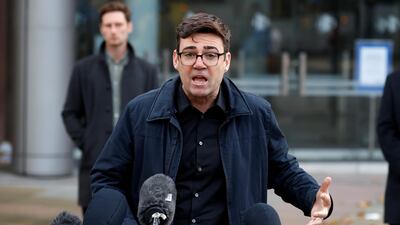
Andy Burnham, mayor of Manchester, holds a news conference on Tuesday. Mr Burnham has been seeking more financial support for workers and businesses affected by the Covid-19 restrictions in his region of almost 3 million people. Reuters -

Burnham celebrates winning the Greater Manchester mayoral election with wife Marie-France van Heel and daughter Annie at Manchester Central in May 2017. Getty Images -

Burnham poses for a portrait after the launch of the Labour party's campaign to elect him as Mayor of Greater Manchester in November 2016. Getty Images -
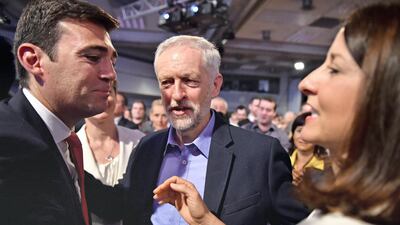
Burnham congratulates Jeremy Corbyn as he is announced as the new leader of the Labour Party in September 2015. Getty Images -

Prior to Corbyn's win Burnham had launched a Labour leadership campaign in 2015. Getty Images -
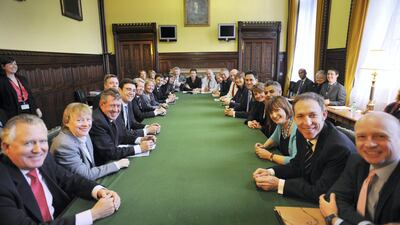
While Ed Miliband was Labour leader Burnham served as Shadow Secretary of State for Health and Shadow Secretary of State for Education. Burnham is seen here (middle left) during Miliband's first shadow cabinet meeting in October 2010. -
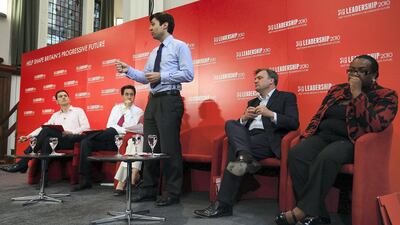
Burnham had campaigned to become Labour leader prior to Miliband's win. He is seen here on the campaign trail with fellow Labour leadership candidates in July 2010. Getty Images -

Burnham poses for a portrait in Portcullis House in Westminster during his 2010 Labour leadership campaign. Getty Images -
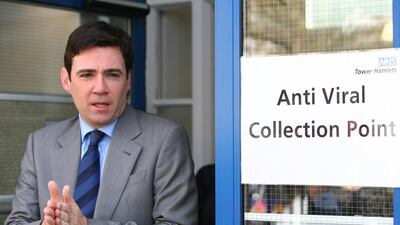
While Gordon Brown was Prime Minister Burnham served as Health Secretary. Seen here after visiting an anti-viral clinic in Tower Hamlets in July 2009. Getty Images -

Burnham also served as Secretary of State for Culture, Media and Sport under Brown. Getty Images -
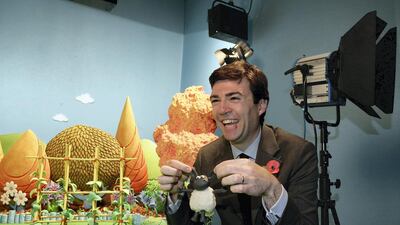
Burnham laughs on set at Aardman animation studios in Bristol in 2008 while serving as Secretary of State for Culture, Media and Sport. Getty Images -
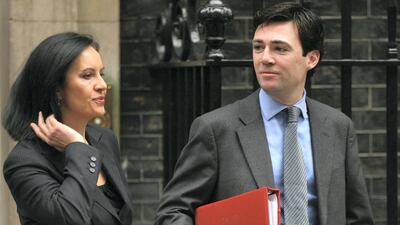
Burnham departs a weekly cabinet meeting at Downing Street in January 2008. Getty Images


Stamp duty scrapped?
Martin Bikhit, CEO of UK Forbes Global Properties, said that stamp duty, annual property taxes and wider housing reform will be under the spotlight.
He said that if stamp duty is scrapped or reformed, “homeowners who have already paid substantial stamp duty should not be penalised again by being rolled into an annual tax model overnight”.
He said: “A sensible transition would be to apply any new annual system only on future transactions. Existing owners keep the system they bought into. New buyers enter under the new framework. That creates fairness, certainty, and a cleaner long-term model.
"For prime central London, the principle matters. Buyers can absorb tax, but they need clarity. Any major reform must encourage movement, not punish those who have already invested heavily under the current rules.”
Charles Curran, principal and market data analyst at Maskells Estate Agents, sees Mr Burnham as a negative for the prime central London property market for second-home owners, foreign owners and landlords. “Mr Burnham has been vocal about property tax, notably that land is undertaxed and he has vowed to change this,” he said. “Originally, he spoke about a Land Value Tax in 2010 and this position seems to have now shifted to a more aggressive Proportional Property Tax which would replace Stamp Duty and Council Tax.
“The current suggestion from campaign group Fairer Share is that property is taxed annually at 0.48 per cent of its market value for owner-occupiers and 0.96 per cent for second home or foreign owners. The initial phase would have a transition period for existing homeowners and would be capped at £1,200 per year above current council tax rates. There is no transition or cap for second home or foreign owned homes.”
Mr Curran calculates that the taxes would be the equivalent of £9,600 a year for a £2m Chelsea home or £24,000 a year for a £5m home. For second-home or foreign owners, they would work out at £19,200 and £48,000 respectively.
However, that should be offset against the fact that stamp duty would not be charged when a house was bought. Over 10 years, the tax on the more expensive property could amount to almost £90,000 more than under the current system. However, if you own the home for longer, then the benefit disappears and homeowners would pay more.
Mr Curran said that, as the tax is not part of the Labour manifesto, it is unlikely to be implemented before the next election, should Labour win, but it gives some flavour as to where Mr Burnham is likely to focus his policies.
“We believe that lower taxes are essential to stimulate the economy and the removal of Stamp duty and council tax to be replaced with a 0.48 per cent annual tax is probably not a bad idea. It will however create a real incentive not to sell for those who would benefit from the transition period which may well cause an initial spike in property prices as domestic vendors, if unable to meet the higher charge, may well end up sitting in their properties even if they are no longer appropriate.
“However, we would also expect to see a large number of foreign owners sell to avoid this tax, which may well counter the lack of sales from domestic vendors. If foreign vendors sell in droves, this will outweigh the domestic vendors, then prices will fall, and potentially quite significantly. A £10 million home owned by a foreign or second homeowner would attract £92,832 in annual taxes under this regime or a 2,930 per cent increase over today with no transition period.”

He said that if the scheme were to be introduced, it would lead to many legal challenges as the valuation of a home would become all-important.
“Tinkering with taxes is dangerous as no one invests in tax uncertainty. May we encourage Mr Burnham to consider not only the vast resources foreign buyers bring to the UK and the benefit that brings to the economy, but also the benefits of a strong private rental market, where landlords are not penalised by further tax increases. and the benefit that this brings to the economy but also the benefit of a strong private rental market where landlords are not penalised via further increased taxation.”
Who will be Chancellor?
Michael Connolly, director of research at The Super Prime, a market intelligence platform for wealthy people, said the focus must be on who is appointed chancellor and what economic changes will be made. Markets can usually absorb the turmoil of leadership change when the transition path is clear or long enough, he pointed out.
“As Andy Burnham prepares to move into Westminster, investors are now trying to assess whether he brings a new approach to spending, taxation and borrowing,” he said.
A degree of uncertainty appeared to have been priced in by markets with the reaction being measured rather than dramatic, because Mr Starmer’s resignation had not come entirely out of the blue.
“The prospect of a left-leaning government placing greater emphasis on welfare and public spending, and therefore borrowing, will be at the forefront of investors' minds,” he said.
“The key question is whether the incoming administration maintains the current economic framework or signals a different direction. At a time when the UK continues to face sluggish growth, elevated debt levels and ongoing pressure on public finances, investors are likely to place even greater importance on the credibility of a new government.”

