

The meme stock craze is back – again. In what’s becoming a familiar summer ritual, social media-fuelled traders have sent a basket of long-neglected US stocks into orbit.
Names such as Opendoor Technologies, Krispy Kreme, GoPro, Wendy’s and Kohl’s are hardly Wall Street darlings, but they’ve suddenly enjoyed dizzying short-term share price gains, seemingly out of nowhere.
Opendoor started July trading at around 56 cents per share, before jumping more than four-fold to $2.88 at its peak on July 22. It appeared to have run out of steam but then jumped 15 per cent to close at $2.10 on August 1, Friday.
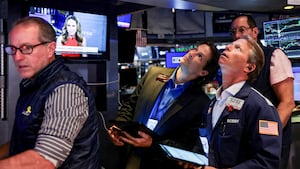
On July 23, GoPro and Krispy Kreme posted pre-market gains of 70 per cent and 90 per cent, respectively. Despite retreating, GoPro still ended July up 58 per cent, Kohl’s ended the month almost 19 per cent higher. Krispy Kreme saw a more modest 9.9 per cent return.
It’s a chaotic, captivating sideshow – another zany episode of traders gone wild. But it may also be telling us something more profound about where the stock market is heading next. If we’re willing to listen.
Meme stocks first emerged in 2021, when retailers GameStop and AMC Entertainment became the flavour of the month on Reddit’s r/WallStreetBets and trading apps like Robinhood.
In 2023, another spell of summertime madness sent struggling homeware retailers Tupperware and Bed Bath & Beyond to the stars. In 2024, GameStop, AMC, Koss and Tupperware all returned in a short-lived reprise.
Chris Beauchamp, chief market analyst at IG, says another round of meme stock mania was “perhaps inevitable” amid growing euphoria over trade deals and record highs for global indexes in July.
“It may be a sign that retail investors are still keen to get plenty of equity exposure, even as institutional money continues to fret over the risks of a broader downturn. Fear of missing out (FOMO) plays a part too,” he says.
IG registered a 30-fold increase in trader interest, with Opendoor the standout stock. Some see the surge as a sign of a bubble, but Mr Beauchamp takes a more positive view.
“Retail investors were proven right in buying the tariff dip in April. They continue to allocate money to stocks even as money managers remain cautious,” he says.
Could they be right again?
Hamza Dweik, head of trading at Saxo Bank Mena, says the meme stock revival is unfolding against a backdrop of broader market optimism. “The S&P 500 has notched 11 record highs so far in 2025, buoyed by strong earnings and a rebound from the tariff-induced dip in April.”
At the same time, Nvidia recently became the world’s first $4 trillion company, swiftly followed by Microsoft.
“Bitcoin has been trading near its all-time highs and the FTSE 100 has shown surprising resilience,” Mr Dweik says.
This environment has emboldened retail traders, many of whom now feel “invulnerable” after a string of successful trades.
Mr Dweik warns the resurgence may be a cautionary signal rather than a cause for celebration. “Historically, such speculative surges have preceded periods of heightened volatility or correction.”
Josh Gilbert, market analyst at eToro, agrees the meme stock resurgence shows “markets are risk-on” but says retail traders aren’t naive.
“Many have a more sophisticated understanding of risk now. They’re leveraging social media and broader insights to find opportunities,” he says.
“They’ve got real-time education, tools and communities at their fingertips, and they’re evolving with markets, not just reacting.
“Many are diversifying too, with gold also in demand. This is more grounded than a pure frenzy,” Mr Gilbert adds. He’s bullish himself, suggesting this could set 2025 up for another strong year, after US markets posted double-digit gains in both 2023 and 2024.
“Rising markets attract more buyers, fuelling further gains,” he says.
However, risks remain. Inflation is sticky, tariff threats haven’t gone away, and supply chains and business confidence could still be hit.
Mr Gilbert says some local opportunities are being overlooked, notably the UAE stock market. “Strong local economic fundamentals make the region feel like a safe haven.”
Tread carefully, though. “There’s a risk of markets running too far ahead of fundamentals. We aren’t there yet, but it’s a risk to be aware of,” he warns.
Jason Hollands, managing director at Evelyn Partners, says social media and trading apps have created the “gamification” of investing, making it seem fun – but there’s real money at stake.
“Clever meme stock investors aim to jump ship after shares have been ramped up, leaving those who bought near the top staring at steep losses. It’s a kind of wealth redistribution, from the naive to the cunning,” Mr Hollands explains.
“US equity valuations are currently priced for perfection, so a setback for the economy or signs the AI theme is waning could see sentiment and appetite for risk flip.”
Markets may press higher this month but US President Donald Trump’s latest tariff threats could halt the rally by hitting trade, warns Vijay Valecha, chief investment officer at Century Financial in Dubai.
“Higher tariffs would drive up prices for US companies and consumers, and delay interest rate cuts,” he says.
“Although the broader rally has legs, investors would do well to temper optimism with selectivity.”
James Angel, associate professor at Georgetown University’s McDonough School of Business Dubai, says the surge reflects investor euphoria over AI, lower corporate taxes, demand for inflation hedges amid tariff fears, and “the usual overexcitement that occasionally infects the stock market”.
Markets run on expectations and those can shift quickly. “The stock market has always been a roller coaster,” Mr Angel says. "The uplifts are exhilarating, but they don’t last forever. That’s why investors expect higher returns – to be compensated for the ride."
market analyst, eToro
Most investors would do well to keep things simple. “Ask yourself: what do you know that the market doesn’t? If you can’t credibly answer that, stick to index funds aligned with your time horizon and risk tolerance,” he suggests.
Tony Hallside, chief executive of advisory firm STP Partners in Dubai, says the risk-on mood is real, but the market remains vulnerable to shocks. “It’s like driving under blue skies. Enjoy it but keep your seat belt on.”
Liquidity is healthy, tech remains strong and AI momentum may yet have further to run, Mr Hallside says. But investor psychology can swing sharply.
“Corrections don’t need big reasons – just a spark.” His advice: don’t follow the herd. “Whether it’s meme stocks or momentum trades, always ask: what happens if the music stops?”
Saxo’s Mr Dweik echoes that concern, warning the rallying is increasingly driven by emotion and momentum rather than fundamentals.
“Speculative surges like this often precede periods of heightened volatility or correction. Euphoria can be fleeting. The hangover can be painful,” he warns.
As Mr Trump menaces trading partners again, that party may already be over.

