The Abu Dhabi skyline. The UAE's wealth grew by an annual 20 per cent last year compared with 11 per cent globally. Christopher Pike / The National

UAE’s financial wealth expected to surge to $1tn by 2026


Deepthi Nair
  • English
  • Arabic

The UAE’s financial wealth is expected to accelerate at a compound annual rate of 6.7 per cent to reach $1 trillion in 2026 from $700 billion last year, driven by growth in both financial and real assets, a new report by management consultancy Boston Consulting Group (BCG) has said.

Global financial wealth rose by 10.6 per cent in 2021 to $530tn, recording the fastest growth in more than a decade, the management consultancy said on Wednesday.

Financial wealth in the UAE grew by an annual 20 per cent last year compared with 11 per cent globally and the Emirates recorded a net inflow of more than 2,000 millionaires, which helped the country to contribute 30 per cent of the total financial wealth in the GCC, BCG's Global Wealth 2022: Standing Still Is Not an Option report said.

Financial wealth in the GCC grew an annual 9 per cent to $7tn last year, according to BCG.

“The UAE represented 10.2 per cent of the Middle East and Africa’s financial wealth in 2021, having grown 6.4 per cent every year since 2016 to $0.7 trillion [$700bn],” said Mustafa Bosca, managing director and partner of BCG.

“The growth in UAE and GCC wealth was equally distributed between financial wealth, such as equities, bonds, cash and deposits, and real assets.”

The number of ultra-high-net-worth individuals (UHNWIs) — people who possess a net wealth of $30 million or more — in the world rose 9.3 per cent last year as the global economic rebound from the pandemic and rising equity markets supercharged wealth creation, according to a March report by global property consultancy Knight Frank.

Last year saw the addition of 52,000 ultra-wealthy people globally. The growth in wealth was evenly spread across regions, with North America leading the pack and registering a 12.2 per cent increase in wealth for UHNWIs in 2021.

About 41 per cent of the UAE’s wealth in 2021 was derived from UHNWIs and this share is expected to grow to 43 per cent in 2026, the BCG report said.

Meanwhile, high-net-worth individuals (HNWIs) — who have a net worth above $1m — accounted for 28 per cent of the UAE’s wealth in 2021. This ratio is expected to remain the same by 2026, BCG added.

Both UHNWIs and HNWIs contributed 30 per cent each to total wealth in the GCC, while those with a net worth of less than $1m accounted for the remaining 40 per cent, Mr Bosca said.

Equities and investment funds in the UAE accounted for 64 per cent of total personal wealth in 2021 and are expected to grow at a compound annual growth rate of 8.8 per cent by 2026, the BCG report said.

Currency and deposits accounted for 29 per cent of total personal wealth in the Emirates last year, while bonds made up only 3 per cent, BCG said.

Life insurance and pensions are expected to account for a bigger share of personal wealth in the UAE over the next five years, the report added.

If Russia halts its military offensive against Ukraine in 2022, global wealth will grow at an average annual rate of 5.3 per cent through to 2026 and roughly $80tn in new wealth will be created over the next five years, according to BCG.

Under this scenario, the GCC will add $1tn of net financial wealth over the next five years.

World's youngest billionaires under 30 — in pictures

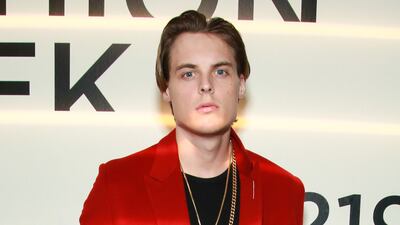
  • Norway’s fishing farm heir Gustav Magnar Witzoe, 28, has a net worth of $4.5 billion. Getty
    Norway’s fishing farm heir Gustav Magnar Witzoe, 28, has a net worth of $4.5 billion. Getty
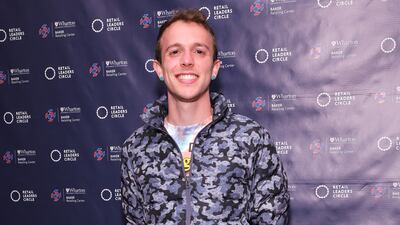
  • Ryan Breslow, 27, dropped out of Stanford University to set up payment software company Bolt. He has a fortune of $2bn. AFP
    Ryan Breslow, 27, dropped out of Stanford University to set up payment software company Bolt. He has a fortune of $2bn. AFP
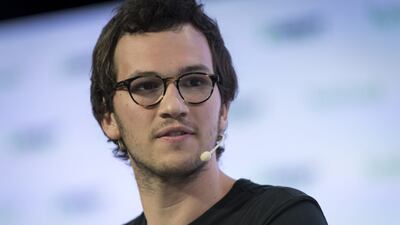
  • Austin Russell, 27, the founder and chief executive of automotive sensor company Luminar Technologies, has a net worth of $1.6bn. Bloomberg
    Austin Russell, 27, the founder and chief executive of automotive sensor company Luminar Technologies, has a net worth of $1.6bn. Bloomberg
  • Henrique Dubugras is co-founder and co-chief executive of Brex, a FinTech that intends to overhaul the corporate credit card. He is worth $1.5bn. Bloomberg
    Henrique Dubugras is co-founder and co-chief executive of Brex, a FinTech that intends to overhaul the corporate credit card. He is worth $1.5bn. Bloomberg
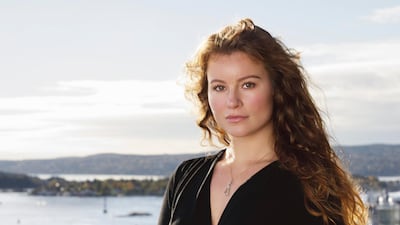
  • Alexandra Andresen, 25, and her sister Katharina each inherited 42 per cent of the family-owned investment company Ferd. Photo: Dag Knudsen
    Alexandra Andresen, 25, and her sister Katharina each inherited 42 per cent of the family-owned investment company Ferd. Photo: Dag Knudsen
  • Katharina Andresen, 26. She and her sister are both worth $1.3bn. Photo: Dag Knudsen
    Katharina Andresen, 26. She and her sister are both worth $1.3bn. Photo: Dag Knudsen
  • Stanley Tang is a co-founder and head of labs at restaurant delivery app DoorDash. He is worth $1.5bn. Photo: DoorDash
    Stanley Tang is a co-founder and head of labs at restaurant delivery app DoorDash. He is worth $1.5bn. Photo: DoorDash
  • DoorDash co-founder Andy Fang serves as the app's head of consumer engineering and is worth $1.5bn. Getty
    DoorDash co-founder Andy Fang serves as the app's head of consumer engineering and is worth $1.5bn. Getty

However, if the Russia-Ukraine conflict lasts well into 2023, wealth will expand at a slightly slower rate of 5 per cent and generate $5tn less in global wealth, the report added.

The Asia-Pacific region, excluding Japan, will experience the fastest rate of wealth growth, with asset values expected to rise by a compound annual growth rate of 8.4 per cent by 2026, BCG said.

If that rate holds, Asia-Pacific could become home to about 25 per cent of the world’s wealth by 2026, it added.

Meanwhile, wealth managers and banks must prepare to unlock opportunities in digital assets and sustainable investments as they will fuel the rise in new wealth, BCG said.

By 2026, sustainable investing will account for 8 per cent to 17 per cent of privately invested wealth, up from 4 per cent to 11 per cent today, BCG estimates.

Wealth managers must also consider whether they need to add cryptocurrencies to client portfolios as non-traditional asset managers currently manage about $1tn in crypto-related wealth, the report said.

“Wealth managers are trying to figure out what role they should play in the crypto space,” Mr Bosca said. “Clients are currently looking to alternative venues to build their digital asset positions.”


Ten tax points to be aware of in 2026

1. Domestic VAT refund amendments: request your refund within five years

If a business does not apply for the refund on time, they lose their credit.

2. E-invoicing in the UAE

Businesses should continue preparing for the implementation of e-invoicing in the UAE, with 2026 a preparation and transition period ahead of phased mandatory adoption. 

3. More tax audits

Tax authorities are increasingly using data already available across multiple filings to identify audit risks. 

4. More beneficial VAT and excise tax penalty regime

Tax disputes are expected to become more frequent and more structured, with clearer administrative objection and appeal processes. The UAE has adopted a new penalty regime for VAT and excise disputes, which now mirrors the penalty regime for corporate tax.

5. Greater emphasis on statutory audit

There is a greater need for the accuracy of financial statements. The International Financial Reporting Standards standards need to be strictly adhered to and, as a result, the quality of the audits will need to increase.

6. Further transfer pricing enforcement

Transfer pricing enforcement, which refers to the practice of establishing prices for internal transactions between related entities, is expected to broaden in scope. The UAE will shortly open the possibility to negotiate advance pricing agreements, or essentially rulings for transfer pricing purposes. 

7. Limited time periods for audits

Recent amendments also introduce a default five-year limitation period for tax audits and assessments, subject to specific statutory exceptions. While the standard audit and assessment period is five years, this may be extended to up to 15 years in cases involving fraud or tax evasion. 

8. Pillar 2 implementation 

Many multinational groups will begin to feel the practical effect of the Domestic Minimum Top-Up Tax (DMTT), the UAE's implementation of the OECD’s global minimum tax under Pillar 2. While the rules apply for financial years starting on or after January 1, 2025, it is 2026 that marks the transition to an operational phase.

9. Reduced compliance obligations for imported goods and services

Businesses that apply the reverse-charge mechanism for VAT purposes in the UAE may benefit from reduced compliance obligations. 

10. Substance and CbC reporting focus

Tax authorities are expected to continue strengthening the enforcement of economic substance and Country-by-Country (CbC) reporting frameworks. In the UAE, these regimes are increasingly being used as risk-assessment tools, providing tax authorities with a comprehensive view of multinational groups’ global footprints and enabling them to assess whether profits are aligned with real economic activity. 

Contributed by Thomas Vanhee and Hend Rashwan, Aurifer

Dr Amal Khalid Alias revealed a recent case of a woman with daughters, who specifically wanted a boy.

A semen analysis of the father showed abnormal sperm so the couple required IVF.

Out of 21 eggs collected, six were unused leaving 15 suitable for IVF.

A specific procedure was used, called intracytoplasmic sperm injection where a single sperm cell is inserted into the egg.

On day three of the process, 14 embryos were biopsied for gender selection.

The next day, a pre-implantation genetic report revealed four normal male embryos, three female and seven abnormal samples.

Day five of the treatment saw two male embryos transferred to the patient.

The woman recorded a positive pregnancy test two weeks later. 

Dubai works towards better air quality by 2021

Dubai is on a mission to record good air quality for 90 per cent of the year – up from 86 per cent annually today – by 2021.

The municipality plans to have seven mobile air-monitoring stations by 2020 to capture more accurate data in hourly and daily trends of pollution.

These will be on the Palm Jumeirah, Al Qusais, Muhaisnah, Rashidiyah, Al Wasl, Al Quoz and Dubai Investment Park.

“It will allow real-time responding for emergency cases,” said Khaldoon Al Daraji, first environment safety officer at the municipality.

“We’re in a good position except for the cases that are out of our hands, such as sandstorms.

“Sandstorms are our main concern because the UAE is just a receiver.

“The hotspots are Iran, Saudi Arabia and southern Iraq, but we’re working hard with the region to reduce the cycle of sandstorm generation.”

Mr Al Daraji said monitoring as it stood covered 47 per cent of Dubai.

There are 12 fixed stations in the emirate, but Dubai also receives information from monitors belonging to other entities.

“There are 25 stations in total,” Mr Al Daraji said.

“We added new technology and equipment used for the first time for the detection of heavy metals.

“A hundred parameters can be detected but we want to expand it to make sure that the data captured can allow a baseline study in some areas to ensure they are well positioned.”

COMPANY PROFILE
Name: HyperSpace
 
Started: 2020
 
Founders: Alexander Heller, Rama Allen and Desi Gonzalez
 
Based: Dubai, UAE
 
Sector: Entertainment 
 
Number of staff: 210 
 
Investment raised: $75 million from investors including Galaxy Interactive, Riyadh Season, Sega Ventures and Apis Venture Partners
Racecard

5.25pm: Etihad Museum – Maiden (TB) Dh82,500 (Turf) 1,200m

6pm: Al Shindaga Museum – Handicap (TB) Dh87,500 (Dirt) 1,200m

6.35pm: Poet Al Oqaili – Handicap (TB) Dh95,000 (T) 1,400m

7.10pm: Majlis Ghurfat Al Sheif – Handicap (TB) Dh87,500 (D) 1,600m

7.45pm: Hatta – Handicap (TB) Dh95,000 (T) 1,400m

8.20pm: Al Fahidi – Rated Conditions (TB) Dh87,500 (D) 2,200m

8.55pm: Zabeel Trophy – Rated Conditions (TB) Dh120,000 (T) 1,600m

9.30pm: Coins Museum – Rated Conditions (TB) Dh95,000 (D) 1,600m

10.05pm: Al Quoz Creative – Handicap (TB) Dh95,000 (T) 1,000m


Mercer, the investment consulting arm of US services company Marsh & McLennan, expects its wealth division to at least double its assets under management (AUM) in the Middle East as wealth in the region continues to grow despite economic headwinds, a company official said.

Mercer Wealth, which globally has $160 billion in AUM, plans to boost its AUM in the region to $2-$3bn in the next 2-3 years from the present $1bn, said Yasir AbuShaban, a Dubai-based principal with Mercer Wealth.

Within the next two to three years, we are looking at reaching $2 to $3 billion as a conservative estimate and we do see an opportunity to do so,” said Mr AbuShaban.

Mercer does not directly make investments, but allocates clients’ money they have discretion to, to professional asset managers. They also provide advice to clients.

“We have buying power. We can negotiate on their (client’s) behalf with asset managers to provide them lower fees than they otherwise would have to get on their own,” he added.

Mercer Wealth’s clients include sovereign wealth funds, family offices, and insurance companies among others.

From its office in Dubai, Mercer also looks after Africa, India and Turkey, where they also see opportunity for growth.

Wealth creation in Middle East and Africa (MEA) grew 8.5 per cent to $8.1 trillion last year from $7.5tn in 2015, higher than last year’s global average of 6 per cent and the second-highest growth in a region after Asia-Pacific which grew 9.9 per cent, according to consultancy Boston Consulting Group (BCG). In the region, where wealth grew just 1.9 per cent in 2015 compared with 2014, a pickup in oil prices has helped in wealth generation.

BCG is forecasting MEA wealth will rise to $12tn by 2021, growing at an annual average of 8 per cent.

Drivers of wealth generation in the region will be split evenly between new wealth creation and growth of performance of existing assets, according to BCG.

Another general trend in the region is clients’ looking for a comprehensive approach to investing, according to Mr AbuShaban.

“Institutional investors or some of the families are seeing a slowdown in the available capital they have to invest and in that sense they are looking at optimizing the way they manage their portfolios and making sure they are not investing haphazardly and different parts of their investment are working together,” said Mr AbuShaban.

Some clients also have a higher appetite for risk, given the low interest-rate environment that does not provide enough yield for some institutional investors. These clients are keen to invest in illiquid assets, such as private equity and infrastructure.

“What we have seen is a desire for higher returns in what has been a low-return environment specifically in various fixed income or bonds,” he said.

“In this environment, we have seen a de facto increase in the risk that clients are taking in things like illiquid investments, private equity investments, infrastructure and private debt, those kind of investments were higher illiquidity results in incrementally higher returns.”

The Abu Dhabi Investment Authority, one of the largest sovereign wealth funds, said in its 2016 report that has gradually increased its exposure in direct private equity and private credit transactions, mainly in Asian markets and especially in China and India. The authority’s private equity department focused on structured equities owing to “their defensive characteristics.”

Huroob Ezterari

Director: Ahmed Moussa

Starring: Ahmed El Sakka, Amir Karara, Ghada Adel and Moustafa Mohammed

Three stars

BULKWHIZ PROFILE

Date started: February 2017

Founders: Amira Rashad (CEO), Yusuf Saber (CTO), Mahmoud Sayedahmed (adviser), Reda Bouraoui (adviser)

Based: Dubai, UAE

Sector: E-commerce 

Size: 50 employees

Funding: approximately $6m

Investors: Beco Capital, Enabling Future and Wain in the UAE; China's MSA Capital; 500 Startups; Faith Capital and Savour Ventures in Kuwait

Famous left-handers

- Marie Curie

- Jimi Hendrix

- Leonardo Di Vinci

- David Bowie

- Paul McCartney

- Albert Einstein

- Jack the Ripper

- Barack Obama

- Helen Keller

- Joan of Arc

What is cyberbullying?

Cyberbullying or online bullying could take many forms such as sending unkind or rude messages to someone, socially isolating people from groups, sharing embarrassing pictures of them, or spreading rumors about them.

Cyberbullying can take place on various platforms such as messages, on social media, on group chats, or games.

Parents should watch out for behavioural changes in their children.

When children are being bullied they they may be feel embarrassed and isolated, so parents should watch out for signs of signs of depression and anxiety

Stage 2 results

Caleb Ewan (AUS) Lotto Soudal 04:18:18

Sam Bennett (IRL) Deceuninck-QuickStep 00:00:02

Arnaud Demare (FRA) Groupama-FDJ 00:00:04

4 Diego Ulissi (ITA) UAE Team Emirates

5 Rick Zabel (GER) Israel Start-Up Nation

General Classification

Caleb Ewan (AUS) Lotto Soudal 07:47:19

2 Sam Bennett (IRL) Deceuninck-QuickStep 00:00:12

3 Arnaud Demare (FRA) Groupama-FDJ 00:00:16

4 Nikolai Cherkasov (RUS) Gazprom-Rusvelo 00:00:17

5 Alexey Lutsensko (KAZ) Astana Pro Team 00:00:19

Company%20profile
%3Cp%3E%3Cstrong%3ECompany%20name%3A%3C%2Fstrong%3E%20Fasset%0D%3Cbr%3E%3Cstrong%3EStarted%3A%20%3C%2Fstrong%3E2019%0D%3Cbr%3E%3Cstrong%3EFounders%3A%3C%2Fstrong%3E%20Mohammad%20Raafi%20Hossain%2C%20Daniel%20Ahmed%0D%3Cbr%3E%3Cstrong%3EBased%3A%3C%2Fstrong%3E%20Dubai%0D%3Cbr%3E%3Cstrong%3ESector%3A%20%3C%2Fstrong%3EFinTech%0D%3Cbr%3E%3Cstrong%3EInitial%20investment%3A%3C%2Fstrong%3E%20%242.45%20million%0D%3Cbr%3E%3Cstrong%3ECurrent%20number%20of%20staff%3A%3C%2Fstrong%3E%2086%0D%3Cbr%3E%3Cstrong%3EInvestment%20stage%3A%3C%2Fstrong%3E%20Pre-series%20B%0D%3Cbr%3E%3Cstrong%3EInvestors%3A%3C%2Fstrong%3E%20Investcorp%2C%20Liberty%20City%20Ventures%2C%20Fatima%20Gobi%20Ventures%2C%20Primal%20Capital%2C%20Wealthwell%20Ventures%2C%20FHS%20Capital%2C%20VN2%20Capital%2C%20local%20family%20offices%3C%2Fp%3E%0A
The five pillars of Islam

1. Fasting 

2. Prayer 

3. Hajj 

4. Shahada 

5. Zakat 

What are the influencer academy modules?
  1. Mastery of audio-visual content creation. 
  2. Cinematography, shots and movement.
  3. All aspects of post-production.
  4. Emerging technologies and VFX with AI and CGI.
  5. Understanding of marketing objectives and audience engagement.
  6. Tourism industry knowledge.
  7. Professional ethics.
Who's who in Yemen conflict

Houthis: Iran-backed rebels who occupy Sanaa and run unrecognised government

Yemeni government: Exiled government in Aden led by eight-member Presidential Leadership Council

Southern Transitional Council: Faction in Yemeni government that seeks autonomy for the south

Habrish 'rebels': Tribal-backed forces feuding with STC over control of oil in government territory

GAC GS8 Specs

Engine: 2.0-litre 4cyl turbo

Power: 248hp at 5,200rpm

Torque: 400Nm at 1,750-4,000rpm

Transmission: 8-speed auto

Fuel consumption: 9.1L/100km

On sale: Now

Price: From Dh149,900

Updated: July 27, 2022, 10:30 AM