

The UAE’s financial wealth is expected to accelerate at a compound annual rate of 6.7 per cent to reach $1 trillion in 2026 from $700 billion last year, driven by growth in both financial and real assets, a new report by management consultancy Boston Consulting Group (BCG) has said.
Global financial wealth rose by 10.6 per cent in 2021 to $530tn, recording the fastest growth in more than a decade, the management consultancy said on Wednesday.
Financial wealth in the UAE grew by an annual 20 per cent last year compared with 11 per cent globally and the Emirates recorded a net inflow of more than 2,000 millionaires, which helped the country to contribute 30 per cent of the total financial wealth in the GCC, BCG's Global Wealth 2022: Standing Still Is Not an Option report said.
Financial wealth in the GCC grew an annual 9 per cent to $7tn last year, according to BCG.
“The UAE represented 10.2 per cent of the Middle East and Africa’s financial wealth in 2021, having grown 6.4 per cent every year since 2016 to $0.7 trillion [$700bn],” said Mustafa Bosca, managing director and partner of BCG.
“The growth in UAE and GCC wealth was equally distributed between financial wealth, such as equities, bonds, cash and deposits, and real assets.”
The number of ultra-high-net-worth individuals (UHNWIs) — people who possess a net wealth of $30 million or more — in the world rose 9.3 per cent last year as the global economic rebound from the pandemic and rising equity markets supercharged wealth creation, according to a March report by global property consultancy Knight Frank.
Last year saw the addition of 52,000 ultra-wealthy people globally. The growth in wealth was evenly spread across regions, with North America leading the pack and registering a 12.2 per cent increase in wealth for UHNWIs in 2021.
About 41 per cent of the UAE’s wealth in 2021 was derived from UHNWIs and this share is expected to grow to 43 per cent in 2026, the BCG report said.
Meanwhile, high-net-worth individuals (HNWIs) — who have a net worth above $1m — accounted for 28 per cent of the UAE’s wealth in 2021. This ratio is expected to remain the same by 2026, BCG added.
Both UHNWIs and HNWIs contributed 30 per cent each to total wealth in the GCC, while those with a net worth of less than $1m accounted for the remaining 40 per cent, Mr Bosca said.
Equities and investment funds in the UAE accounted for 64 per cent of total personal wealth in 2021 and are expected to grow at a compound annual growth rate of 8.8 per cent by 2026, the BCG report said.
Currency and deposits accounted for 29 per cent of total personal wealth in the Emirates last year, while bonds made up only 3 per cent, BCG said.
Life insurance and pensions are expected to account for a bigger share of personal wealth in the UAE over the next five years, the report added.
If Russia halts its military offensive against Ukraine in 2022, global wealth will grow at an average annual rate of 5.3 per cent through to 2026 and roughly $80tn in new wealth will be created over the next five years, according to BCG.
Under this scenario, the GCC will add $1tn of net financial wealth over the next five years.
World's youngest billionaires under 30 — in pictures
-
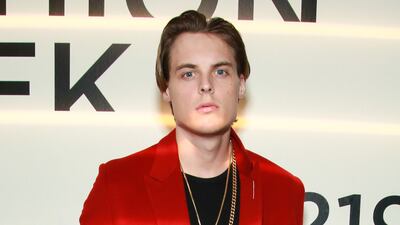
Norway’s fishing farm heir Gustav Magnar Witzoe, 28, has a net worth of $4.5 billion. Getty -
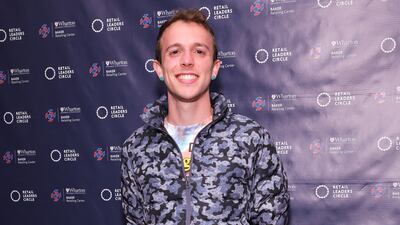
Ryan Breslow, 27, dropped out of Stanford University to set up payment software company Bolt. He has a fortune of $2bn. AFP -

Austin Russell, 27, the founder and chief executive of automotive sensor company Luminar Technologies, has a net worth of $1.6bn. Bloomberg -
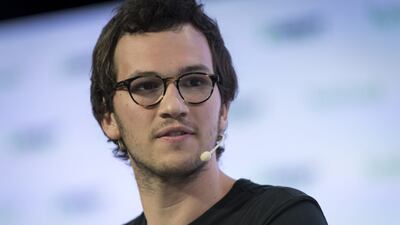
Henrique Dubugras is co-founder and co-chief executive of Brex, a FinTech that intends to overhaul the corporate credit card. He is worth $1.5bn. Bloomberg -
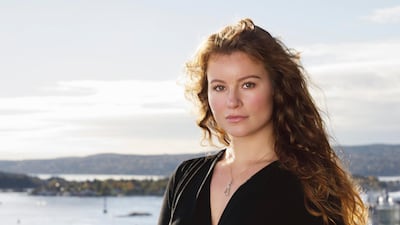
Alexandra Andresen, 25, and her sister Katharina each inherited 42 per cent of the family-owned investment company Ferd. Photo: Dag Knudsen -

Katharina Andresen, 26. She and her sister are both worth $1.3bn. Photo: Dag Knudsen -
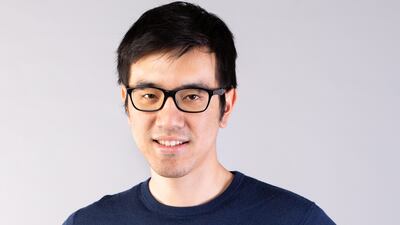
Stanley Tang is a co-founder and head of labs at restaurant delivery app DoorDash. He is worth $1.5bn. Photo: DoorDash -

DoorDash co-founder Andy Fang serves as the app's head of consumer engineering and is worth $1.5bn. Getty


However, if the Russia-Ukraine conflict lasts well into 2023, wealth will expand at a slightly slower rate of 5 per cent and generate $5tn less in global wealth, the report added.
The Asia-Pacific region, excluding Japan, will experience the fastest rate of wealth growth, with asset values expected to rise by a compound annual growth rate of 8.4 per cent by 2026, BCG said.
If that rate holds, Asia-Pacific could become home to about 25 per cent of the world’s wealth by 2026, it added.
Meanwhile, wealth managers and banks must prepare to unlock opportunities in digital assets and sustainable investments as they will fuel the rise in new wealth, BCG said.
By 2026, sustainable investing will account for 8 per cent to 17 per cent of privately invested wealth, up from 4 per cent to 11 per cent today, BCG estimates.
Wealth managers must also consider whether they need to add cryptocurrencies to client portfolios as non-traditional asset managers currently manage about $1tn in crypto-related wealth, the report said.
“Wealth managers are trying to figure out what role they should play in the crypto space,” Mr Bosca said. “Clients are currently looking to alternative venues to build their digital asset positions.”

