A visitor tries the Metaverse Service at the SK Telecom stand during GSMA's 2022 Mobile World Congress in Spain. Analysts are still undecided if the metaverse is another investing fad. Reuters

Why it pays to steer clear of investment fads


  • English
  • Arabic

Human beings have always been prone to fads, fashions and manias — and investors are arguably the worst of the lot.

History is full of examples of crazy investment manias, from railways to canals to South Sea stocks and Dutch tulip bulbs, and the irrationality continues to this day.

We seem more prone to investment frenzies than ever. In recent years, we have had US technology, cryptocurrencies, non-fungible tokens (NFTs), special purpose acquisition companies (Spacs) and the GameStop, AMC Entertainment meme stock craze.

  • Lindsay Lohan released a single called 'Lullaby' as an NFT in May 2021. Photo: FansForever
    Lindsay Lohan released a single called 'Lullaby' as an NFT in May 2021. Photo: FansForever
  • Blockchain entrepreneur Vignesh Sundaresan shows the NFT 'Everydays: The First 5,000 Days' at his home in Singapore. The programmer's purchase of the NFT for $69.3 million highlights how virtual work is establishing itself as a new creative genre. Photo: AFP
    Blockchain entrepreneur Vignesh Sundaresan shows the NFT 'Everydays: The First 5,000 Days' at his home in Singapore. The programmer's purchase of the NFT for $69.3 million highlights how virtual work is establishing itself as a new creative genre. Photo: AFP
  • A digital collage by the American artist Beeple sold for a record $69.3 million, Christie's announced in March 2021. 'Everydays: The First 5,000 Days' is the most expensive NFT – non-fungible token, or collectible digital asset transformed using blockchain into something ownable – ever sold. Photo: AFP
    A digital collage by the American artist Beeple sold for a record $69.3 million, Christie's announced in March 2021. 'Everydays: The First 5,000 Days' is the most expensive NFT – non-fungible token, or collectible digital asset transformed using blockchain into something ownable – ever sold. Photo: AFP
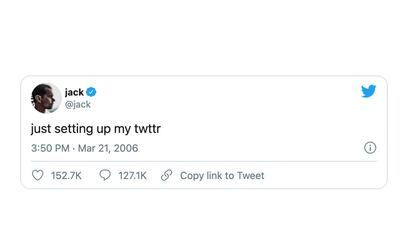
  • Twitter co-founder and chief executive Jack Dorsey sold his first tweet as an NFT for nearly $3 million. Screengrab
    Twitter co-founder and chief executive Jack Dorsey sold his first tweet as an NFT for nearly $3 million. Screengrab
  • Gucci has launched virtual and augmented reality sneakers as NFTs. Photo: Gucci
    Gucci has launched virtual and augmented reality sneakers as NFTs. Photo: Gucci
  • Artist Krista Kim sold the world's first NFT house for more than $500,000 in March this year. Photo: Krista Kim
    Artist Krista Kim sold the world's first NFT house for more than $500,000 in March this year. Photo: Krista Kim
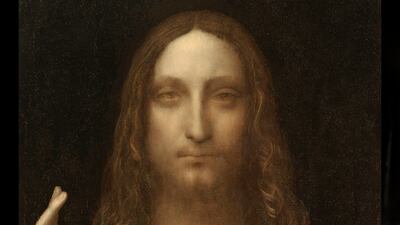
  • Ben Lewis's 'Salvator Metaversi' is an NFT inspired by Leonardo Da Vinci's 'Salvator Mundi'. Photo: Ben Lewis
    Ben Lewis's 'Salvator Metaversi' is an NFT inspired by Leonardo Da Vinci's 'Salvator Mundi'. Photo: Ben Lewis
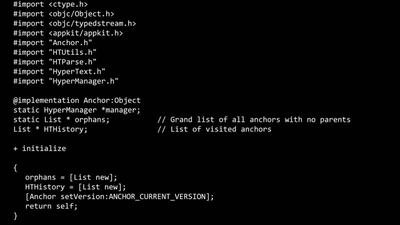
  • Sir Tim Berners-Lee, the father of the internet, sold the source code for the worldwide web as an NFT for $5.4 million on Sotheby’s in June. Photo: Sotheby's
    Sir Tim Berners-Lee, the father of the internet, sold the source code for the worldwide web as an NFT for $5.4 million on Sotheby’s in June. Photo: Sotheby's
  • Dolce & Gabbana unveiled its first NFT collection in Venice in August. Photo: Dolce & Gabbana
    Dolce & Gabbana unveiled its first NFT collection in Venice in August. Photo: Dolce & Gabbana

In a few rare cases, one person is the centre of excitement. That is the case with Cathie Wood at disruptive technology specialists ARK Invest.

In 2020, her ARK Innovation ETF returned a thunderous 152.52 per cent, which is when the investment world sat up and took notice. Suddenly, her name was everywhere, Wood-mania took root and investors piled in.

In 2021, ARK Innovation fell by 23.36 per cent. In the year to date, it is down another 28.58 per cent, underperforming the overall stock market by 20.47 per cent, according to Stocksverse.com.

It is still up 420 per cent since launch in 2014 but bandwagon jumpers have been hammered hard.

Fads are dangerous things unless you are ahead of the trend, Chris Beauchamp, chief market analyst at online trading platform IG, says.

“Too often, most investors only really hear about them when the big initial moves have already happened, as with ARK Innovation,” he says.

The herd piles in at the point of peak excitement and overpays horribly.

Fads are dangerous things unless you are ahead of the trend. Too often, most investors only hear about them when the big initial moves have already happened
Chris Beauchamp,
chief market analyst at IG

“Afterwards they stick around, hoping that stellar performance will return. Sometimes it does, but frequently it doesn’t, and these investors end up holding the bag while the market moves on to the next big thing,” Mr Beauchamp says.

The trick is to find investments before they become popular, but that isn’t easy, he says.

“Nobody is bothered about looking for stuff that isn’t doing well.”

It is easy enough to draw parallels between investment bubbles of the past and more recent frenzies.

Say, between the “Nifty 50” buy-and-hold Wall Street blue chips that everyone loved in the 1950s and 1960s, and today’s technology titans such as Apple, Amazon, Facebook and Tesla.

Or the high-risk, high-return “go-go stocks” from the bullish 1960s and the 1990s dot-com boom. Or the South Sea Bubble of 1720 and the Brics. The parallels aren’t exact, but the same trends are at play. When mania takes hold, nobody is safe.

Right and wrong doesn’t come into it, either. It is worth noting that the South Sea Company’s royal monopoly included the trading of African slaves to the Spanish and Portuguese empires. That didn't stop investors from piling in.

They say history does not repeat itself but it does rhyme, and the railway mania of the 1840s still resonates today, Mark Leale, head of investment management company Quilter Cheviot’s Dubai office, says.

People thought railways would change the world, and they did, but not without triggering an almighty crash first.

The Industrial Revolution created a rich British middle class who were willing to take risks with their spare money, because interest rates were so low, Mr Leale says.

“Railway companies made investing easy by issuing what we would now call ‘call options’, allowing investors to buy shares with a 10 per cent deposit, with the balance to be paid later,” he says.

When the Bank of England raised interest rates in 1845, railway companies called those options in. Many investors were unable to pay and the bubble burst, with railway projects abandoned, Mr Leale says.

“The message is simple. Avoid crazes and look to get rich slowly, taking into account how much you can afford to invest, your capacity for loss and appetite for risk,” he says.

Yet, humans are herd creatures and it is not easy to go against the crowd, while professional investors cannot afford to be seen missing out on the next big thing, David Morrison, senior market analyst at Trade Nation, says.

“Playing safe and aiming to beat inflation won’t get you rich or noticed. To stay ahead of the pack, serious investors need to identify an opportunity and get in early. That is where fortunes are made. It is also where they are lost,” Mr Morrison says.

Investors are constantly hunting for the next get-rich-quick opportunity. Next up could be energy, or the Metaverse, or something nobody has even heard of yet, Mr Morrison says.

“As long as money remains cheap and plentiful, investors will bet on a new fad in the hope of stealing a first-mover advantage,” he says.

Money has been cheap and plentiful for the past decade, which has helped to drive investment mania. As has globalisation, because investors around the world can pour money into any asset, anywhere, in seconds.

The internet has accelerated everything as online and app-based investment platforms open investing to anyone with a mobile, Andrey Dobrynin, managing director and co-founder of InvestEngine, says.

“While increasing access to investing should be applauded, it has also driven what Warren Buffett called ‘speculative, casino-like trading’,” he says.

Investing is not gambling, or at least, it shouldn’t be, Mr Dobrynin says, but too many trading apps have failed in their duty to educate investors about the risks.

This leaves it to the individual, who should consider their own risk tolerance and build diversified, long-term portfolios, rather than chasing hot assets.

Chinese property may be the next bubble to burst, Vijay Valecha, chief investment officer at Century Financial, says.

“Prices are estimated to be 2.6 times higher than in the US, with a rising number of bond defaults in the sector, notably Evergrande, which has liabilities of a staggering $300 billion,” he says.

Renewable energy may also be in a bubble as money pours in and stocks become overvalued, Mr Valecha says.

As long as money remains cheap and plentiful, investors will bet on a new fad in the hope of stealing a first-mover advantage
David Morrison,
senior market analyst at Trade Nation

“With the US Federal Reserve set to tighten policy as inflation rockets, tailwinds are starting to become headwinds,” he says.

As the era of cheap and easy money draws to a close and inflation rockets, the passion for manias may ease.

New geopolitical realities following Russia’s military offensive on Ukraine should also play a part as the global economy feels the heat and froth goes out of the market.

Mr Valecha’s advice is to avoid the “fluff” of fads and fashions and look to invest in fundamentally strong and resilient companies.

“Always check valuations carefully to make sure you do not overpay for any asset. That will have a major impact on your returns,” he says.

Nothing will stop investment manias for long, Mr Beauchamp says, as they will happen again and again.

“The trick is to avoid being taken in by the hype and only risk a small corner of your whole portfolio. The downside is that you won’t get huge outperformance, but you should avoid the huge downside. Diversification, as ever, is key.”

Greed lies at the heart of every bout of investment mania. As does fear of missing out. All too often, investors are their own worst enemies.


Real estate tokenisation project

Dubai launched the pilot phase of its real estate tokenisation project last month.

The initiative focuses on converting real estate assets into digital tokens recorded on blockchain technology and helps in streamlining the process of buying, selling and investing, the Dubai Land Department said.

Dubai’s real estate tokenisation market is projected to reach Dh60 billion ($16.33 billion) by 2033, representing 7 per cent of the emirate’s total property transactions, according to the DLD.

Skewed figures

In the village of Mevagissey in southwest England the housing stock has doubled in the last century while the number of residents is half the historic high. The village's Neighbourhood Development Plan states that 26% of homes are holiday retreats. Prices are high, averaging around £300,000, £50,000 more than the Cornish average of £250,000. The local average wage is £15,458. 

Jetour T1 specs

Engine: 2-litre turbocharged

Power: 254hp

Torque: 390Nm

Price: From Dh126,000

Available: Now

Hurricanes 31-31 Lions

Wellington Hurricanes: 
Tries: Gibbins, Laumape, Goosen, Fifita tries, Barrett
Conversions: Barrett (4)
Penalties: Barrett

British & Irish Lions:
Tries: Seymour (2), North
Conversions: Biggar (2)
Penalties: Biggar (4)

TOUCH RULES

Touch is derived from rugby league. Teams consist of up to 14 players with a maximum of six on the field at any time.

Teams can make as many substitutions as they want during the 40 minute matches.

Similar to rugby league, the attacking team has six attempts - or touches - before possession changes over.

A touch is any contact between the player with the ball and a defender, and must be with minimum force.

After a touch the player performs a “roll-ball” - similar to the play-the-ball in league - stepping over or rolling the ball between the feet.

At the roll-ball, the defenders have to retreat a minimum of five metres.

A touchdown is scored when an attacking player places the ball on or over the score-line.

What is the definition of an SME?

SMEs in the UAE are defined by the number of employees, annual turnover and sector. For example, a “small company” in the services industry has six to 50 employees with a turnover of more than Dh2 million up to Dh20m, while in the manufacturing industry the requirements are 10 to 100 employees with a turnover of more than Dh3m up to Dh50m, according to Dubai SME, an agency of the Department of Economic Development.

A “medium-sized company” can either have staff of 51 to 200 employees or 101 to 250 employees, and a turnover less than or equal to Dh200m or Dh250m, again depending on whether the business is in the trading, manufacturing or services sectors. 

Labour dispute

The insured employee may still file an ILOE claim even if a labour dispute is ongoing post termination, but the insurer may suspend or reject payment, until the courts resolve the dispute, especially if the reason for termination is contested. The outcome of the labour court proceedings can directly affect eligibility.


- Abdullah Ishnaneh, Partner, BSA Law 

How to join and use Abu Dhabi’s public libraries

• There are six libraries in Abu Dhabi emirate run by the Department of Culture and Tourism, including one in Al Ain and Al Dhafra.

• Libraries are free to visit and visitors can consult books, use online resources and study there. Most are open from 8am to 8pm on weekdays, closed on Fridays and have variable hours on Saturdays, except for Qasr Al Watan which is open from 10am to 8pm every day.

• In order to borrow books, visitors must join the service by providing a passport photograph, Emirates ID and a refundable deposit of Dh400. Members can borrow five books for three weeks, all of which are renewable up to two times online.

• If users do not wish to pay the fee, they can still use the library’s electronic resources for free by simply registering on the website. Once registered, a username and password is provided, allowing remote access.

• For more information visit the library network's website.

Ten tax points to be aware of in 2026

1. Domestic VAT refund amendments: request your refund within five years

If a business does not apply for the refund on time, they lose their credit.

2. E-invoicing in the UAE

Businesses should continue preparing for the implementation of e-invoicing in the UAE, with 2026 a preparation and transition period ahead of phased mandatory adoption. 

3. More tax audits

Tax authorities are increasingly using data already available across multiple filings to identify audit risks. 

4. More beneficial VAT and excise tax penalty regime

Tax disputes are expected to become more frequent and more structured, with clearer administrative objection and appeal processes. The UAE has adopted a new penalty regime for VAT and excise disputes, which now mirrors the penalty regime for corporate tax.

5. Greater emphasis on statutory audit

There is a greater need for the accuracy of financial statements. The International Financial Reporting Standards standards need to be strictly adhered to and, as a result, the quality of the audits will need to increase.

6. Further transfer pricing enforcement

Transfer pricing enforcement, which refers to the practice of establishing prices for internal transactions between related entities, is expected to broaden in scope. The UAE will shortly open the possibility to negotiate advance pricing agreements, or essentially rulings for transfer pricing purposes. 

7. Limited time periods for audits

Recent amendments also introduce a default five-year limitation period for tax audits and assessments, subject to specific statutory exceptions. While the standard audit and assessment period is five years, this may be extended to up to 15 years in cases involving fraud or tax evasion. 

8. Pillar 2 implementation 

Many multinational groups will begin to feel the practical effect of the Domestic Minimum Top-Up Tax (DMTT), the UAE's implementation of the OECD’s global minimum tax under Pillar 2. While the rules apply for financial years starting on or after January 1, 2025, it is 2026 that marks the transition to an operational phase.

9. Reduced compliance obligations for imported goods and services

Businesses that apply the reverse-charge mechanism for VAT purposes in the UAE may benefit from reduced compliance obligations. 

10. Substance and CbC reporting focus

Tax authorities are expected to continue strengthening the enforcement of economic substance and Country-by-Country (CbC) reporting frameworks. In the UAE, these regimes are increasingly being used as risk-assessment tools, providing tax authorities with a comprehensive view of multinational groups’ global footprints and enabling them to assess whether profits are aligned with real economic activity. 

Contributed by Thomas Vanhee and Hend Rashwan, Aurifer

Our family matters legal consultant

Name: Hassan Mohsen Elhais

Position: legal consultant with Al Rowaad Advocates and Legal Consultants.

The five pillars of Islam

1. Fasting

2. Prayer

3. Hajj

4. Shahada

5. Zakat 

Islamophobia definition

A widely accepted definition was made by the All Party Parliamentary Group on British Muslims in 2019: “Islamophobia is rooted in racism and is a type of racism that targets expressions of Muslimness or perceived Muslimness.” It further defines it as “inciting hatred or violence against Muslims”.

Moon Music

Artist: Coldplay

Label: Parlophone/Atlantic

Number of tracks: 10

Rating: 3/5

Emergency

Director: Kangana Ranaut

Stars: Kangana Ranaut, Anupam Kher, Shreyas Talpade, Milind Soman, Mahima Chaudhry 

Rating: 2/5

COMPANY%20PROFILE
%3Cp%3E%3Cstrong%3EName%3A%3C%2Fstrong%3E%20Carzaty%2C%20now%20Kavak%3Cbr%3E%3Cstrong%3EBased%3A%3C%2Fstrong%3E%20Dubai%3Cbr%3E%3Cstrong%3ELaunch%20year%3A%20%3C%2Fstrong%3ECarzaty%20launched%20in%202018%2C%20Kavak%20in%20the%20GCC%20launched%20in%202022%3Cbr%3E%3Cstrong%3ENumber%20of%20employees%3A%3C%2Fstrong%3E%20140%3Cbr%3E%3Cstrong%3ESector%3A%3C%2Fstrong%3E%20Automotive%3Cbr%3E%3Cstrong%3EFunding%3A%20%3C%2Fstrong%3ECarzaty%20raised%20%246m%20in%20equity%20and%20%244m%20in%20debt%3B%20Kavak%20plans%20%24130m%20investment%20in%20the%20GCC%3C%2Fp%3E%0A
What is a black hole?

1. Black holes are objects whose gravity is so strong not even light can escape their pull

2. They can be created when massive stars collapse under their own weight

3. Large black holes can also be formed when smaller ones collide and merge

4. The biggest black holes lurk at the centre of many galaxies, including our own

5. Astronomers believe that when the universe was very young, black holes affected how galaxies formed

The biog

Name: Abeer Al Bah

Born: 1972

Husband: Emirati lawyer Salem Bin Sahoo, since 1992

Children: Soud, born 1993, lawyer; Obaid, born 1994, deceased; four other boys and one girl, three months old

Education: BA in Elementary Education, worked for five years in a Dubai school


Global state-owned investor ranking by size

1.

United States

2.

China

3.

UAE

4.

Japan

5

Norway

6.

Canada

7.

Singapore

8.

Australia

9.

Saudi Arabia

10.

South Korea

Updated: March 13, 2024, 12:24 PM