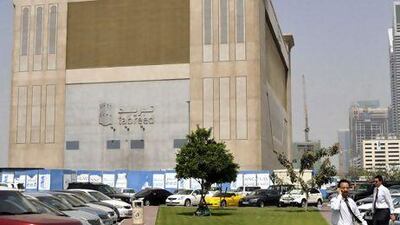
National Central Cooling Company, or Tabreed, unveiled four new pilot projects to boost its operational efficiency by up to 30 per cent and reduce overall costs.
The projects are part of the company’s commitment towards research and development funding to help it achieve its sustainability goals.
The first initiative, the future of cooling, aims to introduce new concept design and control philosophies in the district cooling plants by using disruptive technology such as artificial intelligence, the company said yesterday.
It will lead to “material improvements” in plant performance, prolonged lifespans and lower plant life cycle costs.
“Based on the simulation of this pilot project, we forecast a 25 per cent to 30 per cent increase in performance, compared to our industry benchmarks,” said François-Xavier Boul, Tabreed’s chief development officer.
“We will be tendering two projects based on this concept to validate how actual results compare to our analysis.”
Retrofitting the existing portfolio of plants to improve efficiency is also on the cards, he said.
Tabreed, in which French utility Engie and Mubadala Investment Company own significant stakes, currently operates 86 district cooling plants and delivers more than 1.4 million refrigeration tonnes of cooling to projects across the UAE and the GCC.
It provides district cooling to developments such as Burj Khalifa, the Sheikh Zayed Grand Mosque, Dubai Metro and Ferrari World in the UAE, as well as Bahrain’s financial centre and the Jabal Omar Development in Saudi Arabia.
Tabreed’s second pilot project, Carbon NanoTube, aims to significantly enhance the performance and lifespan of plants and equipment through the use of carbon nanotube material, which has “outstanding properties in terms of heat transfer”.
The company is in talks with a number of partners such as Engie Lab Crigen in France and the Sustainable Energy Development Research Group to provide the material and support these projects, said Mr Boul.
“Through these partnerships, we will run pilot projects to confirm this approach to be adopted in our future plants,” he said.
The third initiative, called wet-bulb forecasting, will aim to improve demand-side management by accurately forecasting customer demand using artificial intelligence.
The last initiative is designed to enhance the efficiency of a district cooling plant’s condenser circuit and its cooling tower – critical components of its performance.
“Developing appropriate infrastructure while preserving the environment is one of the key priorities in UAE Vision 2030 and we are committed to our key role in supporting the UAE’s sustainable development agenda,” said Bader Al Lamki, Tabreed’s chief executive.
“Energy efficiency is essential more than ever and ... [Tabreed] continuously works to make sure we adopt the latest technology and pioneer the district cooling industry with highest efficiency and less impact on our environment.”
The company looks to continue growing “organically and inorganically”, said Mr Al Lamki. In February, Tabreed reported a 16.5 per cent increase in full-year net income.
Last year, the company acquired a majority stake in Emaar Properties’ Downtown Dubai district cooling business for Dh2.48 billion.
The deal gave Tabreed an 80 per cent stake, with Emaar retaining the balance under a long-term partnership deal.
It also bought two district cooling units on Saadiyat Island from Aldar Properties in a Dh963 million deal.
It is assessing the development of large-scale cooling plants in Sharjah through a joint venture with Bee’ah.

Dust and sand storms compared
Sand storm
- Particle size: Larger, heavier sand grains
- Visibility: Often dramatic with thick "walls" of sand
- Duration: Short-lived, typically localised
- Travel distance: Limited
- Source: Open desert areas with strong winds
Dust storm
- Particle size: Much finer, lightweight particles
- Visibility: Hazy skies but less intense
- Duration: Can linger for days
- Travel distance: Long-range, up to thousands of kilometres
- Source: Can be carried from distant regions
TECH%20SPECS%3A%20APPLE%20WATCH%20SERIES%208
%3Cp%3E%3Cstrong%3EDisplay%3A%3C%2Fstrong%3E%2041mm%2C%20352%20x%20430%3B%2045mm%2C%20396%20x%20484%3B%20Retina%20LTPO%20OLED%2C%20up%20to%201000%20nits%2C%20always-on%3B%20Ion-X%20glass%3C%2Fp%3E%0A%3Cp%3E%3Cstrong%3EProcessor%3A%3C%2Fstrong%3E%20Apple%20S8%2C%20W3%20wireless%2C%20U1%20ultra-wideband%3C%2Fp%3E%0A%3Cp%3E%3Cstrong%3ECapacity%3A%3C%2Fstrong%3E%2032GB%3C%2Fp%3E%0A%3Cp%3E%3Cstrong%3EMemory%3A%3C%2Fstrong%3E%201GB%3C%2Fp%3E%0A%3Cp%3E%3Cstrong%3EPlatform%3A%3C%2Fstrong%3E%20watchOS%209%3C%2Fp%3E%0A%3Cp%3E%3Cstrong%3EHealth%20metrics%3A%3C%2Fstrong%3E%203rd-gen%20heart%20rate%20sensor%2C%20temperature%20sensing%2C%20ECG%2C%20blood%20oxygen%2C%20workouts%2C%20fall%2Fcrash%20detection%3B%20emergency%20SOS%2C%20international%20emergency%20calling%3C%2Fp%3E%0A%3Cp%3E%3Cstrong%3EConnectivity%3A%3C%2Fstrong%3E%20GPS%2FGPS%20%2B%20cellular%3B%20Wi-Fi%2C%20LTE%2C%20Bluetooth%205.3%2C%20NFC%20(Apple%20Pay)%3C%2Fp%3E%0A%3Cp%3E%3Cstrong%3EDurability%3A%3C%2Fstrong%3E%20IP6X%2C%20water%20resistant%20up%20to%2050m%2C%20dust%20resistant%3C%2Fp%3E%0A%3Cp%3E%3Cstrong%3EBattery%3A%3C%2Fstrong%3E%20308mAh%20Li-ion%2C%20up%20to%2018h%2C%20wireless%20charging%3C%2Fp%3E%0A%3Cp%3E%3Cstrong%3ECards%3A%3C%2Fstrong%3E%20eSIM%3C%2Fp%3E%0A%3Cp%3E%3Cstrong%3EFinishes%3A%3C%2Fstrong%3E%20Aluminium%20%E2%80%93%20midnight%2C%20Product%20Red%2C%20silver%2C%20starlight%3B%20stainless%20steel%20%E2%80%93%20gold%2C%20graphite%2C%20silver%3C%2Fp%3E%0A%3Cp%3E%3Cstrong%3EIn%20the%20box%3A%3C%2Fstrong%3E%20Watch%20Series%208%2C%20magnetic-to-USB-C%20charging%20cable%2C%20band%2Floop%3C%2Fp%3E%0A%3Cp%3E%3Cstrong%3EPrice%3A%3C%2Fstrong%3E%20Starts%20at%20Dh1%2C599%20(41mm)%20%2F%20Dh1%2C999%20(45mm)%3C%2Fp%3E%0A
Milestones on the road to union
1970
October 26: Bahrain withdraws from a proposal to create a federation of nine with the seven Trucial States and Qatar.
December: Ahmed Al Suwaidi visits New York to discuss potential UN membership.
1971
March 1: Alex Douglas Hume, Conservative foreign secretary confirms that Britain will leave the Gulf and “strongly supports” the creation of a Union of Arab Emirates.
July 12: Historic meeting at which Sheikh Zayed and Sheikh Rashid make a binding agreement to create what will become the UAE.
July 18: It is announced that the UAE will be formed from six emirates, with a proposed constitution signed. RAK is not yet part of the agreement.
August 6: The fifth anniversary of Sheikh Zayed becoming Ruler of Abu Dhabi, with official celebrations deferred until later in the year.
August 15: Bahrain becomes independent.
September 3: Qatar becomes independent.
November 23-25: Meeting with Sheikh Zayed and Sheikh Rashid and senior British officials to fix December 2 as date of creation of the UAE.
November 29: At 5.30pm Iranian forces seize the Greater and Lesser Tunbs by force.
November 30: Despite a power sharing agreement, Tehran takes full control of Abu Musa.
November 31: UK officials visit all six participating Emirates to formally end the Trucial States treaties
December 2: 11am, Dubai. New Supreme Council formally elects Sheikh Zayed as President. Treaty of Friendship signed with the UK. 11.30am. Flag raising ceremony at Union House and Al Manhal Palace in Abu Dhabi witnessed by Sheikh Khalifa, then Crown Prince of Abu Dhabi.
December 6: Arab League formally admits the UAE. The first British Ambassador presents his credentials to Sheikh Zayed.
December 9: UAE joins the United Nations.
CHELSEA'S NEXT FIVE GAMES
Mar 10: Norwich(A)
Mar 13: Newcastle(H)
Mar 16: Lille(A)
Mar 19: Middlesbrough(A)
Apr 2: Brentford(H)
Rebel%20Moon%20-%20Part%20One%3A%20A%20Child%20of%20Fire
%3Cp%3E%3Cstrong%3EDirector%3A%20%3C%2Fstrong%3EZack%20Snyder%3Cbr%3E%3Cstrong%3EStars%3A%20%3C%2Fstrong%3ESofia%20Boutella%2C%20Djimon%20Hounsou%2C%20Ed%20Skrein%2C%20Michiel%20Huisman%2C%20Charlie%20Hunnam%3Cbr%3E%3Cstrong%3ERating%3A%20%3C%2Fstrong%3E2%2F5%3C%2Fp%3E%0A
