
Apple on Thursday reported results that beat Wall Street estimates, with customers showing eagerness to buy a new MacBook model driven by incoming chief executive John Ternus, while supply constraints hindered iPhone sales.
Apple said sales and profits were $111.18 billion and $2.01 per share for the fiscal second quarter ending March 28, above analyst expectations of $109.66 billion and $1.95 per share, according to LSEG. Sales of the iPhone, still the company's best-selling product nearly 20 years after its introduction, were $56.99 billion, slightly less than estimates of $57.21 billion, according to LSEG data, after the biggest revamp of the line-up since the iPhone X in 2017.
Apple shares were down about 1 per cent in after-hours trading.
-
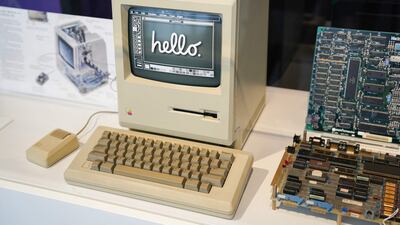
Apple unveiled its first Macintosh computer on January 24, 1984. AFP -
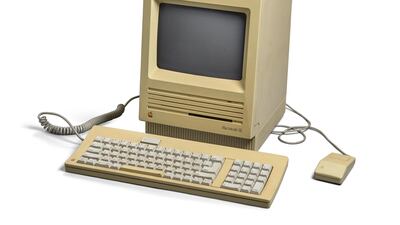
Macintosh – an intuitive personal computer known as the Mac – transformed the landscape of mass-market computing with its revolutionary graphical user interface (GUI), catchy icons and a mouse. Photo: Bonhams -
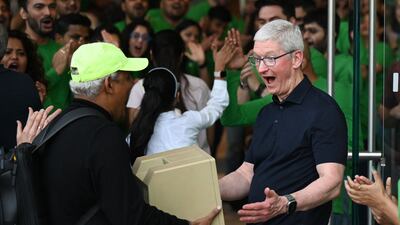
Chief executive Tim Cook is blown away as he is shown an original Macintosh SE computer at the opening of Mumbai's first Apple Store in April 2023. AFP -
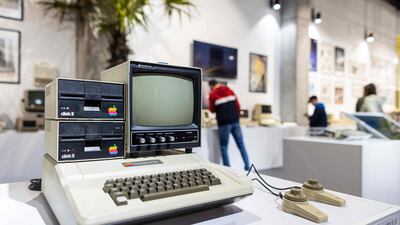
The Apple II, which predates the Mac, was a successful product for the tech company. AFP -
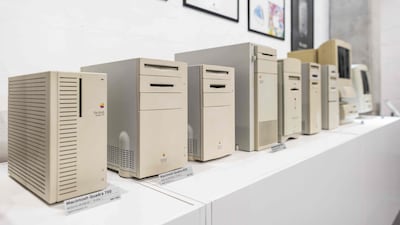
Computers from various generations on display at an Apple Museum in Warsaw. AFP -
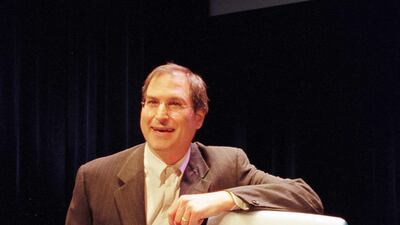
Apple's then-interim chief executive Steve Jobs unveils the iMac, based on the PowerPC G3 processor, in 1998. AFP -
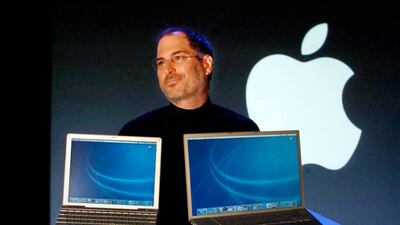
Mr Jobs holds a new 12-inch Apple G4 Powerbook laptop computer, left, and a G4 Powerbook after addressing the Macworld Conference and Expo in San Francisco, 2003. Reuters -
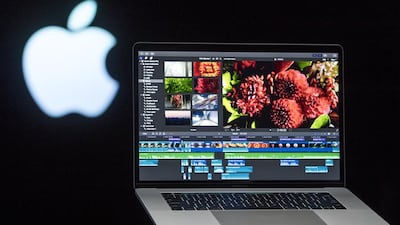
The new MacBook Pro laptop launched in 2016 included an upgraded retina display. Bloomberg -
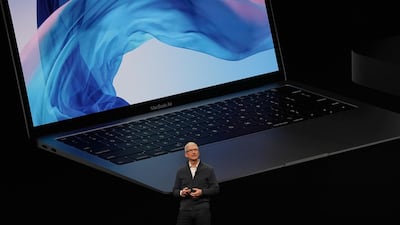
Apple chief executive Tim Cook presents new products, including Macbook laptops, at a special event at the Brooklyn Academy of Music in October 2018. AFP -
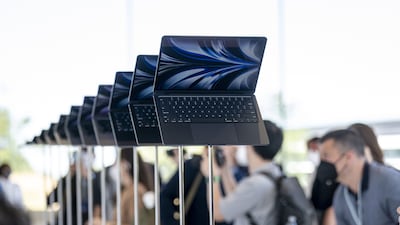
The MacBook Air is unveiled at the Apple Worldwide Developers' Conference at Apple Park campus in Cupertino, California in June 2022. Bloomberg -
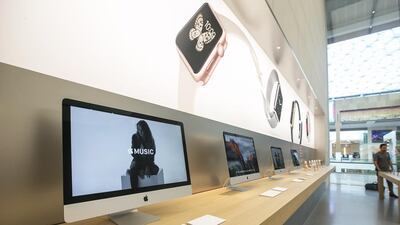
Mac computers on display at the Apple Store in Yas Island. Mona Al Marzooqi / The National


Less supply chain flexibility
Outgoing Apple chief executive Tim Cook said iPhone sales were held back in the quarter by supply constraints for the advanced processor chips that form the brains of the device. The iPhone 17 family's chips are made on a variant of the same Taiwan Semiconductor Manufacturing Co chip manufacturing technology as many leading AI chips.
"The demand was off the charts. And there's just a little less flexibility in the supply chain at the moment for getting more parts," Mr Cook told Reuters.
The iPhone 17 family of devices, plus the iPhone Air, was spearheaded by incoming chief Mr Ternus, who will take over from Mr Cook in September. Under Mr Ternus, Pro models gained more features but also a higher price tag, while entry-level models such as the 17e and base model iPhone 17 held prices steady relative to their storage capacity.
That strategy, along with massive buying power, has helped Apple navigate higher memory chip prices. Apple said gross margins were 49.27 per cent, above estimates of 48.38 per cent, according to LSEG data. Another product masterminded by Ternus was the MacBook Neo, which costs $500 for students. Analysts believe it could help Apple crack a new $20 billion market for lower-priced laptops now dominated by Google Chromebooks. Apple said Mac sales, which included several weeks of Neo sales, were $8.4 billion, compared with estimates of $8.02 billion.
Investors are waiting to hear more about Apple's plans for Siri, its voice assistant that it plans to improve with Google technology.
Ben Bajarin, chief executive of technology consulting firm Creative Strategies, said investors are likely waiting to hear from Apple executives about whether some iPhone customers made purchases earlier than they otherwise would have due to economic conditions and how memory supplies look for the rest of the year.
Apple holds its annual software developer conference in June, where it is expected to reveal more details about its AI plans.
While Apple is not spending tens of billions of dollars per quarter on AI like its rivals, its research and development costs were up 33.5 per cent to $11.42 billion in the fiscal second quarter.
"We are investing a lot. We see it as a huge opportunity, both for consumer and for business," Mr Cook told Reuters. "We're all in, and personalised Siri is on schedule for this year."
Robust services
Apple's services business, which includes revenue from its App Store, which has been under regulatory scrutiny in Europe and elsewhere, generated $30.98 billion in revenue for the fiscal second quarter, above analyst estimates of $30.39 billion.
Sales of iPads were $6.91 billion, compared with estimates of $6.66 billion, and wearables, which include the Apple Watch, accounted for $7.9 billion in revenue, compared with expectations of $7.7 billion, according to LSEG data.
Apple's greater China sales were $20.5 billion, beating analyst estimates of $19.45 billion, according to Visible Alpha data.
Apple updated its capital return programme, saying its board has authorised an additional $100 billion in buy-backs, the same as a year ago.

