


The Indonesian island of Sumba is harnessing power from the sun, wind, rivers and even pig dung in a bid to go 100 per cent renewable by 2025 under a project started by Dutch organisation Hivos.
-

-
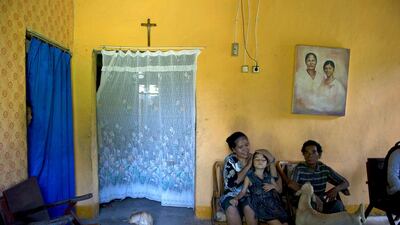
While only around 30 per cent of Sumba's 650,000 people have been hooked up to the power grid, more than 50 per cent of electricity used now on the island comes from renewable sources after Dutch development organisation Hivos launched the Iconic Island project. Romeo Gacad / AFP -
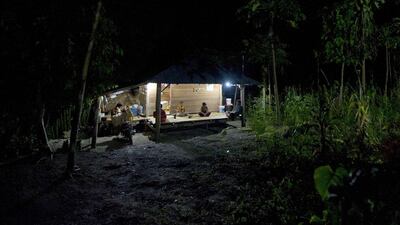
Family members gather in their house powered by electricity from mini-hydroelectric generators built beside a river dam in Kamanggih village. Until two years ago, most people in Kamanggih on the island of Sumba had no power at all. Romeo Gacad / AFP -
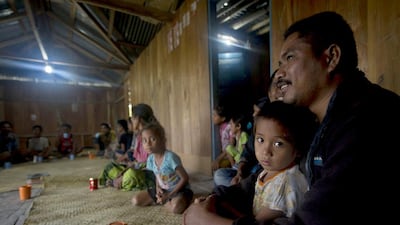
As more communities in Sumba island gain access to power for the first time, the Iconic Island project started by Dutch development organisation Hivos envisages entire communities skipping dirty, fossil fuel-based energy altogether and jumping straight to green sources. Romeo Gacad / AFP -
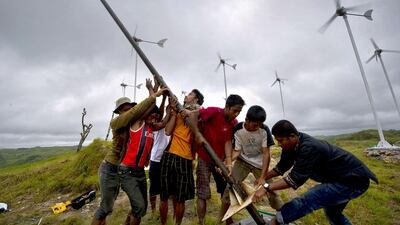
Sumbanese residents erect windmills in Kamanggih village in Sumba island, bringing electricity to the local community. Until two years ago, most people in Kamanggih village on the island of Sumba had no power at all. Romeo Gacad / AFP -
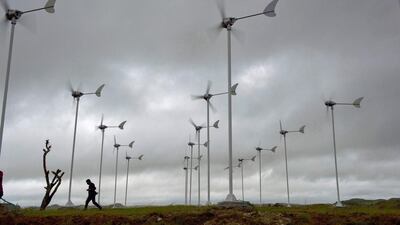
A field of small wind turbines in Kamanggih village in Sumba island. Romeo Gacad / AFP -

Seven-year old Gerarda Malarani in her family's backyard organic farm, which is fertilised by manure collected from the pigs being raised by her parents. Romeo Gacad / AFP -
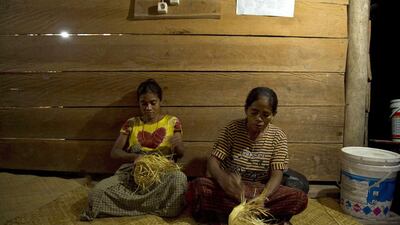
Sumbanese women weave baskets under a lamp powered by electricity from mini-hydroelectric generators built beside a river dam in Kamanggih village. Romeo Gacad / AFP -
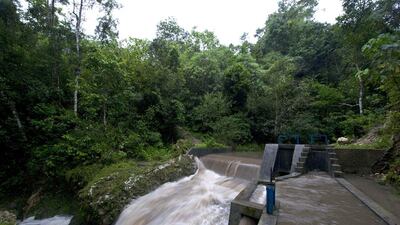
Up to 300 homes at Kamanggih village in Sumba island have access to 24-hour electricity produced by a small hydroelectric generator in the river, above. Romeo Gacad / AFP
In pictures: Sumba island hopes to spark renewables surge in Indonesia
Most popular today

