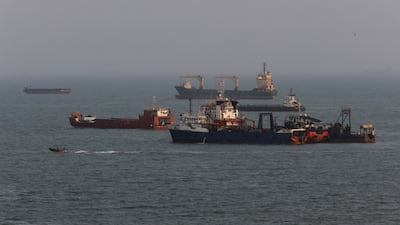

Oil prices jumped on Thursday after reports about Pentagon plans for US strikes on Iran that could be launched before the midterm elections amid continued Iranian attacks on vessels in the Strait of Hormuz.
Brent, the benchmark for two thirds of the world's oil, climbed nearly 3.86 per cent to $104.1 a barrel at 1.49pm UAE time, after falling below the $100 mark earlier this week. West Texas Intermediate, the gauge that tracks US crude, rose 3.78 per cent to $91.62 a barrel.
Crude prices have been hovering above the $100 per barrel mark despite a lull in the US military campaign. US President Donald Trump, who is facing domestic backlash over the war, earlier indicated that the US would resume strikes only after the midterms.

However, rising Iranian attacks in recent weeks on oil and gas tankers in the strait may force Mr Trump’s hand.
The Atlantic on Tuesday reported that the US Defence Department was identifying targets for attacks in Iran. The size of potential strikes, if the US administration were to proceed with hostilities ahead of polls, was still being discussed, it said, quoting unnamed US officials.
The US may choose to conduct a limited military campaign and follow it with a larger operation after polls conclude next month, The Atlantic reported.
Axios quoted officials as saying potential operations could involve extensive US-Israeli strikes on Iranian energy, infrastructure and nuclear targets.
“President Trump holds all the cards and will do whatever is best for the United States,” the US news outlet quoted a White House official as saying.
Israeli officials said the chances of renewed combat before the elections remain low but could rise significantly afterward, with escalation potentially triggering a major Iranian missile response, according to the report.
"Renewed tensions — or, rather, the increasingly crowded headlines surrounding existing and persistent Middle East tensions — weighed on market sentiment," said Ipek Ozkardeskaya, senior analyst at Swissquote. "Oil fluctuated, and Brent is extending gains above $102 per barrel."
Thin traffic
Traffic through the strait, the narrow waterway through which a fifth of the world's oil and gas flowed before the conflict broke out, has remained thin.
The number of vessels transiting the strait fell to the lowest in more than two months, according to shipping data from analytics firm Kpler. Seven commodity ships passed through the strait on Tuesday, the lowest figure since July 23, data showed.
Strikes on tankers climbed to their highest weekly rate since the conflict began on February 28.
In the latest attack, a tanker north of Qatar was struck by multiple projectiles, causing casualties, the UK Maritime Trade Operations agency said on Wednesday.
Houthi attacks on Saudi Arabia's civilian and energy infrastructure are also adding to market jitters. Saudi Arabia's maritime blockade in the Red Sea by the Houthis and consistent strikes on Saudi Airports, ports and oil pipelines as well as refining facilities are stoking fears as an all-out war that would further crimp supplies energy supplies through the Bab El Mandeb strait.
"The risks of multi-front escalation in the region and the war heading toward further fragmentation are boosting the risk premium in pricing," Samer Hasn, senior market analyst at XS.com said.
"Nothing suggests a possible return to diplomacy; rather, all signs point to the situation in the region heading toward further deterioration at existing flashpoints and expanding into new ones."

