

Egypt's energy sector expects to attract $8 billion in foreign investment in the coming fiscal year as the country looks to boost its natural gas production.
The investments will be allocated to developmental and operational activities in the oil and gas sector, Tarek El Molla, the country's petroleum and mineral resources minister, told reporters on the sidelines of the Opec Seminar on Thursday.
“While the bidding processes are still under way, we have identified areas where we can assess the level of commitment from the companies,” Mr El Molla said.
Egypt’s exports of natural gas reached $8.4 billion in 2022, up 171 per cent from a year earlier, as an energy crisis in Europe drove up demand for the fuel.
In December, Egypt discovered a large gasfield off its north-eastern Mediterranean coastline, with potential reserves of 3.5 trillion cubic feet of gas.
The find was in Nargis, one of four offshore exploration blocks in which US oil company Chevron holds operating interests along with Egypt’s Tharwa Petroleum Co.
“Being involved in the discovery … especially in offshore areas such as the Mediterranean Sea and the Red Sea, presents significant opportunities,” Mr El Molla said.
“With access to the necessary resources, we are well-equipped to carry out excavations and capitalise on these valuable findings."
Last year, Qatar Energy signed an agreement with ExxonMobil to pick up a 40 per cent stake in the North Marakia Offshore Block in the Mediterranean Sea.
In February, Adnoc Distribution, the UAE’s largest fuel and convenience retailer, completed the acquisition of a 50 per cent stake in TotalEnergies Egypt, marking the Abu Dhabi company's entry into Egypt.
In 2021, Egypt awarded an oil and gas exploration concession in the Red Sea Block 4 to Abu Dhabi's Mubadala Energy.
“It's great to see the increasing presence of Gulf companies in the Egyptian market,” Mr El Molla said.
“The fact that many Arab and Gulf companies are now working in Egypt reflects a positive investment climate. These companies [have] expressed their desire to expand their investments further."
Earlier this week, Mr El Molla said Egypt had offshore exploration plans worth $1.8 billion to drill new gas wells in the Mediterranean Sea and the Nile Delta.
The programme, which involves major international companies such as Eni, Chevron and BP, aims to drill 35 exploratory gas wells from now until July 2025, with 21 planned for the 2023/24 fiscal year and 14 for 2024/25, he said in an interview with the Emirates News Agency.
The country aims to increase the share of renewable energy in its electricity production to 42 per cent by 2030.
"So far, the idea is to have more gas production and decarbonise existing operations," Mr El Molla said during a panel session earlier.
Egypt, the Arab world’s third largest economy, is suffering from a dollar crunch that is suppressing imports and hurting local industries dependent on foreign materials.
The International Monetary Fund has urged the country to adopt a flexible foreign exchange regime in return for financial assistance from the Washington-based lender.
In January, the fund agreed to give Egypt a $3 billion loan to shore up its finances.
The IMF's conditions included a reduction of the state's footprint in the economy, allowing the private sector a larger role and the adoption of a flexible foreign exchange system that leaves demand and supply to determine the value of the Egyptian pound.
-
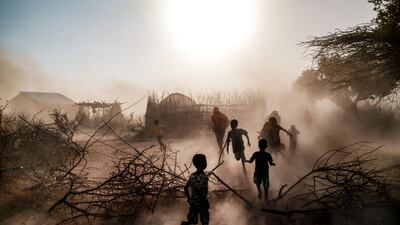
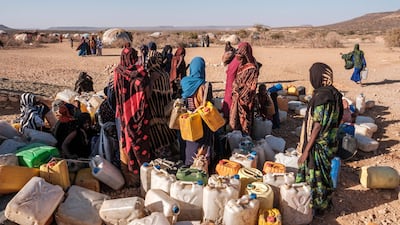
The UN says 12 million people in Ethiopia, 5.6 million in Somalia and 4.3 million in Kenya are 'acutely food insecure' after years of drought. All photos: Eduardo Soteras / AFP -
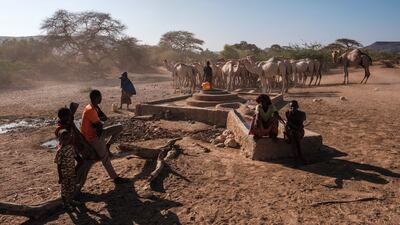
The region's people, many of them herders and subsistence farmers, are enduring their fifth consecutive poor rainy season -

The UN says 1.7 million people have been driven from their homes by a lack of water and pasture -
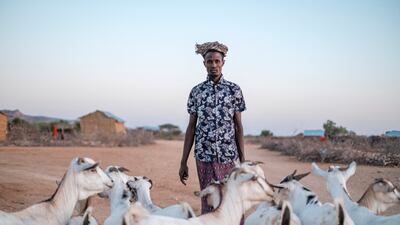
The Horn of Africa is one of the regions most vulnerable to climate change, and extreme weather events are occurring with increased frequency and intensity -
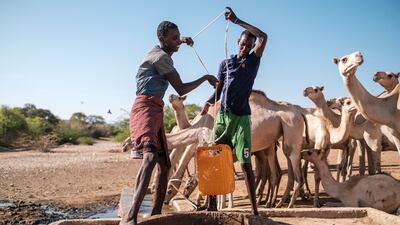
Eight of the 13 past rainy seasons have brought below average rainfall, according to the Climate Hazards Centre in the US -
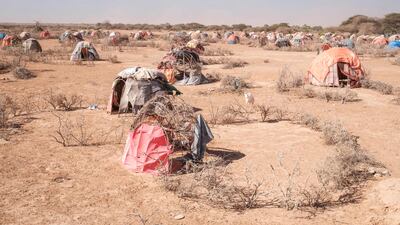
That has brought hardship for millions -
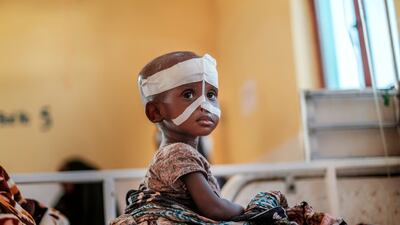
The last famine was declared in Somalia in 2011, when 260,000 people - half of them children under the age of six - died of hunger, partly because the international community did not act fast enough, says the UN -
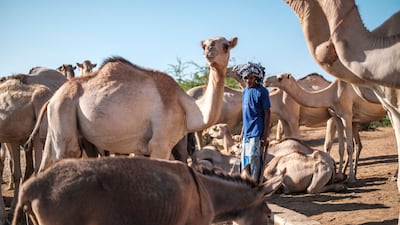
Crops were ravaged by a locust invasion between 2019 and 2021. They have since been wiped out, while livestock has also suffered -
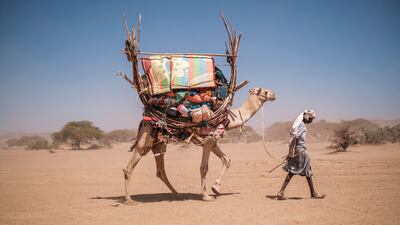
UN humanitarian agency OCHA estimated in November that 9.5 million cattle had died -
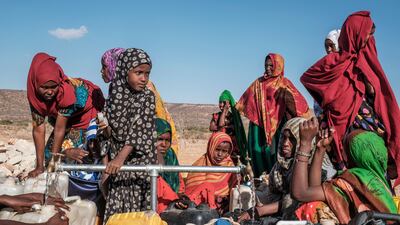
The war in Ukraine has contributed to soaring food and fuel costs, disrupted global supply chains and diverted aid money away from the region -
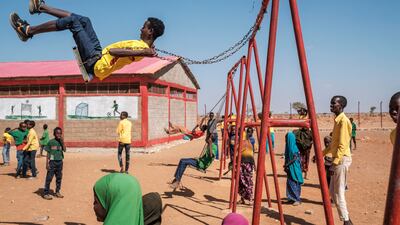
Somalia has been hit hardest, with the drought affecting more than half of its population - about 7.85 million people -

In December, OCHA said the nation was not yet in the grip of full-blown famine thanks to the response of aid agencies and local communities -
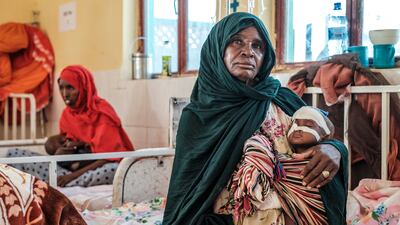
But people were nevertheless suffering "catastrophic" food shortages, it said, and if assistance was not scaled up, famine could be expected in southern Somalia as soon as April -
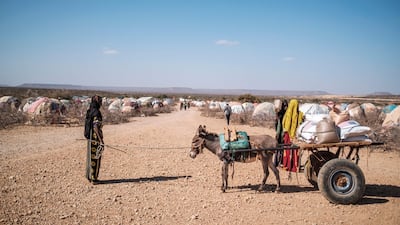
Rural people in Baidoa and Burhakaba districts, and displaced people in Baidoa town and the capital Mogadishu were most at risk -
OCHA said that by June, the number of people at risk of starvation was expected to more than triple to 727,000 from October -
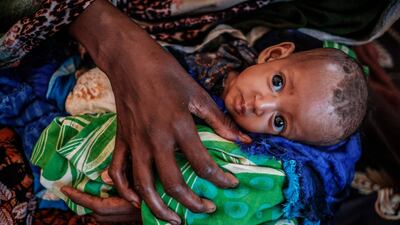
According to the UN children's agency Unicef, almost two million children across Ethiopia, Kenya and Somalia require urgent treatment for severe acute malnutrition, the deadliest form of hunger -
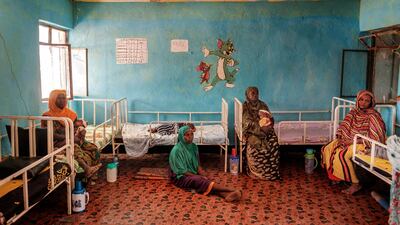
It said in September that 730 children had died between January and July in nutrition centres in Somalia, but that the real numbers were likely to be much higher -
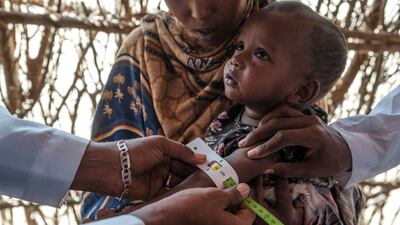
Lacking water, milk and food, and often living in squalid conditions, the youngest become so weak they are vulnerable to diseases such as measles and cholera -
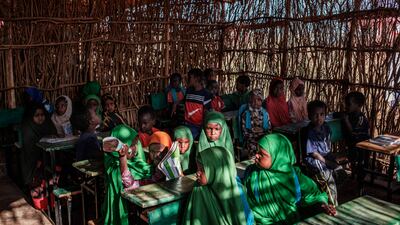
Unicef said 2.7 million children had stopped going to school -

'There is no end in sight for the hunger crisis and hope is slowly fizzling out,' said Xavier Joubert, Ethiopia director for the British charity Save the Children -
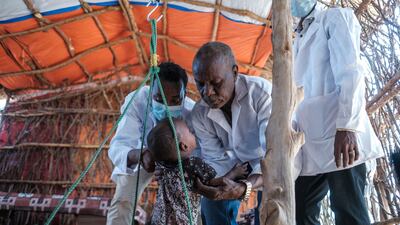
'There's no doubt that the need has grown to an enormous scale,' he said, in an urgent call for funding -
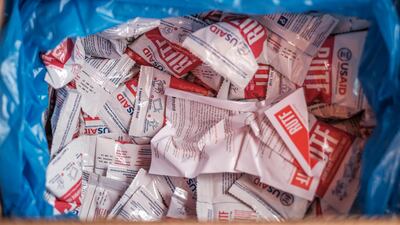
Only 55.5 percent of the $5.9 billion sought by the UN to tackle the crisis has been provided -
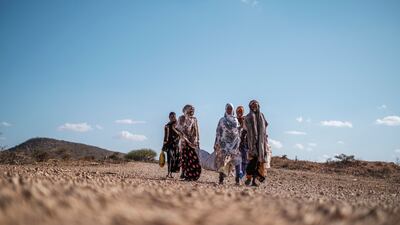
Early humanitarian action averted a famine in Somalia in 2017



