
A proposed European price cap on Russian gas goes against European and Hungarian interests, Hungary's Foreign Minister Peter Szijjarto said on Friday, before an emergency meeting of European Union energy ministers.
Mr Szijjarto, who met his Russian counterpart Sergey Lavrov in Moscow in July seeking 700 million cubic metres of gas on top of an existing long-term supply deal, said the proposed price cap would trigger an immediate cut-off in supplies to Europe.
Russia's state-controlled gas supplier Gazprom started to increase supplies to Hungary last month, adding to previously agreed deliveries via the Turkstream pipeline. Russia supplies Hungary with most of its oil and gas needs.
EU energy ministers on Friday will discuss ways to tame energy prices, which have surged since Russia halted most gas flows to Europe in response to European sanctions over Moscow's invasion of Ukraine.
-
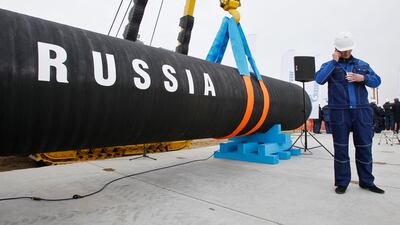
A Russian construction worker speaks on a mobile phone during a ceremony marking the construction of the Nord Stream pipeline in Portovaya Bay, 170 kilometres north-west of St Petersburg in Russia. AP Photo -
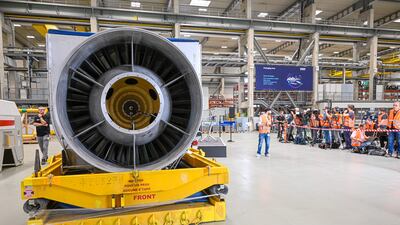
A turbine of the Nord Stream 1 pipeline at the Siemens Energy plant in western Germany. AFP -
The logo of Russia's energy giant Gazprom is pictured at one of its petrol stations in Sofia, Bulgaria. AFP -
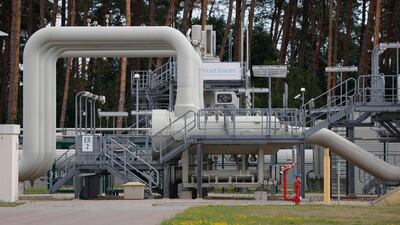
Facilities to receive and distribute natural gas are pictured on the grounds of gas transport and pipeline network operator Cascade in Lubmin, north-eastern Germany, close to the border with Poland. AFP -
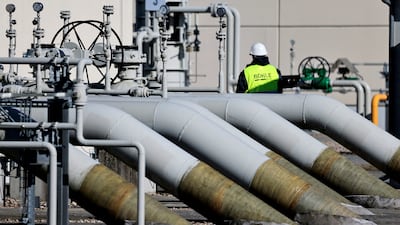
Pipes at the landfall facilities of the 'Nord Stream 1' gas pipeline in Lubmin. Reuters -
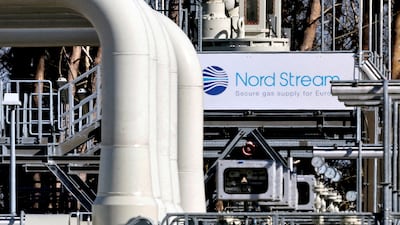
The Nord Stream 1 gas pipeline in Lubmin, Germany. Reuters


“The plan that would impose a price cap exclusively on Russian gas coming via pipelines is entirely against European and Hungarian interests,” Mr Szijjarto said in a Facebook video.
“If price restrictions were to be imposed exclusively on Russian gas, that would evidently lead to an immediate cut-off in Russian gas supplies. It does not take a Nobel prize to recognise that,” he said.
The Czech Republic, which is helping to guide discussions as holders of the EU's rotating presidency, has said it wanted to remove capping Russian gas prices from the agenda of the meeting.
“This morning … we will do our utmost to make Brussels finally understand that gas supplies are not an ideological or political issue, but one of hard-core physical reality,” Mr Szijjarto said.
Under a deal signed last year, before the start of the war in neighbouring Ukraine, Hungary received 3.5 billion cubic metres of gas a year via Bulgaria and Serbia under a long-term deal with Russia and a further billion cubic metres via a pipeline from Austria. The agreement with Gazprom is for 15 years.
Hungary has sharply criticised EU sanctions on Russia over its invasion of Ukraine, saying the moves have failed to weaken Moscow meaningfully, while they risked destroying the European economy.

