


Unplanned outages on the oil-producing US Gulf Coast as a result of Hurricane Ida are set to wipe out the additional supply that is being added to the market by the Opec+ group of producers, the International Energy Agency (IEA) says.
The tropical storm shut in an estimated 1.7 million barrels per day of output along the US Gulf coast with potential supply losses set to reach 30 million barrels, the Paris-based agency said.
Global supply fell 540,000 bpd in August, compared with the previous month, to reach 96.1 million bpd, with the volumes set to hold steady through September.
"An uptrend in supply should resume in October as Opec+ continues to unwind cuts, outages are resolved and as other producers increase," the IEA said.
Opec+, which refers to the group of producers led by Saudi Arabia and Russia, have been drawing down their supply restriction pact and plan to bring 2 million bpd by the end of the year.
The group is set to meet on October 1 to action a further 400,000 bpd of supply for October.
Oil prices continued to trade higher on Tuesday. Brent, the international benchmark for crude, was up 0.64 per cent at $73.98 per barrel at 2.03pm UAE time. West Texas Intermediate, which tracks US crude grades, was up 0.62 per cent at $70.89 per barrel.
"Oil prices are rising as supply-side constraints tighten. Oil producers have yet to recover from Hurricane Ida's devastation, and they are now bracing for another tropical storm, Nicholas, which is expected to be as powerful as Hurricane Ida," said Naeem Aslam, chief market analyst at AvaTrade.
"Almost 44 per cent of the area's oil supply has been cut off," he added.
-

Fire chief TJ Pellegrin checks if residents are safe after Hurricane Ida passed in Bourg, Louisiana. Ida struck the coast of Louisiana on Sunday as a powerful Category 4 storm, 16 years to the day after Hurricane Katrina devastated New Orleans. AFP -
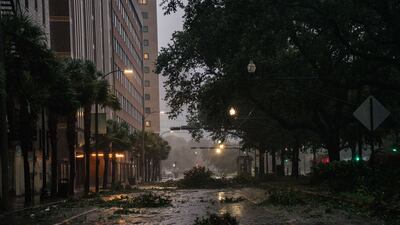
Debris on a street in downtown New Orleans, Louisiana. Hurricane Ida packed winds of 240km/h. AFP -
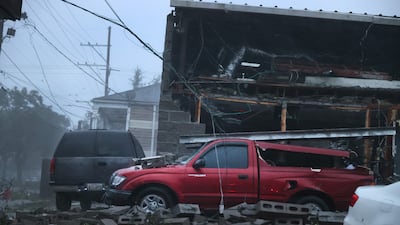
A building collapsed and damaged vehicles during Hurricane Ida in New Orleans, Louisiana. AFP -

Michael Brown, who is homeless, rides out Hurricane Ida from his bed under a highway overpass in New Orleans. AFP -

More than one million homes were left without power in the region. EPA -

Firefighters cut through trees that fell on a road in Bourg. AFP -

Montegut fire chief Toby Henry walks back to his fire truck in the rain. AFP -

A girl blocks her face from the wind and rain produced by Hurricane Ida in New Orleans. AP -
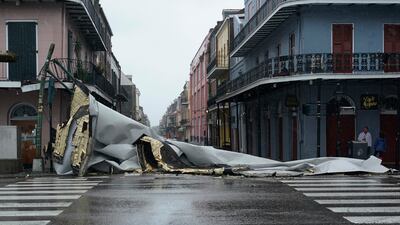
A section of roof that was blown off a building in the French Quarter of New Orleans. AP -
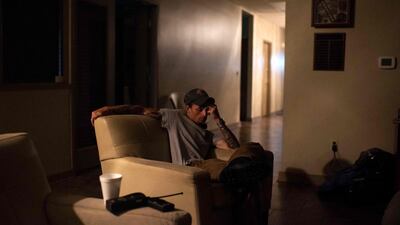
A firefighter rests after the back-up generator went down in Bourg. AFP -

People cross an intersection during Hurricane Ida in New Orleans. AFP -

Rain batters Canal Street in New Orleans. AFP -

Water enters a beach house in Grand Isle, Louisiana. Reuters -

Firefighters pray as the hurricane eye wall gets close to the fire station in Bourg, Louisiana. AFP -

US President Joe Biden speaks about the hurricane alongside Deanne Criswell, administrator of the Federal Emergency Management Agency, in Washington. AFP -

Utility workers play in the wind from Hurricane Ida as they wait for the storm to pass to begin repairs in New Orleans. AFP -
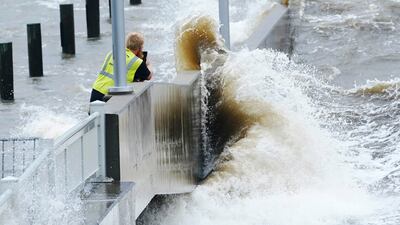
A utility worker photographs waves as they slam against a sea wall in Bay Saint Louis, Mississippi. AP -
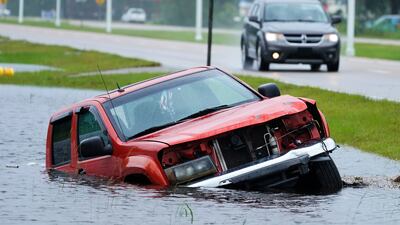
An abandoned vehicle is half submerged in a ditch in Bay Saint Louis. AP -

Firefighters look out the window from a shelter as hurricane Ida passes in Bourg. AFP -
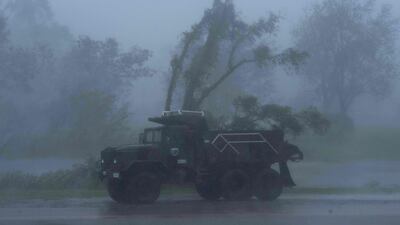
A truck is seen in heavy winds and rain from Hurricane Ida in Bourg. AFP -
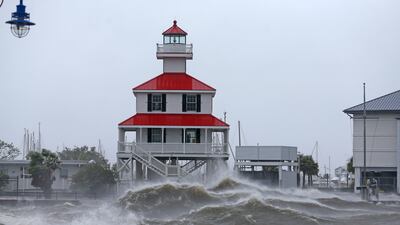
Waves crash against the New Canal Lighthouse on Lake Pontchartrain. Reuters -
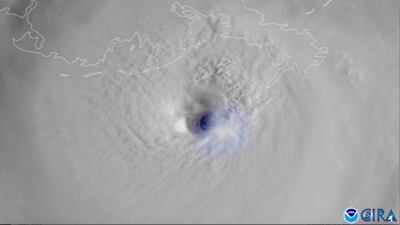
A satellite image provided by the US National Oceanic and Atmospheric Administration shows lightning swirling around the eye of Hurricane Ida as the storm approaches the Louisiana coast. AP -
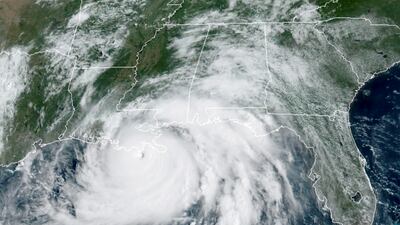
A satellite image shows Hurricane Ida in the Gulf of Mexico and approaching the coast of Louisiana. Reuters -

A man takes pictures of high waves along the shore of Lake Pontchartrain. AP -
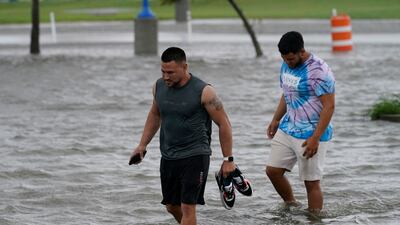
Jesse Perez and Sergio Hijuelo walk through flooded streets near Lake Pontchartrain. AP -

Jesse Perez and Sergio Hijuelo watch the high waves on Lake Pontchartrain. AP -

Tony Hilliard and his family expose themselves to the elements as Hurricane Ida begins to make landfall in New Orleans. AP -
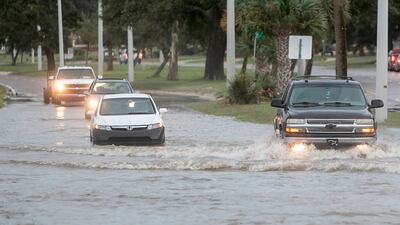
Vehicles on a flooded street in Biloxi. AP -

Jones Park in Gulfport, Mississippi, is flooded from Hurricane Ida's storm surge. AP -
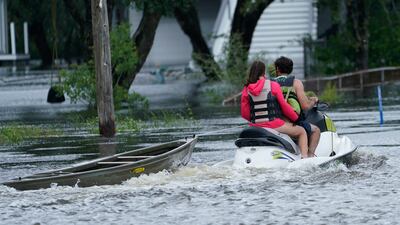
A resident on a jet ski tows a canoe to a flooded house in Bay Saint Louis. AP -
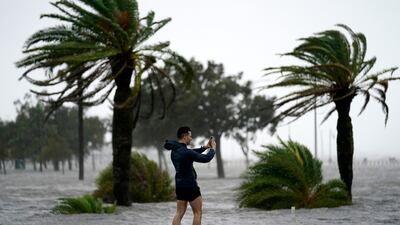
A man takes photos on the edge of Lake Pontchartrain. AP -
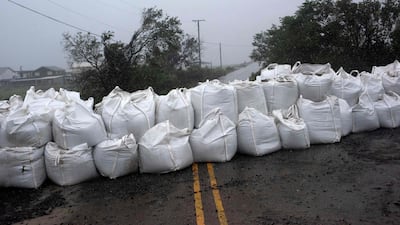
A wall of sandbags in Montegut, Louisiana. AFP


The IEA also revised its demand expectations for the third quarter of this year by 200,000 bpd after consumption fell for three straight months in a row.
The energy agency expects oil demand to grow by 5.2 million bpd in 2021 and 3.2 million bpd in 2022.
"Already signs are emerging of Covid cases abating with demand now expected to rebound by a sharp 1.6 million bpd in October, and continuing to grow until end-year," the agency said.
Global oil demand is expected to be higher than pre-pandemic levels in the second half of 2022, according to the IEA. However, overall consumption next year is set to remain just under 2019 levels at 99.4 million bpd.
The IEA's assessment is more bearish than Opec, which estimated that demand in 2022 could exceed pre-pandemic levels in its latest monthly market report.
Opec expects oil demand for 2022 to reach 100.8 million bpd as the crude exporting group sees strong economic recovery on the back of widespread inoculation efforts.
The group also revised upwards its estimated demand growth for 2022, up by 900,000 bpd to 4.2 million bpd amid expectations of higher levels of economic activity and fewer movement restrictions.
For 2021, Opec revised down its demand growth estimates for the fourth quarter by 120,000 bpd over concerns about the Delta variant's impact on energy demand. The Delta variant of coronavirus, which originated in India, is a particularly virulent strain that has been responsible for a surge in infections across the world.
"Opec expects demand to improve by 6 million bpd in 2021 and 4.2 million bpd in 2022, which means this market will stay in deficit this year but that should change in the first quarter," said Edward Moya, senior market analyst at Oanda.

