Foreign direct investment in the Gulf could slow in the second half of this year as the war between Iran and Israel dents investor sentiment, in a similar impact of global uncertainty, the World Bank's GCC countries director said.
Investors will probably adopt a wait-and-see approach as the conflict that started with Israel's attacks on Iran's nuclear sites on June 12 worsens, Safaa El-Kogali told The National in Riyadh.
“Even if they've started [investing beforehand], they [foreign investors] might hold off until they see things settling down a bit,” she said on the sidelines of a World Bank seminar on Sunday.
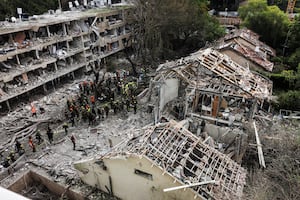
De-escalation does not seem likely after President Donald Trump ordered the first-ever direct US military attack on Iranian soil earlier that day. The US attacked three Iran nuclear facilities with six bunker-buster bombs and launched Tomahawk missiles.
GCC countries had varied in their ability to attract FDI in 2024.
The UAE received Dh167 billion ($45.5 billion) in foreign direct investment last year, Sheikh Mohammed bin Rashid, Vice President and Ruler of Dubai, said in a post on X on Thursday. This represented a 48 per cent increase, he added.
The UAE accounted for 37 per cent of the total foreign investment flows in the region, he said.
Saudi Arabia's net FDI inflows in 2024 decreased as a share of GDP, amounting to 1.1 per cent compared to 2.1 per cent in 2023, according to a recent report by the World Bank.
Bahrain, Kuwait, and Qatar saw FDI fall by 7.3 per cent, 2.3 per cent and 0.5 per cent of GDP respectively from 2023 to 2024, it added.
Oman saw FDI increase by 2.4 per cent of GDP. This was due to “prudent fiscal management and diversification efforts” the report said.
What is the impact?
No one can accurately measure the impact of the escalation on the regional economies, but peace is necessary for economic security and the implications will be broad, Ms El-Kogali said.
“Increasing costs of commodities, of shipments – this will impact a number of industries that import raw material”, she said. The conflict will add to inflation, which will affect investors and consumers alike, she added.
“Whenever there is uncertainty … in any region, tourists usually decide not to go,” she said.
Travel and tourism made up about 11.4 per cent of the region's gross domestic product in 2024, according to the latest data from the Statistical Centre for the Co-operation Council for the Arab Countries of the Gulf.
Oil prices, which have surged since the beginning of the war, will also have an impact on the fiscal balance of Gulf countries that still rely heavily on oil as their primary source of revenue and exports, she said.
Brent and WTI surged by as much as 13 per cent in the first few hours of trading after Israel began its military campaign against Tehran.
Oil prices posted a third weekly gain in a row despite falling on Friday as the war sparked supply fears.
On Friday, Brent, the benchmark for two thirds of the world's oil, fell 2.33 per cent to settle at $77.01 a barrel. West Texas Intermediate, the gauge that tracks US crude, closed 0.28 per cent lower at $74.93 a barrel.
Who will feel it more?
Gulf countries that have diversified away from oil, such as the UAE, are more likely to resist hits caused by global economic uncertainty, Ms El-Kogali said.
This was a key message of the World Bank report, Smart Spending, Stronger Outcomes: Fiscal Policy for a Thriving GCC, released last week, that measured the growth of Gulf economies until June 1.
“I think this report is really timely, because it focuses on what the GCC countries have been doing, and what impact, or the effect, those policies that have been put in place [have had],” said Ms El-Kogali.
“The UAE has started the diversification agenda a while back and currently, with 74 per cent of GDP being from the non-oil sector, puts them in a stronger position.
“The more you diversify, the more you have different opportunities to deal with crises that come your way. When you put all your eggs in one bag, and something happens to that bag, then you're in greater trouble.”
Proper investment
Ms El-Kogali said that higher oil prices can benefit Gulf countries, depending on how revenue is spent in the non-oil sector.
“We think that as the non-oil sector continues to be strong and growing, with the easing off of the oil production cuts, that the countries of the GCC have good gross prospects in the short and medium term,” she said.
“We really expect growth to reach 4.5 per cent by 2026 driven by the oil and the non-oil.” It takes time to see the returns of investments she added.
This growth is particularly important during period of geoeconomic uncertainty.
However, “there may be the risk of spillovers” of the war which will impact the growth trajectory of Gulf nations, she said.
Gulf countries have been prudent in the past during crises and “we saw that implementing fiscal spending during downturns had a positive impact”, she said.
There is room to do more to further streamline spending and the Gulf countries must prioritise investments that have high returns, and can create jobs during difficult times, that will then sustain growth through economic cycles, she added.

How does ToTok work?
The calling app is available to download on Google Play and Apple App Store
To successfully install ToTok, users are asked to enter their phone number and then create a nickname.
The app then gives users the option add their existing phone contacts, allowing them to immediately contact people also using the application by video or voice call or via message.
Users can also invite other contacts to download ToTok to allow them to make contact through the app.
How to apply for a drone permit
- Individuals must register on UAE Drone app or website using their UAE Pass
- Add all their personal details, including name, nationality, passport number, Emiratis ID, email and phone number
- Upload the training certificate from a centre accredited by the GCAA
- Submit their request
What are the regulations?
- Fly it within visual line of sight
- Never over populated areas
- Ensure maximum flying height of 400 feet (122 metres) above ground level is not crossed
- Users must avoid flying over restricted areas listed on the UAE Drone app
- Only fly the drone during the day, and never at night
- Should have a live feed of the drone flight
- Drones must weigh 5 kg or less
TEACHERS' PAY - WHAT YOU NEED TO KNOW
Pay varies significantly depending on the school, its rating and the curriculum. Here's a rough guide as of January 2021:
- top end schools tend to pay Dh16,000-17,000 a month - plus a monthly housing allowance of up to Dh6,000. These tend to be British curriculum schools rated 'outstanding' or 'very good', followed by American schools
- average salary across curriculums and skill levels is about Dh10,000, recruiters say
- it is becoming more common for schools to provide accommodation, sometimes in an apartment block with other teachers, rather than hand teachers a cash housing allowance
- some strong performing schools have cut back on salaries since the pandemic began, sometimes offering Dh16,000 including the housing allowance, which reflects the slump in rental costs, and sheer demand for jobs
- maths and science teachers are most in demand and some schools will pay up to Dh3,000 more than other teachers in recognition of their technical skills
- at the other end of the market, teachers in some Indian schools, where fees are lower and competition among applicants is intense, can be paid as low as Dh3,000 per month
- in Indian schools, it has also become common for teachers to share residential accommodation, living in a block with colleagues
COMPANY%20PROFILE
%3Cp%3E%3Cstrong%3EName%3A%20%3C%2Fstrong%3ESmartCrowd%0D%3Cbr%3E%3Cstrong%3EStarted%3A%20%3C%2Fstrong%3E2018%0D%3Cbr%3E%3Cstrong%3EFounder%3A%20%3C%2Fstrong%3ESiddiq%20Farid%20and%20Musfique%20Ahmed%0D%3Cbr%3E%3Cstrong%3EBased%3A%20%3C%2Fstrong%3EDubai%0D%3Cbr%3E%3Cstrong%3ESector%3A%20%3C%2Fstrong%3EFinTech%20%2F%20PropTech%0D%3Cbr%3E%3Cstrong%3EInitial%20investment%3A%20%3C%2Fstrong%3E%24650%2C000%0D%3Cbr%3E%3Cstrong%3ECurrent%20number%20of%20staff%3A%3C%2Fstrong%3E%2035%0D%3Cbr%3E%3Cstrong%3EInvestment%20stage%3A%20%3C%2Fstrong%3ESeries%20A%0D%3Cbr%3E%3Cstrong%3EInvestors%3A%20%3C%2Fstrong%3EVarious%20institutional%20investors%20and%20notable%20angel%20investors%20(500%20MENA%2C%20Shurooq%2C%20Mada%2C%20Seedstar%2C%20Tricap)%3C%2Fp%3E%0A
Key facilities
- Olympic-size swimming pool with a split bulkhead for multi-use configurations, including water polo and 50m/25m training lanes
- Premier League-standard football pitch
- 400m Olympic running track
- NBA-spec basketball court with auditorium
- 600-seat auditorium
- Spaces for historical and cultural exploration
- An elevated football field that doubles as a helipad
- Specialist robotics and science laboratories
- AR and VR-enabled learning centres
- Disruption Lab and Research Centre for developing entrepreneurial skills
The specs: 2019 Chevrolet Bolt EV
Price, base: Dh138,000 (estimate)
Engine: 60kWh battery
Transmission: Single-speed Electronic Precision Shift
Power: 204hp
Torque: 360Nm
Range: 520km (claimed)
Essentials
The flights
Emirates and Etihad fly direct from the UAE to Los Angeles, from Dh4,975 return, including taxes. The flight time is 16 hours. Alaska Airlines, United Airlines, Delta Air Lines, Aeromexico and Southwest all fly direct from Los Angeles to San Jose del Cabo from Dh1,243 return, including taxes. The flight time is two-and-a-half hours.
The trip
Lindblad Expeditions National Geographic’s eight-day Whales Wilderness itinerary costs from US$6,190 (Dh22,736) per person, twin share, including meals, accommodation and excursions, with departures in March and April 2018.
IPL 2018 FINAL
Sunrisers Hyderabad 178-6 (20 ovs)
Chennai Super Kings 181-2 (18.3 ovs)
Chennai win by eight wickets
Mercer, the investment consulting arm of US services company Marsh & McLennan, expects its wealth division to at least double its assets under management (AUM) in the Middle East as wealth in the region continues to grow despite economic headwinds, a company official said.
Mercer Wealth, which globally has $160 billion in AUM, plans to boost its AUM in the region to $2-$3bn in the next 2-3 years from the present $1bn, said Yasir AbuShaban, a Dubai-based principal with Mercer Wealth.
“Within the next two to three years, we are looking at reaching $2 to $3 billion as a conservative estimate and we do see an opportunity to do so,” said Mr AbuShaban.
Mercer does not directly make investments, but allocates clients’ money they have discretion to, to professional asset managers. They also provide advice to clients.
“We have buying power. We can negotiate on their (client’s) behalf with asset managers to provide them lower fees than they otherwise would have to get on their own,” he added.
Mercer Wealth’s clients include sovereign wealth funds, family offices, and insurance companies among others.
From its office in Dubai, Mercer also looks after Africa, India and Turkey, where they also see opportunity for growth.
Wealth creation in Middle East and Africa (MEA) grew 8.5 per cent to $8.1 trillion last year from $7.5tn in 2015, higher than last year’s global average of 6 per cent and the second-highest growth in a region after Asia-Pacific which grew 9.9 per cent, according to consultancy Boston Consulting Group (BCG). In the region, where wealth grew just 1.9 per cent in 2015 compared with 2014, a pickup in oil prices has helped in wealth generation.
BCG is forecasting MEA wealth will rise to $12tn by 2021, growing at an annual average of 8 per cent.
Drivers of wealth generation in the region will be split evenly between new wealth creation and growth of performance of existing assets, according to BCG.
Another general trend in the region is clients’ looking for a comprehensive approach to investing, according to Mr AbuShaban.
“Institutional investors or some of the families are seeing a slowdown in the available capital they have to invest and in that sense they are looking at optimizing the way they manage their portfolios and making sure they are not investing haphazardly and different parts of their investment are working together,” said Mr AbuShaban.
Some clients also have a higher appetite for risk, given the low interest-rate environment that does not provide enough yield for some institutional investors. These clients are keen to invest in illiquid assets, such as private equity and infrastructure.
“What we have seen is a desire for higher returns in what has been a low-return environment specifically in various fixed income or bonds,” he said.
“In this environment, we have seen a de facto increase in the risk that clients are taking in things like illiquid investments, private equity investments, infrastructure and private debt, those kind of investments were higher illiquidity results in incrementally higher returns.”
The Abu Dhabi Investment Authority, one of the largest sovereign wealth funds, said in its 2016 report that has gradually increased its exposure in direct private equity and private credit transactions, mainly in Asian markets and especially in China and India. The authority’s private equity department focused on structured equities owing to “their defensive characteristics.”
ENGLAND%20SQUAD
%3Cp%3E%3Cstrong%3EGoalkeepers%3C%2Fstrong%3E%20Pickford%20(Everton)%2C%20Pope%20(Newcastle)%2C%20Ramsdale%20(Arsenal)%3C%2Fp%3E%0A%3Cp%3E%3Cstrong%3EDefenders%3C%2Fstrong%3E%20Chilwell%20(Chelsea)%2C%20Dier%20(Tottenham)%2C%20Guehi%20(Crystal%20Palace)%2C%20James%20(Chelsea)%2C%20Maguire%20(Man%20United)%2C%20Shaw%20(Man%20United)%2C%20Stones%20(Man%20City)%2C%20Trippier%20(Newcastle)%2C%20Walker%20(Man%20City)%3Cbr%3E%3Cbr%3E%3Cstrong%3EMidfielders%20%3C%2Fstrong%3EBellingham%20(Dortmund)%2C%20Gallagher%20(Chelsea)%2C%20Henderson%20(Liverpool)%2C%20Maddison%20(Leicester)%2C%20Mount%20(Chelsea)%2C%20Phillips%20(Man%20City)%2C%20Declan%20Rice%20(West%20Ham)%3Cbr%3E%3Cbr%3E%3Cstrong%3EForwards%20%3C%2Fstrong%3EFoden%20(Man%20City)%2C%20Grealish%20(Man%20City)%2C%20Kane%20(Tottenham)%2C%20Rashford%20(Man%20United)%2C%20Saka%20(Arsenal)%2C%20Toney%20(Brentford)%3C%2Fp%3E%0A
