


Moody's Investors Service has affirmed the ratings of six Saudi Arabian companies and revised their outlook to “positive” from “stable”, as the Arab world’s largest economy continues to carry out significant reforms to diversify its non-oil economy.
The six entities whose credit ratings were affirmed at 'A1' are Saudi Aramco, the world’s largest oil supplier; the Public Investment Fund, the kingdom’s sovereign wealth fund; Saudi Basic Industries Corporation the Middle East’s largest petrochemical producer; Saudi Telecom Company, the country's biggest mobile operator; Saudi Power Procurement Company and Saudi Electricity Company.
The rating actions follow Moody's decision last week to affirm the 'A1' rating of Saudi Arabia and change the outlook to positive from stable.
“Today's rating actions are a direct consequence of the sovereign rating action and reflect the credit linkages between Saudi Arabia and each of the six entities,” Moody’s said on Thursday.
“While these corporates benefit to varying degrees from international assets and cash flows, they all have significant credit linkages to the Saudi Arabia sovereign and are exposed to the domestic environment including political, economic, regulatory and social factors.”
Aramco’s A1 rating reflects its large operational scale, significant downstream integration and strong financial flexibility given its low cost structure and low leverage relative to cash flows, the New York-based credit rating agency said.
These traits offer resilience through oil price cycles and also help mitigate carbon transition risk, which is a material credit consideration for oil and gas companies.
One of the world’s largest sovereign wealth funds, the PIF receives contributions from the government, both monetary and through asset transfers, Moody’s said. It expects the fund to maintain sizeable cash balances, in addition to an undrawn rapid credit facility (RCF) to fund potential acquisitions and investments.
-

Solar dishes can be seen behind trees at the King Abdulaziz City of Sciences and Technology. Reuters -
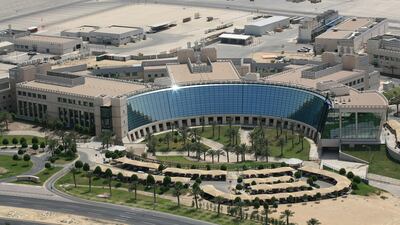
Aramco's Dhahran Research and Development Centre in Saudi Arabia's eastern region of Dhahran. AFP -
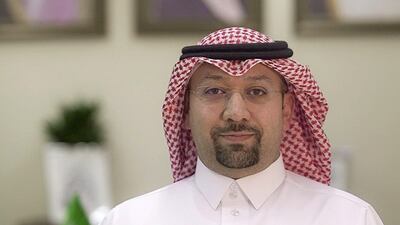
Dr Munir El Desouki, president of King Abdul Aziz City for Science and Technology (KACST). Photo: @munireldesouki -
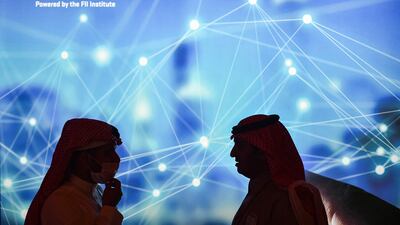
Delegates attending the fourth edition of the Future Investment Initiative (FII) conference at the capital Riyadh's Ritz-Carlton hotel in January 2021. AFP -
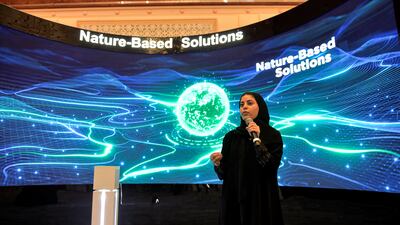
A Saudi host addressing guests during a presentation on the Saudi Green Initiative earlier in July, which includes goals for tree-planting and reducing emissions. AFP -

A beacon rises above the harbour at the King Abdullah University of Science and Technology near Jeddah. Reuters -

Visitors test VR glasses at the Mobile World Congress 2019 in Barcelona at the Saudi Telecom Company stand. Photo: dpa -
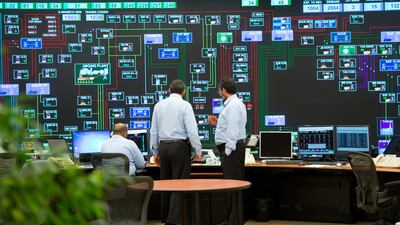
The Operations Co-ordination Centre in Dhahran in eastern Saudi Arabia. AFP


With about $620 billion in assets under management, the PIF is at the centre of the Saudi Vision 2030 initiative to diversify the country’s economy away from hydrocarbons.
Under a five-year strategy announced in 2021, the PIF aims to more than double the value of its assets under management to $1.07 trillion and commit $40 billion annually to develop Saudi Arabia's economy until 2025.
Sabic, which is set to play a key role in the kingdom’s plan to reduce its reliance on oil exports, benefits from a competitive cost position and significant economies of scale, according to Moody's.
Its A1 rating continues to reflect its strong global position in the petrochemical and fertiliser market, as well as its competitive cost position, the rating agency said.
The petrochemicals industry is expected to be a major driver of crude demand over the next few decades as consumers increasingly switch to electric vehicles.
Globally, the sector is projected to be worth about $800 billion by 2030, up from about $475 billion in 2020, according to Precedence Research.
Last year, Sabic announced plans to set up a plant to convert crude oil into petrochemicals in Ras Al Khair, with a capacity of 400,000 barrels per day of oil.
The credit profile of STC, meanwhile, which has operations in the Middle East and Asia, reflects its leading position in the lucrative Saudi telecoms market, with a market share of about 72 per cent, Moody's said.
The A1 rating of Saudi Power Procurement Company is based on its low business risk profile, Moody’s said. The company is the licensed monopoly principal buyer of electricity in Saudi Arabia and a wholly owned entity of the government.
Saudi Arabia is in the middle of a major economic diversification drive under its Vision 2030 agenda, amid a push to reduce its reliance on oil and tap into other high-growth industries to boost its economy, create more jobs and attract private investment.
The kingdom had the highest annual growth rate among the world's 20 biggest economies in 2022, according to the latest data from the Organisation for Economic Co-operation and Development.
The country's economy expanded 8.7 per cent last year on higher oil prices and the strong performance of its non-oil private sector.
Business activity in the non-oil economy of Saudi Arabia hit an eight-year high in February as output growth in the kingdom strengthened, according to the Riyad Bank purchasing managers’ index.

