


The Ministry of Culture and Youth has unveiled its blueprint for a major programme that aims to boost the country's cultural and creative sectors.
The blueprint will be a "turning point" for the economy and reflect the inclusive participation of young people and global stakeholders.
The 10-year National Strategy for the Cultural and Creative Industries, the first in the Arab world, was launched last week by Sheikh Mohammed bin Rashid, Vice President and Ruler of Dubai.
It intends to expand the size and capabilities of the two sectors and rank them among the top 10 most important economic industries in the Emirates.
The strategy aims to increase the contribution of the two industries to the country’s gross domestic product to 5 per cent over the next decade.
It also aims to double the number of establishments operating in them and the number of jobs they provide, as well as increase the volume of exports of their products and services and the average spending of families on these.
The plan will also develop proactive legislation and policies to help entrepreneurs and freelancers, as well as improve returns on investments.
"The UAE became fertile ground to all those who want to innovate, create and live in an open and tolerant society," Noura Al Kaabi, Minister of Culture and Youth, said on Sunday.
"Culture has become important in economic development ... creative industries are multiple and intertwined, and they are sustainable – they are not depleted as they rely on people's brains, talents and passion."
The announcement is a prelude to the World Conference on Creative Economy, which will run from December 7 to December 9 at Expo 2020 Dubai.
The UAE has been making a significant push to advance its creative and cultural industries, and efforts by the local government have garnered international support.
In November, the UN Educational, Scientific and Cultural Organisation backed the UAE's call to protect and promote the creative arts and the cultural sector, shielding them from challenges posed by the growth of digital streams and artificial intelligence.
Last month, the Ministry of Culture and Youth signed an agreement with its UK counterpart to exchange expertise and experiences in the cultural and creative industries as it seeks to strengthen co-operation in a wide variety of creative and cultural industries, including heritage, literature, visual and performing arts, audio-visual media and design.
On Saturday, Sheikh Hamdan bin Mohammed, Crown Prince of Dubai, announced that tenants who are rebuilding or renovating properties in Al Quoz Creative Zone will be exempt from paying rent for up to two years, a move that is part of efforts to transform the Dubai district into a world-leading centre for the creative sector.
-
Zeman Awwal, a permanent cultural space celebrating local heritage and giving Emirati artists the chance to present their work, is located at Mall of the Emirates in Dubai. All photos: Khushnum Bhandari / The National -
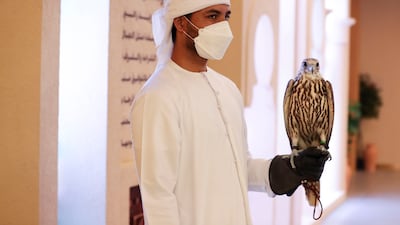
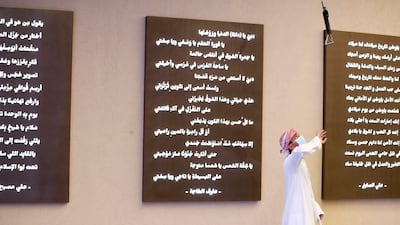
The space puts Emirati traditions under the spotlight and comprises nine distinct areas showcasing art, fashion, poetry, film and food. -

Zeman Awwal aims to provide the mall’s visitors an authentic look at various aspects of Emirati culture. -
A boy practices Al Youla dance with a replica wooden rifle. -
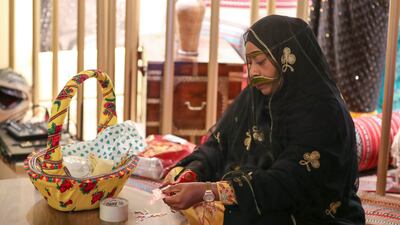
Craft workshops will also be held intermittently at the space, teaching visitors artisan skills that are passed from generation to generation, including Sadu and palm frond weaving. -
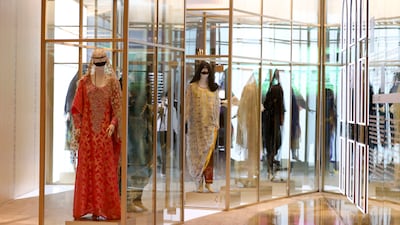
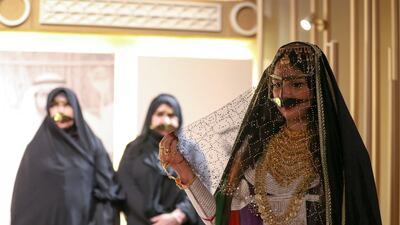
A collection of 10 dresses from The Zay Initiative are on display at Zeman Awwal. -
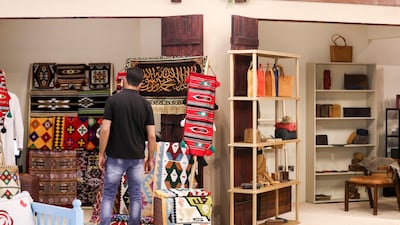
Zeman Awwal also features a variety of souqs, selling everything from carpets and leather products to spices, fabrics and souvenirs. -
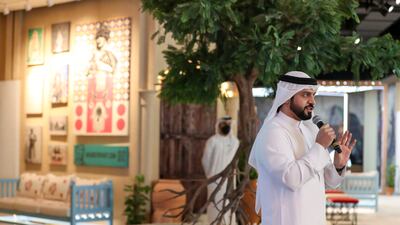
Hussain Moosa, director at Mall of the Emirates, says Zeman Awwal is meant to offer the mall's visitors a perspective on UAE history. -
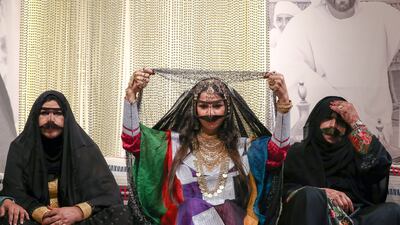
Traditional Emirati bridal processions will be reenacted periodically at the venue. -
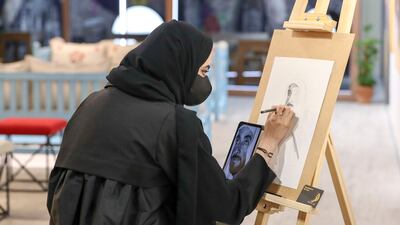
An Emirati artist sketches a portrait of Sheikh Zayed, the Founding Father. -
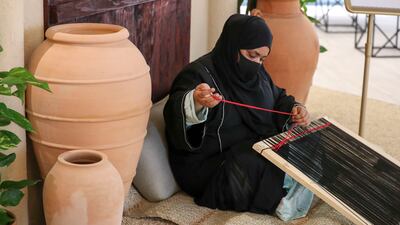
Workshops offering a look at Emirati handicrafts will also be held. -
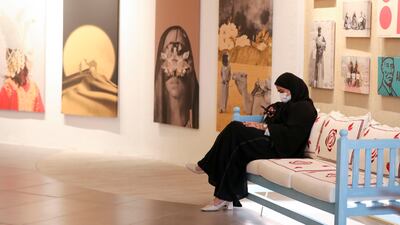
The modern, upscale interior vibe at Zeman Awwal provides a platform for Emirati artists to showcase their work. -
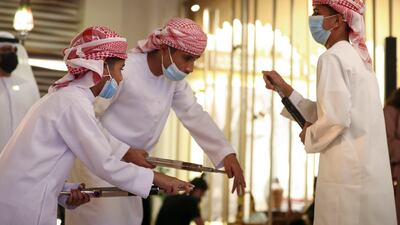
Zeman Awwal also features sections depicting local customs during weddings, and excursions to the desert and the sea. -
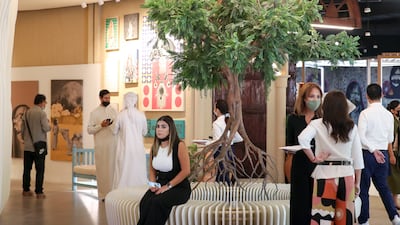
A floating ghaf tree located in the centre of the space. -
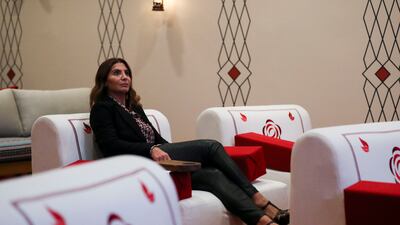
Decked out with plush seats alluding to traditional Arab decor, the Cinema Al Majlis screens a selection of Emirati films and series.


In September, the Abu Dhabi Government Media Office said construction of the Yas Creative Hub, the capital's newest venue for the media, gaming and entertainment industry, was 95 per cent complete.
The newly announced programme is "intimately connected" to the 10 values of the UAE's strategy over the next 50 years, Ms Al Kaabi said.
Forty strategic initiatives at both the federal and local levels will be put in place, centred on three main pillars – talent, professionals and enabling an effective business environment.
Among these, 16 initiatives are aimed at talents and creatives, 10 at professionals and the business environment while 14 are designed to enable the business environment.
Programmes will be put in place to support these pillars, from early stage learning for youths and measures to attract a global workforce to developing legislation for intellectual property and giving entrepreneurs access to new markets.
The participation of youths, in particular, is being encouraged by Ms Al Kaabi, who has called for a proactive collaboration between the public and private sectors to incentivise the future generation of business.
"We want the youth to harness their talents so that it becomes a passion. This will become a new driver for the economy and create more jobs," she said.
Federal entities joining the programme are the ministries of Economy, Industry and Advanced Technology, Culture and Tourism, Human Resources and Emiratisation, Education and Community Development, as well as the Federal Competitiveness and Statistics Centre.
UAE Minister of Culture and Youth
At the local level, each of the seven emirates is represented by the Department of Culture and Tourism – Abu Dhabi, Dubai Culture, the Sharjah Department of Culture, Ras Al Khaimah's Department of Antiquities and Museums, the Department of Tourism and Archaeology in Umm Al Quwain, Ajman's Department of Tourism Development and the Fujairah Culture and Media Authority.
Besides the local government and private sector, the ministry is working with international statistics centres on indicators that will be agreed upon to help decision makers to put into effect the strategy, Ms Al Kaabi said.
Partnerships and agreements will be announced at the coming WCCE conference, she said.

