
Airbus and Boeing are queuing at Emirates airlines' door two weeks before Dubai Airshow as pressure intensifies to finalise deals during the biennial expo, the company's president Tim Clark told The National.
However, aircraft delivery delays, backlogs into the next decade and plane makers' reluctance to develop stretched versions of their largest models are restraining the airline's growth plans, Mr Clark added. The airline typically makes a splash during the biennial expo with billions of dollars in plane orders.
“In the two or three weeks before the Dubai Airshow, everybody is eager, trying to persuade us to buy their wares and they increase the pressure every day as it gets closer … Boeing, Airbus, everybody else is here trying to see whether we can do deals with them in the future,” he told The Inside Brief with Manus Cranny at the airline group's headquarters.

“The difference is that both manufacturers are hamstrung with regards to their ability to produce aeroplanes at the pace and the time that we would want … they are unable to take on more orders, probably before 2033.”
Emirates is also putting pressure on both plane makers to meet its requirements and to get better deals.
“We have a few announcements to make,” Mr Clark said, declining to provide details.
Emirates, the host airline of the Dubai Airshow, is considering additional aircraft orders as it expands its route network.
The airline typically makes headlines at the expo with orders for hundreds of wide-body aircraft, heating the rivalry between Airbus and Boeing.
The biennial airshow is to take place from November 17 to 21 at Al Maktoum International Airport, also known as DWC, under the theme The Future is Here.
-
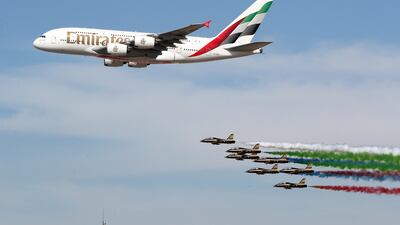
An Emirates plane accompanied by the UAE's Al Fursan aerobatic team during a flying display at the Dubai Airshow. Pawan Singh / The National -
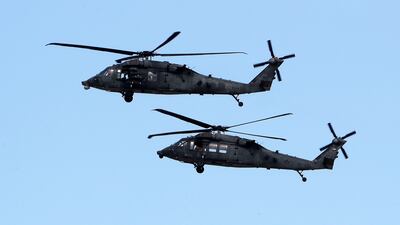
UAE craft flying in formation during a flying display at the Dubai Airshow. Pawan Singh / The National -
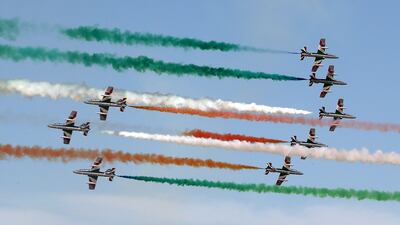
The Italian Air Force during a display at the Dubai Air show at DWC in Dubai. Pawan Singh / The National -
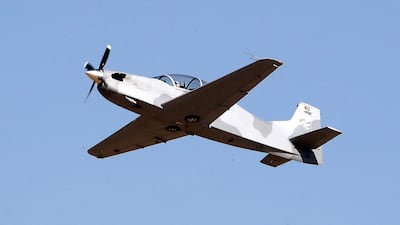
A Bader 250 craft during the flying display at the Dubai Air show. Pawan Singh / The National -
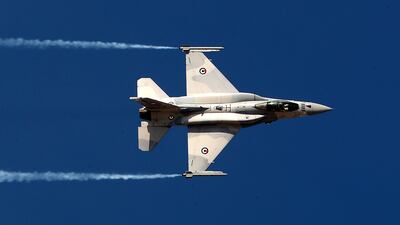
An F16-60 during a display at the Dubai Airshow. Pawan Singh / The National -
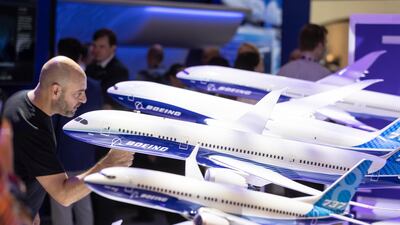
Day one of the Dubai Airshow at Al Maktoum Airport. Antonie Robertson / The National -
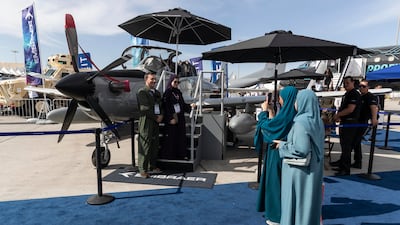
The Embraer stand. Antonie Robertson / The National -
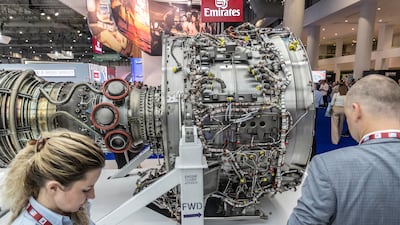
The SANAD stand. Antonie Robertson / The National -
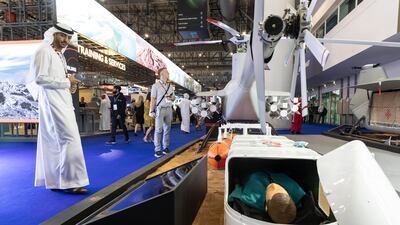
Exhibits on show on day one. Antonie Robertson / The National -
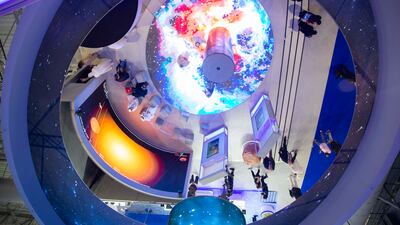
The space agency stand at Dubai Airshow. Leslie Pableo for The National -
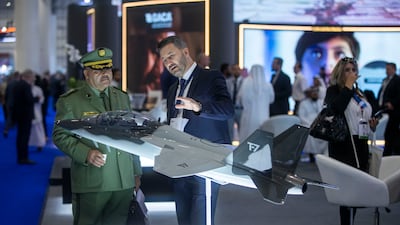
Military aircraft on show. Leslie Pableo for The National -
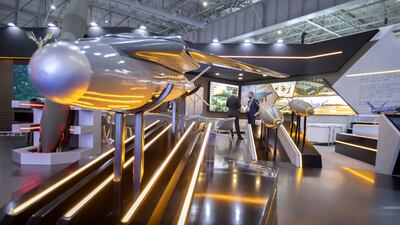
Visitors at Dubai Airshow. Leslie Pableo for The National -
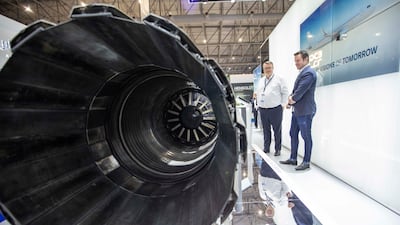
The engine of a plane on display at Dubai Airshow. Leslie Pableo for The National -
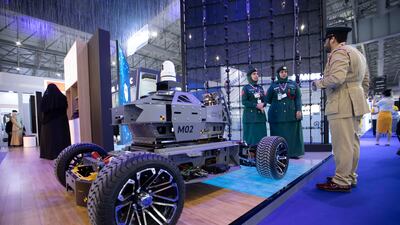
The Dubai Police stand. Leslie Pableo for The National -
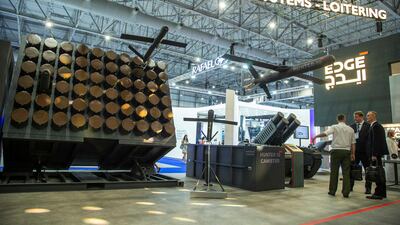
Visitors looking at missiles at Dubai Airshow. Leslie Pableo for The National -
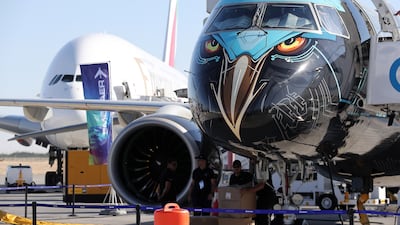
An exhibit with a bird-themed paint scheme the Dubai Airshow at Dubai World Central. Pawan Singh / The National -
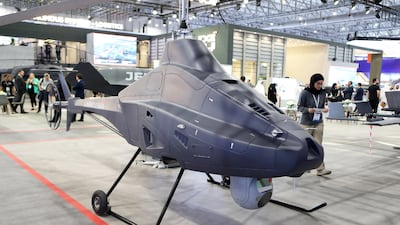
A drone on display at the stand of UAE military technology company EDGE, at Dubai Airshow. Pawan Singh / The National -

Visitors at the Dubai Airshow. The event has attracted more than 1,400 exhibitors from 95 countries. Pawan Singh / The National -
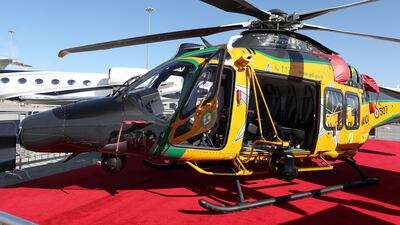
A helicopter on display at the Dubai Airshow. Pawan Singh / The National -
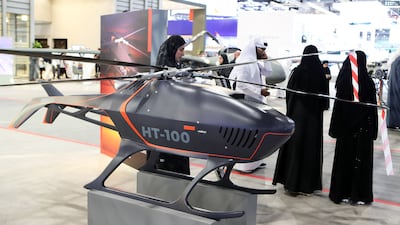
An EDGE drone at Dubai Airshow. Pawan Singh / The National -

An Etihad Airways passenger jet on display at Dubai Airshow. Pawan Singh / The National -
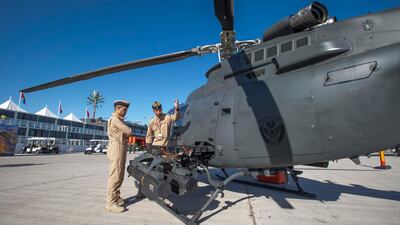
UAE military aircraft at Dubai Airshow, Al Maktoum International Airport. Leslie Pableo for The National -

Emirates crew with an Emirates plane at the Dubai Airshow, Al Maktoum International Airport. Leslie Pableo for The National -
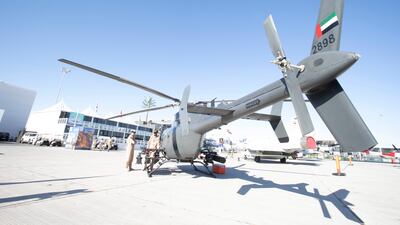
UAE military aircraft at the Dubai Airshow. Leslie Pableo for The National -

Abu Dhabi Police aircraft at the Dubai Airshow. Leslie Pableo for The National -
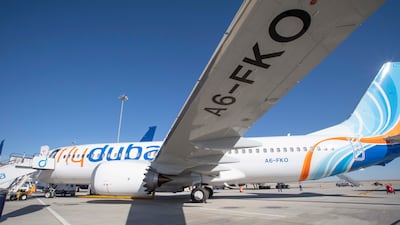
A flydubai plane at the Dubai Airshow. Leslie Pableo for The National -
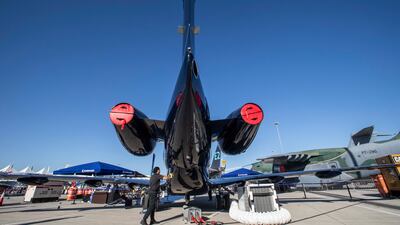
Crew preparing an aircraft for Dubai Airshow. Leslie Pableo for The National -
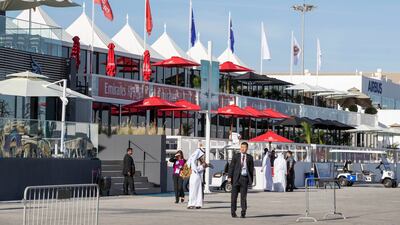
Emirates chalet at the Dubai Airshow. Leslie Pableo for The National -
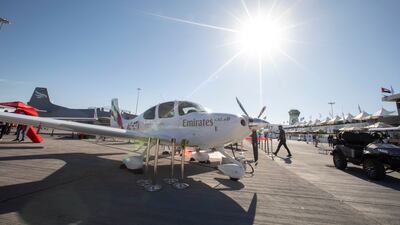
Emirates planes on display at the Dubai Airshow. Leslie Pableo for The National -
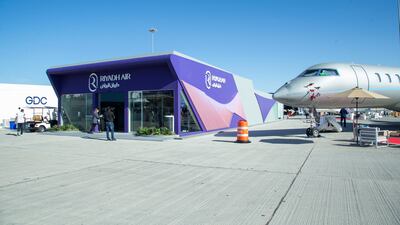
Riyadh Air's chalet at Dubai Airshow, Al Maktoum International Airport. Leslie Pableo for The National -
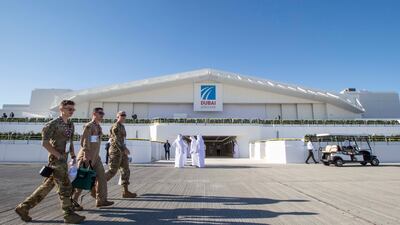
Visitors attend the Dubai Airshow. Leslie Pableo for The National -
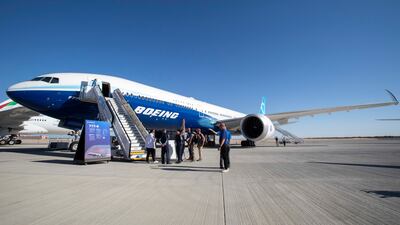
A Boeing plane on display at the Dubai Airshow. Leslie Pableo for The National -

UAE military aircraft at the Dubai Airshow. Leslie Pableo for The National


777X deliveries over damages
Emirates is the biggest customer for the Boeing 777X, with 170 of the 777-9 and 35 of the smaller 777-8 variant on order.
But the US plane maker last week again postponed the jet programme to 2027, from its original 2020 schedule, and Mr Clark does not know when he will receive his first plane.
“When they said they pushed it to 2027, that's a 12-month period: Am I looking at the first quarter? Second quarter? Third quarter? Fourth quarter?” he said.
“It's bad news for us. It's seven years after we expected it to happen.”
Asked when Boeing has promised the first delivery to Emirates, Mr Clark said: “They don't know. They honestly don't.”
Before Boeing's latest guidance, Emirates had been “working very closely” with the planemaker over the last few months and had anticipated getting its first 777-9 in the last quarter of this year, with the plane's seats and galleys ready to go, he added.
The 777X is crucial to Emirates' future wide-body fleet. The airline has built its fleet on the Boeing 777 and Airbus A380s, but Airbus has ceased production of the A380.
Emirates will continue to fly its A380s to the “back-end” of the next decade and is spending about $5 billion to retrofit its older aircraft and keep them flying for longer.
Debt-laden Boeing took a $4.9 billion charge due to its delayed 777X programme amid a prolonged certification process.
Mr Clark said Emirates is more interested in getting its planes than seeking compensation from Boeing, but acknowledged that a discussion about damages will happen.
“We're not after trying to extract value from these people,” he said. “It'll have to happen at some point, but the main focus is getting this aircraft.”

Emirates was heavily involved with the early design of the revamped 777X in 2010.
“Seventeen years later, we might have it, and that's something we're more concerned about than we are about receiving damages,” Mr Clark said. “Of course, we will have that conversation with Boeing.”
The seven-year delay is taking a toll on Emirates' growth plans.
“We have many, many routes on the drawing board which we'd like to execute now and can't,” Mr Clark said.
Emirates currently flies to 153 destinations with a fleet of more than 250 planes.
Taking 13 of the 65 Airbus A350-900s it has on order “keeps the wolf at the door” and retrofitting more of its older aircraft “keeps our head above water, allows us to grow capacity but at a much lower level than we used to do in the past”, Mr Clark said.
The 777X is an updated version of Boeing’s popular 777 model, its largest civil aircraft in production and seats more than 400 passengers. Airbus competes with its A350-1000 jet.
'Fighting chance' under CEO Ortberg
Boeing chief executive Kelly Ortberg, who has been at the helm for just over a year, is working to stabilise the company after years of crises.
Mr Ortberg and Stephanie Pope, the head of the commercial planes unit, are “very focused” on addressing the company's challenges.
“Is Kelly the man to do it? Probably. I look back at the number of people that have been the CEOs of Boeing in the past, I think we have a fighting chance with him and Stephanie Pope trying to get through,” Mr Clark said.
The transformation of the company is a “Herculean” task, and it could take until 2030 to fix its issues, he added. "[Mr Ortberg] was not going to walk in and wave a magic wand and get things sorted out.”
By 2030, Boeing could make a comeback “in the way it used to be, producing large numbers of aircraft of different variants, of different sizes, well and to a very high standard”, Mr Clark said.
'Risk-averse' industry
The aviation veteran is trying to convince manufacturers to build larger versions of the A350 and 777X as it seeks a successor for the A380.
The double-decker, which helped lay the foundation for Emirates' dominance on global routes, will stay in service until 2040.
“I cannot persuade either side of the ledger to build a lookalike. They are very, very risk-averse,” he said.
“I don't see the innovation or flair that I used to see in the 70s, 80s and early 90s.”
An A380 replacement is a venture that manufacturers are not prepared to undertake, Mr Clark said. He blamed geopolitical and socio-economic “traumas” in the last 20 years, such as the 2008 financial crisis and wars, for making manufacturers and airline customers more risk-averse.
The need for an A380 replacement is “barking obvious” given the slot constraints at busy airports, but other airline chief executives do not support the business case for bigger aircraft as they cannot fill them, he said.
Negotiation tactics
A masterful negotiator, Mr Clark has spent decades finessing minute details of plane orders, weighing in on aircraft designs and insisting on high delivery standards.
“I have a bit of a reputation for being candid,” he said. “If I don't like something, I will probably tell them. Generall,y it cuts through what I call the froth and the fluff.”
His secret to successful negotiations? Know your opponent's position, then have a counter-position ready.
“You've got to be fairly quick on your feet. Think carefully, think articulately. Do not go on a tangent. Do not overreact. Be measured about what you do, but be firm and fair about how you go about it,” he said.
“If you're trying to consummate a deal, try and see that they need a margin. So do you. So somehow you get there.”
Mr Clark said Airbus is the hardest party to negotiate with, “but they were great fun”.
He compared negotiations to chess, adding: “We got some really good deals as a result of all the work that we did.”
That led to building professional and social relationships that helped shape discussions on product innovations.
Airbus became “extremely flexible and responsive to many things that we wanted to do, which was certainly out of the normal run of things, one of which would be interiors in the A380s,” he said.
The Inside Brief with Manus Cranny is available on YouTube, Apple, Podcasts, Spotify and all other major platforms.

