


Saudi Arabia and the UAE are at the forefront of the gaming industry in the Middle East, with their governments recognising the massive potential the growing market possesses, a study has said.
About 60 per cent of the region’s population consider themselves to be gaming enthusiasts, accounting for half of gaming app downloads, more than the global average of 40 per cent, the Boston Consulting Group said in its latest Game Changer report.
The Middle East is considered a “significant” market for both core and casual gamers, with Saudi Arabia representing about 45 per cent of the sector with a value of more than $1.8 billion, BCG said.
Gamers in the kingdom, the Arab world's biggest economy, are more inclined towards mobile gaming, which accounts for about 65 per cent of market revenue, it said.
“The Middle East is a key player in the global gaming industry, with an impressive penetration rate and a strong commitment from governments to invest in the sector,” said Alexander Schudey, managing director and partner at BCG.
“The region's focus on gaming and the establishment of dedicated gaming hubs makes it an attractive destination for global gaming companies.”
Gaming has become big business globally, gaining traction during the Covid-19 pandemic in 2020, with new-age technology providing both an opportunity to reach a wider audience and develop new titles to cater to consumer demand.
Saudi Arabia plans to develop 30 games and create about 40,000 jobs by 2030, as part of its National Gaming and Esports Strategy.

The programme, unveiled by Saudi Crown Prince Mohammed bin Salman in September, outlines a comprehensive investment programme for the industry and has the ultimate goal of making the kingdom a global gaming centre by 2030.
Riyadh also created the Saudi Esports Federation to hasten the industry's development. Its president, Prince Faisal bin Bandar, was appointed as vice president of the Global Esports Federation in December.
Saudi Arabia's gaming industry received a boost with new funding worth $488 million from the Saudi Esports Federation, the National Development Fund and the Social Development Bank, it was announced at the Leap technology conference in Riyadh in February.
Meanwhile, the number of gaming start-ups in Saudi Arabia almost doubled to 24 in 2022, from 13 in the previous year, driven by incubation programmes, a report by game developer support system Nine66 said in December.
The UAE, the Arab world's second largest economy, aims to attract global businesses and support local talent in the gaming, led by Abu Dhabi Gaming, which is offering strong incentives, and the Dubai Multi Commodities Centre's Gaming Centre.
managing director and partner at Boston Consulting Group
In December, the DMCC teamed up with Yalla Esports to launch the DMCC gaming centre to support the growth of the industry in Dubai by providing gaming businesses with access to capital and industry talent.
The UAE’s business-friendly environment has led a number of international gaming developers to establish their regional headquarters in the country.
France's Ubisoft, the publisher of the Assassin's Creed games, is based in Abu Dhabi while Chinese gaming company Tencent has set up its regional headquarters in Dubai.
In February, AD Gaming, the organisation responsible for developing the gaming and e-sports industry in Abu Dhabi, teamed up with the Sawa Group, a game publishing and e-sports company, to support gaming in the UAE capital.
Gaming revenue in the Mena region is projected to hit $6 billion by 2027, about double the figure from 2021, the DMCC said in its latest Future of Trade 2023 report last month.
The metaverse – the emerging virtual space where people represented by avatars interact – is also expected to give gaming a boost in the region.
“The Middle East is a unique market for gaming. Governments in the GCC region have invested heavily in the industry and recognised its potential, implementing strategies to attract gaming companies,” BCG analysts wrote in the report.
-

Ahmed Alhindi, 28, left, from Saudi Arabia dressed up as Madara Uchiha (from the Naruto series) and Yousef Al Muaimi from Abu Dhabi, 18, dressed up as King (from WatchDogs). Khushnum Bhandari for The National -
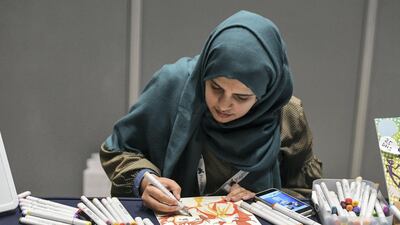
Sheikha Al Shamsi, 30 is a talented cartoonist who graduated from Zayed University, and is currently working for the RTA. She sold her work at GamesCon, ADNEC. Khushnum Bhandari for The National -

The man of the hour: Joker cosplay at GamesCon, ADNEC. Khushnum Bhandari for The National -

Coral Wave performs at GamesCon, ADNEC. Khushnum Bhandari for The National -
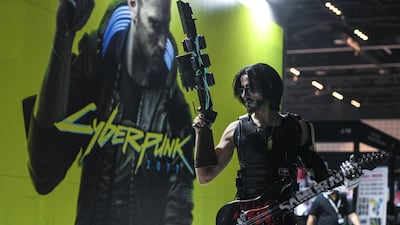
The Keanu Reeves character from the game CyberPunk 2077, which will launch worldwide in April 2020. Khushnum Bhandari for The National -
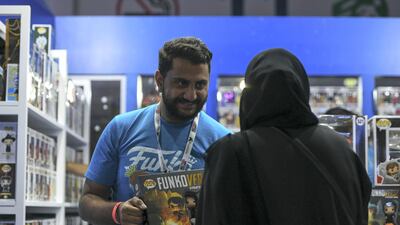
Ahmed Mohieddin sells the popular Funko Pop collectables at GamesCon, ADNEC. Khushnum Bhandari for The National -

Cosplay at GamesCon, ADNEC. Khushnum Bhandari for The National -
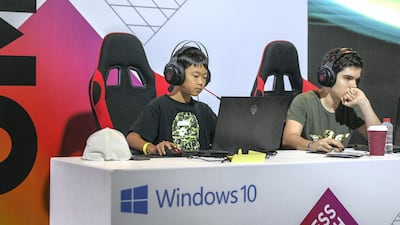
Gamers in action at GamesCon, ADNEC. Khushnum Bhandari for The National -
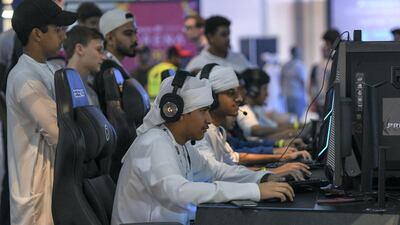
Gamers in action at GamesCon, ADNEC. Khushnum Bhandari for The National -

Stalls there sell everything from games to art. Khushnum Bhandari for The National -
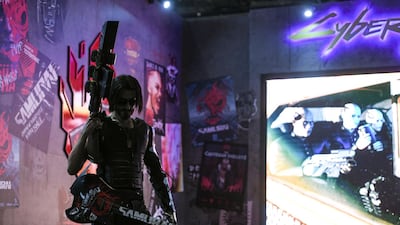
The Keanu Reeves character from the game CyberPunk 2077, which will launch worldwide in April 2020 at the GamesCon. Khushnum Bhandari for The National -

A stall selling memorabilia at GamesCon, ADNEC. Khushnum Bhandari for The National -
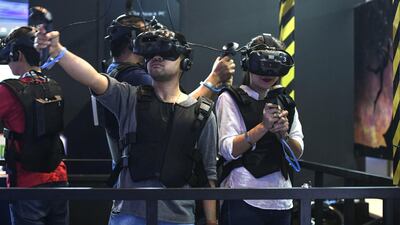
Virtual reality games at GamesCon, ADNEC. Khushnum Bhandari for The National -

Coral Wave performs at GamesCon, ADNEC. Khushnum Bhandari for The National -
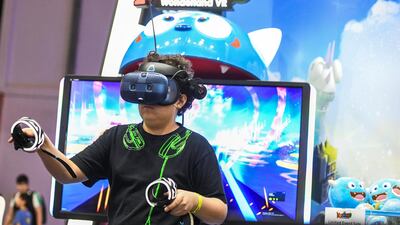
Virtual reality game Kooring Wonderland at GamesCon, ADNEC. Khushnum Bhandari for The National -

Coral Wave performs at GamesCon, ADNEC. Khushnum Bhandari for The National -
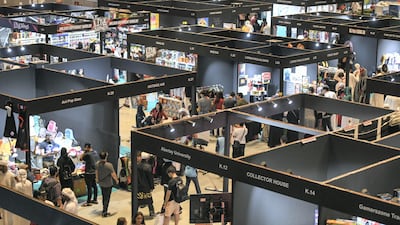
MiddleEast GamesCon, ADNEC. Khushnum Bhandari for The National -

Fans engrossed in video games at GamesCon, ADNEC. Khushnum Bhandari for The National -

Ichiban, Japanese anime collectables at GamesCon, ADNEC. Khushnum Bhandari for The National -

Ichiban, Japanese anime collectables at GamesCon, ADNEC. Khushnum Bhandari for The National -

Ichiban, Japanese anime collectables at GamesCon, ADNEC. Khushnum Bhandari for The National


Mobile gaming, which has registered significant growth in recent years, is expected to continue to lead in the industry, with the widespread adoption of smartphones and the increasing power of mobile computing, BCG said.
This has compelled PC and console game publishers to actively invest in the trend, BCG noted, taking advantage of the sector's accessibility to gamers, the convergence it offers across gaming platforms and the potential of its business model, it said.
The rise of casual games, designed to be played in short periods of time, has driven innovation in the monetisation of mobile games, making them cheaper for a wider audience, the report said.
“Mobile gaming is mostly monetised through advertising, which is technically free for a player, while PC/console games are yet to realise the potential of this model,” BCG said.

