



The UAE has been ranked in the top 25 countries for global talent in a new report by graduate business school Insead.
The Arab world's second-biggest economy also ranked second in the Middle East behind Israel in the 2022 Global Talent Competitiveness Index report, Insead said on Monday.
The annual benchmarking report measures how countries and cities attract, grow and retain talent. It covers 133 countries and 175 cities across all income groups and levels of development.
The UAE ranked 25th globally, while Switzerland, Singapore and Denmark are the most talent-competitive countries, the GTCI 2022 report said.
____________
Watch: some stats behind the UAE's hiring boom
The US ranked fourth, followed by Sweden, the Netherlands, Norway, Finland, Australia and the UK.
The ninth annual report was published in partnership with Portulans Institute and Singapore’s Human Capital Leadership Institute.
“Rich countries constitute most of the talent champions, and most talent laggards happen to be poor economies,” the report said.
“This correlation is not cast in stone: well-balanced and economically sound strategies can allow all types of economies to improve their abilities to grow, attract and retain talent.”
In recent years, the UAE has undertaken several economic, legal and social reforms to attract skilled workers.
The government’s overhaul of a number of visa programmes has boosted opportunities for foreign workers to live and work in the country. That includes a revamp of the 10-year golden visa to simplify eligibility criteria and expand the categories of beneficiaries.
The green visa was also introduced to provide five-year residency to skilled workers without needing a sponsor or employer.
The UAE also recently implemented a new unemployment insurance programme for federal government and private sector employees, to which all workers must subscribe from January 1, 2023.
It will pay Emiratis and residents in the private and public sectors a cash sum for a maximum of three months if they lose their jobs.
The GTCI rankings are measured by six pillars: enable, attract, grow, retain, vocational and technical skills, and global knowledge skills.
The UAE was particularly strong in the “attract” pillar, having the fourth-highest score after Luxembourg, Singapore and Switzerland. The report highlighted the country’s high level of external openness towards foreign talent, access to growth opportunities and lifelong learning possibilities.
The pillar with the most scope for improvement for the UAE was “retain”, in which the country ranked 51st.
Meanwhile, the GTCI report said that global economic uncertainty could have a “negative and sometimes irreversible impact” on the talent situation of poorer economies.
Even in higher-income economies, labour markets may become more fragmented and generate new types of inequalities, the research said.
New work trends, such as “quiet quitting” and younger generations’ propensity for gig and part-time jobs, are calling for new ways to grow, attract and retain talent, the research said.
“Government, business and talent are feeling the negative compounded effects of financial, food and energy shocks, particularly impacting the poor and emerging economies,” said Felipe Monteiro, co-author of the report, academic director of the GTCI and Insead senior affiliate professor of strategy.
“This will likely elevate the level of inequalities on the global talent scene and hinder the progress in achieving key sustainable development goal targets.”
Efforts are urgently required to reduce those talent inequalities that are the most likely to prevent the world from reaching specific SDGs, the report said.
This pertains to the SDGs on quality education, gender equality, decent work, economic growth and reduced inequalities, it said.
Swift action is urgently required to reduce talent inequalities, Mr Monteiro said.
Governments and organisations should champion economic and education reforms to allow young generations to contribute through higher levels of entrepreneurship, innovation and productivity, he said.
Cities can play a central role in reducing inequalities by adopting the right talent policies, the GTCI report said.
For the second consecutive year, San Francisco is the top-ranked city in the Global City Talent Competitiveness Index, followed by Boston and Zurich.
Seattle, Lausanne, Singapore, Geneva, Helsinki, Munich and Dublin round out the top 10 most competitive global cities for talent.
Abu Dhabi ranked 39th in the global city rankings, while Dubai ranked 46th.
The five pillars used to measure the rankings were: enable, attract, grow and retain talent, and global knowledge skills.
“In the global competition for talents, cities continue to move faster than most nation states,” Bruno Lanvin, co-author of the report, said.
____________
Top 15 companies to work for in the UAE, according to LinkedIn — in pictures
-

Luxury retailer Chalhoub Group is the best company to work for in the UAE this year, according to LinkedIn. Photo: Chris Whiteoak / The National -
Abu Dhabi’s strategic investment arm, Mubadala Investment Company, was second on the best company list. Photo: Mubadala -

Healthcare provider Mediclinic was third on the LinkedIn list. Reuters -

Europe’s largest bank, HSBC, is the fourth best company to work for in the UAE this year, according to LinkedIn. Reuters -

Hospitals operator Aster DM Healthcare completed the top five best companies to work for in the UAE in 2022. Jeffrey Biteng / The National -
National health insurer Daman was sixth. Ryan Carter / The National -

The Al Tayer Group and its portfolio of businesses was seventh. Photo: Facebook -

Cosmetics company L’Oreal was eighth. Reuters -
Dubai lender Mashreq Bank was ninth on LinkedIn's list. Satish Kumar / The National -
Life insurer MetLife rounded out the top 10 companies to work for in the UAE. Reuters -
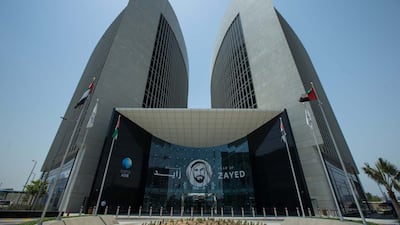
Abu Dhabi Islamic Bank was 11th. -
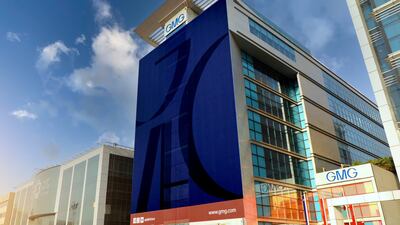
Gulf Marketing Group (parent of Sun & Sand Sports) was 12th. Photo: Facebook -
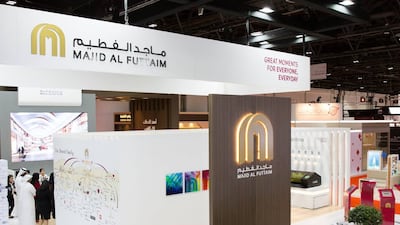
Business conglomerate and mall operator Majid Al Futtaim was 13th. -

E-commerce company Amazon was 14th. AP Photo -
Energy services company Schneider Electric completed the LinkedIn top 15. AFP


Gender inequalities call for “renewed and accelerated efforts”, as they have been broadening again since the onset of the Covid-19 pandemic, he said.
Providing girls with equal education opportunities and women with equal leadership opportunities is critically important to reduce inequality, Mr Lanvin said.

