
Dubai's Careem is addressing problematic market fragmentation in the Middle East and North Africa with its fast-growing 'super app', its co-founder and chief executive has said.
Mudassir Sheikha told The National's Business Extra podcast: "We have built a presence in almost 100 cities in the region, where if you want to come and build your services on the app, then we can give you the ability to light up the remaining 99 cities at the flick of a switch versus having to painfully go into every city and enable your service."
Super apps bundle single apps' functionalities on to one platform for many different services. China pioneered this kind of multipurpose app, with Chinese sending texts, managing digital payments, shopping and playing games and socialising all from one place, usually WeChat, which has more than 1.2 billion users.
Careem rolled out its own super app in April 2020, offering access to more than a dozen services, including ride-hailing, food and grocery delivery, bike and scooter rentals and peer-to-peer payments. Careem is also offering third-party digital businesses the infrastructure and network to scale as "tenants" on its platform. So far, the company has brought on Swapp car rental and JustLife home cleaning and PCR testing.
Mr Sheikha said that because the company has laid the groundwork for technical, legal and operational infrastructure in more than 100 markets across the Middle East, North Africa and Pakistan, it should help digital companies that offer services an easier entrance into new markets.
"Conceptually speaking, it should be easier to build on the Careem super app than building outside [it]," he said.
-
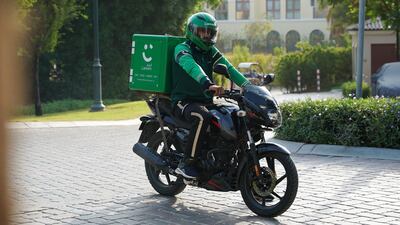
Careem captains operate across the UAE. Photo: Careem -
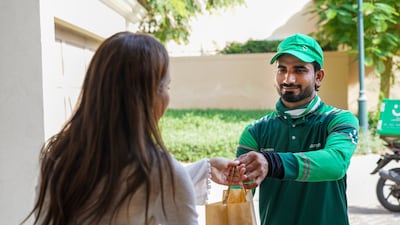
Careem NOW delivers food to your doorstep. Photo: Careem -
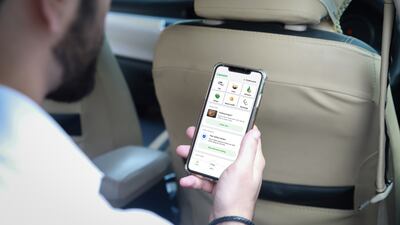
The Careem super app makes ordering quick and easy. Photo: Careem -

A Careem rental bicycle at Jumeirah Beach, Dubai. Photo: RTA / Careem -
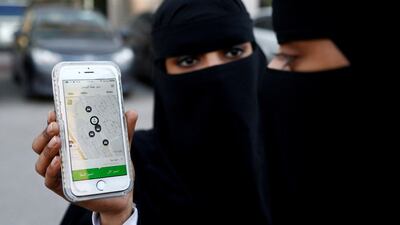
Careem also operates in Riyadh, Saudi Arabia. Reuters -
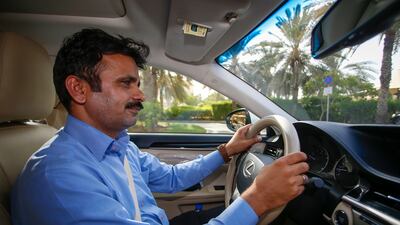
Abrar Ahmed, Careem's longest-serving driver, takes 'The National' for a spin in Dubai Media City. Chris Whiteoak / The National -
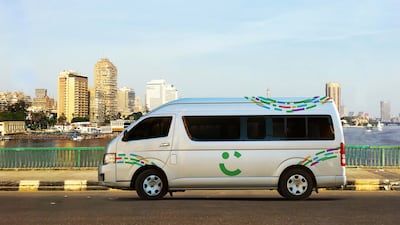
Careem's bus service in Egypt. Courtesy Careem -
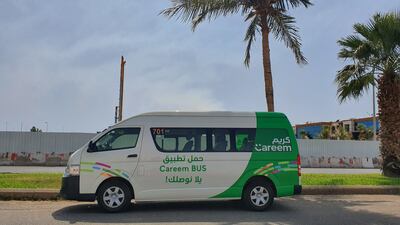
The new 13-seater bus service will operate throughout the country. Photo: Careem -
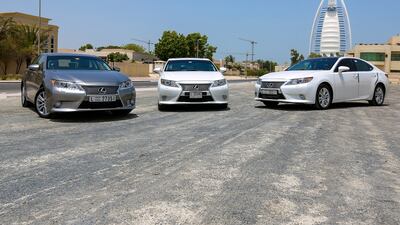
You can even hire cars from Careem in Dubai. Victor Besa / The National


While the rise of super apps is accelerating digital adoption in emerging markets, Careem's efforts may also have a knock-on effect in improving the free flow of commerce across the region. The Middle East and North Africa needs EU-style integration of people, goods and $2.5 trillion in spending if the region is to produce its fair share of global GDP, a 2022 report by the UAE's Majid Al Futtaim and US consultancy McKinsey found.
While the super app is a massive opportunity for Careem, as the company celebrates its 10-year anniversary this week, Mr Sheikha said it is taking a more thoughtful approach to growth than in previous years.
"We have been a little bit smarter in the last few years," he said, acknowledging that "we may have gotten a little bit carried away at the end of last year, when there was a lot of hype around tech and tech adoption" and the company emerged from being "defensive" during the peak of the Covid-19 pandemic, when roads were largely empty.

He said "the new reality" for tech companies is one that prioritises profit over growth, as it contends with a higher cost of conducting business amid historic global inflation and high energy prices.
Inflation is affecting some of Careem's markets harder than others, said Mr Sheikha.
"Where we are being hit, we unfortunately have to raise prices to make our Captains [what Careem calls its drivers] whole because in many cases, our Captains are facing higher fuel prices ... which means that they have to get paid more to deliver that service ... when you raise prices, affordability does come down," he said.
In the long term, Mr Sheikha believes technology's ability to improve efficiency can be a "weapon" against inflation.
Still, he said, new funding, acquisitions and hiring were all on the table with the aim of becoming one of the largest technology companies in the Middle East, North Africa and Pakistan regions, similar to how a handful of big names emerged in the US and China, such as Google or Alibaba.
"There's going to be a lot of amazing entrepreneurial activity, a lot of start-ups will build scale, they will serve different verticals, different needs. But a few platforms will emerge as the digital economy leaders of this region. We want Careem to be one such leader of the ecosystem," said Mr Sheikha.

The region is still very early in its journey of digital adoption and there is a huge opportunity for Careem to use tech to simplify and improve lives across the region, he said, citing the statistic that e-commerce penetration in Mena is 6 per cent as opposed to 52 per cent for China.
The rapid growth of consumer spending through digital means it "is a secular trend that's only going to go in one direction".
"We have a young population which is tech savvy [and] smartphones are everywhere. We are going to see a rapidly growing digital adoption across all services that people consume at the moment," he said.
In June, the company snapped up two Dubai start-ups to enhance its offerings in FinTech and food delivery. Careem bought Denarii for an undisclosed sum to connect customers and drivers with remittance services provided by licensed providers, and a week later, it announced a takeover of food delivery platform, MUNCH:ON.
However, expansion into new markets and businesses will be at a "measured" pace in this phase of growth for Careem, said Mr Sheikha.
"It's not a function of us not feeling the magnitude of the opportunity that's ahead of us. Over the next five to 10 years, all of these things will happen. But we just cannot do them simultaneously anymore," he said.
"So our core business, which is ride-hailing, is now profitable, it generates positive cash, that can be invested in growing new things ... the food business is live only in a few cities, making sure that we get them right, grow and scale the cities before we go to new cities. The grocery business, we are again testing it in Dubai first, and as it starts to build scale ... and becomes more mature [we will] expand to more markets."
Careem also remains committed to "very important" frontier markets in the region, such as Pakistan and Iraq, where it has pioneered ride-hailing services.
"From time to time, we experiment with some other services as well," Mr Sheikha said.
"But in a couple of these markets, they also are enablers of our business in the rest of the region. For example, in the case of Pakistan, as well as Egypt and Jordan, we have call centres in these markets, we have our back office, our development centres, so we do not just use these markets for our services, and getting them live. But we also use them to enable our services in the rest of the region."
There has also been an impact on the start-up ecosystem of the region, thanks to the former Careem staffers who have left to start more than 100 businesses, in a similar vein to the "Paypal effect" in Silicon Valley.
"The one thing that I feel particularly proud about ... many of these businesses are very purpose-driven, similar to some of the foundations that we had put at Careem," Mr Sheikha said.
"I hope that the DNA of our entrepreneurship remains purposeful, which is something that is quite on display when you speak to some of these entrepreneurs that are building these incredible start-ups."

