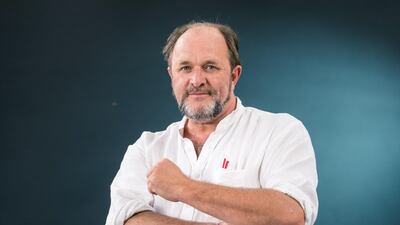
"Nearly 30 years ago, just after I wrote my book about Delhi, City of Djinns, I won a prize for it," says writer and historian William Dalrymple. "I had always loved pictures, so I decided to invest the money in a painting. I bought what was then called a 'Company School' picture."
Thousands of this type of painting were made by Indian artists in the second half of the 18th century to reflect the taste and specifications of a new class of patron in India: the officials of the East India Company. "Thirty years ago there was not a huge amount of prestige around the genre," says Dalrymple. "You could buy a museum-quality Company School picture for £1,000 [Dh4,586]."
That is no longer the case. Company paintings are suddenly very much in the news, as a result of an exhibition at the Wallace Collection in London, curated by Dalrymple, of some of the greatest examples of the genre.
Titled Forgotten Masters: Indian Painting for the East India Company, the show caused a huge stir in England, bringing art critics to a belated appreciation of the genius of obscure artists such as Shaikh Zainuddin, Bhawani Das and Haludar. The exhibition, which has now closed amid the coronavirus pandemic, was accompanied by a detailed catalogue published by Bloomsbury under the same name (and designed by Dalrymple's brother Robert). The book is now available on Amazon. With scores of beautiful colour palettes and a set of contextual essays by scholars, it is the ideal companion for this time of quarantine.
This was the time that explorers from the great new age of maritime travel were bringing back amazing natural history specimens from other continents
For Dalrymple, the show – which is likely to be extended to September once the pandemic subsides – was an exercise in restoring to the mainstream works from an understudied period of Indian art history, as well as an act of revision – of reperception. “It’s time to say goodbye to the distorting phrase ‘Company School’ and shift the focus from the British patrons to the actual Indian painters,” he says. “You don’t look at the ceiling of the Sistine Chapel and say the credit for it goes to Pope Julius II. You honour it as the work of Michelangelo.”
Many of the paintings in the book are strikingly intimate, detailed, realistic pictures of birds and animals, plants and flowers – a far cry from the ornate and teeming figurework usually associated with Indian painting. So why is this?
In the second half of the 18th century, Dalrymple says, the East India Company, while expanding its footprint as a political power in the Indian subcontinent, became the link between the art of the land and certain newly emerging trends in Europe.
“This was the time that explorers from the great new age of maritime travel were bringing back amazing natural history specimens from other continents. The Kew botanical gardens had just opened in England. All around Europe it had become the vogue to paint, classify and define the natural world, and to publish these in catalogue form. Such books reached the hands of those East India Company officials who had a taste for art; people like the army general Claude Martin in Lucknow, or the judge Elijah Impey in Calcutta.
“Such patrons also found artists who had been put out of work because of the fall of various royal courts at the hands of the Company. So they put these artists to work on the depiction of things that struck their own eye as picturesque in the Indian landscape. Sending such pictures home for them, at the time, it was the equivalent of picture postcards or Instagram posts today,” says Dalrymple.
You don't look at the ceiling of the Sistine Chapel and say the credit for it goes to Pope Julius II. You honour it as the work of Michelangelo
Naturally, the asymmetry of this intercultural encounter means that the historical record greatly talks mainly of the wealthy, literate, articulate Company patron (who usually also left a trail of documentary records on his life) while excluding the contribution of the unlettered artist, of whose life few details have survived and whose brushstrokes are his only biography. But it is time for that to change, for as the exhibition suggests, these brushstrokes often have a remarkable character.
Consider what was being asked of the artists. Many of the painters featured in the book were trained in the highly ornate and picturesque style preferred by the Mughal Empire, at the time still ruling India. But the European still-life botanical and natural history drawings to which they were now exposed, and asked to replicate, was “raw and confrontational”, Dalrymple says.
Consider the visual pleasure produced by the panache of Zainuddin, a painter employed by judge Impey, in his depiction of a black-hooded oriole. The bird's profile shows off its beautiful two-tone plumage. The viewer can almost feel each brushstroke that creates a yellow feather upon the black wing, and note the arch of the bird's back.
The oriole’s pose and gaze are jaunty, it stares at something outside the visual field with a beady red eye. The painting is actually a double study: the oriole perches on a branch extending from the stump of a jackfruit tree, commonly used to make furniture in India. Little blue tints lend a touch of mystique to the tree, and on examining closely, you'll see a large camouflaged insect crawling up the stump. The effect is one of pleasure in the natural world, with notes of mischief and whimsy.
Of course, in shifting the focus of "Company" paintings to the artists, it is still possible to give credit to the patrons for influencing a shift in the preoccupations of Indian art, away from the fantastical to the naturalistic and everyday. In making Indian birds and beasts and even festivals and classes of workers (soldiers, tradesmen, ascetics) the object of their study, the Company officials democratised Indian art.
Sometimes these paintings even manage to be quietly subversive. A fine example of this tendency is in a picture of seven people (including the patron, Thomas Holroyd) made by Shaikh Muhammad Amir of Karraya in circa 1835. Five Indian palanquin bearers, led by a servant of a higher rank, carry Holroyd on a journey while he reads in peace.
The picture makes colonial hierarchy transparent, but there is something very ambiguous, too. Headless, with his haunches wrapped around a bolster, Holroyd seems self-absorbed, but the labourers calmly return the viewer's gaze. The frame of the painting illuminates reality, the artist seems to be whispering that the palanquin shuts out.
“I have spent the past two decades writing up different aspects of a fascinating period of Indian history: the time between the decline of the Mughal Empire and the rise of the Raj, when colonialism had not yet acquired a fixed shape and many norms were fluid,” says Dalrymple. “To me, this exhibition is the artistic manifestation of that theme.”
Soon after this fertile intercultural encounter, Indian art would lapse into a century of mediocrity under the assault of a more prescriptive colonial gaze and practice and, simultaneously, the arrival of photography. But Forgotten Masters reminds us of the vivid and quirky pictures that still have the power to, says Dalrymple, "make us gasp."
Forgotten Masters: Indian Painting for the East India Company is on Amazon.ae for Dh141

SPEC%20SHEET%3A%20APPLE%20IPHONE%2014%20PRO%20MAX
%3Cp%3E%3Cstrong%3EDisplay%3A%3C%2Fstrong%3E%206.7%22%20Super%20Retina%20XDR%20OLED%2C%202796%20x%201290%2C%20460ppi%2C%20120Hz%2C%202000%20nits%20max%2C%20HDR%2C%20True%20Tone%2C%20P3%2C%20always-on%3C%2Fp%3E%0A%3Cp%3E%3Cstrong%3EProcessor%3A%3C%2Fstrong%3E%20A16%20Bionic%2C%206-core%20CPU%2C%205-core%20GPU%2C%2016-core%20Neural%20Engine%3C%2Fp%3E%0A%3Cp%3E%3Cstrong%3EMemory%3A%3C%2Fstrong%3E%206GB%3C%2Fp%3E%0A%3Cp%3E%3Cstrong%3ECapacity%3A%3C%2Fstrong%3E%20128%2F256%2F512GB%20%2F%201TB%3C%2Fp%3E%0A%3Cp%3E%3Cstrong%3EPlatform%3A%3C%2Fstrong%3E%20iOS%2016%3C%2Fp%3E%0A%3Cp%3E%3Cstrong%3EMain%20camera%3A%3C%2Fstrong%3E%20Triple%2048MP%20main%20(f%2F1.78)%20%2B%2012MP%20ultra-wide%20(f%2F2.2)%20%2B%2012MP%20telephoto%20(f%2F2.8)%2C%206x%20optical%2C%2015x%20digital%2C%20Photonic%20Engine%2C%20Deep%20Fusion%2C%20Smart%20HDR%204%2C%20Portrait%20Lighting%3C%2Fp%3E%0A%3Cp%3E%3Cstrong%3EMain%20camera%20video%3A%3C%2Fstrong%3E%204K%20%40%2024%2F25%2F30%2F60fps%2C%20full-HD%20%40%2025%2F30%2F60fps%2C%20HD%20%40%2030fps%2C%20slo-mo%20%40%20120%2F240fps%2C%20ProRes%20(4K)%20%40%2030fps%3B%20night%2C%20time%20lapse%2C%20cinematic%2C%20action%20modes%3B%20Dolby%20Vision%2C%204K%20HDR%3C%2Fp%3E%0A%3Cp%3E%3Cstrong%3EFront%20camera%3A%3C%2Fstrong%3E%2012MP%20TrueDepth%20(f%2F1.9)%2C%20Photonic%20Engine%2C%20Deep%20Fusion%2C%20Smart%20HDR%204%2C%20Portrait%20Lighting%3B%20Animoji%2C%20Memoji%3C%2Fp%3E%0A%3Cp%3E%3Cstrong%3EFront%20camera%20video%3A%3C%2Fstrong%3E%C2%A04K%20%40%2024%2F25%2F30%2F60fps%2C%20full-HD%20%40%2025%2F30%2F60fps%2C%20slo-mo%20%40%20120%2F240fps%2C%20ProRes%20(4K)%20%40%2030fps%3B%20night%2C%20time%20lapse%2C%20cinematic%2C%20action%20modes%3B%20Dolby%20Vision%2C%204K%20HDR%3C%2Fp%3E%0A%3Cp%3E%3Cstrong%3EBattery%3A%3C%2Fstrong%3E%204323mAh%2C%20up%20to%2029h%20video%2C%2025h%20streaming%20video%2C%2095h%20audio%3B%20fast%20charge%20to%2050%25%20in%2030min%3B%20MagSafe%2C%20Qi%20wireless%20charging%3C%2Fp%3E%0A%3Cp%3E%3Cstrong%3EConnectivity%3A%3C%2Fstrong%3E%20Wi-Fi%2C%20Bluetooth%205.3%2C%20NFC%20(Apple%20Pay)%3C%2Fp%3E%0A%3Cp%3E%3Cstrong%3EBiometrics%3A%3C%2Fstrong%3E%20Face%20ID%3C%2Fp%3E%0A%3Cp%3E%3Cstrong%3EI%2FO%3A%3C%2Fstrong%3E%20Lightning%3C%2Fp%3E%0A%3Cp%3E%3Cstrong%3EDurability%3A%3C%2Fstrong%3E%20IP68%2C%20dust%2Fsplash%2Fwater%20resistant%20up%20to%206m%20up%20to%2030min%3C%2Fp%3E%0A%3Cp%3E%3Cstrong%3ECards%3A%3C%2Fstrong%3E%20Dual%20eSIM%20%2F%20eSIM%20%2B%20eSIM%20(US%20models%20use%20eSIMs%20only)%3C%2Fp%3E%0A%3Cp%3E%3Cstrong%3EColours%3A%3C%2Fstrong%3E%20Deep%20purple%2C%20gold%2C%20silver%2C%20space%20black%3C%2Fp%3E%0A%3Cp%3E%3Cstrong%3EIn%20the%20box%3A%3C%2Fstrong%3E%20iPhone%2014%20Pro%20Max%2C%20USB-C-to-Lightning%20cable%2C%20one%20Apple%20sticker%3C%2Fp%3E%0A%3Cp%3E%3Cstrong%3EPrice%3A%3C%2Fstrong%3E%20Dh4%2C699%20%2F%20Dh5%2C099%20%2F%20Dh5%2C949%20%2F%20Dh6%2C799%3C%2Fp%3E%0A
Quick pearls of wisdom
Focus on gratitude: And do so deeply, he says. “Think of one to three things a day that you’re grateful for. It needs to be specific, too, don’t just say ‘air.’ Really think about it. If you’re grateful for, say, what your parents have done for you, that will motivate you to do more for the world.”
Know how to fight: Shetty married his wife, Radhi, three years ago (he met her in a meditation class before he went off and became a monk). He says they’ve had to learn to respect each other’s “fighting styles” – he’s a talk it-out-immediately person, while she needs space to think. “When you’re having an argument, remember, it’s not you against each other. It’s both of you against the problem. When you win, they lose. If you’re on a team you have to win together.”
T20 World Cup Qualifier, Muscat
UAE FIXTURES
Friday February 18: v Ireland
Saturday February 19: v Germany
Monday February 21: v Philippines
Tuesday February 22: semi-finals
Thursday February 24: final
More on Quran memorisation:
Conflict, drought, famine
Estimates of the number of deaths caused by the famine range from 400,000 to 1 million, according to a document prepared for the UK House of Lords in 2024.
It has been claimed that the policies of the Ethiopian government, which took control after deposing Emperor Haile Selassie in a military-led revolution in 1974, contributed to the scale of the famine.
Dr Miriam Bradley, senior lecturer in humanitarian studies at the University of Manchester, has argued that, by the early 1980s, “several government policies combined to cause, rather than prevent, a famine which lasted from 1983 to 1985. Mengistu’s government imposed Stalinist-model agricultural policies involving forced collectivisation and villagisation [relocation of communities into planned villages].
The West became aware of the catastrophe through a series of BBC News reports by journalist Michael Buerk in October 1984 describing a “biblical famine” and containing graphic images of thousands of people, including children, facing starvation.
Band Aid
Bob Geldof, singer with the Irish rock group The Boomtown Rats, formed Band Aid in response to the horrific images shown in the news broadcasts.
With Midge Ure of the band Ultravox, he wrote the hit charity single Do They Know it’s Christmas in December 1984, featuring a string of high-profile musicians.
Following the single’s success, the idea to stage a rock concert evolved.
Live Aid was a series of simultaneous concerts that took place at Wembley Stadium in London, John F Kennedy Stadium in Philadelphia, the US, and at various other venues across the world.
The combined event was broadcast to an estimated worldwide audience of 1.5 billion.
The biog
Mission to Seafarers is one of the largest port-based welfare operators in the world.
It provided services to around 200 ports across 50 countries.
They also provide port chaplains to help them deliver professional welfare services.
COMPANY%20PROFILE
%3Cp%3E%3Cstrong%3EName%3A%20%3C%2Fstrong%3EYango%20Deli%20Tech%0D%3Cbr%3E%3Cstrong%3EBased%3A%20%3C%2Fstrong%3EUAE%0D%3Cbr%3E%3Cstrong%3ELaunch%20year%3A%20%3C%2Fstrong%3E2022%0D%3Cbr%3E%3Cstrong%3ESector%3A%20%3C%2Fstrong%3ERetail%20SaaS%0D%3Cbr%3E%3Cstrong%3EFunding%3A%20%3C%2Fstrong%3ESelf%20funded%0D%3Cbr%3E%3C%2Fp%3E%0A
Test
Director: S Sashikanth
Cast: Nayanthara, Siddharth, Meera Jasmine, R Madhavan
Star rating: 2/5
Key facilities
- Olympic-size swimming pool with a split bulkhead for multi-use configurations, including water polo and 50m/25m training lanes
- Premier League-standard football pitch
- 400m Olympic running track
- NBA-spec basketball court with auditorium
- 600-seat auditorium
- Spaces for historical and cultural exploration
- An elevated football field that doubles as a helipad
- Specialist robotics and science laboratories
- AR and VR-enabled learning centres
- Disruption Lab and Research Centre for developing entrepreneurial skills
The%20Color%20Purple
%3Cp%3E%3Cstrong%3EDirector%3A%20%3C%2Fstrong%3EBlitz%20Bazawule%3Cbr%3E%3Cstrong%3EStarring%3A%20%3C%2Fstrong%3EFantasia%20Barrino%2C%20Taraji%20P%20Henson%2C%20Danielle%20Brooks%2C%20Colman%20Domingo%3Cbr%3E%3Cstrong%3ERating%3A%3C%2Fstrong%3E%204%2F5%3C%2Fp%3E%0A
Dhadak 2
Director: Shazia Iqbal
Starring: Siddhant Chaturvedi, Triptii Dimri
Rating: 1/5
Avatar: Fire and Ash
Director: James Cameron
Starring: Sam Worthington, Sigourney Weaver, Zoe Saldana
Rating: 4.5/5
TEAMS
EUROPE:
Justin Rose, Francesco Molinari, Tyrrell Hatton, Tommy Fleetwood, Jon Rahm, Rory McIlroy, Alex Noren, Thorbjorn Olesen, Paul Casey, Sergio Garcia, Ian Poulter, Henrik Stenson
USA:
Brooks Koepka, Justin Thomas, Dustin Johnson, Patrick Reed, Bubba Watson, Jordan Spieth, Rickie Fowler, Webb Simpson, Tiger Woods, Phil Mickelson, Bryson DeChambeau ( 1 TBC)
At a glance
Fixtures All matches start at 9.30am, at ICC Academy, Dubai. Admission is free
Thursday UAE v Ireland; Saturday UAE v Ireland; Jan 21 UAE v Scotland; Jan 23 UAE v Scotland
UAE squad Rohan Mustafa (c), Ashfaq Ahmed, Ghulam Shabber, Rameez Shahzad, Mohammed Boota, Mohammed Usman, Adnan Mufti, Shaiman Anwar, Ahmed Raza, Imran Haider, Qadeer Ahmed, Mohammed Naveed, Amir Hayat, Zahoor Khan
UAE v Ireland
1st ODI, UAE win by 6 wickets
2nd ODI, January 12
3rd ODI, January 14
4th ODI, January 16
UK-EU trade at a glance
EU fishing vessels guaranteed access to UK waters for 12 years
Co-operation on security initiatives and procurement of defence products
Youth experience scheme to work, study or volunteer in UK and EU countries
Smoother border management with use of e-gates
Cutting red tape on import and export of food
How%20champions%20are%20made
%3Cp%3E%0D%3Cstrong%3EDiet%3C%2Fstrong%3E%20%0D%3Cbr%3E7am%20-%20Protein%20shake%20with%20oats%20and%20fruits%0D%3Cbr%3E10am%20-%205-6%20egg%20whites%0D%3Cbr%3E1pm%20-%20White%20rice%20or%20chapati%20(Indian%20bread)%20with%20chicken%0D%3Cbr%3E4pm%20-%20Dry%20fruits%20%0D%3Cbr%3E7.30pm%20-%20Pre%20workout%20meal%20%E2%80%93%20grilled%20fish%20or%20chicken%20with%20veggies%20and%20fruits%0D%3Cbr%3E8.30pm%20to%20midnight%20workout%0D%3Cbr%3E12.30am%20%E2%80%93%20Protein%20shake%20%0D%3Cbr%3E%3Cstrong%3ETotal%20intake%3A%3C%2Fstrong%3E%204000-4500%20calories%20%0D%3Cbr%3E%3Cstrong%3ESaidu%E2%80%99s%20weight%3A%3C%2Fstrong%3E%20110%20kg%0D%3Cbr%3E%3Cstrong%3EStats%3A%3C%2Fstrong%3E%20Biceps%2019%20inches.%20Forearms%2018%20inches%3C%2Fp%3E%0A
Top 10 most polluted cities
- Bhiwadi, India
- Ghaziabad, India
- Hotan, China
- Delhi, India
- Jaunpur, India
- Faisalabad, Pakistan
- Noida, India
- Bahawalpur, Pakistan
- Peshawar, Pakistan
- Bagpat, India
BIO
Favourite holiday destination: Turkey - because the government look after animals so well there.
Favourite film: I love scary movies. I have so many favourites but The Ring stands out.
Favourite book: The Lord of the Rings. I didn’t like the movies but I loved the books.
Favourite colour: Black.
Favourite music: Hard rock. I actually also perform as a rock DJ in Dubai.
The bio
His favourite book - 1984 by George Orwell
His favourite quote - 'If you think education is expensive, try ignorance' by Derek Bok, Former President of Harvard
Favourite place to travel to - Peloponnese, Southern Greece
Favourite movie - The Last Emperor
Favourite personality from history - Alexander the Great
Role Model - My father, Yiannis Davos
Match info
Manchester United 1 (Van de Beek 80') Crystal Palace 3 (Townsend 7', Zaha pen 74' & 85')
Man of the match Wilfried Zaha (Crystal Palace)
How to protect yourself when air quality drops
Install an air filter in your home.
Close your windows and turn on the AC.
Shower or bath after being outside.
Wear a face mask.
Stay indoors when conditions are particularly poor.
If driving, turn your engine off when stationary.
COMPANY%20PROFILE
%3Cp%3EFounder%3A%20Hani%20Abu%20Ghazaleh%3Cbr%3EBased%3A%20Abu%20Dhabi%2C%20with%20an%20office%20in%20Montreal%3Cbr%3EFounded%3A%202018%3Cbr%3ESector%3A%20Virtual%20Reality%3Cbr%3EInvestment%20raised%3A%20%241.2%20million%2C%20and%20nearing%20close%20of%20%245%20million%20new%20funding%20round%3Cbr%3ENumber%20of%20employees%3A%2012%3C%2Fp%3E%0A
Email sent to Uber team from chief executive Dara Khosrowshahi
From: Dara
To: Team@
Date: March 25, 2019 at 11:45pm PT
Subj: Accelerating in the Middle East
Five years ago, Uber launched in the Middle East. It was the start of an incredible journey, with millions of riders and drivers finding new ways to move and work in a dynamic region that’s become so important to Uber. Now Pakistan is one of our fastest-growing markets in the world, women are driving with Uber across Saudi Arabia, and we chose Cairo to launch our first Uber Bus product late last year.
Today we are taking the next step in this journey—well, it’s more like a leap, and a big one: in a few minutes, we’ll announce that we’ve agreed to acquire Careem. Importantly, we intend to operate Careem independently, under the leadership of co-founder and current CEO Mudassir Sheikha. I’ve gotten to know both co-founders, Mudassir and Magnus Olsson, and what they have built is truly extraordinary. They are first-class entrepreneurs who share our platform vision and, like us, have launched a wide range of products—from digital payments to food delivery—to serve consumers.
I expect many of you will ask how we arrived at this structure, meaning allowing Careem to maintain an independent brand and operate separately. After careful consideration, we decided that this framework has the advantage of letting us build new products and try new ideas across not one, but two, strong brands, with strong operators within each. Over time, by integrating parts of our networks, we can operate more efficiently, achieve even lower wait times, expand new products like high-capacity vehicles and payments, and quicken the already remarkable pace of innovation in the region.
This acquisition is subject to regulatory approval in various countries, which we don’t expect before Q1 2020. Until then, nothing changes. And since both companies will continue to largely operate separately after the acquisition, very little will change in either teams’ day-to-day operations post-close. Today’s news is a testament to the incredible business our team has worked so hard to build.
It’s a great day for the Middle East, for the region’s thriving tech sector, for Careem, and for Uber.
Uber on,
Dara
MIDWAY
Produced: Lionsgate Films, Shanghai Ryui Entertainment, Street Light Entertainment
Directed: Roland Emmerich
Cast: Ed Skrein, Woody Harrelson, Dennis Quaid, Aaron Eckhart, Luke Evans, Nick Jonas, Mandy Moore, Darren Criss
Rating: 3.5/5 stars
