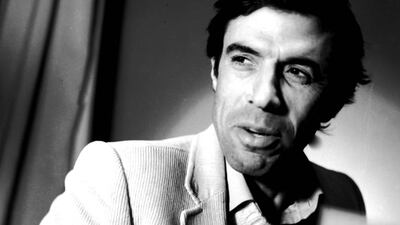
Bachtyar Ali returns with a new book. He was the first Kurdish author to have a novel translated into English. Photo: Khasraw Hama Karim

Bachtyar Ali, his new book and a lifelong quest to put Kurdish literature on the world map


  • English
  • Arabic

The last time Bachtyar Ali made a trip from his adopted home of Germany to his birthplace of Iraqi Kurdistan he received something of a hero’s welcome.

In Sulaymaniyah and Halabja, for four hours a day and for three days in a row, he signed copies of his new novel for readers. “That’s a sign that literature is now deeply embedded in people’s lives,” Ali says, “that there are people who see literature as an effective weapon.”

Over the course of four decades, Ali’s literature — spanning novels, poetry and essays — has confronted and explored chaos, conflict and injustice, particularly in regards to Iraqi Kurdistan. “In my entire literary work, I talk about how politics and power destroy human connections,” he tells The National, ahead of the release of his new book.

“In my country, the relationship between identities and individuals has been dangerously destroyed. It is the function of literature to reflect that tragedy and to reproduce a different type of relationship.”

Ali’s remarkable fiction is filled with, and indeed fuelled by, characters who journey far, either physically or spiritually, to build bridges, forge alliances and salvage what they hold dear. “My books are odes to individuals who don’t sit idly by when disaster strikes but who want to rescue something,” he reveals.

In The Mansion of the Sad Birds, a woman sends her suitors around the world to save them from the constraints of a small town and a parochial mindset. Meanwhile, I Stared at the Night of the City — the first Kurdish novel to be translated into English — features a group of friends who embark on a quest to recover the bodies of two lovers killed by the autocratic “Barons”. And in The Last Pomegranate Tree, Ali’s latest novel to be translated into English from Sorani Kurdish by Kareem Abdulrahman — the author follows a peshmerga fighter who goes in search of his long-lost son after 21 years in captivity.

Bachtyar Ali's The Last Pomegranate Tree. Photo: Archipelago Books

Dazzlingly inventive, The Last Pomegranate Tree has Ali engaging with his common themes and, at the same time, employing his trademark style — gritty realism combined with myth, allegory and fantastical flourishes.

Muzafar-i Subhdam’s odyssey is a desperate cross-country hunt depicting casualties of war and atrocities of dictatorial misrule — but it is also a never-ending magical mystery tour rendered vivid by Muhammad the Glass-Hearted, the Professor of our Dark Nights and the eponymous tree with its healing powers.

Ali is widely regarded as one of the most renowned and critically acclaimed writers from Iraqi Kurdistan. He grew up in Sulaymaniyah in northern Iraq, a place he found stimulating as “a literary and intellectual centre for the Kurds” — but also suffocating due to its “one-dimensionality” and lack of interaction with other cultures.

Ali abandoned his studies in geology after being injured in a student protest against Saddam Hussein and instead decided to devote his life to literature. “Understanding humans is more interesting than understanding rocks,” he says.

Rejecting the army and participation in the Iran-Iraq war, he went into hiding for several years, where he read and wrote regularly. After the revolt in 1991, Ali enjoyed a degree of creative freedom, publishing a collection of poems and the philosophical magazine Azadi.

“From the outset, I knew that the situation would not last for long, but I still wanted to make the best of that opportunity to do new types of intellectual and artistic work,” he says. “Most political situations in the Middle East are temporary. One must make the best of these calm, more normal periods.”

Ali says: 'Until 1991, the number of good Kurdish books could probably fill one bookcase. Now the Kurdish library is fairly large.' Photo: Khasraw Hama Karim

When Ali and his fellow journalists fell foul of the authorities and started to receive death threats, he realised he had to leave the country. He has lived in Germany for 25 years but, for his writing, continues to draw on his thoughts and memories of the land he left behind. Despite his best efforts, he feels he cannot fully convey the horrors of what he terms “the Iraqi disaster”.

“The vastness of this tragedy — its impact on the lives of adults and children, the deep psychological scars incurred, the displacement of millions of people — cannot be relayed," he says. "A paradox is created by the fact that our power to recount a story is limited whereas man’s brutality is not. But that doesn’t mean we should stop writing: it means we should write as if we are searching for the impossible.”

Ali is heartened by the fact that the voices of more and more Kurdish writers are being heard after years of suppression. Some, however, don’t get the wider audience they deserve,e he says. “There are only a small number of competent Kurdish translators and they work under very difficult circumstances,” he adds.

“In the West, there’s a common view that the Middle East doesn’t produce great art and literature. Few publishers take the risk of publishing a literary work from the Middle East, let alone from Kurdish literature that is virtually unknown.”

Still, Ali believes that Kurdish literature has come a long way in the last 30 years. “Until 1991, the number of good Kurdish books could probably fill one bookcase," he says. "Now, the Kurdish library is fairly large because many important works have been written in or translated into Kurdish.”

Ali says poetry used to be the dominant genre until a “radical change” brought about an interest in theoretical writings and novels. “Kurdish narrative literature is new," he adds. "Given its short history, I’ve seen some beautiful works, but I haven’t managed to read everything or to get to know all the writers well."

“It's impossible for me to give you an overview and say where my work lies in this,” he says. “But I do know that other writers rarely share my style and themes, or my philosophy of literature’s role. That makes me happy. As a writer, I’d like to be a different and remote island on the bigger map. I don’t know where exactly I am on it, but I know I hold a special place.”

The Last Pomegranate Tree was published on January 24 and is available to buy online or in bookshops

Explore Sulaymaniyah and Iraqi Kurdistan through the works of artist Ismail Khayat below

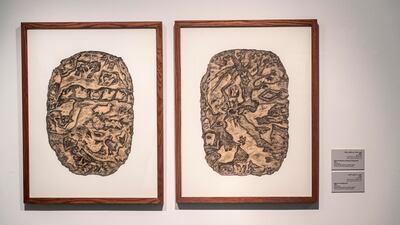
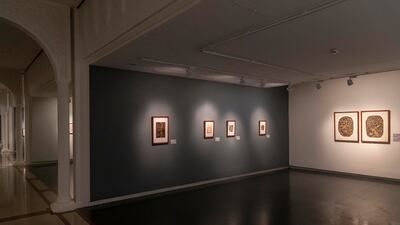
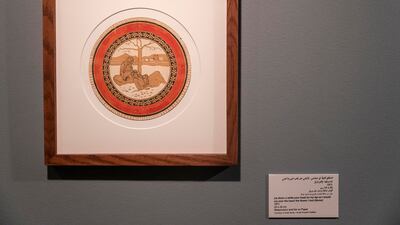
  • Sharjah Art Museum has paid tribute to the life and legacy of pioneering artist Ismail Khayat. An exhibition of his creations, titled Lasting Impressions, runs until November 27. Antonie Robertson / The National
    Sharjah Art Museum has paid tribute to the life and legacy of pioneering artist Ismail Khayat. An exhibition of his creations, titled Lasting Impressions, runs until November 27. Antonie Robertson / The National
  • Khayat, who died aged 78 in October, was among the most daring, creative and influential Arab artists of the 20th century. Photo: Ismail Khayat Gallery
    Khayat, who died aged 78 in October, was among the most daring, creative and influential Arab artists of the 20th century. Photo: Ismail Khayat Gallery
  • The exhibition features works spanning his six-decade career, as well as multiple mediums. Antonie Robertson / The National
    The exhibition features works spanning his six-decade career, as well as multiple mediums. Antonie Robertson / The National
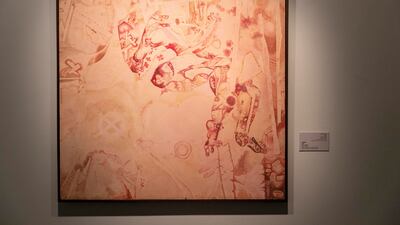
  • Known best for his Expressionist works, Khayat was dubbed the 'grandfather of Kurdish art'. Antonie Robertson / The National
    Known best for his Expressionist works, Khayat was dubbed the 'grandfather of Kurdish art'. Antonie Robertson / The National
  • His works incorporated symbols, landscapes and folklore from Iraqi Kurdistan. Antonie Robertson / The National
    His works incorporated symbols, landscapes and folklore from Iraqi Kurdistan. Antonie Robertson / The National
  • The exhibition is currently on show in Sharjah. Antonie Robertson / The National
    The exhibition is currently on show in Sharjah. Antonie Robertson / The National
  • Sharjah Art Museum's exhibition includes almost 150 samples of Khayat's works, which number in the thousands.
    Sharjah Art Museum's exhibition includes almost 150 samples of Khayat's works, which number in the thousands.
  • Co-curator Alya Al Mulla says: 'He was always experimenting; with different mediums, different techniques, and different elements, coming up with his own style.' Antonie Robertson / The National
    Co-curator Alya Al Mulla says: 'He was always experimenting; with different mediums, different techniques, and different elements, coming up with his own style.' Antonie Robertson / The National
  • His son Hayas says: “He was a role model for Kurds at the time because his works were displayed alongside the great artists of Iraq's golden period of fine art." Antonie Robertson / The National
    His son Hayas says: “He was a role model for Kurds at the time because his works were displayed alongside the great artists of Iraq's golden period of fine art." Antonie Robertson / The National
  • Khayat spent much of his life in the city of Sulaymaniyah — where he taught art at public schools for 25 years, and later at the American University of Iraq.
    Khayat spent much of his life in the city of Sulaymaniyah — where he taught art at public schools for 25 years, and later at the American University of Iraq.
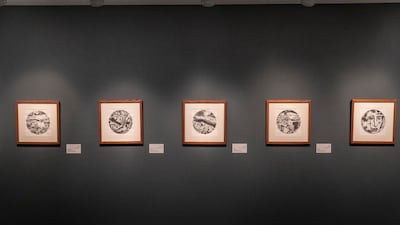
  • The first section of the exhibition showcases the artist's monochromatic works. Antonie Robertson / The National
    The first section of the exhibition showcases the artist's monochromatic works. Antonie Robertson / The National
  • A tour of SharjahArt Museum’s exhibition of works by Iraqi-Kurdish artist Ismail Khayat. Antonie Robertson/The National
    A tour of SharjahArt Museum’s exhibition of works by Iraqi-Kurdish artist Ismail Khayat. Antonie Robertson/The National
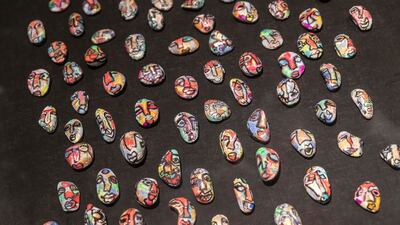
  • Khayat's peace stones. He began creating them during the Kurdish Civil War, which started in 1994. Antonie Robertson / The National
    Khayat's peace stones. He began creating them during the Kurdish Civil War, which started in 1994. Antonie Robertson / The National
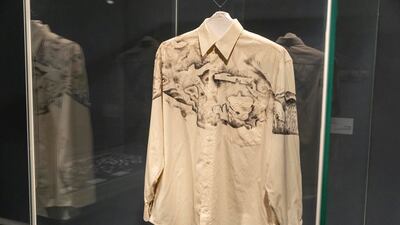
  • Khayat even designed clothes, carrying on the legacy of his father, a notable tailor. Antonie Robertson / The National
    Khayat even designed clothes, carrying on the legacy of his father, a notable tailor. Antonie Robertson / The National
Notable Yas events in 2017/18

October 13-14 KartZone (complimentary trials)

December 14-16 The Gulf 12 Hours Endurance race

March 5 Yas Marina Circuit Karting Enduro event

March 8-9 UAE Rotax Max Challenge

57%20Seconds
%3Cp%3E%3Cstrong%3EDirector%3A%3C%2Fstrong%3E%20Rusty%20Cundieff%0D%3Cbr%3E%3Cstrong%3EStars%3A%20%3C%2Fstrong%3EJosh%20Hutcherson%2C%20Morgan%20Freeman%2C%20Greg%20Germann%2C%20Lovie%20Simone%0D%3Cbr%3E%3Cstrong%3ERating%3A%20%3C%2Fstrong%3E2%2F5%0D%3Cbr%3E%0D%3Cbr%3E%3C%2Fp%3E%0A
Western Region Asia Cup Qualifier

Results

UAE beat Saudi Arabia by 12 runs

Kuwait beat Iran by eight wickets

Oman beat Maldives by 10 wickets

Bahrain beat Qatar by six wickets

Semi-finals

UAE v Qatar

Bahrain v Kuwait


Switching%20sides
%3Cp%3EMahika%20Gaur%20is%20the%20latest%20Dubai-raised%20athlete%20to%20attain%20top%20honours%20with%20another%20country.%0D%3C%2Fp%3E%0A%3Cp%3E%3Cstrong%3EVelimir%20Stjepanovic%20(Serbia%2C%20swimming)%20%3C%2Fstrong%3E%0D%3Cbr%3EBorn%20in%20Abu%20Dhabi%20and%20raised%20in%20Dubai%2C%20he%20finished%20sixth%20in%20the%20final%20of%20the%202012%20Olympic%20Games%20in%20London%20in%20the%20200m%20butterfly%20final.%20%0D%3C%2Fp%3E%0A%3Cp%3E%3Cstrong%3EJonny%20Macdonald%20(Scotland%2C%20rugby%20union)%20%3C%2Fstrong%3E%0D%3Cbr%3EBrought%20up%20in%20Abu%20Dhabi%20and%20represented%20the%20region%20in%20international%20rugby.%20When%20the%20Arabian%20Gulf%20team%20was%20broken%20up%20into%20its%20constituent%20nations%2C%20he%20opted%20to%20play%20for%20Scotland%20instead%2C%20and%20went%20to%20the%20Hong%20Kong%20Sevens.%20%0D%3C%2Fp%3E%0A%3Cp%3E%3Cstrong%3ESophie%20Shams%20(England%2C%20rugby%20union)%20%3C%2Fstrong%3E%0D%3Cbr%3EThe%20daughter%20of%20an%20English%20mother%20and%20Emirati%20father%2C%20Shams%20excelled%20at%20rugby%20in%20Dubai%2C%20then%20after%20attending%20university%20in%20the%20UK%20played%20for%20England%20at%20sevens.%20%0D%3C%2Fp%3E%0A
Start-up hopes to end Japan's love affair with cash

Across most of Asia, people pay for taxi rides, restaurant meals and merchandise with smartphone-readable barcodes — except in Japan, where cash still rules. Now, as the country’s biggest web companies race to dominate the payments market, one Tokyo-based startup says it has a fighting chance to win with its QR app.

Origami had a head start when it introduced a QR-code payment service in late 2015 and has since signed up fast-food chain KFC, Tokyo’s largest cab company Nihon Kotsu and convenience store operator Lawson. The company raised $66 million in September to expand nationwide and plans to more than double its staff of about 100 employees, says founder Yoshiki Yasui.

Origami is betting that stores, which until now relied on direct mail and email newsletters, will pay for the ability to reach customers on their smartphones. For example, a hair salon using Origami’s payment app would be able to send a message to past customers with a coupon for their next haircut.

Quick Response codes, the dotted squares that can be read by smartphone cameras, were invented in the 1990s by a unit of Toyota Motor to track automotive parts. But when the Japanese pioneered digital payments almost two decades ago with contactless cards for train fares, they chose the so-called near-field communications technology. The high cost of rolling out NFC payments, convenient ATMs and a culture where lost wallets are often returned have all been cited as reasons why cash remains king in the archipelago. In China, however, QR codes dominate.

Cashless payments, which includes credit cards, accounted for just 20 per cent of total consumer spending in Japan during 2016, compared with 60 per cent in China and 89 per cent in South Korea, according to a report by the Bank of Japan.

How to donate

Send “thenational” to the following numbers or call the hotline on: 0502955999
2289 – Dh10
2252 – Dh 50
6025 – Dh20
6027 – Dh 100
6026 – Dh 200

Avatar: Fire and Ash

Director: James Cameron

Starring: Sam Worthington, Sigourney Weaver, Zoe Saldana

Rating: 4.5/5

Company Profile

Name: Thndr
Started: 2019
Co-founders: Ahmad Hammouda and Seif Amr
Sector: FinTech
Headquarters: Egypt
UAE base: Hub71, Abu Dhabi
Current number of staff: More than 150
Funds raised: $22 million

AI traffic lights to ease congestion at seven points to Sheikh Zayed bin Sultan Street

The seven points are:

Shakhbout bin Sultan Street

Dhafeer Street

Hadbat Al Ghubainah Street (outbound)

Salama bint Butti Street

Al Dhafra Street

Rabdan Street

Umm Yifina Street exit (inbound)

Dust and sand storms compared

Sand storm

  • Particle size: Larger, heavier sand grains
  • Visibility: Often dramatic with thick "walls" of sand
  • Duration: Short-lived, typically localised
  • Travel distance: Limited 
  • Source: Open desert areas with strong winds

Dust storm

  • Particle size: Much finer, lightweight particles
  • Visibility: Hazy skies but less intense
  • Duration: Can linger for days
  • Travel distance: Long-range, up to thousands of kilometres
  • Source: Can be carried from distant regions
'Brazen'

Director: Monika Mitchell

Starring: Alyssa Milano, Sam Page, Colleen Wheeler

Rating: 3/5

WWE TLC results

Asuka won the SmackDown Women's title in a TLC triple threat with Becky Lynch and Charlotte Flair

Dean Ambrose won the Intercontinental title against Seth Rollins

Daniel Bryan retained the WWE World Heavyweight Championship against AJ Styles

Ronda Rousey retained the Raw Women's Championship against Nia Jax

Rey Mysterio beat Randy Orton in a chairs match

Finn Balor defeated Drew McIntyre

Natalya beat Ruby Riott in a tables match

Braun Strowman beat Baron Corbin in a TLC match

Sheamus and Cesaro retained the SmackDown Tag Titles against The Usos and New Day

R-Truth and Carmella won the Mixed Match Challenge by beating Jinder Mahal and Alicia Fox

MOUNTAINHEAD REVIEW

Starring: Ramy Youssef, Steve Carell, Jason Schwartzman

Director: Jesse Armstrong

Rating: 3.5/5

RESULT

Los Angeles Galaxy 2 Manchester United 5

Galaxy: Dos Santos (79', 88')
United: Rashford (2', 20'), Fellaini (26'), Mkhitaryan (67'), Martial (72')

Updated: February 25, 2023, 3:03 AM