Palestinian writer and architect Suad Amiry’s novel, Mother of Strangers, is a portrait of a fairy tale gone wrong. Released last month, it follows the story of the Palestinian people, through the intimate lives of its protagonists.
From the first page, we meet Subhi, aged 15, who lives in the ancient port city of Jaffa, between 1947 to 1951, a period spanning the end of the British Mandate and the beginning of the Arab-Israeli War.
When Subhi, who works as a mechanic, meets peasant girl Shams, 13, at an annual summer festival, he decides that he must marry her.
Ambitious, clever and talented, Subhi’s hard work as a mechanic is rewarded when a rich merchant offers to buy him a full English suit for fixing the water pump in his orange grove. Even before getting the suit tailored to fit him, Subhi imagines wearing it on his wedding day, seeing the suit as a ticket to a brighter future for himself with Shams and his family.
MOTHER%20OF%20STRANGERS
%3Cp%3EAuthor%3A%20Suad%20Amiry%3Cbr%3EPublisher%3A%20Pantheon%3C%2Fp%3E%0A%3Cp%3EPages%3A%20304%3Cbr%3EAvailable%3A%20Now%3C%2Fp%3E%0A
Through both Subhi and Shams, we explore an honest, and perhaps, naive view of the world, which slowly crumbles as the mass displacement of Palestinians begins.
Mother of Strangers is hopeful, dark, ironic and full of heartbreak, especially when one discovers that Subhi and Shams were not fictionalised characters but real people, who are still alive today.
Curiously, the book was never meant to be a work of fiction.
Amiry has written six works of nonfiction including Sharon and My Mother-in-Law, which was awarded the Viareggio-Versilia International Prize in 2004, and Golda Slept Here, which won the Nonino Risit d’Aur Prize in 2014. As an architect, she was the recipient of the Aga Khan Award for Architecture and is the founder of the Riwaq Centre for Architectural Conservation in Ramallah, where she has lived for many years.
Amiry’s nonfiction and her work outside of writing frequently delve into the lives of Palestinians, their history, identity and sense of place.
Her first novel began with a plan to write a story about her father. In the author’s note, Amiry recounts a story her father told her of when he was refused entry to visit his childhood home in Jaffa.
“I was 17, and it was the first time I had ever seen him cry,” Amiry writes. “Those were the tears that stopped me from visiting my family’s home in Jaffa all those years.”
Despite only living 40 minutes away from Jaffa, Amiry never felt strong enough to make the journey in search of her father’s home and the hometown which he had told her countless stories about.
“I was born and raised in Damascus and Jordan so I never had the chance to see Palestine,” Amiry tells The National.
“I had to imagine Jaffa from a distance. I always say I became an architect because of building little models in my brain about how Palestine and Jaffa looked like.”
Amiry decided, 40 years after her father told her his story, to go to Jaffa and search for the childhood home he never returned to and write a book about it. However, her first attempt to pay homage to her father felt like a failure at first.
“When I couldn't find the house, I was very depressed,” she says.
“Then the taxi driver taking me from Jaffa to Ramallah felt how sad I was. He told me, if you want to write something about Jaffa, I have a good story for you. And he started talking about Shams.”
The story of Shams, Subhi and their love story in Jaffa triggered something in Amiry. She started to research their lives, the history of Jaffa and met and interviewed them both to piece together what happened to them and what happened to her father’s hometown.
“I feel that we Palestinians and Arabs in general, we shy away from personal stories,” says Amiry.
“Unlike the Europeans, unlike the Jewish people who address personal stories, we don’t. And personal stories are universal, they connect you to other human beings as human beings.”
At first, Amiry wasn’t sure what direction she was heading with the book, but she knew the stories of these people mattered and could shed more light on the history of Palestine than any statistics or figures. What she created was a fictionalised novel, combining her father’s recollections of his home town, the lives of Shams and Subhi and a harrowing period of history intertwined with the lives of very real people.
“This is also a love story of young teenagers,” says Amiry.
“Everything really in Palestine, and these two young people had a future, had hope. And the war made all of this collapse. So I wanted to share with the world, what happened to normal people during the war.”
Amiry approached the story and its tangents in an accessible way, drawing readers in through the power of the narrative, the characters and her rich descriptions of Jaffa. From the view of the sea, the abundance of orange groves, the quaint cafes and old cinemas, the real cosmopolitan fabric of the city becomes a fully whole and realised character all on its own.
In its heart, Mother of Strangers is a universal story about everyday people, with hopes and dreams, who somehow, achingly, found a means to survive through unbelievable and tragic adversity. It is a truth that connects the characters in her book to her father and certainly to Amiry herself.
“Subhi revived what my father went through,” Amiry says. “I found characters, as it were, who fulfilled a story that I wanted to tell about my father.”
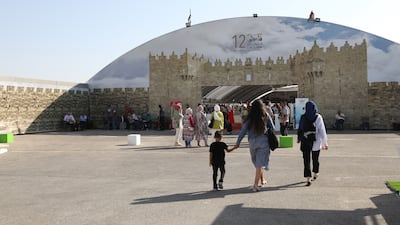
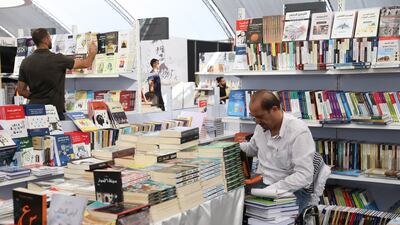
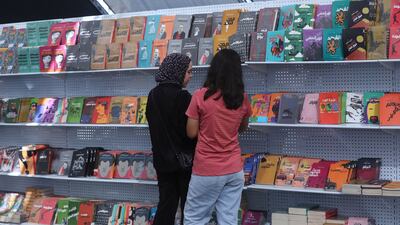
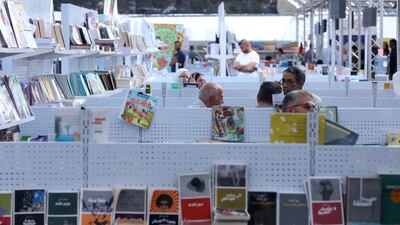
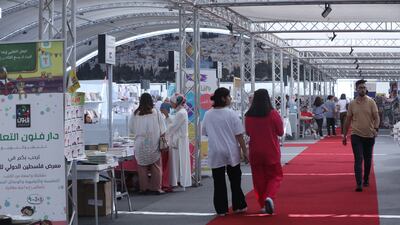
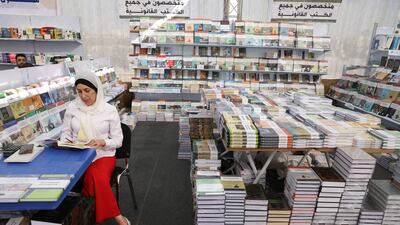
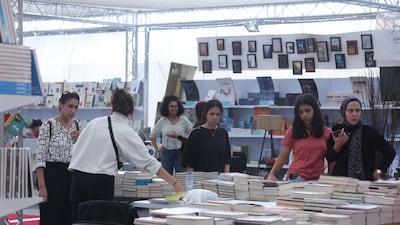
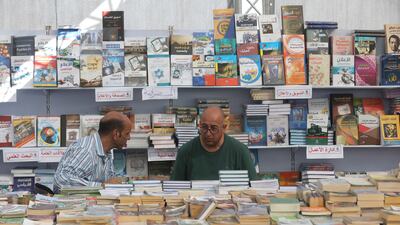
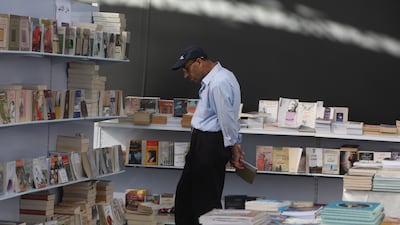
Scroll through images of the Palestine International Book Fair in Ramallah below
Mohammed bin Zayed Majlis
COMPANY PROFILE
Company name: Blah
Started: 2018
Founder: Aliyah Al Abbar and Hend Al Marri
Based: Dubai
Industry: Technology and talent management
Initial investment: Dh20,000
Investors: Self-funded
Total customers: 40
Key figures in the life of the fort
Sheikh Dhiyab bin Isa (ruled 1761-1793) Built Qasr Al Hosn as a watchtower to guard over the only freshwater well on Abu Dhabi island.
Sheikh Shakhbut bin Dhiyab (ruled 1793-1816) Expanded the tower into a small fort and transferred his ruling place of residence from Liwa Oasis to the fort on the island.
Sheikh Tahnoon bin Shakhbut (ruled 1818-1833) Expanded Qasr Al Hosn further as Abu Dhabi grew from a small village of palm huts to a town of more than 5,000 inhabitants.
Sheikh Khalifa bin Shakhbut (ruled 1833-1845) Repaired and fortified the fort.
Sheikh Saeed bin Tahnoon (ruled 1845-1855) Turned Qasr Al Hosn into a strong two-storied structure.
Sheikh Zayed bin Khalifa (ruled 1855-1909) Expanded Qasr Al Hosn further to reflect the emirate's increasing prominence.
Sheikh Shakhbut bin Sultan (ruled 1928-1966) Renovated and enlarged Qasr Al Hosn, adding a decorative arch and two new villas.
Sheikh Zayed bin Sultan (ruled 1966-2004) Moved the royal residence to Al Manhal palace and kept his diwan at Qasr Al Hosn.
Sources: Jayanti Maitra, www.adach.ae
The%20specs
%3Cp%3E%3Cstrong%3EEngine%3A%20%3C%2Fstrong%3E3.0%20twin-turbo%20inline%20six-cylinder%0D%3Cbr%3E%3Cstrong%3ETransmission%3A%20%3C%2Fstrong%3Eeight-speed%0D%3Cbr%3E%3Cstrong%3EPower%3A%20%3C%2Fstrong%3E503hp%0D%3Cbr%3E%3Cstrong%3ETorque%3A%20%3C%2Fstrong%3E600Nm%0D%3Cbr%3E%3Cstrong%3EPrice%3A%20%3C%2Fstrong%3Efrom%20Dh450%2C000%0D%3Cbr%3E%3Cstrong%3EOn%20sale%3A%20%3C%2Fstrong%3Enow%3C%2Fp%3E%0A
The%20specs
%3Cp%3E%3Cstrong%3EEngine%3A%3C%2Fstrong%3E%201.8-litre%204-cyl%20turbo%0D%3Cbr%3E%3Cstrong%3EPower%3A%20%3C%2Fstrong%3E190hp%20at%205%2C200rpm%0D%3Cbr%3E%3Cstrong%3ETorque%3A%3C%2Fstrong%3E%20320Nm%20from%201%2C800-5%2C000rpm%0D%3Cbr%3E%3Cstrong%3ETransmission%3A%20%3C%2Fstrong%3ESeven-speed%20dual-clutch%20auto%0D%3Cbr%3E%3Cstrong%3EFuel%20consumption%3A%3C%2Fstrong%3E%206.7L%2F100km%0D%3Cbr%3E%3Cstrong%3EPrice%3A%3C%2Fstrong%3E%20From%20Dh111%2C195%0D%3Cbr%3E%3Cstrong%3EOn%20sale%3A%20%3C%2Fstrong%3ENow%3C%2Fp%3E%0A
World Cricket League Division 2
In Windhoek, Namibia - Top two teams qualify for the World Cup Qualifier in Zimbabwe, which starts on March 4.
UAE fixtures
Thursday, February 8 v Kenya; Friday, February 9 v Canada; Sunday, February 11 v Nepal; Monday, February 12 v Oman; Wednesday, February 14 v Namibia; Thursday, February 15 final
Ten tax points to be aware of in 2026
1. Domestic VAT refund amendments: request your refund within five years
If a business does not apply for the refund on time, they lose their credit.
2. E-invoicing in the UAE
Businesses should continue preparing for the implementation of e-invoicing in the UAE, with 2026 a preparation and transition period ahead of phased mandatory adoption.
3. More tax audits
Tax authorities are increasingly using data already available across multiple filings to identify audit risks.
4. More beneficial VAT and excise tax penalty regime
Tax disputes are expected to become more frequent and more structured, with clearer administrative objection and appeal processes. The UAE has adopted a new penalty regime for VAT and excise disputes, which now mirrors the penalty regime for corporate tax.
5. Greater emphasis on statutory audit
There is a greater need for the accuracy of financial statements. The International Financial Reporting Standards standards need to be strictly adhered to and, as a result, the quality of the audits will need to increase.
6. Further transfer pricing enforcement
Transfer pricing enforcement, which refers to the practice of establishing prices for internal transactions between related entities, is expected to broaden in scope. The UAE will shortly open the possibility to negotiate advance pricing agreements, or essentially rulings for transfer pricing purposes.
7. Limited time periods for audits
Recent amendments also introduce a default five-year limitation period for tax audits and assessments, subject to specific statutory exceptions. While the standard audit and assessment period is five years, this may be extended to up to 15 years in cases involving fraud or tax evasion.
8. Pillar 2 implementation
Many multinational groups will begin to feel the practical effect of the Domestic Minimum Top-Up Tax (DMTT), the UAE's implementation of the OECD’s global minimum tax under Pillar 2. While the rules apply for financial years starting on or after January 1, 2025, it is 2026 that marks the transition to an operational phase.
9. Reduced compliance obligations for imported goods and services
Businesses that apply the reverse-charge mechanism for VAT purposes in the UAE may benefit from reduced compliance obligations.
10. Substance and CbC reporting focus
Tax authorities are expected to continue strengthening the enforcement of economic substance and Country-by-Country (CbC) reporting frameworks. In the UAE, these regimes are increasingly being used as risk-assessment tools, providing tax authorities with a comprehensive view of multinational groups’ global footprints and enabling them to assess whether profits are aligned with real economic activity.
Contributed by Thomas Vanhee and Hend Rashwan, Aurifer
Tamkeen's offering
- Option 1: 70% in year 1, 50% in year 2, 30% in year 3
- Option 2: 50% across three years
- Option 3: 30% across five years
The specs: 2018 Chevrolet Trailblazer
Price, base / as tested Dh99,000 / Dh132,000
Engine 3.6L V6
Transmission: Six-speed automatic
Power 275hp @ 6,000rpm
Torque 350Nm @ 3,700rpm
Fuel economy combined 12.2L / 100km
The specs
Engine: 2.0-litre 4cyl turbo
Power: 261hp at 5,500rpm
Torque: 405Nm at 1,750-3,500rpm
Transmission: 9-speed auto
Fuel consumption: 6.9L/100km
On sale: Now
Price: From Dh117,059
Ipaf in numbers
Established: 2008
Prize money: $50,000 (Dh183,650) for winners and $10,000 for those on the shortlist.
Winning novels: 13
Shortlisted novels: 66
Longlisted novels: 111
Total number of novels submitted: 1,780
Novels translated internationally: 66
Sholto Byrnes on Myanmar politics
The specs
- Engine: 3.9-litre twin-turbo V8
- Power: 640hp
- Torque: 760nm
- On sale: 2026
- Price: Not announced yet
Sheer grandeur
The Owo building is 14 storeys high, seven of which are below ground, with the 30,000 square feet of amenities located subterranean, including a 16-seat private cinema, seven lounges, a gym, games room, treatment suites and bicycle storage.
A clear distinction between the residences and the Raffles hotel with the amenities operated separately.
PROFILE OF HALAN
Started: November 2017
Founders: Mounir Nakhla, Ahmed Mohsen and Mohamed Aboulnaga
Based: Cairo, Egypt
Sector: transport and logistics
Size: 150 employees
Investment: approximately $8 million
Investors include: Singapore’s Battery Road Digital Holdings, Egypt’s Algebra Ventures, Uber co-founder and former CTO Oscar Salazar
MOTHER%20OF%20STRANGERS
%3Cp%3EAuthor%3A%20Suad%20Amiry%3Cbr%3EPublisher%3A%20Pantheon%3C%2Fp%3E%0A%3Cp%3EPages%3A%20304%3Cbr%3EAvailable%3A%20Now%3C%2Fp%3E%0A