


There’s no denying the diversity of Arab culture, one rich in history with a long tradition in storytelling. But it seems that Arab stories aren’t reaching their intended audiences within the region and beyond.
At the Frankfurt Book Fair last month, the Abu Dhabi Arabic Language Centre hosted a number of panel discussions exploring how challenges facing Arabic literature and the Arabic publishing market could be overcome.
Earlier in May, during the International Congress of Publishing and Creative Industries in Abu Dhabi, concerns around the rise of digital piracy, respecting the intellectual property of authors, reading education and distribution challenges were at the forefront of discussions.
Any reader of Arabic literature will profess there are challenges around the infrastructure of publishing in the Arab world. Simply put, not all books published in Arabic are readily available to those who want to read them and not all Arabic-language writers feel their work is given the platforms and support it deserves.
However, as seen by the impressive turn out at this year's Sharjah International Book Fair, which runs until Sunday, judging from the sessions, award ceremonies and conversations on the ground, there is a sense of urgency and the regional publishing industry is taking matters into its own hands by heading in the right direction.
-
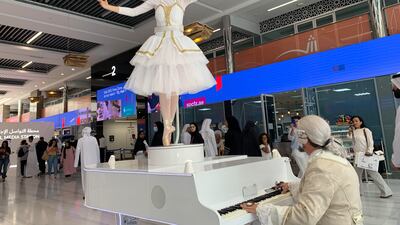
The first day of the Sharjah International Book Fair, at Expo Centre. Pawan Singh / The National -
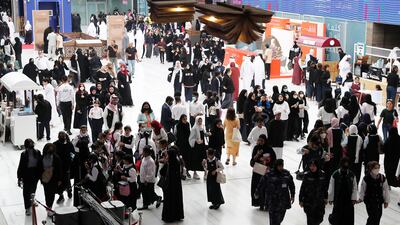
The first day of the Sharjah International Book Fair, at Expo Centre. Pawan Singh / The National -
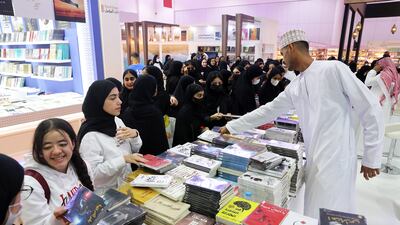
The first day of the Sharjah International Book Fair, at Expo Centre. Pawan Singh / The National -
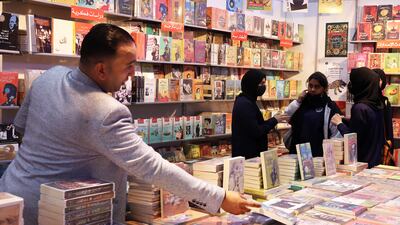
The first day of the Sharjah International Book Fair, at Expo Centre. Pawan Singh / The National -

The first day of the Sharjah International Book Fair, at Expo Centre. Pawan Singh / The National -
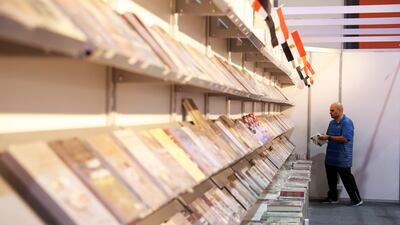
The first day of the Sharjah International Book Fair, at Expo Centre. Pawan Singh / The National -
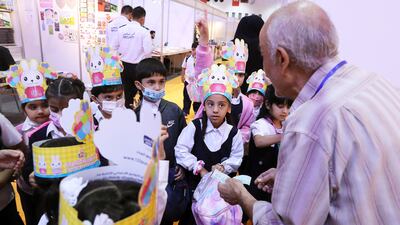
The first day of the Sharjah International Book Fair, at Expo Centre. Pawan Singh / The National -
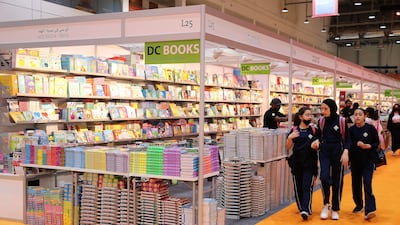
The first day of the Sharjah International Book Fair, at Expo Centre. Pawan Singh / The National -
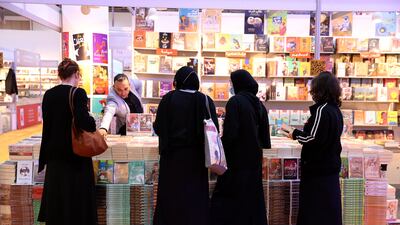
The first day of the Sharjah International Book Fair, at Expo Centre. Pawan Singh / The National -

The first day of the Sharjah International Book Fair, at Expo Centre. Pawan Singh / The National -
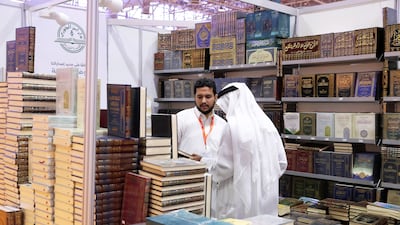
The first day of the Sharjah International Book Fair, at Expo Centre. Pawan Singh / The National -

The first day of the Sharjah International Book Fair, at Expo Centre. Pawan Singh / The National -
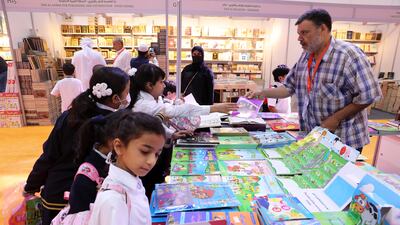
The first day of the Sharjah International Book Fair, at Expo Centre. Pawan Singh / The National -
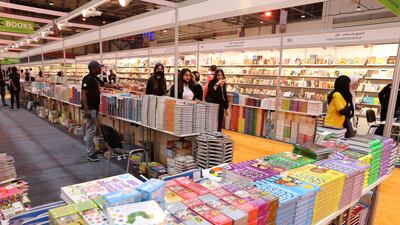
The first day of the Sharjah International Book Fair, at Expo Centre. Pawan Singh / The National -
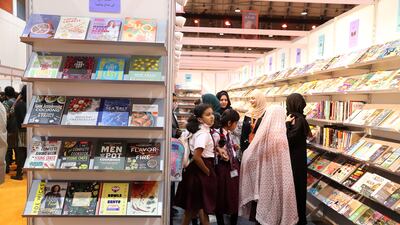
The first day of the Sharjah International Book Fair, at Expo Centre. Pawan Singh / The National -

The first day of the Sharjah International Book Fair, at Expo Centre. Pawan Singh / The National -
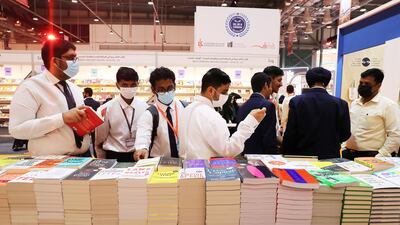
The first day of the Sharjah International Book Fair, at Expo Centre. Pawan Singh / The National


Penguin Random House’s chief executive Markus Dohle was at the book fair for the first time and commented on the growth and positive energy present during the book festival.
“We see the growth, both in international distribution here, but also in local publishing,” Dohle tells The National.
“The book fair is growing every year and has become a huge international centre, for publishing, for publishing executives, for book retailers from around the world and readers alike.”
Dohle’s visit is a sign that big names such as Penguin Random House are interested in in the region. On one hand, some of the company's titles, such as Prince Harry's long-awaited memoir Spare, clearly strike a chord across different markets through our shared global culture. .
“He's one of the most interesting and globally known public figures in recent history,” Dohle says. “For us, as publishers, to be part of bringing his experiences domestically and globally, family and beyond, into the world, it is an honour.”
On the other hand, Penguin Random House also wants to support local culture and voices, whether it's engaging in publishing opportunities or exploring the literature landscape and writing talent of the region.
“In publishing, it’s always about one book at a time, one story at a time,” Dohle says.
“We are experienced in bringing international voices to the region but are learning how to understand the local culture, the local writing talent and the writing community. And we need some time to find the best voices that we then hopefully bring into the world.”
Storytelling is connected to the human experience, a way to forge through challenges, form connections and understand the world around us. But this can't happen if the books aren’t being published, and a lack globally of diversity in the industry is a major challenge here in the Arab world.
Within the context of Arab writing, particularly Arab fiction, pertaining to both books in translation and books by writers in the Arab diaspora, there simply aren’t enough.

Hisham Matar’s The Return won the 2017 Pulitzer Prize for Biography or Autobiography, Omani author Jokha Alharthi Celestial Bodies won the International Man Booker prize in 2019, Lebanese writer Zeina Hashem Beck's poetry collection O was published this year under the Penguin Poets series, making her the first Arab poet to do so. These and a number of recently released graphic novels and young adult fiction pieces are only the beginning of what should be a more expansive, more diverse literary selection of what Arab writers have to offer.
Dohle says in order to see real, organic diversity, the change needs to start internally within publishing houses themselves.
“We have publishing companies around the world on six continents in more than 25 countries,” he says.
“Over time, our community has to represent the population of the society, the nation and the culture. Once we've achieved that, we can attract more diverse publishing and writing talent, and with that more diverse stories. Once we have that we can publish more diverse stories to a more diverse audience. But it starts with us.”
Over the last few years, social media has been instrumental in pushing issues of diversity, particularly in fiction, to the forefront of the discussion around books and reading. Author Corinne Duyvis coined the hashtag #OwnVoices, now a staple in the industry, to highlight books where creators or main characters come from underrepresented or marginalised communities.
In 2020, #PublishingPaidMe was a social media campaign on Twitter where writers shared book advances online. The viral campaign exposed major pay disparity and inequality in advances and opportunities between writers of colour and white writers.
Also in 2020, The New York Times published Just How White Is the Book Industry?, an article revealing that out of 7,124 books published by major publishing houses between 1950 and 2018, 95 per cent were written by white authors.
Author and story diversity at major publishing houses has increased over the last few years, but there is no quick fix when it comes to this obvious imbalance.
“We are making progress,” Dohle says. “It's not a sprint. It's a marathon. But I think finally we’ve become tangible and measurable about it and I think that's an important step that the industry has never done before.”
The publishing industry is one of those rare enterprises where creativity and commerce meet. And while it may seem that streaming platforms might be competing with reading, it has in fact helped give a platform to diverse voices and inspired a return to reading.
“Ten, 15 years ago, we had perhaps 10 or 15 stories that were translated into video content,” Dohle says. “Today? It's far beyond 100 because of the growth of video via streaming, and people who watch those series, they come back to the original story, and they buy and read the book.”
Crazy Rich Asians, To All the Boys I’ve Loved Before and Bridgerton, to name a few, are all commercially and critically acclaimed movies and shows that have been adapted from novels and are driving audiences to read the original source.
It seems only natural then that with diverse voices from around the world carving a space in the mainstream and connecting with an audience, that it’s a matter of time before stories from and about the Arab world, by Arabs, will do the same.
“I always say money gets jealous, and follows the best stories,” Dohle says.
“We have to discover the most compelling writers, help them to perfect their stories and the package and then launch it into the world.
"And I think this region has a lot to offer, both in fiction and nonfiction because of the rich history and culture here.”
Scroll through the below gallery to see 19 graphic novels set in the Middle East
-
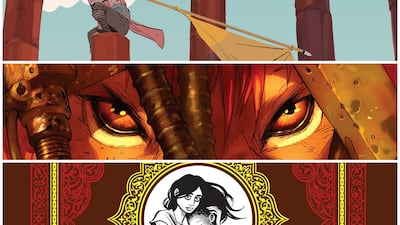
From across genres, writers and illustrators are telling authentic stories and nuanced experiences set in the Middle East. Photo: Supplied -
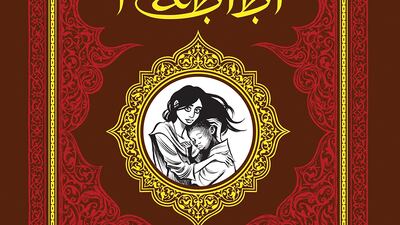
'Habibi' by Craig Thompson is set in a fictional Arab world and tells the story of refugee child slaves Dodola and Zam, who escape their captors. Photo: Craig Thompson -
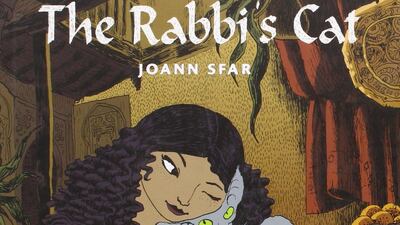
'The Rabbi’s Cat' by Joann Sfar is a comical story set in 1930s Algeria about a photo that gains the ability to speak after eating the family parrot. Photo: Joann Sfar -
'Hasib & the Queen of Serpents' by David B is an engrossing story influenced by the structural frame of the classic 'One Thousand and One Nights'. Photo: David B -
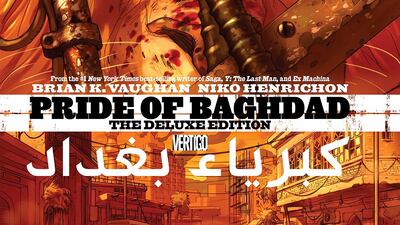
'Pride of Baghdad' by Brian K Vaughan is a story based on true events set in 2003 Iraq where a pride of lions, Zill, Safa, Noor and Ali, escape from the Baghdad Zoo after the city is bombed by American forces. Photo: Brian K Vaughan -
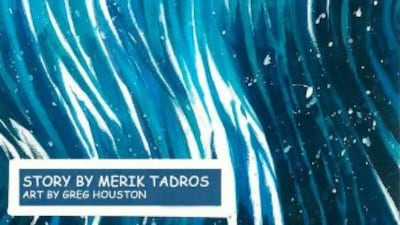
'River Jordan' by Merik Tadros is set in Chicago and Amman, Jordan and tells the story of Rami, 9, who is coming to terms with his father’s murder by creating art. Photo: Merik Tadros -

'Palestine' by Joe Sacco explores the Palestinian revolution and the Gulf War, detailing many of the difficulties faced by the Palestinian people. Photo: Joe Sacco -
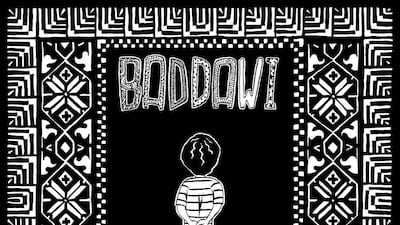
In 'Baddawi', Leila Abdelrazaq explores her father Ahmed’s harrowing childhood when he was raised in a refugee camp in northern Lebanon among thousands of Palestinians who fled their homeland after the 1948 war. Photo: Leila Abdelrazaq -
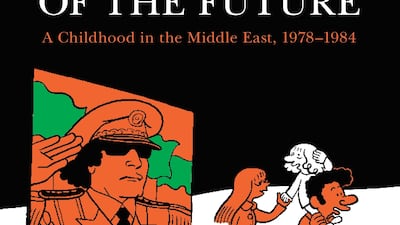
'The Arab of the Future' by Riad Sattouf is an autobiographical graphic novel set in rural France, Libya and Syria in the 1970s and '80s that featured three dictators that altered the course of Sattouf's life - Gaddafi, Assad, and his father. Photo: Riad Sattouf -
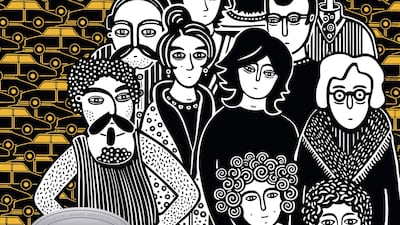
'A Game for Swallows' by Zeina Abirached is set in 1984, East Beirut, during the Lebanese Civil War, where Zeina, 6, and her brother must endure a night of bombings when their parents don’t return home. Photo: Zeina Abirached -

'I Remember Beirut' by Zeina Abirached is a collection of stories based on Abirached’s childhood in post-war Lebanon and is filled with poignant and powerful details on the impact of war. Photo: Zeina Abirached -
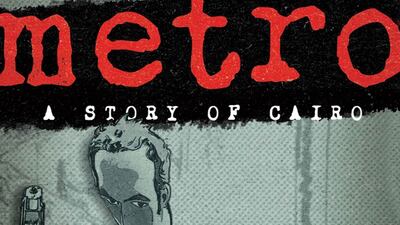
'Metro' by Magdy El Shafee is set in busy, dynamic Cairo, where Shihab, who in an attempt to pay back a loan, decides to rob a bank and finds himself in the middle of a government cover-up. Photo: Magdy El Shafee -

'Cairo' by G Willow Wilson is an urban fantasy set in the city, where a set of unlikely characters are in search of an artefact of formidable power - a jinn trapped in a stolen hookah. Photo: G Willow Wilson -
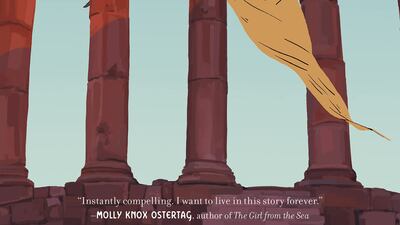
'Squire' by Sara Alfageeh and Nadia Shammas is an exciting fantasy adventure about swords, knights and squires. Photo: Sara Alfageeh and Nadia Shammas -
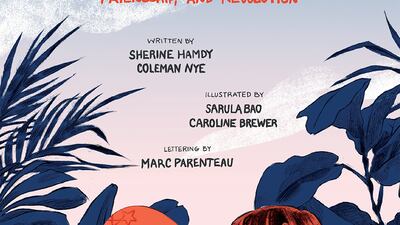
'Lissa: A Story about Medical Promise, Friendship, and Revolution' by Sherine Hamdy tells the story of an unlikely friendship, between Anna and Layla who come from different classes, cultural backgrounds and religions. Photo: Sherine Hamdy -
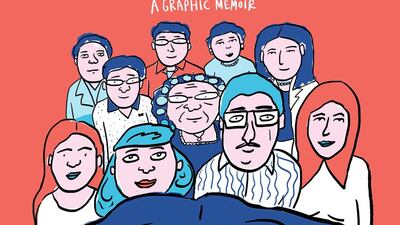
'I Was Their American Dream' by Malaka Gharib is a graphic memoir about heritage, self-discovery and family and the lives of modern immigrants in America. Photo: Malaka Gharib -
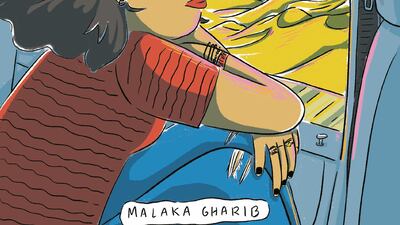
'It Won't Always Be Like This' is another intimate graphic memoir from Malaka Gharib about her experiences as a young American girl growing up with her Egyptian father's new family. Photo: Malaka Gharib -
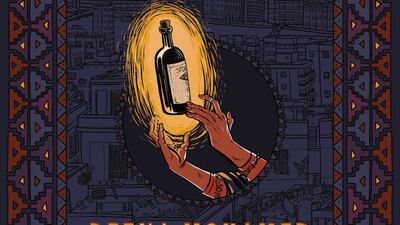
'Shubiek Lubiek' by Deena Mohamed is set in modern day Cairo but in a world where wishes from genies are not only real, but for sale. Photo: Deena Mohamed -
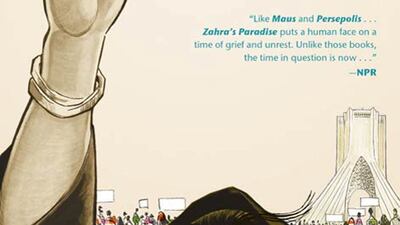
'Zahra's Paradise' by Amir Soltani and Khalil Bendib is set in modern Iran after the 2009 election and follows the chain of events after the disappearance of a young protestor and activist Mehdi. Photo: Amir Soltani and Khalil -
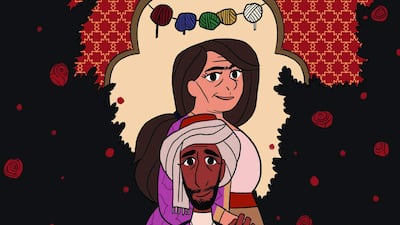
'The Carpet Merchant of Konstantiniyya' by Reimena Yee is the story of Zeynel who must reconnect to faith, love and his home after he is turned into a vampire by a stranger. Photo: Reimena Yee



