


On the second day of the Culture Summit Abu Dhabi, Noura Al Kaabi, Minister of Culture and Youth, gave a speech to a packed auditorium in which she highlighted the importance of growing a cultural practice in the Emirates and put the spotlight on creatives in the region.
The three-day event is looking at the theme of Living Culture through the lens of practitioners and participants.
Al Kaabi began her speech by thanking individuals from the creative field who “are exemplary models of a living and breathing cultural tapestry of the UAE”.
Scroll through the gallery below to see more photos from days one and two of the Culture Summit Abu Dhabi
-
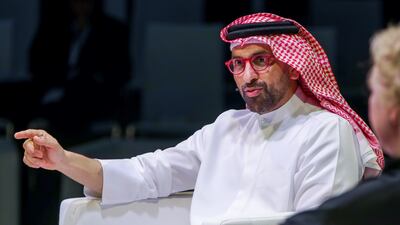
Sultan Sooud Al Qassemi, founder of Barjeel Art Foundation, takes part in the discussion on the third and final day of Culture Summit Abu Dhabi. All photos: Victor Besa / The National -

Manal Ataya, director general at Sharjah Museums Authority, also took part in the panel. -
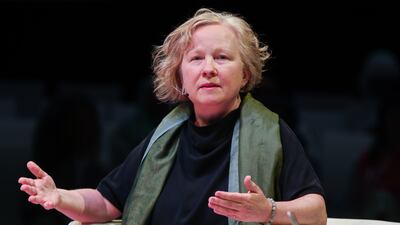
Maya Allison, executive director and chief curator at the NYU Abu Dhabi Art Gallery, joined the discussion. -
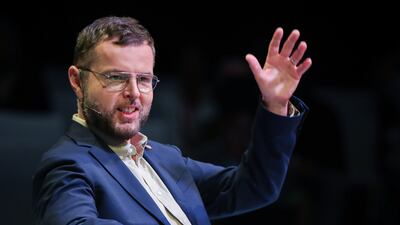
A panellist speaks during the event. -

The New Canon was one of the panels held on day three of the Culture Summit Abu Dhabi. -
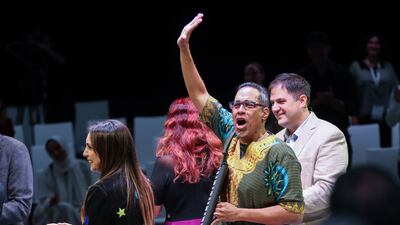
Famed pianist, composer and educator Danilo Perez waves to the crowd. -
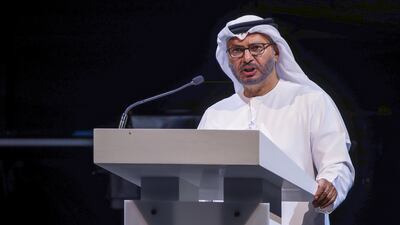
Former minister and now diplomatic advisor Anwar Gargash. Victor Besa / The National -
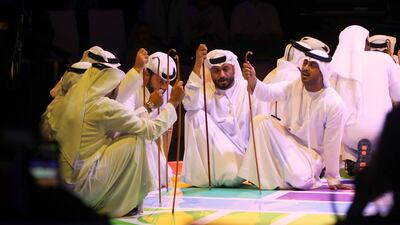
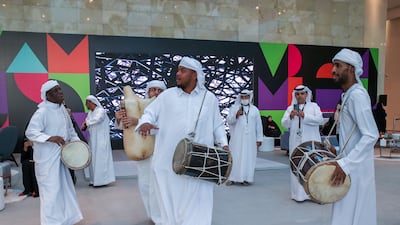
Visitors were treated to a traditional Al Ayala dance, where performers hold thin bamboo canes and move to steady drum rhythms. -
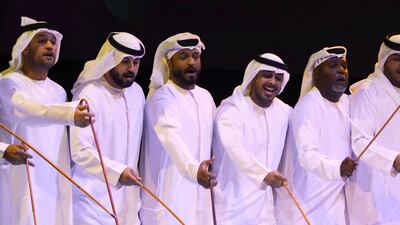
Al Ayala is often performed at weddings and other celebrations. -

Chris Dercon in conversation with architect Sir David Adjaye. -
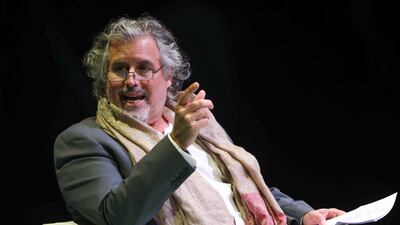
A session on Taking Bollywood Global: Dynamics of Diversity, moderated by Hans Fraikin, Abu Dhabi Film Commissioner. -
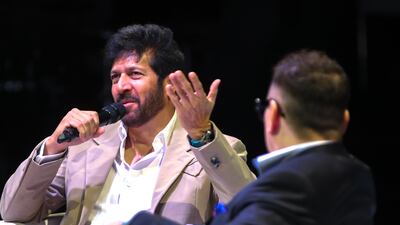
Kabir Khan, director of '83', in the conversation on Bollywood. -
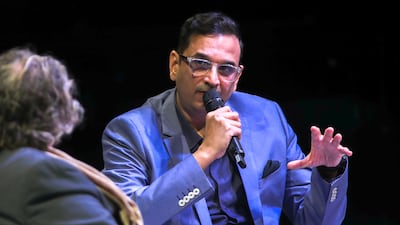
Taking Bollywood Global: Dynamics of Diversity - Aashish Singh, Chief Executive Officer, Lyca Productions. -

Andre Timmins, founder and director of Wizcraft and IIFA, as part of the discussion on Bollywood. -
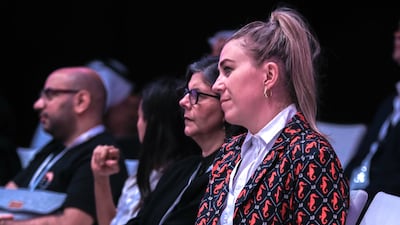
A member of the audience watching a panel called 'Taking Bollywood Global: Dynamics of Diversity'. -
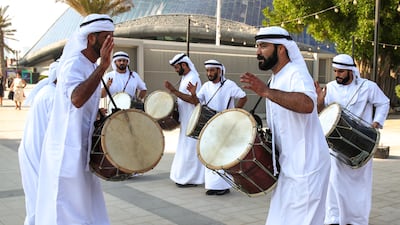
Day three of the Culture Summit Abu Dhabi opened with a traditional performance from the mountain regions. -

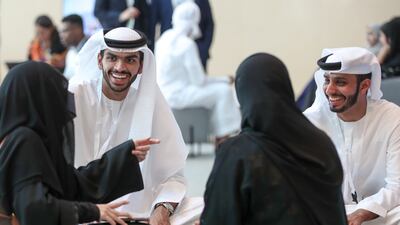
The event was a meeting of minds, with visitors from across various sectors sharing their thoughts on the post-Covid cultural world. -

Omar Saif Ghobash, UAE ambassador to Vatican, speaks at the event. -
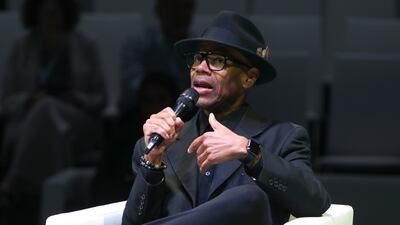
Grammy Award-winning producer Jimmy Jam discussed the regional music scene. -
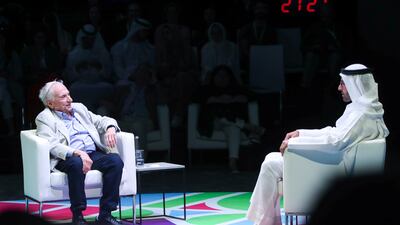
Mohamed Al Mubarak in conversation with Frank Gehry, Architect, Gehry Partners. -
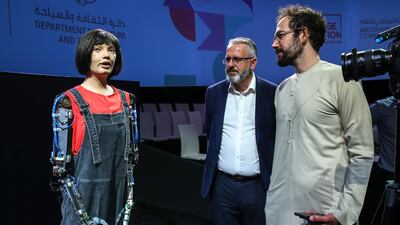
Robot artist Ai-Da, left, in conversation with The National's Hareth Al Bustani, far right, with her creator Aidan Meller, looking on. -
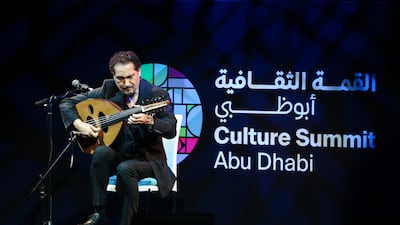
Performance by Iraqi oud virtuoso Naseer Shamma. -
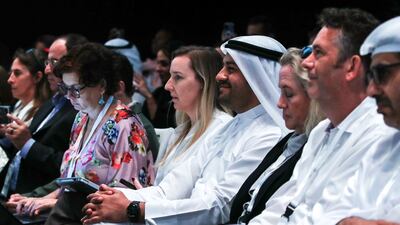
The audience listens to Mohamed Al Mubarak in conversation with Frank Gehry, Architect, Gehry Partners. -
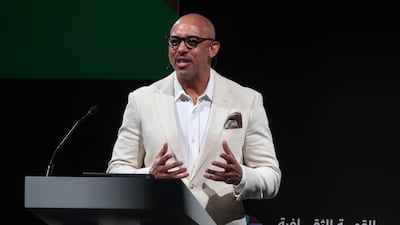
Harvey Mason Jr, chief executive of Recording Academy, lecturing on 'Music and Influence on Global Culture'. -
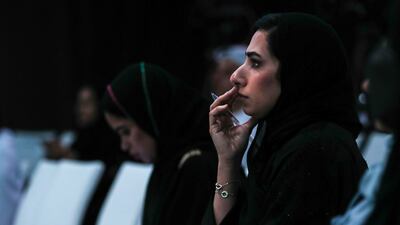
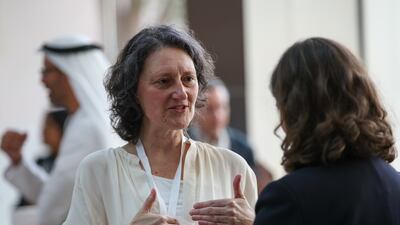
An attendee on day two of the Culture Summit in Abu Dhabi. -
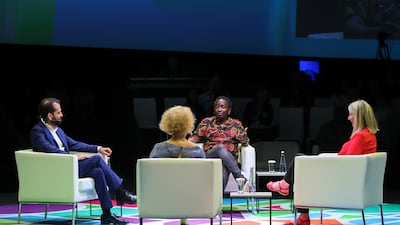
A discussion on 'Mentoring for Impact', with moderator Fiammetta Rocco, senior editor and culture editor of The Economist, and speakers Erica Love, director of Culture Central, Eric Wainaina, artist and founder of The Nairobi Musical Theatre Initiative, and Gael Hedding, director of Berklee Abu Dhabi. -
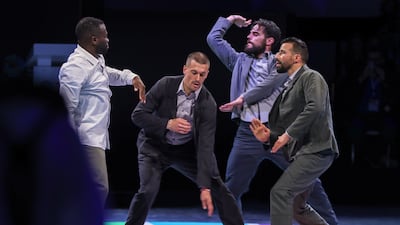
A peformance of 'The Roots' by French Algerian choreographer Kader Attou, a dance performance in which he returns to the origins of hip-hop with an acrobatic celebration of the genre. Eleven dancers perform different facets of the former underground culture and show how the body can bend to different beats: from breakdance to Smurf, electric boogie to popping. -
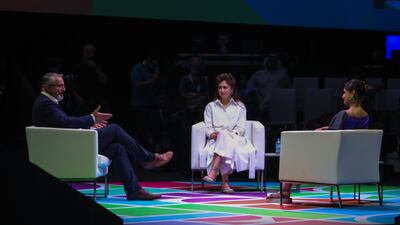
A discussion on 'AI and the Future of Culture', with moderator Priya Khanchandani, head of curatorial + interpretation at the Design Museum, and speakers Aidan Meller, director of Ai-Da Robot and Oxfordians, and Suhair Khan, founder and director of Open/Ended Design. -
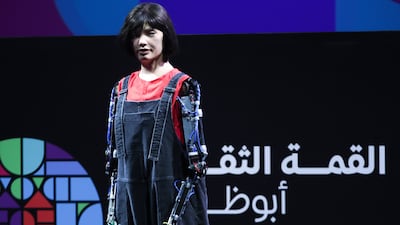
Artificial intelligence-powered robot artist Ai-Da at the Culture Summit in Abu Dhabi. Ai-Da's work reflects human aesthetic tastes and the conditions by which they are shaped. -
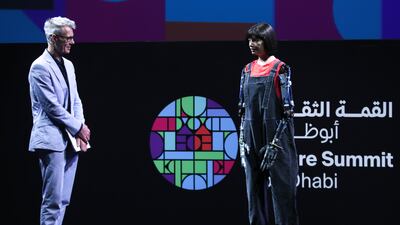
Ai-Da in conversation with Tim Marlow, chief executive and director of London's Design Museum, who analysed the creative philosophy of the world’s first humanoid artist. -
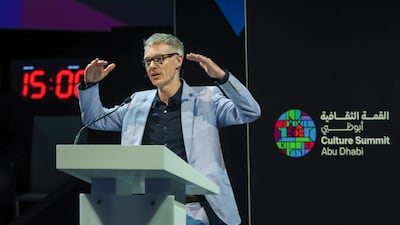
Mr Marlow introduces Ai-Da at the summit. -
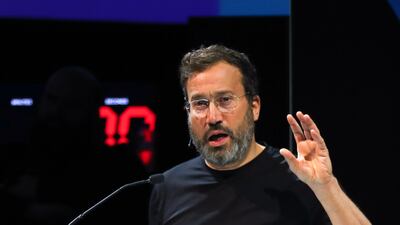
Eyal Weizman, director of research agency Forensic Architecture, speaks on the use of technology such as machine learning, as well as the importance of modelling and simulations. -
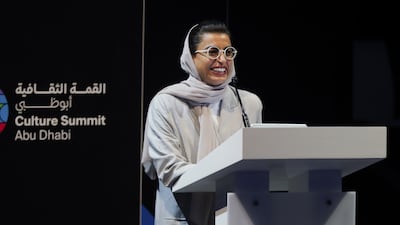
UAE Minister of Culture and Youth Noura Al Kaabi gives the keynote address. -
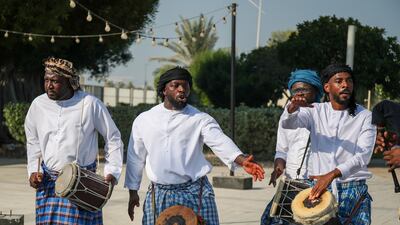
This year’s Culture Summit will be attended by 1,000 people while another 5,000 will take part online. -
The summit seeks to identify ways in which culture can transform societies and communities around the globe. -
The conference brings together decision makers in culture, heritage, public policy and technology, as well as artists, thinkers and performers from around the world. -
The summit is now in its fifth year. -
It is organised by Abu Dhabi's Department of Culture and Tourism. -
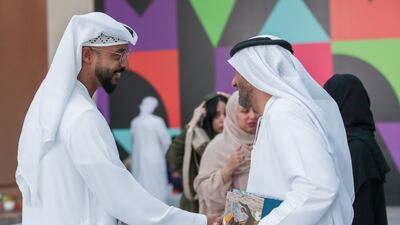
The theme of this year's event is 'A Living Culture'. -
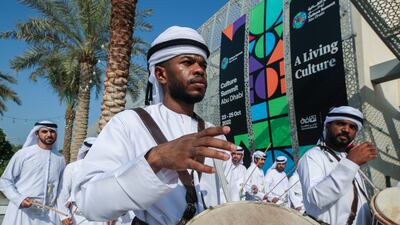
The summit has returned with a more extensive programme. -
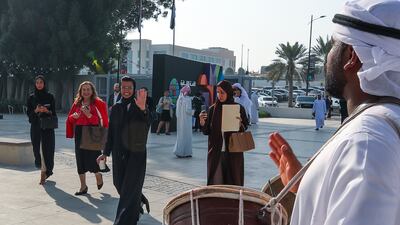
UAE Minister of Culture and Youth, Noura Al Kaabi at the summit. -

In-person attendance returned to the event after it moved online for two years owing to the Covid-19 pandemic. -
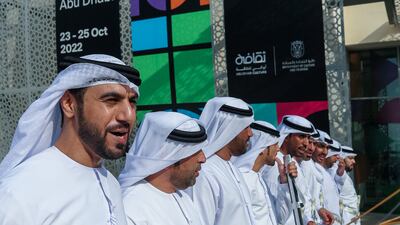
In only five years, the summit has grown from a noble idea into a staple of the international cultural calendar. -
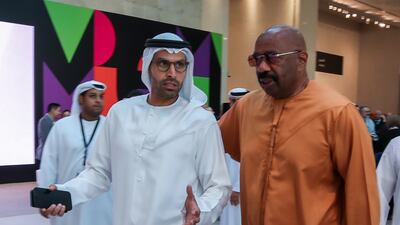
Mohamed Al Mubarak, chairman of DCT — Abu Dhabi, arrives with Steve Harvey. -
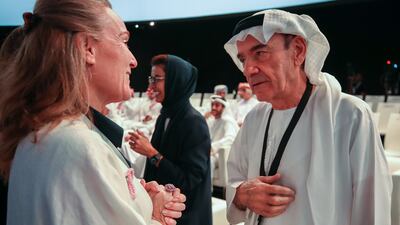
Zaki Nusseibeh, cultural adviser to the President, attends the event. -
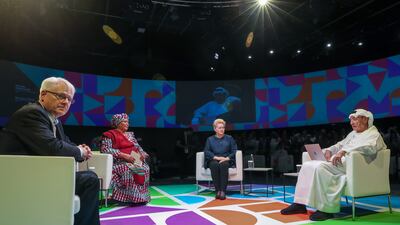
Mr Nusseibeh moderated a discussion on 'The role of culture in making resilient and shared societies', featuring former Lithuanian president Dalia Grybauskaite, former Malawian president Joyce Banda and former Croatian president Ivo Josipovic. -
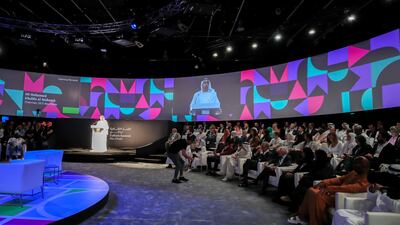
Mr Al Mubarak makes the welcome speech and opening remarks. -
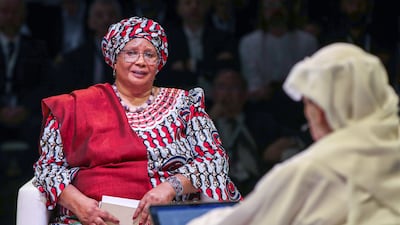
Ms Banda, former president of Malawi, takes part in the discussion moderated by Mr Nusseibeh.


First, Al Kaabi made mention of Iranian artists Ramin Haerizadeh, Rokni Haerizadeh and Hesam Rahmanian, who live in Dubai.
The collective, who go by Ramin, Rokni, Hesam, and who also work as individual artists, have become regionally and internationally celebrated for their surreal and immersive artworks that include performances, paintings, animations and installations.
Al Kaabi noted that the trio “represent the contemporary UAE, one that celebrates cultural diversity, with boundless acceptance of the other”.
Through their practice, the artists are constantly pushing their work through research and experimentation to examine the many facets and intersections of culture, from collaboration, displacement, irony and politics.
Emirati artist Abdulla Lutfi, whose work has become synonymous with representing the UAE through a playful lens, was also mentioned.
-
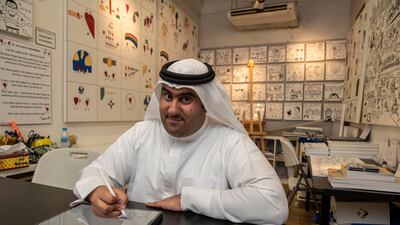
Emirati artist Abdulla Lutfi shows his new collection a year after he opened his own studio space. Abdulla is autistic and has launched an NFT art collection. All photos: Antonie Robertson / The National -

It was a challenge to move from canvas to computer screen, but Lutfi has become comfortable with digital art and says it is quicker to make changes. -
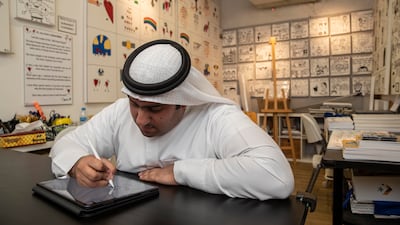
Digital art can be tracked and the artist is paid a commission every time an artwork is resold. -

The 'Khalli Walli' NFT collection was launched recently. -
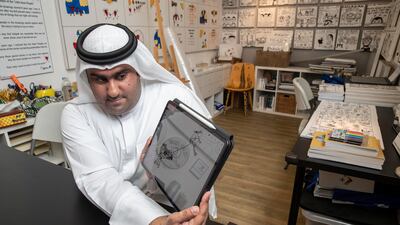
Lutfi shows a piece he sketched on the iPad. -
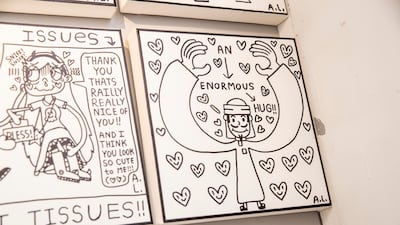
The artist is known in the UAE for striking black and white canvas works made using a black marker. -
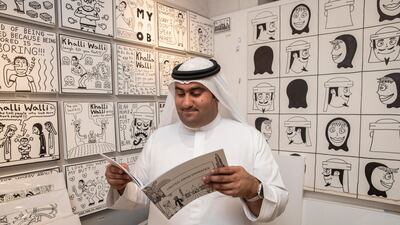
Lutfi is invited to workshops with people keen to learn his unusual style inspired by cartoon characters and anime. -
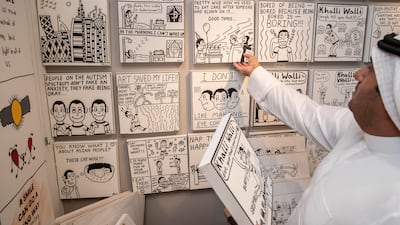
He says using colours stresses him and he prefers working in black and white. -
Lutfi works in a studio called Next Chapter at Tashkeel in Dubai's Al Fahidi district. -
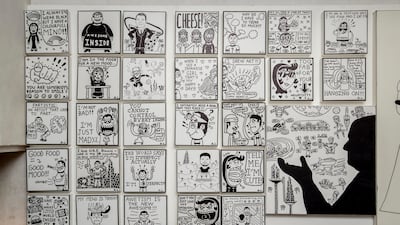
He has been working in his own studio space for a year. -
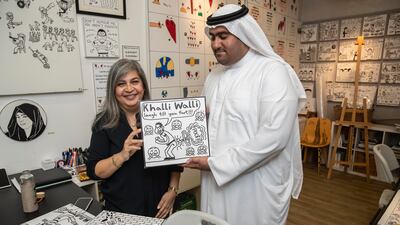
Art teacher Gulshan Kavarana helped the Emirati move to digital art. -
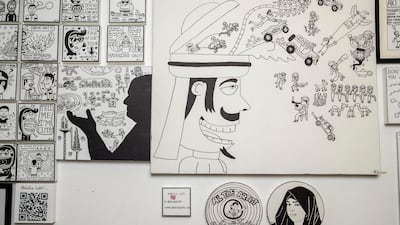
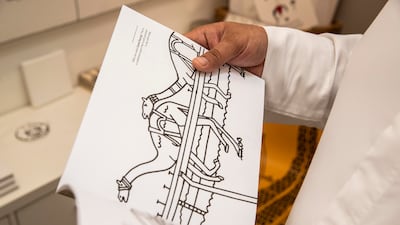
Some of Lutfi's art. -
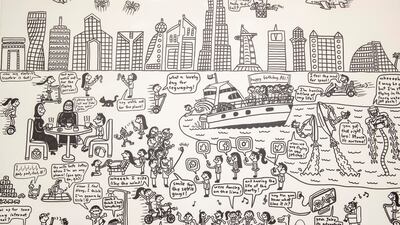
The works capture slices of life in the Emirates under the backdrop of Dubai landmarks.


Al Kaabi said he “looks at the world in an unconventional manner, with his distinctive black and white drawings and Japanese anime style uniquely reflecting a shade of life of our UAE society”.
Lutfi’s works, with their extreme focus on detail, are a dynamic representation of the world around him, observed as an artist on the autism spectrum.
The contemporary Sima Dance Company were also highlighted by Al Kaabi. The troupe were originally founded in Damascus in 2003 by celebrated choreographer Alaa Krimed, but are now based in Dubai.
Al Kaabi said the group “has successfully been able to collaborate with a wide array of well-renowned local and global cultural institutions”.
Krimed was inspired to create Sima after noticing a void in the Arab contemporary dance landscape, and has worked to expose Middle Eastern audiences to the art from.
In 2017 they opened their own space, Sima Performing Arts, in Alserkal Avenue and have since collaborated with many cultural institutions in the UAE.
Alserkal Avenue’s founder and patron Abdelmonem Alserkal, who was in attendance at Al Kaabi’s address, was also thanked for his contribution to the growing arts and culture scene in the UAE.

“He is a patron of arts. He is the founder of Alserkal and Alserkal Avenue, an arts district established as a cultural hub housed in a former industrial district zone in Al Quoz, in Dubai,” Al Kaabi said.
“He's a businessman, he had an industrial zone and he turned it into an artistic hub. I think the effect transcends beyond such a quarter, which really is a testament to his work, his passion and his team.”
Over the past 10 years, Alserkal Avenue has become a pivotal area for the organic growth of local and regional artists. It has also supported the ideation and development of many creative home-grown concepts and businesses, while also exposing the UAE to international cultural institutions and artists.
Al Kaabi emphasised the importance of culture in the UAE for being both a driving force for artists and creatives, and a home for them.
“A creative person, regardless of their nationality, religion or background is welcome,” she said.
“We are determined that our culture sector be an outlet of choice for creators from all over the world, so that they may express their ideas and for our museums and culture reports to be platforms for dialogue and discussion through arts.”
Al Kaabi also said at both the local and federal level, the Ministry of Culture and Youth has developed a comprehensive administrative system for the cultural sector where the message of sustainability, diversity and dialogue will be at the forefront.
This includes laws, legislations and the development of operational regulations to establish key infrastructure in order to develop a cultural environment in which creators of different nationalities and creative pathways can work together and have opportunities to grow and thrive.
Part of spearheading and cementing these plans was successfully listing three cities from the UAE to be part of the Unesco Creative Cities Network. Dubai is the city of design, Sharjah the city of crafts and folklore, and Abu Dhabi the city of music.
“These titles contribute to strengthening the UAE’s position on global culture and on the creativity map,” Al Kaabi said.
The aim of this work is to develop the cultural infrastructure of the country to provide resources, build cultural assets and make the arts more accessible to a wider proportion of society in the UAE, as well as abroad.
Watch: Culture Summit Abu Dhabi's opening day

