


One of Leonardo da Vinci’s last paintings and a prime example of his genius is coming to Louvre Abu Dhabi as part of the museum’s fifth anniversary celebrations.
The National witnessed the unhanging of Saint John the Baptist on Tuesday, before it began its journey from Paris to the UAE. Workers unlatched the two cords from which the painting was suspended and carefully set it on a trolley, wheeling the smiling saint out of the Grande Gallery, where several Renaissance masterpieces, including three other Leonardo paintings, are hung.
The painting will be loaned by the Louvre Museum in Paris and go on display in the permanent galleries of Louvre Abu Dhabi for two years. It will be on show from November 8, which coincides with the museum's anniversary four days earlier.
“I have to say I’m quite moved,” Manuel Rabate, director of Louvre Abu Dhabi, says in Paris. “We just saw da Vinci’s wonderful painting unhanged and prepared for a trip to Abu Dhabi. These kind of moments in museum life are quite touching and important. Indeed, it is a gift for the fifth anniversary organised with the help and support of the Louvre. It is a beautiful painting and an important loan."
Saint John the Baptist, Rabate says, is one of Leonardo's landmark paintings — but it isn’t the first to be shown at Louvre Abu Dhabi. The Tuscan master’s Portrait of an Unknown Woman, also known as La Belle Ferronniere, was loaned by the Louvre to its Abu Dhabi sibling to mark its opening in 2017. The painting was on display at Louvre Abu Dhabi for two years.

“La Belle Ferronniere actually was the first birthday gift that we had from the Louvre,” Rabate says. “It is significant that we are celebrating the fifth anniversary with another exquisite painting by the great master of the Renaissance. It is only possible through the strong relationship and trust between the two museums.”
Mohamed Khalifa Al Mubarak, chairman of Louvre Abu Dhabi, says: “The arrival of this renowned masterpiece from Musee du Louvre demonstrates the unique and profound nature of our long-term collaboration. Visitors to Louvre Abu Dhabi have an unmissable opportunity to engage with a magnificent artwork that captures an extraordinary moment in history and now represents a monumental chapter in our own grand story.
"As we celebrate Louvre Abu Dhabi’s five-year anniversary next month, we must also reflect on how this iconic museum is at the forefront of an unfolding vision for Saadiyat Cultural District — promoting worldwide connections through the universal language of history, culture and the arts.”
“Louvre Abu Dhabi is a unique achievement and a tremendous success in the museum world,” says Laurence des Cars, president and director of Louvre Museum. “This museum, the result of an unprecedented collaboration between the United Arab Emirates and France, has won the hearts and minds of an ever-growing public for five years.
Des Cars says: "The celebration of this anniversary is a great opportunity for the Louvre to reiterate its pride in working alongside our partners and thus projecting ourselves into the next decade. I am delighted to see the arrival at Louvre Abu Dhabi of Saint John the Baptist, a marvellous masterpiece by Leonardo da Vinci, which fascinates museum visitors with its intensity and soothing beauty. We could not imagine a finer ambassador of our values.”

The 16th-century oil on wood painting is one of the Parisian Louvre’s most popular displays. It is notable for its youthful depiction of Saint John, who was portrayed as a gaunt figure up until Leonardo's painting.
One of Leonardo's key works, the artist carried the painting with him and ceaselessly worked on it, perfecting the chiaroscuro technique, a method of treating light and shadow. He also used this as a mode of expression, reflecting on emotions and spiritual questions. Both in terms of technique and emotion, des Cars says, Saint John the Baptist represents Leonardo “at his best” and “most expressive".
Dressed in furs and with long curly hair, the saint has an enigmatic smile reminiscent of The Mona Lisa’s and points up towards heaven. The work, thought to have been painted between 1513 and 1516, is among the most spectacular examples of sfumato, one of the canonical modes of painting during the Renaissance, featuring a softened transition of colours.
Leonardo brought the painting with him from Florence when settling in France in 1516 at the invitation of King Francis I. When the artistdied in 1519, the painting was still partly unfinished — including the right arm and the fur covering the body.
Acquired by King Francis I, the painting passed into the collection of King Charles I of England in approximately 1630 before entering the collection of Louis XIV in 1662. The work then remained in the French royal collection until it entered the Louvre during the French Revolution in 1793, when the museum marked its opening.

In 2016, Saint John the Baptist went through a restoration process. The varnish used to seal the painting, which gradually darkens over time, was removed to restore the work’s luminosity. Des Cars says the process made it clearer for the audience to understand its "extraordinary composition".
“It is like an apparition,” she says. “His face and movement emerge out of the shadow. There is also a softness to the treatment that is so touching.”
Many who saw Leonardo's paintings during his lifetime were often uneasy with how lifelike the people in his paintings looked. Saint John the Baptist and The Mona Lisa are both prime examples of this. In the case of the former, his soft glow and the accuracy and scale with which his features are rendered imbues the biblical figure with a human quality.
Des Cars says: “It gives a power like a human presence. Something that is close to us and, at the same time, a symbol of spiritual power. This mix of a human vision, a young man of Leonardo’s time, and the spiritual entity that is represented is the genius of Leonardo. He really broke the code of representation with this painting.
"It is a universal masterpiece. Whatever our religious backgrounds, we can all interact with the painting because we are in the presence of a very strong visual emotion. It touches our heart, minds and eyes. I hope Louvre Abu Dhabi’s public will enjoy this experience and want to know more about Leonardo da Vinci and one day come to Paris to see the other da Vinci works.”
John, who was a contemporary of Jesus of Nazareth, lived a humble life in the desert and became the preacher who announced the coming of the Messiah. He practised baptism in the waters of the Jordan River, hence his nickname John the Baptist.
The preacher is a major figure in Christianity but also one of the prophets of Islam. Subsequently, Saint John the Baptist became the patron saint of the city of Florence in Italy and was a subject often depicted during the Renaissance, an era renowned for its brilliant artistic creations.

The presentation of Saint John the Baptist at Louvre Abu Dhabi is the first in a series of four major loans from the Louvre in Paris, following an agreement between the UAE's and France's cultural departments.
Although not the first time Saint John the Baptist has been loaned to another institution, it will be the longest the work has been away from France, where Leonardo spent his last few years.
The work, with its expansive reach and subject matter, puts it in tune with Louvre Abu Dhabi’s universal model. Rabate says the painting’s image and likeness have proliferated through time until it has become ingrained in the global consciousness. Adding it to a collection that has been curated to draw universal connections also helps in bolstering the narrative of the work.
“We are telling the story of humanity using very strong artworks," Rabate says. "This is the kind of painting whose image you’ve seen everywhere. The work is going to the Permanent Gallery. It will be in the section dedicated to the Renaissance and we will see how it is in dialogue with not only the transformation of the art world in Italy but in other places in the world."
Rabate says the artworks the museum displays highlight interconnected stories that span civilisations, which Saint John the Baptist will add to.
The painting’s acquisition and the museum’s fifth anniversary mark a new chapter for Louvre Abu Dhabi, he adds..
“When you’re celebrating your fifth anniversary, it’s not only the past or the present ... we are looking forward to the next step," he says. "We’re still a very young organisation and museum. We need to strengthen our special narrative, as well as the relationship that we have with French museums and those in the region."
Saint John the Baptist will be displayed at Louvre Abu Dhabi's permanent galleries from November 8 for two years.
Scroll through images of Louvre Abu Dhabi's ongoing Impressionism exhibition below
-
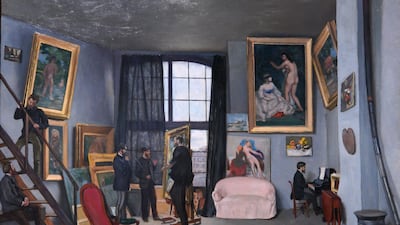
'Bazille Studio' (1870), oil on canvas by Frederic Bazille and Edouard Manet. Victor Besa / The National -
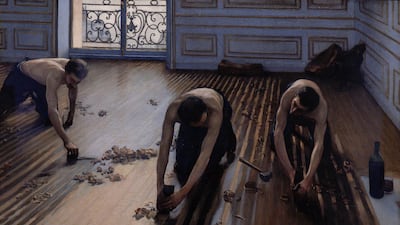
'Floor Scrapers' (1875), oil on canvas by Gustave Caillebotte. Victor Besa / The National -
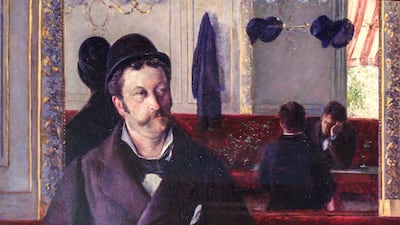
'In the Cafe' (1880), oil on canvas by Gustave Caillebotte. Victor Besa / The National -
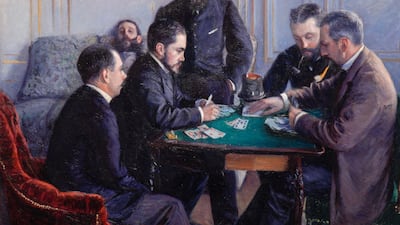
'The Bezique Game' (1880), oil on canvas by Gustave Caillebotte. Victor Besa / The National -
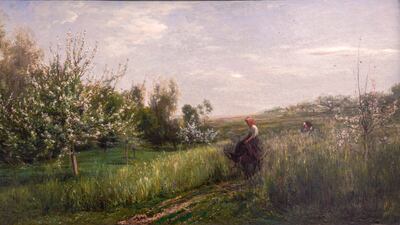
'Spring' (1857), oil on canvas by Charles-Francois Daubigny. Victor Besa / The National -
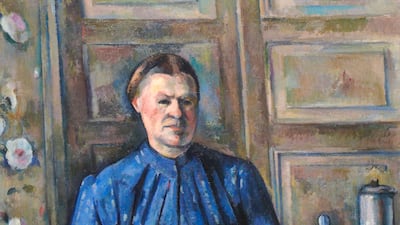
'Woman with a Coffee Pot' (1890-95), oil on canvas by Paul Cezanne. Victor Besa / The National -
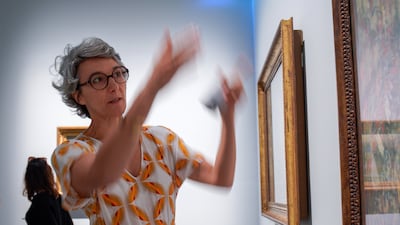
Sylvie Patry, chief curator and deputy director for Collections and Curatorial Affairs at Musée d’Orsay. Victor Besa / The National -
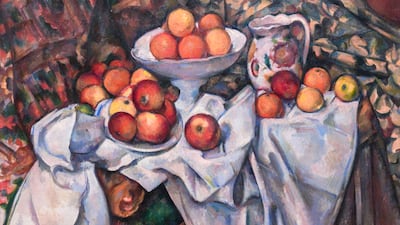
'Apples and Oranges' (1839), oil on canvas by Paul Cezanne. Victor Besa / The National -
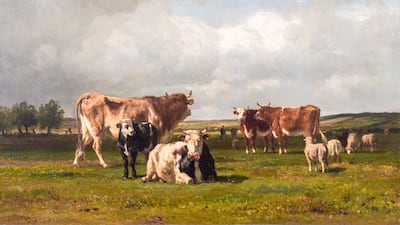
'The Pastures under a Cloudy Sky' (1856-60), oil on canvas by Constant Troyon. Victor Besa / The National -
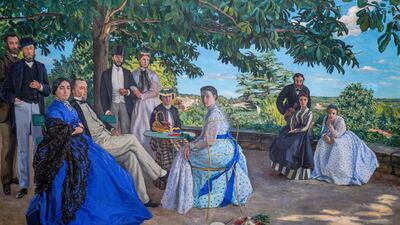
'Family Reunion' (1867-1841), oil on canvas by Frederic Bazille. Victor Besa / The National -
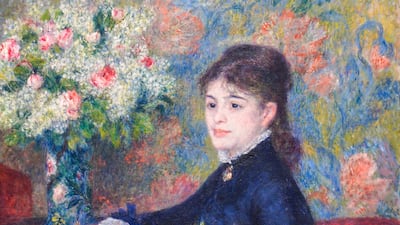
'The Cup of Chocolate' (1877-78), oil on canvas by Pierre-Auguste Renoir. Victor Besa / The National -
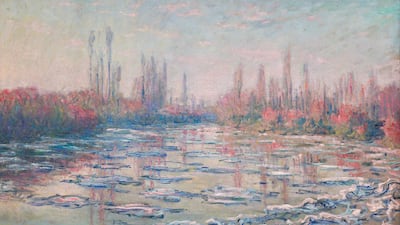
'The Ice Floes' (1880), oil on canvas by Claude Monet. Victor Besa / The National -
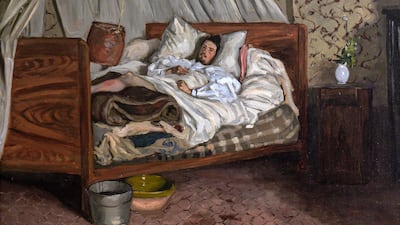
'The Improvised Field Hospital' (1865), oil on canvas by Frederic Bazille. Victor Besa / The National -
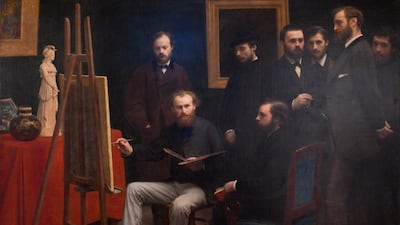
'A Studio at Les Batignolles' (1870), oil on canvas by Henri Fantin-Latour. Victor Besa / The National -
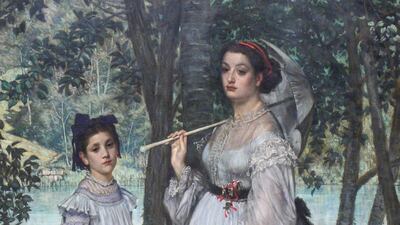
'The Two Sisters' (1863), oil on canvas by James Tissot. Victor Besa / The National -
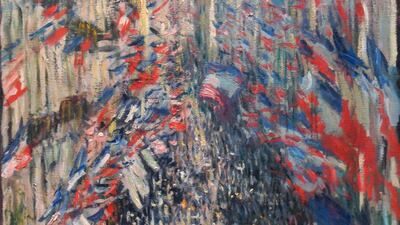
'Rue Montorgueil, Paris' (1878), oil on canvas by Claude Monet. Victor Besa / The National -
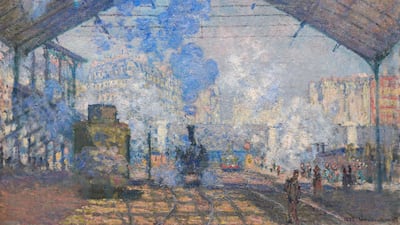
'Saint-Lazare Railway Station' (1877), oil on canvas by Claude Monet. Victor Besa / The National -
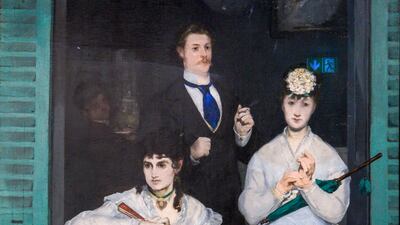
'The Balcony' (1868-69), oil on canvas by Edouard Manet. Victor Besa / The National -
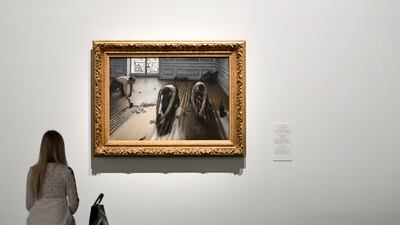
'Floor Scrapers' by Gustave Cailebotte, oil on canvas. Khushnum Bhandari / The National -
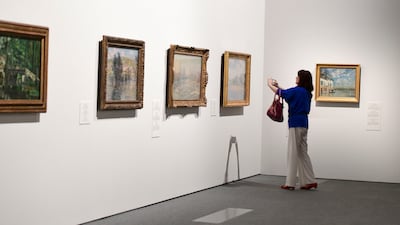
The exhibition is running until February. Khushnum Bhandari / The National -
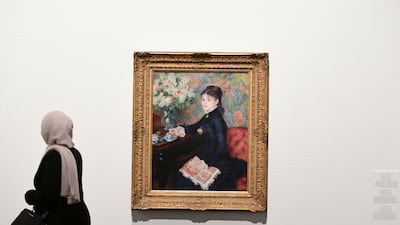
It highlights how the French artists, known as 'the impressionists', were rebels of their time. Khushnum Bhandari / The National -
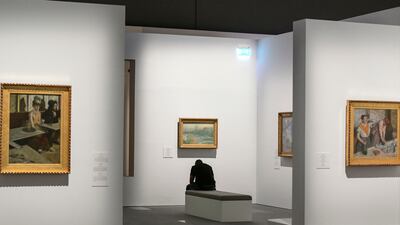
Their vibrant brushstrokes and outdoor landscapes broke conventional art rules in the 19th century. Khushnum Bhandari / The National -
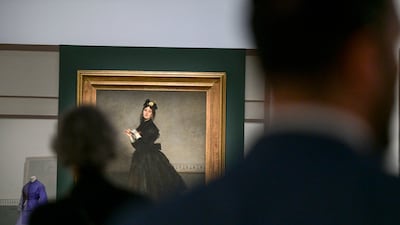
'The Lady with the Glove' by Carlos-Duran. Khushnum Bhandari / The National



