



As the art landscape of the Arab world continues to expand, artists from different backgrounds, cultures and disciplines are presenting work that showcases a diverse range of talent and perspectives.
Here, we look at 10 creatives from the region who are doing interesting and important work that you need to know about.
Nasser Almulhim
Exploring how geometric and organic shapes interact with each other and the human psyche, Saudi painter and sculptor Nasser Almulhim’s practice takes a playful, intuitive and bold approach to image-making and three-dimensional forms.
Almulhim is also interested in the connections between spirituality and mental processes and how to represent this relationship visually. Through composition, scale, forms and colours, Almulhim attempts to create rhythmic energies and stimulate psychological shifts through his work.
Maitha Abdalla
Emirati artist Maitha Abdalla recently had a solo exhibition, INT. The Body — Sunrise, at Cromwell Place in London. The exhibition often explored the power of storytelling in folktales from the Arabian Gulf and the surrounding region.
Her large-scale works combine painterly and drawing techniques that depict mesmerising and slightly dark images of human-animal hybrid creatures interacting with each other. Through her narratives, Abdalla recalls the dying nature of regional folktales and how they are shaped by culture and societal norms and traditions.
Alymamah Rashed
Kuwaiti artist Alymamah Rashed explores the idea of a hybrid existence through her Surrealist large-scale paintings.
Rashed combines idiosyncratic form — quirky, floating and engaging — with autobiographical portraiture and elements of regional folklore, alongside everyday banal objects, to explore female subjectivity.
Her paintings are striking for their ethereal quality, light and emergent forms influenced by eastern and western aesthetic disciplines.
Rashed currently has a solo exhibition, When my Heart Danced Near Your Mirage, at Tabari Artspace at DIFC, running until January 5.
Hashel Al Lamki
Emirati painter and multidisciplinary artist Hashel Al Lamki explores the connection between humankind and its habitats, whether natural or manmade.
The Gulf and the UAE’s development over the years, particularly in its complex cultural, social and spatial dynamics have influenced his practice and the content of his work.
From sweeping, stylised landscapes to intricate details and experimentation with colour, Lamki’s work is engaging and interactive.
Sawsan Al Bahar
Syrian artist and researcher Sawsan Al Bahar’s work examines concepts of identity, home and inherited memories.
From intricate drawings to sweeping installations, Al Bahar’s work seeks to reconcile ideas around generational displacement. It also delves into the nuances of emotional attachment to memories and the idea of home through various facets — interpreting these ideas into drawings and 3D installations and sculpture.
Al Bahar was recently awarded the Massimiliano Galliani Prize for drawing at the 17th ArtVerona in Italy and had her first solo exhibition Talaliya at Firetti Contemporary gallery in Alserkal Avenue.
Sarah Al Mehairi
Multidisciplinary Emirati artist Sarah Al Mehairi explores themes of identity, language, materiality and memory through narrative and abstract work.
Playing with ideas in her traditional artistic practice, Al Mehairi works in a number of mediums, including mixed media, sculpture, painting, book art and fibre art.
Al Mehairi had a solo exhibition, When the Ground Was, at Carbon 12 in Alserkal Avenue this year and was part of the Beyond: Emerging Artists programme at Abu Dhabi Art. Her works are on show at Manarat Al Saadiyat until January 22.
Amir Hazim
Iraqi artist Amir Hazim’s photography reveals a sensitive and gritty depiction of the world.
Whether in Baghdad or the UAE, through striking black-and-white imagery, Hazim sheds light on harrowing memories, capturing present moments and visions of the future.
His portraits, street scenes and personal observations are presented through bold compositions and a signature use of light and shadow.
Shaikha Al Mazrou

Emirati artist Shaikha Al Mazrou’s sculptural experimentations investigate the form, content and physicality of materials — combining ideas from different contemporary artistic movements, while playing with colour theory and geometric abstraction.
Recently, Al Mazrou was one of 19 international artists included in this year's Frieze Sculpture at Regent's Park in London. Her piece Red Stack, reinterpreted cushions, enlarging and magnifying their form and volume as a piled stack, appearing soft and hard at the same time.
Miramar Muhd
Iraqi visual artist Miramar Muhd has created larger-than-life murals in Amman, Dubai and the Netherlands.
The self-taught artist’s work includes Break The Silence, a mural which was painted with fellow artist Dalal Mitwally in the centre of Amman. She also collaborated with choreographer Abd Al Hadi Abunahleh at Amman’s bi-annual IDEA Festival last year.
This year, Muhd created Flowers From The East in the Netherlands as part of the Open Art Shuffle project, along with Harmony, on the face of DIFC’s ICD Brookfield Place building in Dubai. The stunning work features outstretched hands against a backdrop of blooming flowers.
Salama Nasib
An Emirati artist specialising in printmaking, Salama Nasib’s work explores ideas around translating and rendering exchanges and memories.
Delicate, detailed and powerfully emotive, her images are inspired by her own exchanges and memories as well as elements from mythology.
Nasib has exhibited locally in the UAE, including at Tashkeel and Meem Gallery as well as internationally, at the Meridian International Centre in Washington, the Kunstquartier Bethanien in Berlin and was part of a six-week residency at Dundee Contemporary Arts in Scotland.
Christie's Dubai's Contemporary Middle Eastern Art exhibition - in pictures
-
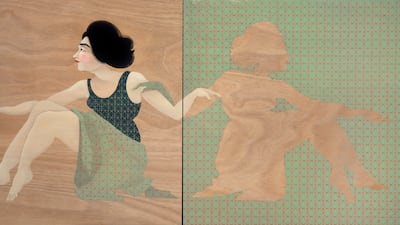
'The Interpreter' by Hayv Kahraman (2016). All Photos: Christie's Dubai -

'Mirror Ball' by Monir Shahroudy Farmanfarmaian (circa 1970). -
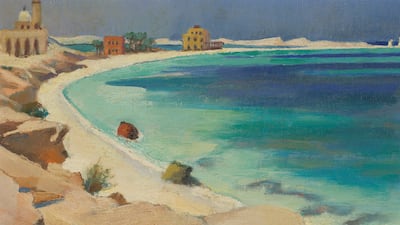
Mahmoud Saïd's 1948 seascape 'Les falaises-la baie à Marsa Matrouh (esquisse)'. -
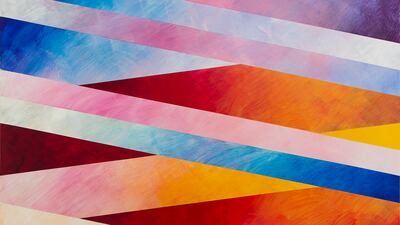
'Angelus II-1' by Kamal Boullata (2017). -
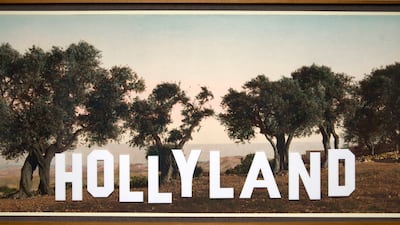
'Hollyland' by Hazem Harb (2019). -
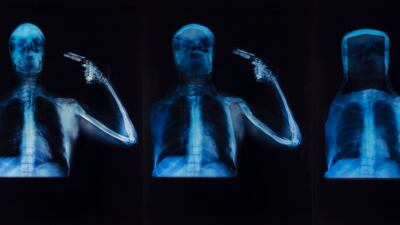
'Evolution of Man' by Ahmed Mater (2010).



