'Yallah', the Arbic word for 'let's go', is an expression of urgency, encouragement or even impatience. The National

Yallah: Arabic word for 'let's go' is a call to action and an encouragement


Razmig Bedirian
  • English
  • Arabic

In Arabic, yallah is used to move things along. It is a call to action, an expression of urgency, encouragement or even impatience.

It can be translated to “let's go”, but its meaning is shaped entirely by context. You might hear it when someone wants you to hurry up, when a group is ready to leave, or when a conversation has gone on too long. It can be warm, firm, supportive or exasperated.

Yallah is a fusion of two words: ya, which is a vocative particle similar to “oh” or “hey” in English, and Allah, the Arabic word for God. It is a contraction of ya Allah, meaning oh God.

Over time, it became secularised in daily speech. Its religious weight is not as overt any more, but the word retains the energy of its plea.

If you are running late and you would like a friend to hurry up, you could say: yallah taakharna. If you’re waiting for them downstairs and want to hurry up and make a move: yallah, ana taht.

You could even use it to wrap up a conversation: yallah, binhki baadein – or yallah, we’ll talk later. To encourage someone, you could say: yallah, feek taamilha – yallah, you can do it. You could even use it to cheer your favourite sports team, simply by shouting yallah, yallah.

Yallah is one of those words that has outgrown its origins, perhaps due to its flexibility. This is most evident by its prevalence in pop culture and music.

Nancy Ajram, Cheb Khaled and Ragheb Alama all have songs with yallah in their title, but non-Arab singers have also adopted the word. Romanian singer Inna has a 2015 dance hit named Yalla. Iranian-Swedish singer Arash also has a song with US rapper T-Pain called Yalla.

  • The Arabic word for sign is aya. All photos: The National
    The Arabic word for sign is aya. All photos: The National
  • The Arabic word for cat is qita
    The Arabic word for cat is qita
  • Laban is the Arabic word for milk
    Laban is the Arabic word for milk
  • Mosa, or Moses in English, is mentioned 136 times in the Quran
    Mosa, or Moses in English, is mentioned 136 times in the Quran
  • The Arabic word for ownership is tamalouk
    The Arabic word for ownership is tamalouk
  • The Arabic word for mint is ne’ena’a
    The Arabic word for mint is ne’ena’a
  • Shuback is the Arabic word for window
    Shuback is the Arabic word for window
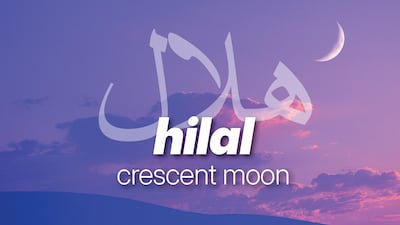
  • Hilal is Arabic for crescent
    Hilal is Arabic for crescent
  • Musafir, the Arabic word for traveller, is often used in music and poetry, evoking a sense of longing and passion
    Musafir, the Arabic word for traveller, is often used in music and poetry, evoking a sense of longing and passion
  • Raqaba, the Arabic word for neck, can also denote caution and scrutiny
    Raqaba, the Arabic word for neck, can also denote caution and scrutiny
  • Ithin, the Arabic word for permission, has many bureaucratic uses
    Ithin, the Arabic word for permission, has many bureaucratic uses
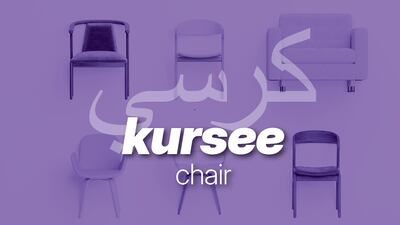
  • The Arabic word for chair is kursee
    The Arabic word for chair is kursee
  • Faten is Arabic name that has many spiritual and poetic meanings
    Faten is Arabic name that has many spiritual and poetic meanings
  • The Arabic word for embroidery is tatreez
    The Arabic word for embroidery is tatreez
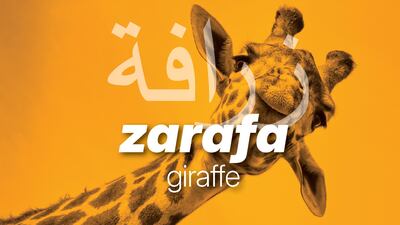
  • Zarafa is Arabic for giraffe
    Zarafa is Arabic for giraffe
  • The Arabic word for dignity, honour and respect is izza
    The Arabic word for dignity, honour and respect is izza
  • Hewi is the Emirati word for front garden
    Hewi is the Emirati word for front garden
  • Lahja is the Arabic word for dialect
    Lahja is the Arabic word for dialect
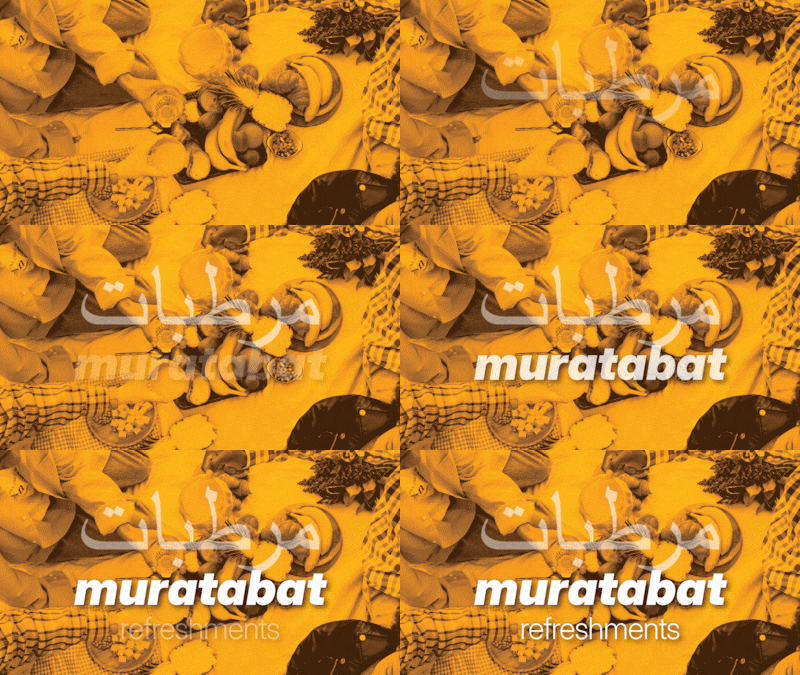
  • Muratabat is often translated as refreshments
    Muratabat is often translated as refreshments
  • Handasa is the Arabic word for engineering
    Handasa is the Arabic word for engineering
  • The Arabic word for octopus is akhtaboot
    The Arabic word for octopus is akhtaboot
  • The Arabic word for mightiness is jabarut
    The Arabic word for mightiness is jabarut
  • The Arabic word kibriyaa, often seen in Quranic verses, speaks to might and humility
    The Arabic word kibriyaa, often seen in Quranic verses, speaks to might and humility
  • Junoon is the Arabic word for madness and obsession
    Junoon is the Arabic word for madness and obsession
  • Adheem is commonly translated as great, magnificent or mighty
    Adheem is commonly translated as great, magnificent or mighty
  • Tanamor is the Arabic word for bullying
    Tanamor is the Arabic word for bullying
  • The Arabic word for forgetfulness and oblivion is alnisyan
    The Arabic word for forgetfulness and oblivion is alnisyan
  • Yallah, the Arabic word for 'let's go', is an expression of urgency, encouragement or even impatience
    Yallah, the Arabic word for 'let's go', is an expression of urgency, encouragement or even impatience
  • The Arabic word majlis, rooted in Bedouin tradition, refers to a space for hospitality and dialogue
    The Arabic word majlis, rooted in Bedouin tradition, refers to a space for hospitality and dialogue
  • Falaj is Arabic for water channel
    Falaj is Arabic for water channel
  • Ne'meh is Arabic for blessing
    Ne'meh is Arabic for blessing
  • The Arabic word sumud means resilience and steadfastness
    The Arabic word sumud means resilience and steadfastness
  • The Arabic word for mountain is jabal
    The Arabic word for mountain is jabal
  • Kibreet is Arabic for matchstick
    Kibreet is Arabic for matchstick
  • Sahaba means cloud in Arabic
    Sahaba means cloud in Arabic
  • Qilada is the Arabic word for necklace
    Qilada is the Arabic word for necklace

UAE Premiership

Results
Dubai Exiles 24-28 Jebel Ali Dragons
Abu Dhabi Harlequins 43-27 Dubai Hurricanes

Fixture
Friday, March 29, Abu Dhabi Harlequins v Jebel Ali Dragons, The Sevens, Dubai

Mercer, the investment consulting arm of US services company Marsh & McLennan, expects its wealth division to at least double its assets under management (AUM) in the Middle East as wealth in the region continues to grow despite economic headwinds, a company official said.

Mercer Wealth, which globally has $160 billion in AUM, plans to boost its AUM in the region to $2-$3bn in the next 2-3 years from the present $1bn, said Yasir AbuShaban, a Dubai-based principal with Mercer Wealth.

Within the next two to three years, we are looking at reaching $2 to $3 billion as a conservative estimate and we do see an opportunity to do so,” said Mr AbuShaban.

Mercer does not directly make investments, but allocates clients’ money they have discretion to, to professional asset managers. They also provide advice to clients.

“We have buying power. We can negotiate on their (client’s) behalf with asset managers to provide them lower fees than they otherwise would have to get on their own,” he added.

Mercer Wealth’s clients include sovereign wealth funds, family offices, and insurance companies among others.

From its office in Dubai, Mercer also looks after Africa, India and Turkey, where they also see opportunity for growth.

Wealth creation in Middle East and Africa (MEA) grew 8.5 per cent to $8.1 trillion last year from $7.5tn in 2015, higher than last year’s global average of 6 per cent and the second-highest growth in a region after Asia-Pacific which grew 9.9 per cent, according to consultancy Boston Consulting Group (BCG). In the region, where wealth grew just 1.9 per cent in 2015 compared with 2014, a pickup in oil prices has helped in wealth generation.

BCG is forecasting MEA wealth will rise to $12tn by 2021, growing at an annual average of 8 per cent.

Drivers of wealth generation in the region will be split evenly between new wealth creation and growth of performance of existing assets, according to BCG.

Another general trend in the region is clients’ looking for a comprehensive approach to investing, according to Mr AbuShaban.

“Institutional investors or some of the families are seeing a slowdown in the available capital they have to invest and in that sense they are looking at optimizing the way they manage their portfolios and making sure they are not investing haphazardly and different parts of their investment are working together,” said Mr AbuShaban.

Some clients also have a higher appetite for risk, given the low interest-rate environment that does not provide enough yield for some institutional investors. These clients are keen to invest in illiquid assets, such as private equity and infrastructure.

“What we have seen is a desire for higher returns in what has been a low-return environment specifically in various fixed income or bonds,” he said.

“In this environment, we have seen a de facto increase in the risk that clients are taking in things like illiquid investments, private equity investments, infrastructure and private debt, those kind of investments were higher illiquidity results in incrementally higher returns.”

The Abu Dhabi Investment Authority, one of the largest sovereign wealth funds, said in its 2016 report that has gradually increased its exposure in direct private equity and private credit transactions, mainly in Asian markets and especially in China and India. The authority’s private equity department focused on structured equities owing to “their defensive characteristics.”

On Instagram: @WithHopeUAE

Although social media can be harmful to our mental health, paradoxically, one of the antidotes comes with the many social-media accounts devoted to normalising mental-health struggles. With Hope UAE is one of them.
The group, which has about 3,600 followers, was started three years ago by five Emirati women to address the stigma surrounding the subject. Via Instagram, the group recently began featuring personal accounts by Emiratis. The posts are written under the hashtag #mymindmatters, along with a black-and-white photo of the subject holding the group’s signature red balloon.
“Depression is ugly,” says one of the users, Amani. “It paints everything around me and everything in me.”
Saaed, meanwhile, faces the daunting task of caring for four family members with psychological disorders. “I’ve had no support and no resources here to help me,” he says. “It has been, and still is, a one-man battle against the demons of fractured minds.”
In addition to With Hope UAE’s frank social-media presence, the group holds talks and workshops in Dubai. “Change takes time,” Reem Al Ali, vice chairman and a founding member of With Hope UAE, told The National earlier this year. “It won’t happen overnight, and it will take persistent and passionate people to bring about this change.”

Updated: July 25, 2025, 6:01 PM