


An invitation to look within and expand our horizons, shuback is an Arabic word that inspires and holds great resonance.
Meaning “window”, this week's word carries literal and metaphorical significance. The root word, shabbak, refers to a web, network or intricate design.
That theme of connection extends to shuback's metaphorical meanings – from being an opening that lets in light and air to a bridge to new experiences, or a stationary point from which to observe the world.
It is no wonder then that shuback has been a powerful literary device for generations of Arab authors. In the novels and short stories of Egyptian Nobel laureate Naguib Mahfouz, characters often gaze out of windows, longing for a better life or greater opportunities. Similarly, in Celestial Bodies, the Man Booker International Prize-winning novel by Omani author Jokha Alharthi, critics have highlighted her use of windows and paths as metaphors for the evolution of her characters.
With its rhythmic double syllable, shuback is not only easy to rhyme but has also served as a key motif in Arabic music. In Taht Al Shubbak (Under the Window), first heard in the 1946 Egyptian film Libat El Sitt (The Lady’s Puppet), singer Aziza Osman pines for her unrequited love: “Under the window, I caught sight of you … What else is with you? Why don't you tell me?”
Mohamed Mounir cemented his status as a star with his seminal 1981 album Shababeek (Windows). On the album, he blends Nubian folk elements with Egyptian pop, crafting songs that serve as vivid vignettes of life, capturing the dreams and struggles of the young and old, the hopeful and heartbroken.
The word shuback is also heard in everyday conversation, often incorporated into colloquial expressions. A common refrain is fatah al-shuback, meaning “open the window”, which signifies welcoming new opportunities. Meanwhile, rama nafsahu min al-shuback, which means “threw himself out of the window”, is used to describe a reckless or impulsive course of action.
Elastic in usage and rich with meaning, shuback is yet another evocative window into the Arabic language.
-
The Arabic word for sign is aya. All photos: The National -

The Arabic word for cat is qita -

Laban is the Arabic word for milk -

Mosa, or Moses in English, is mentioned 136 times in the Quran -

The Arabic word for ownership is tamalouk -

The Arabic word for mint is ne’ena’a -

Shuback is the Arabic word for window. The National -
Hilal is Arabic for crescent -

Musafir, the Arabic word for traveller, is often used in music and poetry, evoking a sense of longing and passion -

Raqaba, the Arabic word for neck, can also denote caution and scrutiny -
Ithin, the Arabic word for permission, has many bureaucratic uses -
The Arabic word for chair is kursee -

Faten is Arabic name that has many spiritual and poetic meanings -
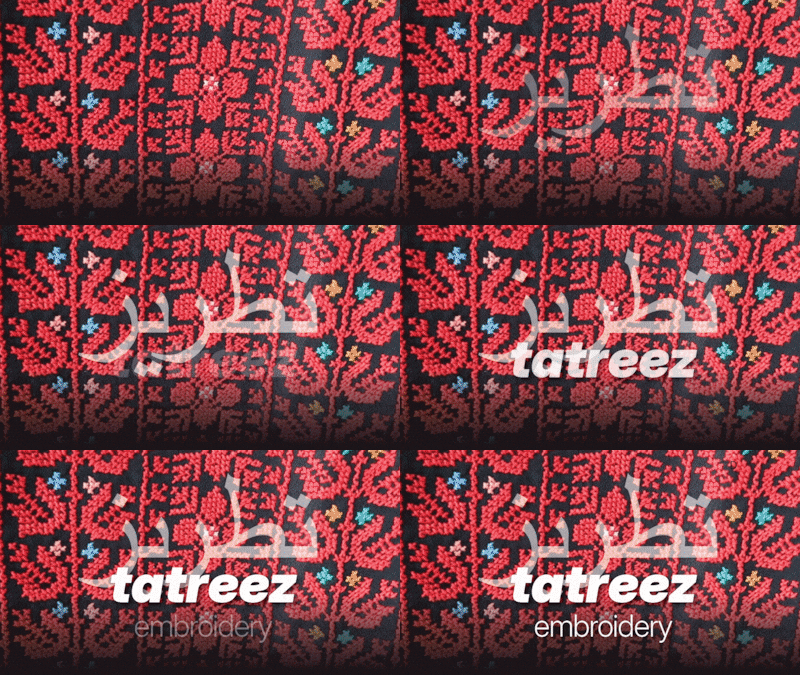
The Arabic word for embroidery is tatreez -
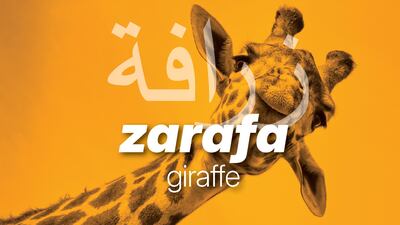
Zarafa is Arabic for giraffe -

The Arabic word for dignity, honour and respect is izza -

Hewi is the Emirati word for front garden -

Lahja is the Arabic word for dialect -
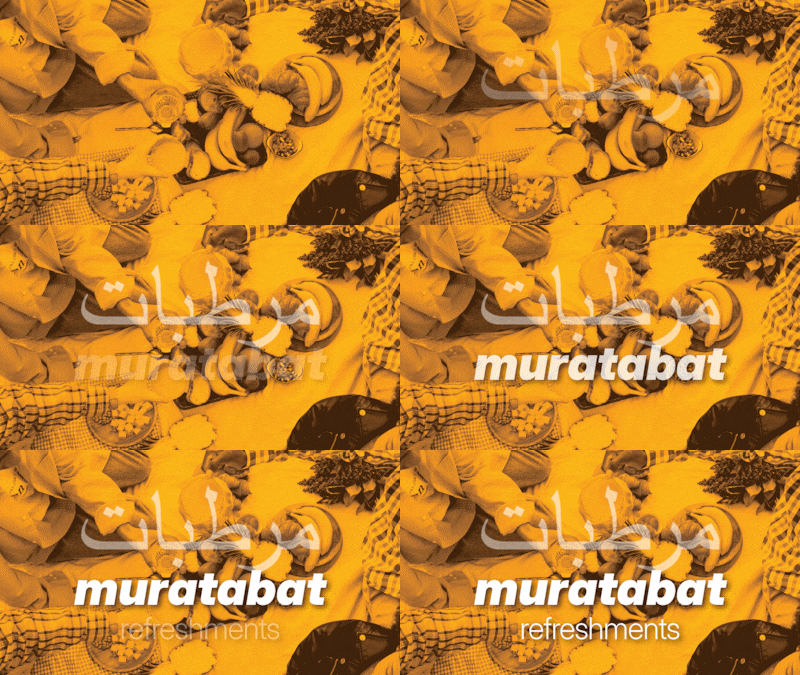
Muratabat is often translated as refreshments -

Handasa is the Arabic word for engineering -

The Arabic word for octopus is akhtaboot -

The Arabic word for mightiness is jabarut -

The Arabic word kibriyaa, often seen in Quranic verses, speaks to might and humility -

Junoon is the Arabic word for madness and obsession -

Adheem is commonly translated as great, magnificent or mighty -

Tanamor is the Arabic word for bullying -

The Arabic word for forgetfulness and oblivion is alnisyan -

Yallah, the Arabic word for 'let's go', is an expression of urgency, encouragement or even impatience -
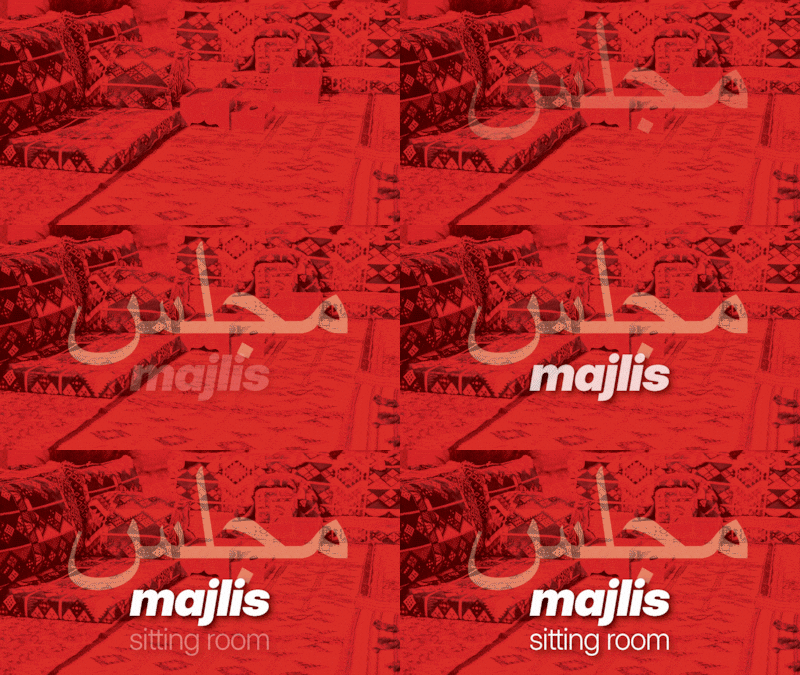
The Arabic word majlis, rooted in Bedouin tradition, refers to a space for hospitality and dialogue -

Falaj is Arabic for water channel -

Ne'meh is Arabic for blessing -

The Arabic word sumud means resilience and steadfastness -

The Arabic word for mountain is jabal -
Kibreet is Arabic for matchstick -

Sahaba means cloud in Arabic -
Qilada is the Arabic word for necklace



