


In one of the few poems from the late Abbasid period, Muslim scholar Yaqut al-Hamawi wrote: “O you whose beauty's splendour has owned my being.”
The use of ownership here is not only the verb in the sentence, but the main focal point and meaning behind al-Hamawi’s words. This leads to the Arabic word of the week: Tamalouk, which has several meanings and variations in different cultures.
Tamalouk means ownership, possession, including to currently own something, become the owner of something or when someone has the right to own something. This type of ownership refers to land or assets. It can also mean to have the legal right to something, to hold or have control over property, which also includes occupying that space.
Depending on how the word has been used and the context of a conversation, it can also refer to other aspects of ownership or control. Tamalouk can mean to possess, have or hold something physically or emotionally. It can also refer to having control or ownership over your actions, feelings, or reactions.
-
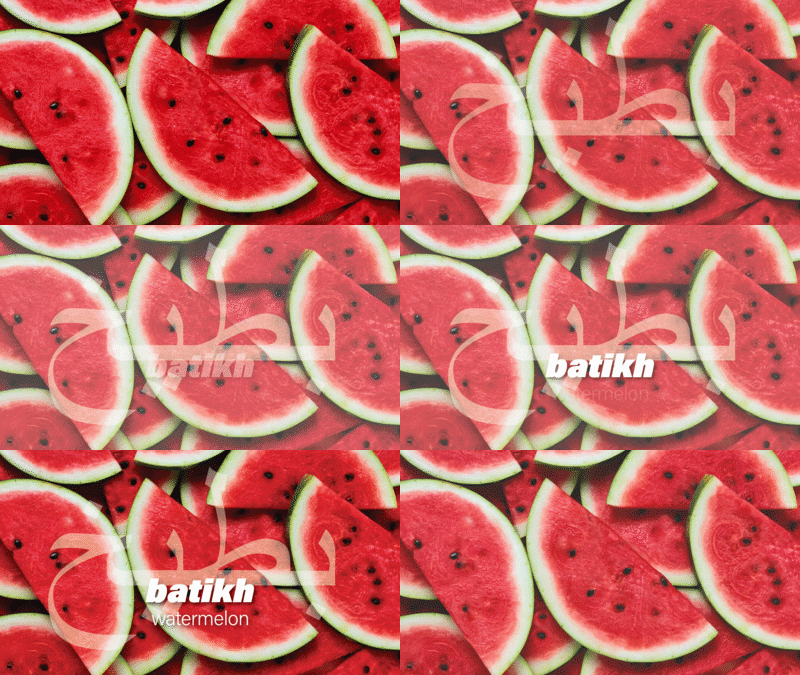
The Arabic word for watermelon, batikh, has become a symbol of Palestine. All photos: The National -

The Arabic word for union, etihad, is intrinsically connected to the UAE -

The Arabic for water, ma'a, is a universal symbol for rebirth -

The Arabic for echo, sada, is a literary device in poetry -

Aasal, the Arabic word for honey can also be used in a complimentary manner -

Jisim, the Arabic word for body extends across chemistry, medicine and aphorisms -

Jawab, the Arabic for answer resonates with knowledge -

Fikir is the Arabic word for think or to think -

The Arabic word for hissan or horse can have more than one origin -

The Arabic word shaghaf or passion refers to intense love -
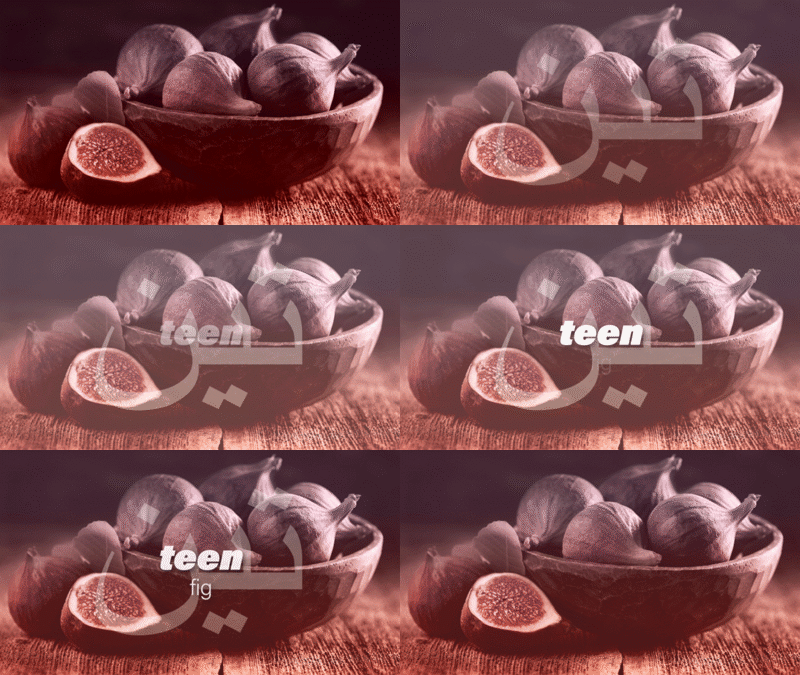
The Arabic word teen or onion doesn't have a clear Arabic source -

The Arabic word saraha means honesty -
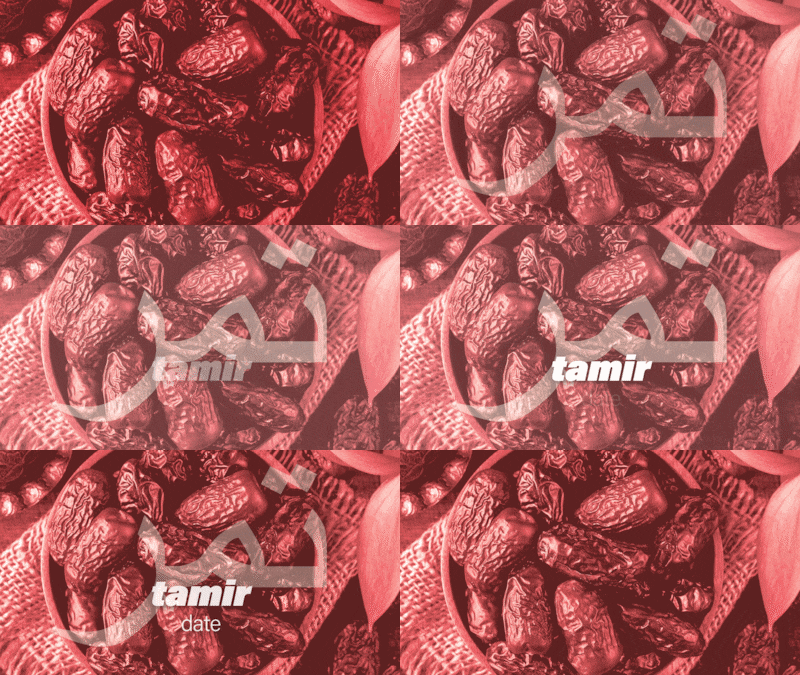
Tamir, the Arabic word for date is a fruit that has over 400 variations -

The Arabic word for tongue, lisan, is connected to the idea of truth -
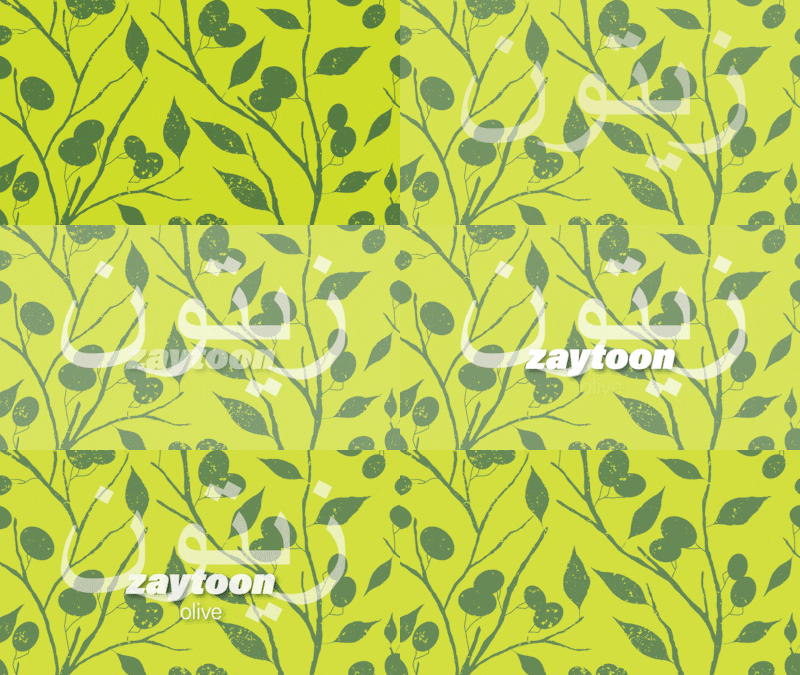
The Arabic word for olive, zaytoon, is also the word for olive tree -

The Arabic word for sign, alama, has several meanings


Tamalouk comes from the verb malaka, which is derived from the three Arabic letters Meem, Lam and Kaf. Malaka refers to the action of taking ownership of land by force. In the context of people, it is the action of ruling over a group, for example as a king or queen. This is why the Arabic word for king is malik and for queen is malika. The word malaka can also specifically refer to taking control over one’s own willpower and self.
Tamalouk is one of the classic Arabic words that are understood and used across dialects and accents with slight variations in pronunciation.

