


American novelist Thomas Wolfe believed culture to be the “arts elevated to a set of beliefs”, while poet and writer Allen Ginsberg is quoted as saying that “whoever controls the media, the images, controls the culture”.
This week’s Arabic word of the week, thaqafa, which translates to culture, is an all-encompassing concept. In English and Arabic, the term culture encompasses a broad yet thorough set of different ideas and practices that have varying relevance and definitions to different people.
While thaqafa translates to the English word culture, it also refers to concepts of refinement, cultivation, education and civilisation. More commonly, however, it refers to the collective knowledge, values and experiences shared societally, and to the idea of education specifically. It can also mean to have knowledge or an understanding in all things from the sciences to the arts.
Thaqafa is a noun made up of three Arabic letters, tha, qaf and faa. It is derived from the verb theqafa, which is defined as the action of defeating someone through knowledge in a particular subject.
The connection between the origin of the word and thaqafa denotes the idea that the more knowledge a person possesses the more cultured they are, which in turn is a reflection of how smart they are. To be truly cultured in the Arabic context means that one is aware or knowledgeable in all or most topics.
-

Hob is the Arabic word for love, but can be used in many contexts -

The Arabic word helu translates, in English, to sweet -

Nashef is the Arabic word for dry, but has many connotations, depending on the context in which you use it -

The Arabic word hurriyeh translates to freedom in English -
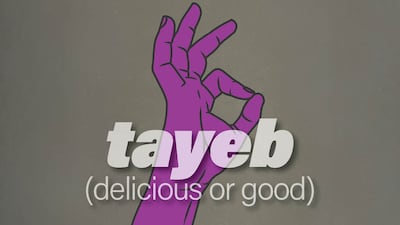
The Arabic word tayeb can mean delicious or good, depending on the context -
The Arabic word mustaqbal is best expressed as future in English -

Waqaa, the Arabic word for fall, can signify a loss of power, stature, health or grace -

Hudood means borders in English -

The Arabic word rooh translates to spirit or soul in English -

The Arabic word ain means eye in English -

Waraq, the Arabic word of the week means paper in English -

Bahr, the Arabic for sea, has a poetic lilt -

Kareem means generous in English -

Bab means door in English -

Eid means holiday or festival -

Najm means star for the night sky and cosmos, but also has plenty of other meanings, including ambition or fame -

Alwan, the Arabic word for colours, has many shades of meaning -

Akel can refer to home-cooked meals, embezzlement, fire and rust -

Jamal is the Arabic word for beauty, be it literal or figurative -

Herfe translates to profession or craft -

Tabiaa translates to nature and can frame landscapes and portraits -

Sehha is the Arabic word for health -

Ijaza is Arabic for holiday and shines in summer but is not stress-free -

Aamal is the Arabic word for work -

Al dahr translates to time -

Qalb is a word for heart, with poetic roots -

Lugha in Arabic translates to language in English -

Insaan means human being -
Na'eeman is an idiomatic expression used when someone has had a shower or bath, a haircut or had their beard trimmed -

The Arabic word for life touches on eternity, death and accomplishment -

Qamar is the Arabic for moon -

The Arabic word for strength or power is quwwa -

Burj is Arabic for tower -

The Arabic word for sun is shams -

Sabr in English can translate to patience -

Hayba is the Arabic word for prestige -

The Arabic term al shay'e translates as 'the thing' in English -

The Arabic word for road is tareeq -

The Arabic word for read has mystical and scholarly connotations -

Istikan is the Arabic word for a type of tea cup -

The Arabic word hanan means affection in English -
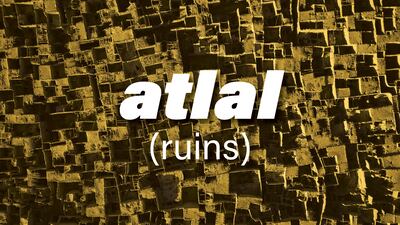
The Arabic word atlal means ruins in English -

Kura is the Arabic word for ball, in all its forms -
Janaah in Arabic means wing in English -

The Arabic word sana translates to year in English -
Qasida is the Arabic for poem, not poetry -

Ameer, the Arabic word for prince, which influenced another English title -

Nakhla translates to palm tree in English -

Al samt is the Arabic for silence -

Kalimaat translates to words in English -

Markaz is Arabic for centre -

Beshara is the Arabic word for good news -

Bayt is the Arabic for house or home -

Fann is the Arabic word for art, and can be either a verb or an adjective -

Isim, which means name, is made up of three letters, alif, seen and meem -

Dunya is the Arabic word for world -

Nazaafah translates to cleanliness in English -

Many traditions revolve around drinking coffee, including weddings, funerals and business meetings -

Fajr is the Arabic word for dawn -

Maghrib is the Arabic word for sunset -

The Arabic language is filled with idioms, quotes and colloquial quips involving the mirror -

Raei is the Arabic word for opinion -

Wa'ed is a multifaceted word for 'promise', as well as a female name -
Qussa is the Arabic word for story -

Sadaaka is the Arabic word for friendship -

Akhbaar is the Arabic word for news -
Rasem is made up of the three Arabic letters Rah, Seen and Meem. While it can simply mean a drawing or a sketch it’s also a malleable word whose definition can change depending on context and dialect – particularly between colloquial and classical Arabic. -

As well as finishing a task, khatem denotes a deeper sense of finality -

Commonly translated to blessed, mubarak is used as a popular greeting on auspicious days -

The Arabic word for lighthouse is also a term that has become closely associated with Islam -

Siyaam, the Arabic word for fasting is also connected to silence -

Tawbah, the Arabic word for repentance, is also connected to Ramadan -

Safar, the Arabic Word for travel can also refer to sunny days, a brighter-blazing fire or exile. The National


There are various categories of thaqafa specific to certain areas of study. Thaqafa aamma refers to possessing general knowledge, while thaqafa mehaniyya is educational culture, particularly delving into the study of a particular topic in a specialised field.
Thaqafa wataniyya is knowledge associated with a particular country or nation, and thaqafa shaabeyya is the knowledge of an indigenous culture. Thaqafa assasiyya refers to an understanding of the essence or the foundations of a particular topic.
There are a number of words derived from the same root of thaqafa that are related to the idea of culture and knowledge.
Thaqqafa means to teach or bestow knowledge on someone else or to enrich or improve the state of something, while tathaqqafa refers to someone acquiring knowledge on their own to gain a better understanding of the world.
The noun mouthaqqaf refers to someone who is educated or very knowledgeable. Tathqeef is the process of learning or becoming more knowledgeable while mouthaqqif is a teacher of knowledge such as a lecturer and tathaqqafa is the exchange of knowledge between two parties on the same or various topics.

