


A senior UN official on Friday described a “grave” crisis for women's rights in Afghanistan, as she met with Taliban officials during a visit to the impoverished nation.
Deputy Secretary General Amina Mohammed, who is spending four days in Afghanistan, spoke out against recent Taliban decrees that ban most female aid workers and bar women and girls from higher education.
In a statement, Ms Mohammed said the decrees undermine the work of numerous organisations helping millions of vulnerable Afghans and stressed the importance of a unified response from the international community.
“What is happening in Afghanistan is a grave women's rights crisis and a wake-up call for the international community,” Ms Mohammed said.
“It shows how quickly decades of progress on women's rights can be reversed in a matter of days.”
She urged the Taliban to reconsider and not isolate Afghanistan in the midst of a “terrible humanitarian crisis”.
Afghan women under Taliban rule — video
“These restrictions present Afghan women and girls with a future that confines them in their own homes, violating their rights and depriving the communities of their services,” Ms Mohammed said.
Last week, UN Secretary General Antonio Guterres denounced the “unprecedented, systemic attacks on women’s and girls’ rights”, which he said are creating “gender-based apartheid”.
During their mission, Ms Mohammed, along with Executive Director of UN Women Sima Bahous, met members of affected communities, humanitarian workers, civil society actors and others in Kabul, Kandahar and Herat.
Before arriving in Afghanistan, the delegation held talks in several countries in the region, the Gulf, Asia and Europe to discuss women’s and girls’ rights as well as sustainable development.
They met the leadership of the Organisation of Islamic Co-operation, the Islamic Development Bank, groups of Afghan women in Ankara and Islamabad and a group of ambassadors and special envoys to Afghanistan based in Doha.
Afghan women living under Taliban rule — in pictures
-
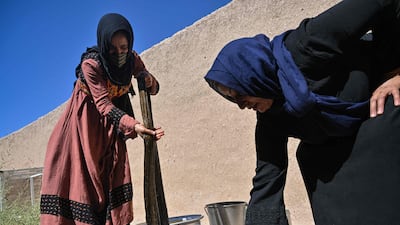
Women wash freshly dyed silk in a factory in Herat province. Whether Afghan girls receive an education under the Taliban is turning into an issue of wealth, young women living under the regime say. AFP -
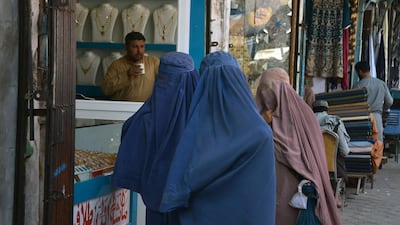
Afghan women walk in a Kandahar market. Even if Afghan girls can receive an education, the likelihood they will be able to put it to any use is low. AFP -
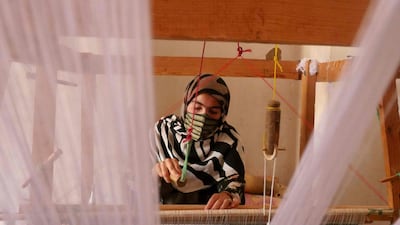
An Afghan women weaves silk to make scarfs and other products inside a workshop in the Zandajan district of Herat province. Many Afghan girls fear the longer they stay away from school, the more pressure will build to conform to patriarchal standards and marry. AFP -
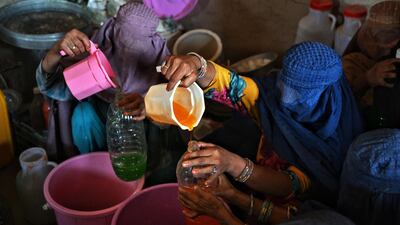
Burqa-clad women work in a shampoo factory in Kandahar. AFP -
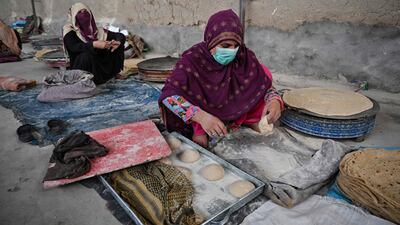
Women make flatbread in a factory in Kandahar. AFP -
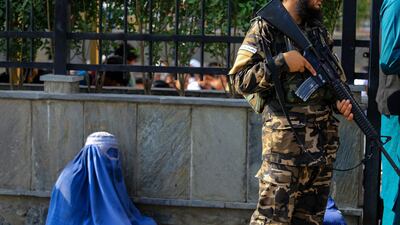
An Afghan woman begs as Taliban fighters stand guard in Kabul. Amnesty International says the Taliban have breached women's and girls' rights to education, work and free movement since they took control of the government. EPA -
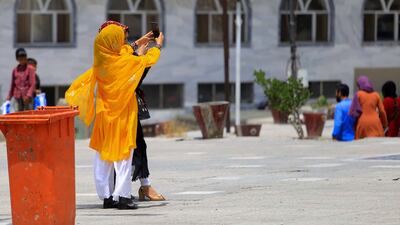
Afghan women take a selfie at a park in Kabul. The rates of child, early and forced marriage in Afghanistan are increasing under Taliban rule, Amnesty International has said. EPA -
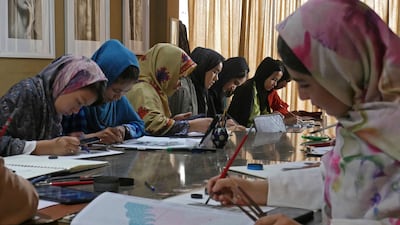
Afghan girls paint at a workshop class in Herat. The World Bank estimates that for each year of secondary education, the likelihood of marrying before the age of 18 decreases by five percentage points or more. AFP -
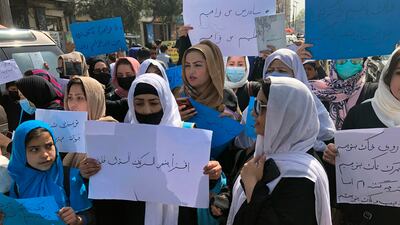
Afghan women protest in Kabul. The lives of Afghan women and girls are being destroyed by the Taliban’s crackdown on their human rights, Amnesty has said. AP -
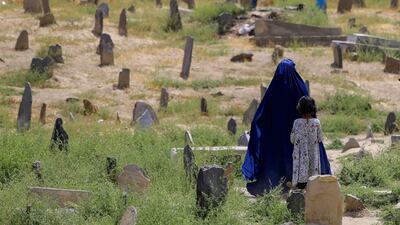
An Afghan woman walks in a graveyard in Kabul. EPA -

Shgofe, an Afghan newscaster, presents a programme on private channel 1TV in Kabul. Female TV presenters and reporters in Afghanistan continue to appear with their faces covered to comply with a mandate issued by the Taliban. EPA -
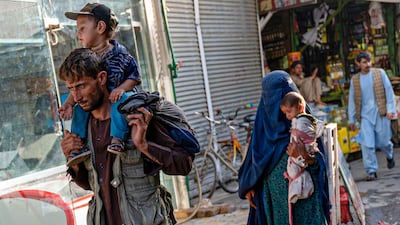
An Afghan family walk past a market near the Pul-e Khishti Mosque in Kabul. AFP -
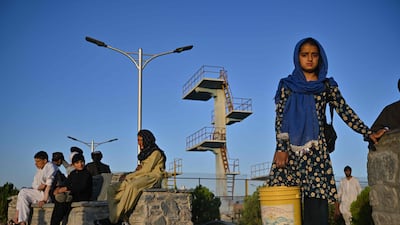
People at Wazir Akbar Khan Hill in Kabul. Whether Afghan girls receive an education under the Taliban is turning into an issue of wealth, young women living under the regime say. AFP -
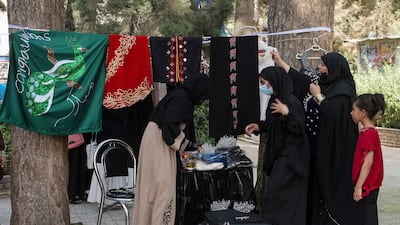
Women browse through garments and fabrics for sale in a stall at a women's handicraft market in Herat. AFP -
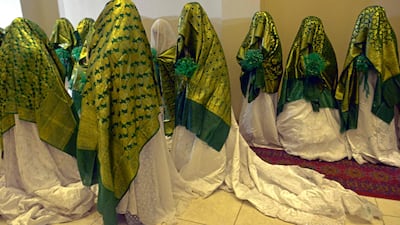
Brides wait for the start of a mass wedding in Kabul. Dozens of Afghan women, concealed in thick green shawls, were married off in an austere ceremony attended by hundreds of guests and gun-toting Taliban fighters. AFP


They agreed “in principle” to hold an international conference on women and girls in March.
Since sweeping to power in August 2021, the Taliban have shredded the freedoms that many Afghan women and girls had grown accustomed to during 20 years of western intervention.
They are now barred from university, secondary schools and many jobs, while their freedom of movement has been drastically curtailed.

