

US Secretary of State Antony Blinken hosted Mexican Foreign Minister Marcelo Ebrard at the State Department on Friday.
The two leaders had much to discuss during their bilateral meeting, including the North American Leaders Summit, migration and regional security.
Mr Blinken told reporters: “We are preparing for the North American Leaders Summit early next year. And so we're going to be talking about that, our ongoing co-operation, collaboration on migration, on citizen security, but also the work that we've been doing between our governments.”
Mr Ebrard added: “We are going to have several conversations right now in order to advance on those issues.”
It was unknown if Mr Blinken and Mr Ebrard also discussed other pressing issues facing the two countries, including Mexico's energy policies, which some in Washington have claimed discriminate against US companies.
The meeting comes on the heels of a federal judge on Thursday temporarily blocking President Joe Biden's administration from terminating a Donald Trump-era policy known as Title 42, which requires asylum seekers to remain in Mexico until they are granted a hearing in US immigration court.
-
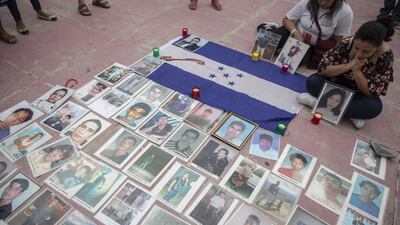
Central American mothers demonstrate in Mexico City to demand justice for their children who have disappeared during their transit through Mexico to the US. EPA -
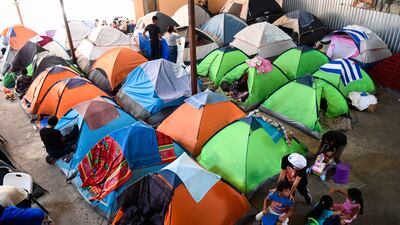
Migrants from Central and South America seeking asylum in the US camp out as Title 42 border restrictions continue. AFP -

Thousands of migrants arrive in the Mexican city of Tijuana each year. AFP -
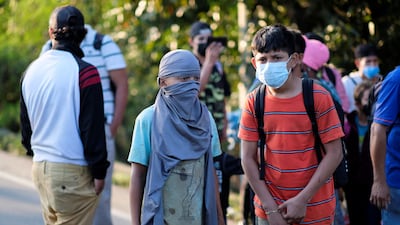
Migrant children wait on a road after a caravan from Central America was blocked by Guatemalan authorities. Reuters -
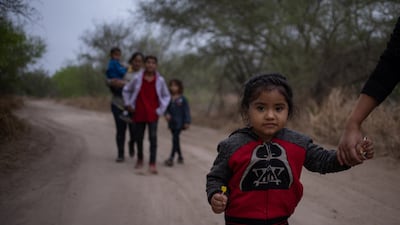
A three-year-old asylum seeker from Honduras holds her mother’s hand after crossing the Rio Grande into the US from Mexico. Reuters -
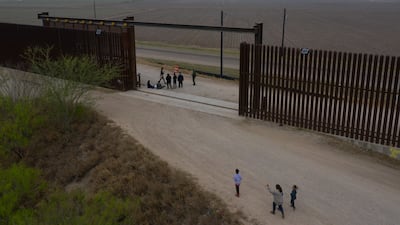
Migrants await transport after arriving at the border wall in Penitas, Texas. Reuters -

US Border Patrol agents speak to an unaccompanied minor from Honduras after she crossed the Rio Grande from Mexico. Getty / AFP -
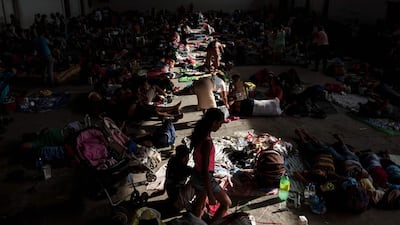
Migrant women and children rest at an improvised shelter in Santiago Niltepec, Oaxaca state, Mexico. AFP -
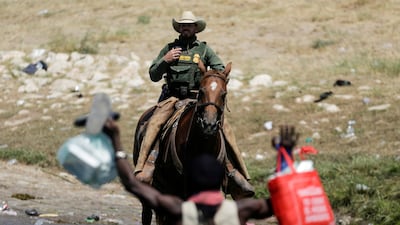
A US Border Patrol officer blocks the path of a migrant trying to return to the US after having crossed into Mexico. Reuters -

The US said it would increase deportation flights for thousands of migrants who entered the Texas border city of Del Rio. AFP -

The US Border Patrol prevents migrants from crossing into Texas from Mexico. AFP -
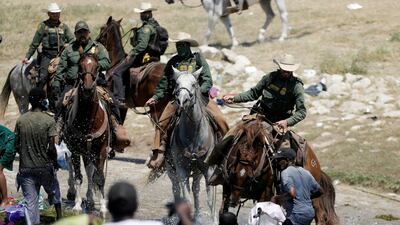
US Border Patrol officers bar the way to migrants trying to return to the US. Reuters -
US law enforcement officers attempt to close off crossing points along the Rio Grande. AFP -

US authorities attempt to close the border to stop the flow of migrants. AP


Immigration, civil rights, and human rights leaders have written an open letter to the Biden administration, urging it “to seize this opportunity to fulfil its promise to build a humane immigration system”.
“Title 42 is a Trump-era policy that has weaponised public health to circumvent domestic and international refugee law by rapidly expelling individuals more than 2.4 million times to Mexico or their countries of origin without the opportunity to seek protection,” the letter read.
“This expulsion policy was a racist continuation of efforts to dismantle the US asylum system and has disproportionately harmed black, brown and indigenous asylum seekers.”
The group states that rights advocates have documented more than 10,000 violent attacks — including kidnappings, serious assaults and murders — of migrants.
US District Judge Matthew Kacsmaryk in Texas stayed the termination until legal challenges by Texas and Missouri are settled but has not ordered the policy to be reinstated in the interim.
The impact on the programme was not immediately clear.
The decision comes as El Paso, Texas, and other border cities face a daily influx of migrants that could grow larger if separate asylum restrictions enacted under former president Trump end next week.
Thursday's ruling could prove to be a temporary setback for the Biden administration, which may appeal the decision.
The Associated Press contributed to this report

