


US Special Representative for Afghanistan Thomas West will travel to the UAE, India and Japan next week to consult on the Central Asian country's ongoing humanitarian and economic crises.
Mr West will speak with world leaders on the “protection of Afghans’ rights and shared security concerns”, the State Department said on Wednesday.
The department did not provide details on which officials Mr West will meet during his travels.
The trip was announced on the heels of an explosion in northern Afghanistan that killed at least 15 people, with officials reporting that all victims were “children and ordinary people”.
Such attacks have become commonplace in Afghanistan since the Taliban's takeover following the hasty US withdraw from the country last year. The attacks have been compounded by skyrocketing poverty amid an economic meltdown.
Preliminary World Bank statistics show that Afghanistan's gross domestic product contracted by 20.7 per cent in 2021.
-
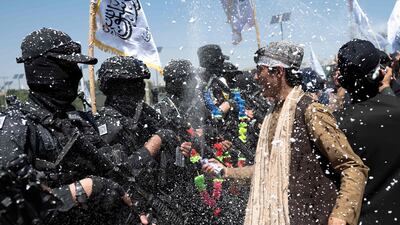
Taliban fighters and supporters celebrate at Ahmad Shah Massoud square in Kabul on August 31, 2022. AFP -
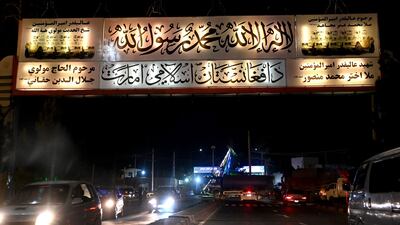
A banner hung in Kabul by Taliban authorities to mark the first anniversary of the departure of US-led foreign forces from Afghanistan. AFP -

Taliban fighters set off fireworks near the former US embassy in Kabul to celebrate the anniversary. AFP -
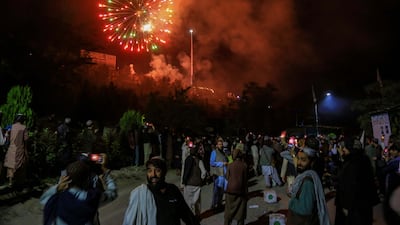
The Taliban government declared August 31 a national holiday in Afghanistan, as part of the celebrations marking the first anniversary of the end of two decades of foreign presence. EPA -
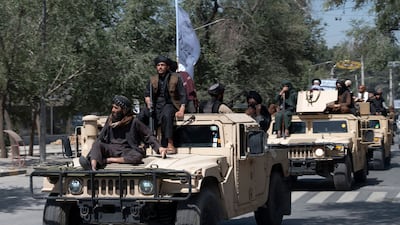
Taliban fighters take to the streets to celebrate. AFP -
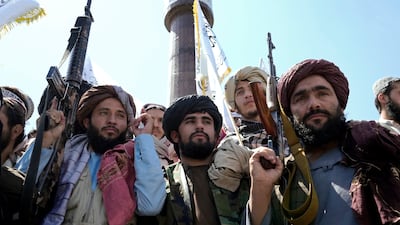
Taliban fighters in front of the US embassy in Kabul. AP Photo -

Children with Taliban flags celebrate the anniversary. AP Photo -

A Taliban convoy in Kabul on Wednesday. Reuters -
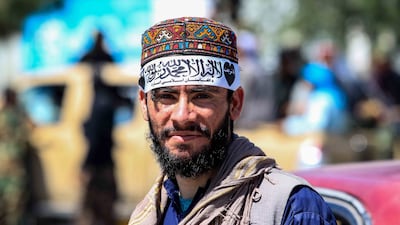
The Taliban celebrate the first anniversary of the US withdrawal outside the former US embassy in Kabul. EPA -
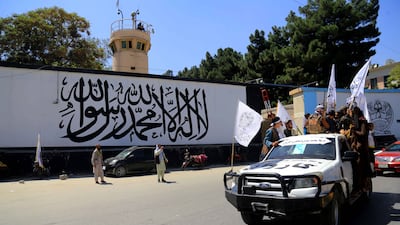
Taliban fighters celebrate the anniversary of the US withdrawal. EPA -
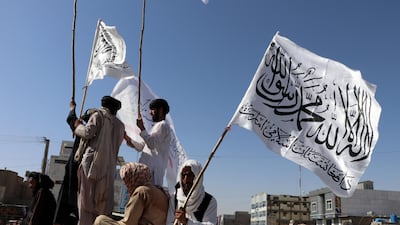
Celebrations in Kandahar. EPA -
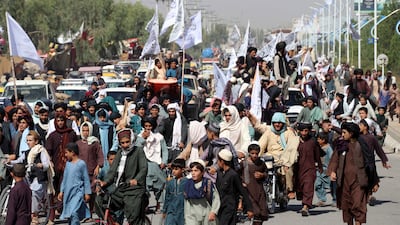
A celebratory parade in Kandahar. EPA -
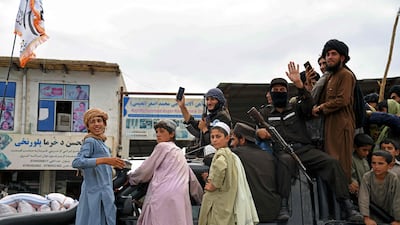
Taliban fighters and supporters during a parade in Kandahar. AFP -
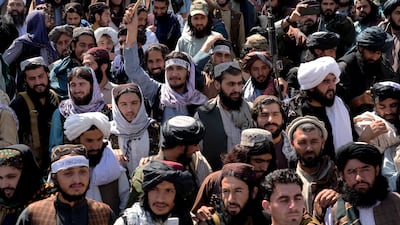
Taliban fighters and supporters in Kabul. AP Photo -
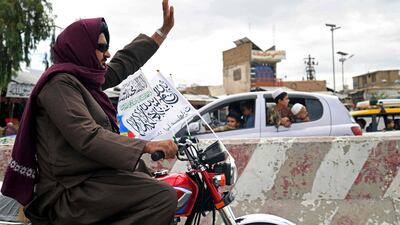
A Taliban fighter during the anniversary parade in Kandahar. AFP


The cessation of aid as a result of the Taliban takeover “led to a dramatic drop in public spending and aggregate demand, shrinking household incomes and reducing consumption”, the World Bank said.
About 24 million Afghans are in dire need of humanitarian aid and are considered food-insecure as a harsh winter approaches, a leading Red Cross official told The National on Wednesday.
Last week, Russia's presidential envoy to Afghanistan announced Moscow would host a regional summit on the crisis.
“It is important that the world should not forget the situation in Afghanistan because today it’s not getting the attention that it deserves,” JP Singh, India's joint secretary in charge of the Pakistan-Afghanistan-Iran division of the Ministry of External Affairs, said of the Moscow talks.
Washington officials said that the US special representative will also engage with the Afghan diaspora, including human rights, business, political and media leaders, on how to address challenges.
The US is among the countries grappling with how to best address the status of Afghans who fled the Taliban takeover.
-
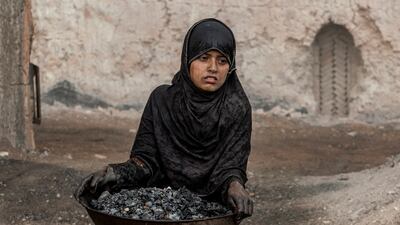
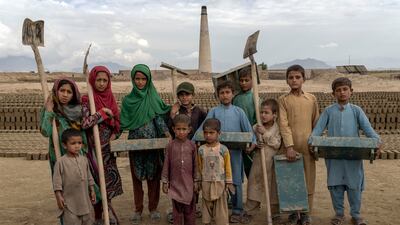
The number of children put to work in Afghanistan, already high, is growing, fuelled by the collapse of the economy after the Taliban took over the country and the world cut off financial aid just over a year ago. All photos: AP Photo -

A recent survey by Save the Children estimated that half of Afghanistan’s families send children out to work to keep food on the table as livelihoods crumble. -
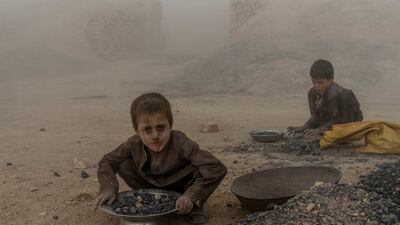
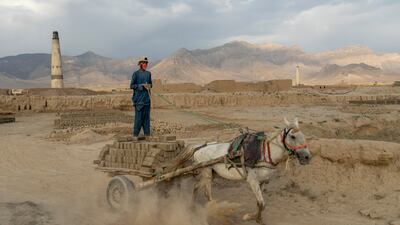
Nowhere is the malaise clearer than in the many brick factories on the motorway north out of the capital, Kabul. -
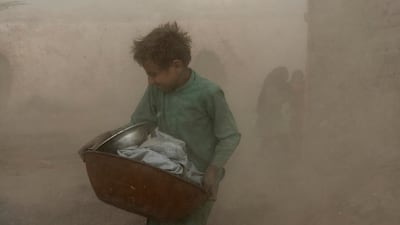
Conditions in the furnaces are tough even for adults. But in almost all of them, children as young as four or five toil alongside their families from early in the morning until dark in the heat of summer. -
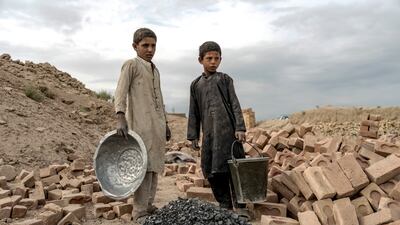
Children are involved in every step of the brickmaking process. -
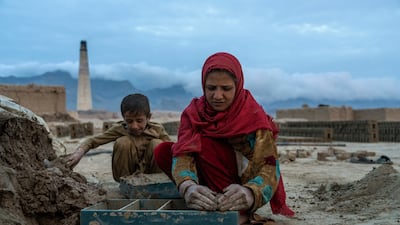
They haul cannisters of water and carry the wooden brick moulds filled with mud to put in the sun to dry. -
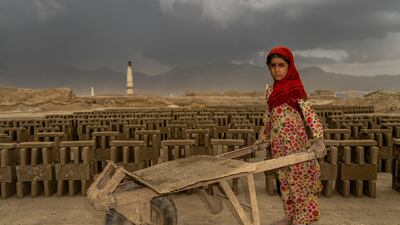
They load and push wheelbarrows full of dried bricks to the kiln for firing, then push back wheelbarrows full of fired bricks. -
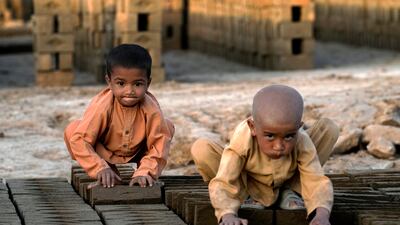
Everywhere they are lifting, stacking, sorting bricks. -
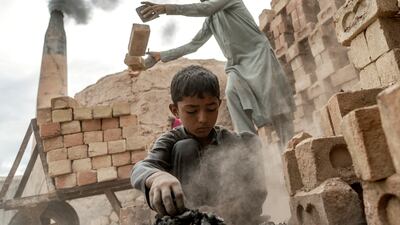
They pick through the smouldering charcoal from the kilns for pieces that can still be used, inhaling the soot and singeing their fingers. -
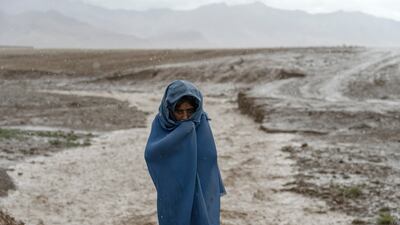
The children work with a determination and a grim sense of responsibility beyond their years, borne out of knowing little else but their families’ need. -
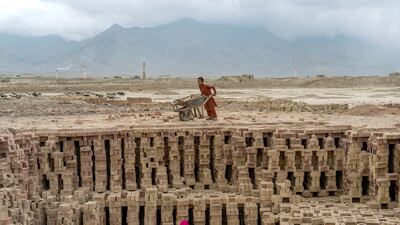
When asked about toys or play, they smile and shrug. Only a few have been to school. -
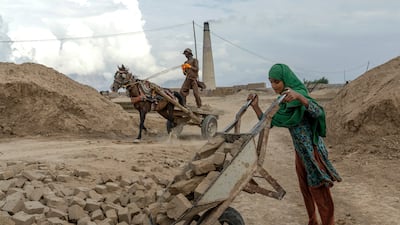
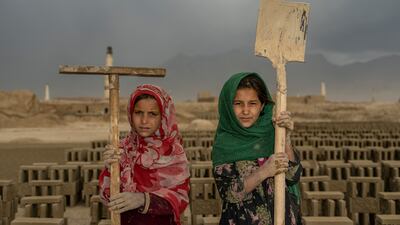
Nabila, 12, has been working in brick factories since she was five or six. Like many other brick workers, her family works part of the year at a kiln near Kabul, the other part at one outside Jalalabad, near the Pakistan border. -

A few years ago, she got to go to school a little in Jalalabad. She would like to go back to school but her family needs her work to survive, she said with a soft smile. 'We can’t think about anything else but work,' she said. -
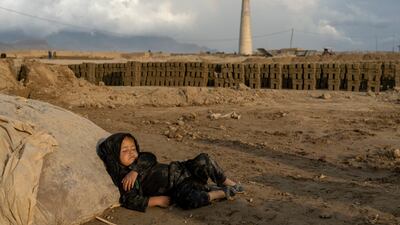
The landscape around the factories is bleak and barren, with the kilns’ smokestacks pumping out black, sooty smoke. Families live in dilapidated mud houses next to furnaces, each with a corner where they make their bricks. For most, a day’s meal is bread soaked in tea. -
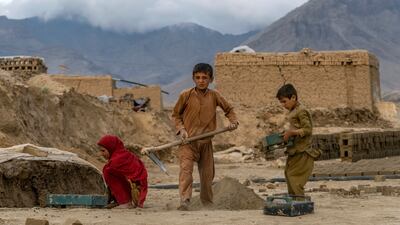
Rahim has three children working with him at a brick kiln, ranging in age from 5 to 12. The children had been in school, and Rahim, who goes by one name, said he had long resisted putting them to work. But even before the Taliban came to power, as the war went on and the economy worsened, he said he had no choice. -
'There’s no other way,' Rahim said. 'How can they study when we don’t have bread to eat? Survival is more important.' -

Workers get the equivalent of $4 for every 1,000 bricks they make. One adult working alone is unable to make that amount in a day, but if the children help, they can make 1,500 bricks a day, workers said. -
According to surveys by Save the Children, the percentage of families saying they had a child working outside the home grew from 18 per cent to 22 per cent from December to June. That would suggest more than a million children nationwide were working. Another 22 per cent of children said they were asked to work on the family business or farm. -
The surveys covered more than 1,400 children and more than 1,400 caregivers in seven provinces. They also pointed to the swift collapse in Afghans’ livelihoods. In June, 77 per cent of the surveyed families said they had lost half their income or more compared with a year ago, up from 61 per cent in December.


More than 78,000 Afghans came to the US under “Operation Allies Welcome” through a special process called “humanitarian parole”.
This allowed fleeing Afghans to be admitted to the US quickly, allowing them to stay for up to two years — though it does not guarantee a path to lawful permanent residency or citizenship.
Leaders in Congress introduced the Afghan Adjustment Act in an effort to bring those Afghans out of legal limbo and provide a path for some to obtain a more long-term status.
The bill has racked up significant endorsements both on and off Capitol Hill.
The US Chamber of Commerce, Airbnb, DoorDash, and several other leading American employers have urged Congress to pass the bipartisan bill before congressional budget talks this December, but the legislation's movement has stalled following the midterm elections.

