US soldiers and members of the Syrian Democratic Forces take part in military exercises in north-eastern Syria. EPA

US tells Turkey ground incursion in Syria 'will not resolve' its security concerns


  • English
  • Arabic

The US is walking a fine line between competing allies, as Turkey increases its threats against the Syrian Democratic Forces.

Turkey has ramped up strikes on Kurdish groups in Syria and has threatened to carry out a ground invasion following a bombing in Istanbul earlier this month.

Ankara blamed the attack on Kurdish militias, including the US-backed SDF. The group has denied involvement.

The US Department of Defence said on Tuesday that its mission to defeat ISIS continues in Syria, but the SDF has reduced the number of partnered patrols it typically conducts with American troops amid increased threats from Turkey in recent weeks.

A US State Department representative told The National that it has emphasised to Turkey that military escalation “will not resolve” its security concerns.

Meanwhile, SDF chief Mazloum Abdi demanded “stronger” support from US partners on Tuesday after an unprecedented Turkish troop deployment on the Syrian border.

Officials in Ankara have warned they would need only days “to become almost fully ready” to carry out a ground incursion into Syria's north-east.

“The Biden administration is stuck between a rock and a hard place,” Charles Lister, senior fellow at the Middle East Institute in Washington, told The National.

“I’m not surprised [they have] taken to walking on eggshells, as that’s its only option frankly.

“Of course we want to avoid a Turkish incursion … but US troops are never going to face off against Turkish soldiers — that’s just not on the cards.”

Jonathan Lord, senior fellow and director of the Middle East Security Programme at the Centre for a New American Security, argued that Washington's cautious tone is “almost permissive” of Turkish escalation, and it is clear that the US is “picking its battles”.

  • People inspect the damage after Turkish air strikes hit a power station in Taql Baql, Syria. AP
    People inspect the damage after Turkish air strikes hit a power station in Taql Baql, Syria. AP
  • A fire rages at an oil installation hit by a Turkish air strike in Tal Awdah, in north-eastern Syria's Hasakah province. AFP
    A fire rages at an oil installation hit by a Turkish air strike in Tal Awdah, in north-eastern Syria's Hasakah province. AFP
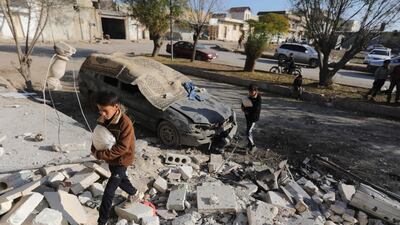
  • Residents walk over the rubble of a building destroyed by a rocket in the town of Azaz, Aleppo province. AFP
    Residents walk over the rubble of a building destroyed by a rocket in the town of Azaz, Aleppo province. AFP
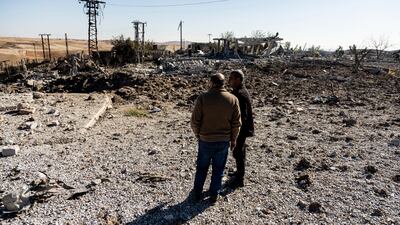
  • People look at a site damaged by Turkish air strikes in Taql Baql, Hasakah province. AP
    People look at a site damaged by Turkish air strikes in Taql Baql, Hasakah province. AP
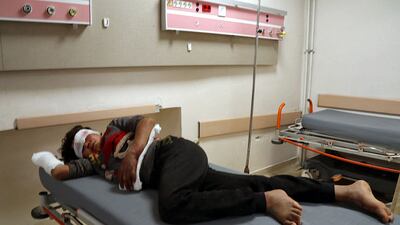
  • A person wounded in a rocket attack in the town of Azaz receives medical care at a clinic. AFP
    A person wounded in a rocket attack in the town of Azaz receives medical care at a clinic. AFP
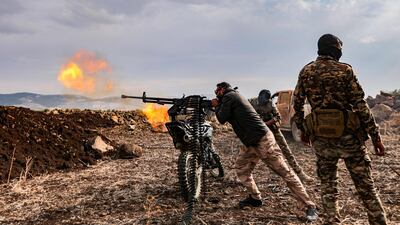
  • A Syrian fighter fires a machinegun mounted on the back of motorcycle during military drills by the Turkish-backed Suleiman Shah Division in the opposition-held Afrin region of northern Syria. AFP
    A Syrian fighter fires a machinegun mounted on the back of motorcycle during military drills by the Turkish-backed Suleiman Shah Division in the opposition-held Afrin region of northern Syria. AFP
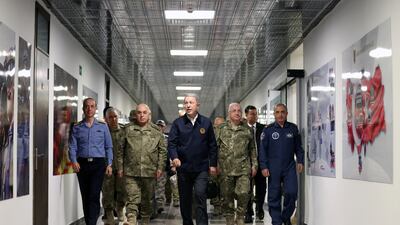
  • Turkey's Defence Minister Hulusi Akar visits the Land Forces Operation Centre, in Ankara. Reuters
    Turkey's Defence Minister Hulusi Akar visits the Land Forces Operation Centre, in Ankara. Reuters
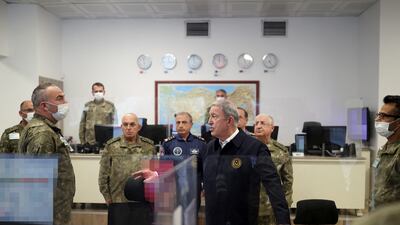
  • Mr Akar is briefed on the operations. Reuters
    Mr Akar is briefed on the operations. Reuters
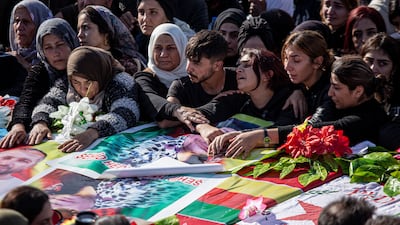
  • Kurds attend a funeral of people killed in Turkish air strikes in the village of Al Malikiyah, northern Syria. AP
    Kurds attend a funeral of people killed in Turkish air strikes in the village of Al Malikiyah, northern Syria. AP
  • Women mourn during the funeral service. AP
    Women mourn during the funeral service. AP
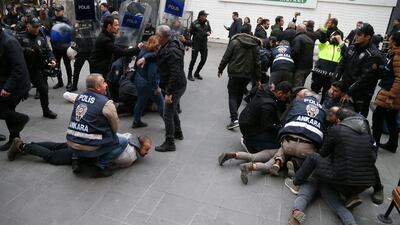
  • Police arrest members of the Peoples' Democratic Party (HDP) during a protest against the Turkish Armed Forces' (TSK) air campaign in the northern regions of Iraq and Syria, in Ankara. AFP
    Police arrest members of the Peoples' Democratic Party (HDP) during a protest against the Turkish Armed Forces' (TSK) air campaign in the northern regions of Iraq and Syria, in Ankara. AFP

“The primary objective is to cajole Turkey to be a good ally in Europe and support US efforts in Ukraine and Nato accession for Finland and Sweden,” Mr Lord told The National.

“As long as Turkey doesn’t do damage to US interests, they have a green light.”

But he added: “The very nature of the [Turkish] operation is undermining US interests and further destabilising the region.”

The Turkish bombardments come after months of ground invasion threats from Turkish President Recep Tayyip Erdogan, who considers the SDF to be terrorists. This rhetoric has only intensified since the Istanbul bombing.

National Security Council spokesman John Kirby told reporters on Monday that Washington was “not in a position to say who was responsible” for the bombing in Istanbul and that the White House “did not want to see any actions within Syria”.

Nicholas Heras, director of strategy and innovation at the New Lines Institute, told The National that Ankara is applying “maximum pressure” on Washington to leave north-east Syria — and leave responsibility for Kurdish forces “to some combination” of Turkish, Russian and Syrian government forces.

Bob Menendez, the leading senator on the Foreign Relations Committee, last week called Ankara out over the strikes, claiming the attacks on US partnered forces “are not the actions of an ally”.

Otherwise, there has been relative silence in Congress on the increased tension between two of Washington's critical regional allies.

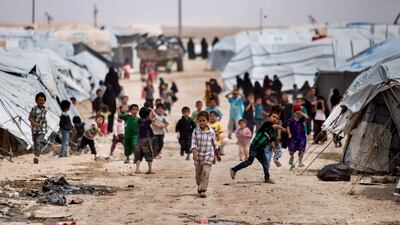
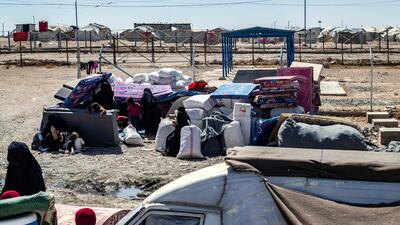
One of Turkey's targets in Syria has been US-backed forces guarding Al Hol detention camp, a facility holding suspected family members of ISIS fighters, as well as civilian infrastructure.

The threat of a Turkish ground operation poses the risk of diverting SDF resources away from the anti-ISIS mission, particularly its control over Al Hol and anti-radicalisation efforts there.

“Escalation threatens both humanitarian efforts in the area and the safe repatriation of these vulnerable individuals to their countries or areas of origin,” a State Department representative told The National.

Last week, US Central Command (Centcom) urged the repatriation of the detainment camp's international residents after officials reported the discovery of two beheaded Egyptian girls.

For Mr Lister, these types of dilemmas were an “inevitable consequence” of Washington's decision to join forces with the Kurdish YPG in its mission to counter ISIS in Syria.

“Whether that decision was the right one is unimportant at this point … we can only hope that wiser heads prevail and Turkey’s campaign avoids a ground component, but with elections just months away, these are worrying times,” Mr Lister added.

Natasha Hall, senior fellow at Washington's Centre for Strategic International Studies, said the instability highlights the consequences of the continued US pivot away from the Middle East after years of entrenchment.

“Lack of consistent, high-level diplomacy can curb the US ability to prevent crises, which profoundly affects trust in the US amongst allies and, therefore, the US ability to shape events,” Ms Hall told The National.

Miserable conditions at Al Hol camp in north-east Syria - in pictures

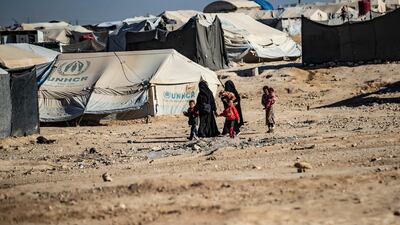
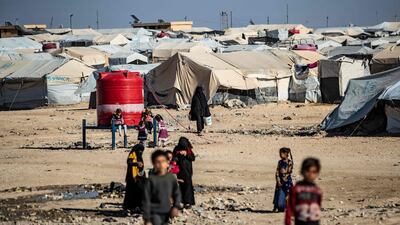
  • Al Hol camp in Al Hasakeh province, Syria, houses families of ISIS fighters. AP
    Al Hol camp in Al Hasakeh province, Syria, houses families of ISIS fighters. AP
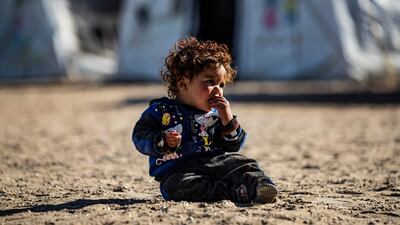
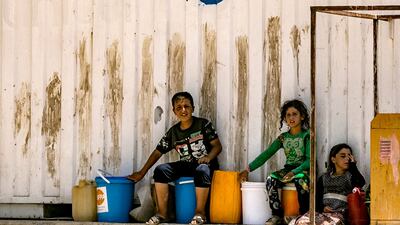
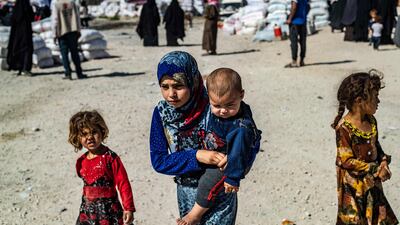
  • About 56,000 people, mostly women and children, live in crowded conditions in the camp. AFP
    About 56,000 people, mostly women and children, live in crowded conditions in the camp. AFP
  • Many of its residents have been there since ISIS was defeated in Syria in 2019. AFP
    Many of its residents have been there since ISIS was defeated in Syria in 2019. AFP
  • About 10,000 people at Al Hol are non-Arab foreign citizens, with the rest mostly from Syria and Iraq. AFP
    About 10,000 people at Al Hol are non-Arab foreign citizens, with the rest mostly from Syria and Iraq. AFP
  • The Al Hol camp, which holds relatives of suspected ISIS group fighters. AFP
    The Al Hol camp, which holds relatives of suspected ISIS group fighters. AFP
  • UK charity Save the Children says 40,000 children from 60 countries live in dire conditions in Syria's Roj and Al Hol camps. AFP
    UK charity Save the Children says 40,000 children from 60 countries live in dire conditions in Syria's Roj and Al Hol camps. AFP
  • Families at Al Hol gather their belongings as they prepare to return home to Syria's northern Raqqa region. AFP
    Families at Al Hol gather their belongings as they prepare to return home to Syria's northern Raqqa region. AFP
  • Two children die at the camp every week, Save the Children has said. AFP
    Two children die at the camp every week, Save the Children has said. AFP
  • There have been reports of women in the camp being detained and tortured by ISIS supporters. AFP
    There have been reports of women in the camp being detained and tortured by ISIS supporters. AFP
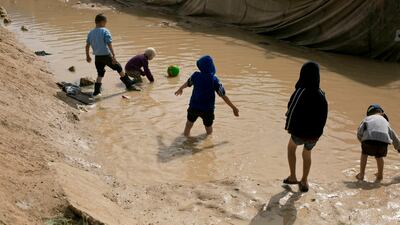
  • Children play in a mud puddle at Al Hol camp. AP
    Children play in a mud puddle at Al Hol camp. AP
COMPANY%20PROFILE
%3Cp%3E%3Cstrong%3ECompany%3A%20%3C%2Fstrong%3EEducatly%3Cbr%3E%3Cstrong%3EStarted%3A%20%3C%2Fstrong%3E2020%3Cbr%3E%3Cstrong%3EBased%3A%20%3C%2Fstrong%3EUAE%3Cbr%3E%3Cstrong%3EFounders%3A%20%3C%2Fstrong%3EMohmmed%20El%20Sonbaty%2C%20Joan%20Manuel%20and%20Abdelrahman%20Ayman%3Cbr%3E%3Cstrong%3EIndustry%3A%20%3C%2Fstrong%3EEducation%20technology%3Cbr%3E%3Cstrong%3EFunding%20size%3A%20%3C%2Fstrong%3E%242%20million%3Cbr%3E%3Cstrong%3EInvestors%3A%20%3C%2Fstrong%3EEnterprise%20Ireland%2C%20Egypt%20venture%2C%20Plus%20VC%2C%20HBAN%2C%20Falak%20Startups%3C%2Fp%3E%0A

Mercer, the investment consulting arm of US services company Marsh & McLennan, expects its wealth division to at least double its assets under management (AUM) in the Middle East as wealth in the region continues to grow despite economic headwinds, a company official said.

Mercer Wealth, which globally has $160 billion in AUM, plans to boost its AUM in the region to $2-$3bn in the next 2-3 years from the present $1bn, said Yasir AbuShaban, a Dubai-based principal with Mercer Wealth.

Within the next two to three years, we are looking at reaching $2 to $3 billion as a conservative estimate and we do see an opportunity to do so,” said Mr AbuShaban.

Mercer does not directly make investments, but allocates clients’ money they have discretion to, to professional asset managers. They also provide advice to clients.

“We have buying power. We can negotiate on their (client’s) behalf with asset managers to provide them lower fees than they otherwise would have to get on their own,” he added.

Mercer Wealth’s clients include sovereign wealth funds, family offices, and insurance companies among others.

From its office in Dubai, Mercer also looks after Africa, India and Turkey, where they also see opportunity for growth.

Wealth creation in Middle East and Africa (MEA) grew 8.5 per cent to $8.1 trillion last year from $7.5tn in 2015, higher than last year’s global average of 6 per cent and the second-highest growth in a region after Asia-Pacific which grew 9.9 per cent, according to consultancy Boston Consulting Group (BCG). In the region, where wealth grew just 1.9 per cent in 2015 compared with 2014, a pickup in oil prices has helped in wealth generation.

BCG is forecasting MEA wealth will rise to $12tn by 2021, growing at an annual average of 8 per cent.

Drivers of wealth generation in the region will be split evenly between new wealth creation and growth of performance of existing assets, according to BCG.

Another general trend in the region is clients’ looking for a comprehensive approach to investing, according to Mr AbuShaban.

“Institutional investors or some of the families are seeing a slowdown in the available capital they have to invest and in that sense they are looking at optimizing the way they manage their portfolios and making sure they are not investing haphazardly and different parts of their investment are working together,” said Mr AbuShaban.

Some clients also have a higher appetite for risk, given the low interest-rate environment that does not provide enough yield for some institutional investors. These clients are keen to invest in illiquid assets, such as private equity and infrastructure.

“What we have seen is a desire for higher returns in what has been a low-return environment specifically in various fixed income or bonds,” he said.

“In this environment, we have seen a de facto increase in the risk that clients are taking in things like illiquid investments, private equity investments, infrastructure and private debt, those kind of investments were higher illiquidity results in incrementally higher returns.”

The Abu Dhabi Investment Authority, one of the largest sovereign wealth funds, said in its 2016 report that has gradually increased its exposure in direct private equity and private credit transactions, mainly in Asian markets and especially in China and India. The authority’s private equity department focused on structured equities owing to “their defensive characteristics.”

Timeline

2012-2015

The company offers payments/bribes to win key contracts in the Middle East

May 2017

The UK SFO officially opens investigation into Petrofac’s use of agents, corruption, and potential bribery to secure contracts

September 2021

Petrofac pleads guilty to seven counts of failing to prevent bribery under the UK Bribery Act

October 2021

Court fines Petrofac £77 million for bribery. Former executive receives a two-year suspended sentence 

December 2024

Petrofac enters into comprehensive restructuring to strengthen the financial position of the group

May 2025

The High Court of England and Wales approves the company’s restructuring plan

July 2025

The Court of Appeal issues a judgment challenging parts of the restructuring plan

August 2025

Petrofac issues a business update to execute the restructuring and confirms it will appeal the Court of Appeal decision

October 2025

Petrofac loses a major TenneT offshore wind contract worth €13 billion. Holding company files for administration in the UK. Petrofac delisted from the London Stock Exchange

November 2025

180 Petrofac employees laid off in the UAE


Updated: November 29, 2022, 9:36 PM