



Cameron Evans expertly navigates a narrow waterway that cuts through marshland off what’s left of Tangier Island, the speck of land he’s called home his whole life and where he hopes to grow old.
The hum of his boat's 50-horsepower engine mixes with the sounds of birdsong as waves lap against lush green seagrass. This was all once was habitable land, but rising sea levels and erosion have rendered the area too unstable and waterlogged to live on.
“I remember, right where we are at now … I remember land,” Mr Evans says, pointing to an expanse of water that recently swallowed part of the island.
The residents of what is called The Uppards were the first victims of rising sea levels and erosion on Tangier Island in the 1930s.
And they won't be the last.
All that remains of that once-thriving settlement is debris and tombstones, which occasionally surface when the tide is low.
Tangier Island, which sits 20 kilometres off the coast of Virginia in the Chesapeake Bay, is losing land at an alarming rate and as hurricane season hits, islanders are particularly worried about their future.
“It stays on your mind that this is hurricane season,” said James “Ooker” Eskridge, the island's mayor.
“When we go to bed at night and when we get up, if there's a storm out there, we're constantly monitoring it and of course, we know if we get not even a direct hit, if it comes close enough, we'll get quite a bit of damage and lose quite a bit of shoreline.”
A 2015 study by the Army Corps of Engineers found that since 1850, Tangier has lost two thirds of its land mass and that by 2050, the island may be uninhabitable, perhaps making the people of Tangier some of the first climate change refugees in the country.
It is a fate the 400 or so residents are trying desperately to avoid.
In 2017, Tangier, which measures 5km long and 2.5km wide, made headlines when then-president Donald Trump called Mr Eskridge to discuss ways to save the island.
The tightly knit conservative community voted overwhelmingly for Mr Trump in 2016 and 2020, and “Trump 2024" flags fly high above the island's docks.
“I believe we got help for the island that we would have been slower in getting,” Mr Eskridge said of Mr Trump's interest in Tangier.
But the island needs more help than the former president was able to provide.
A jetty the Army Corps of Engineers built in 1989 has protected the western edge of the island for the past three decades and residents believe another one is needed to the north and east.
“Rocks, rocks like we have on the west side to protect us from nor'easters,” Mr Eskridge says, referring to the massive storms that frequently form along the eastern coast of the US several months out of the year.
While that solution may sound simple, building jetties is expensive and so far, the state of Virginia has been hesitant to invest.
But a recent proposal by Tim Kaine, a senator representing the state, has made Mr Eskridge optimistic.
The Democratic senator recently visited the island to tell Mr Eskridge that he may have secured $25 million to fund a pilot project that would use material dredged from narrow channels in the Chesapeake to help create a buffer near the island and allow it to be built back up.
The funding, which still must be approved by Congress, would mark the most significant investment in saving the island in years.
“One way to combat the effects of sea level rise is to build the island higher,” said Matthew Kirwan, an associate professor at the Virginia Institute of Marine Science whose work focuses on coastal landscape evolution.
While details for the pilot project remain scarce, Mr Kirwan believes dredging is a viable way to help protect Tangier — but it’s no permanent fix.
“Dredge disposal on marshes is not perfect; we can put the sediment exactly where we want it but there's no guarantee it'll stay there,” Mr Kirwan explained to The National. “Tangier is eroding from all sides, and so that material will eventually be lost.”
But he added that beefing up the island will help make it more “resilient”.
-
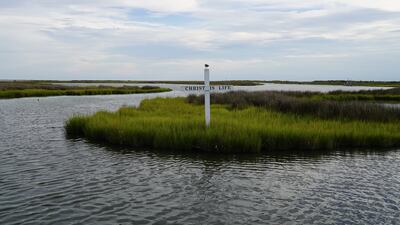
A cross rises from the marsh on Tangier Island in the Chesapeake Bay. Religion is an important part of life on Tangier. All photos: Willy Lowry / The National -
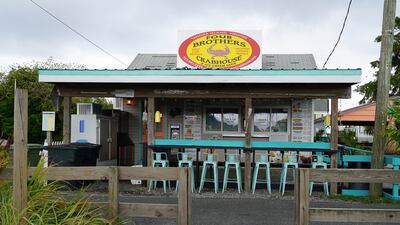
Four Brothers Crabhouse is one of only two restaurants still open on Tangier. -
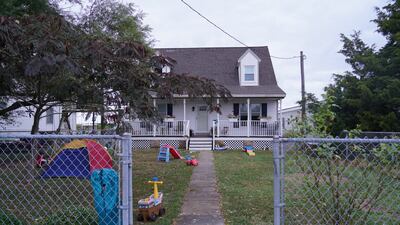
Children's toys fill the front lawn of a house on Tangier Island. The island's population has been steadily decreasing for years. -

A Trump flag flies next to crab traps. -
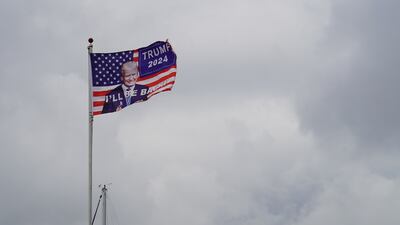
A Trump 2024 flag flies above a dock on Tangier Island. Former president Donald Trump is extremely popular on the island. -
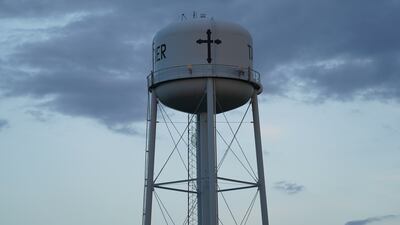
The Tangier water tower rises high above the flat island. -
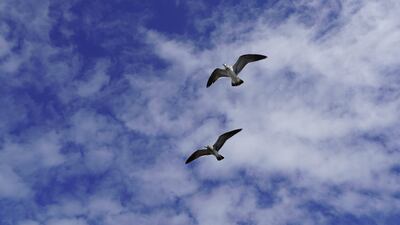
Birds fly over Tangier. The island is a haven for rare species. -
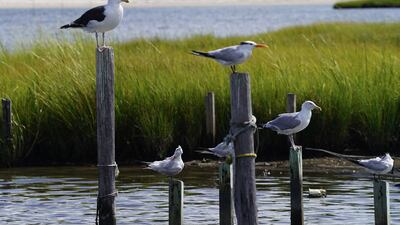
Birds rest on posts jutting out of the Chesapeake Bay. Tangier Island is home to dozens of bird species. -
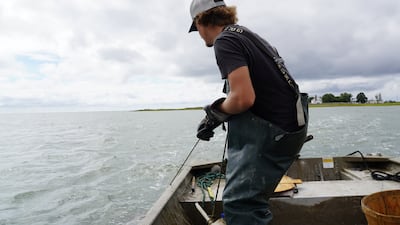
Cameron Evans, 23, pulls up a crab trap that he set in the sandy waters of the Chesapeake Bay. -
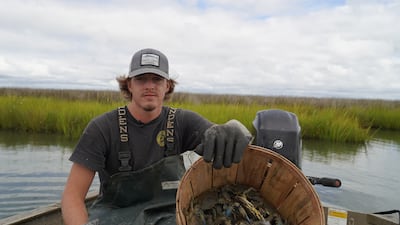
Mr Evans poses with a bushel of crabs he caught. -
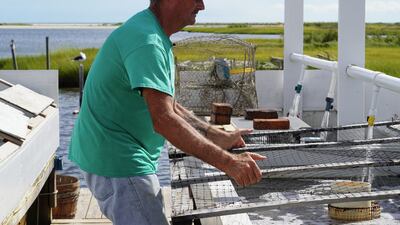
James Eskridge, who goes by 'Ooker' covers a tank holding crabs he caught. Mr Eskridge is the mayor of Tangier. Crabbing is more than a job for the men of Tangier, it's a way of life and connects them to their forefathers. -
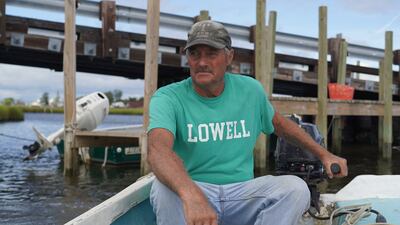
Mr Eskridge drives his small boat through shallow water as he heads to his crab shanty. -

Mr Eskridge dons a Trump hat. The mayor spoke with then-president Donald Trump in 2017 to discuss ways to save the island. -
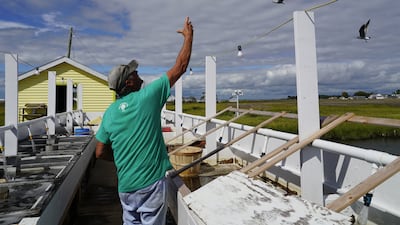
Mr Eskridge feeds birds at his crab shanty. -
While Mr Eskridge may be mayor of Tangier, he says his first job is waterman and crabber. -

Mr Eskridge navigates the narrow channel that leads to his crab shanty. -
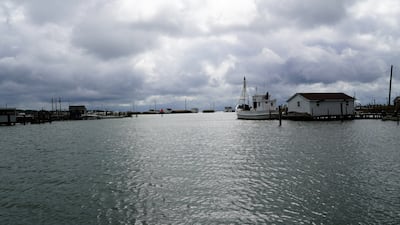
The Harbour of Tangier is home to dozens of crab shanties. -
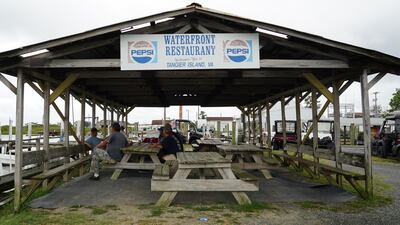
Watermen wait out foul weather under shelter. -
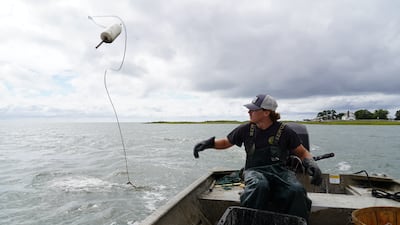
Mr Evans sets a crab trap. -
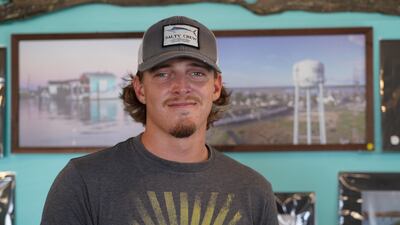
In addition to crabbing, Mr Evans leads photography workshops on the island. Here he poses in his waterfront studio. -
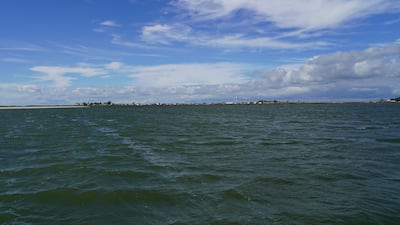
Looking at Tangier Island from the water, one quickly sees how flat and susceptible it is to sea level rise. -

The eastern edge of the island is most susceptible to erosion and rising water levels. -
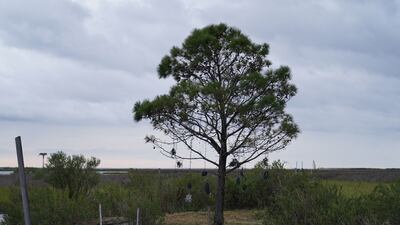
The island is mostly flat grassland and marsh. -
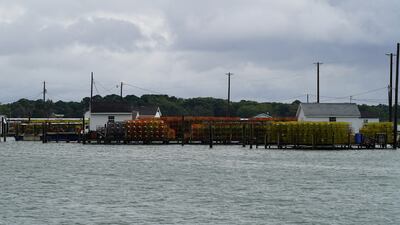
Crab traps line the docks of Tangier. -
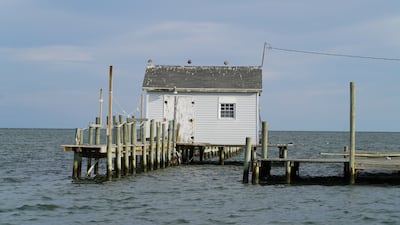
A crab shanty sits on stilts in the Chesapeake bay off of Tangier Island. Watermen store crabs and tools in their shanties, which act like floating offices. -
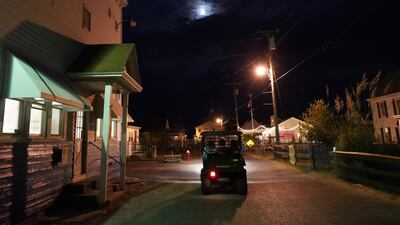
There are only a handful of cars on Tangier. Most people get around by bicycle or golf cart. -
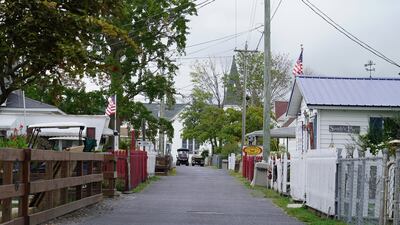
Main Ridge Road, one of three main arteries on Tangier Island. The island consists of three ridges connected by bridges. -
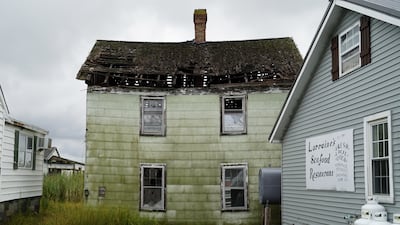
An old abandoned house on Tangier Island. The island's population has decreased significantly in recent years. -
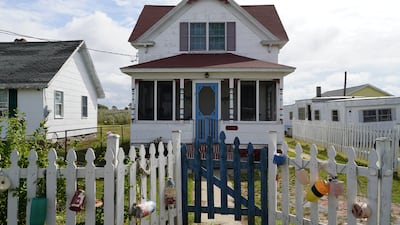
A colourful house on Tangier Island. -
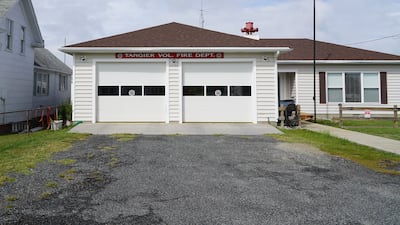
The island is so small it only has a volunteer fire department. -

An egret stands in a marsh with the Tangier village in the background. -
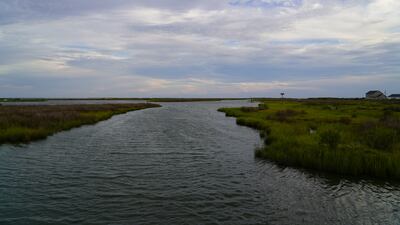
Looking south from Tangier Island. -
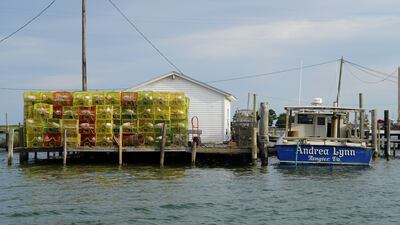
A crabbing boat is docked to next crab traps. -
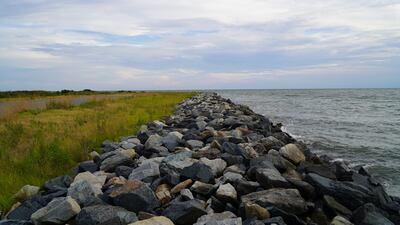
A rock-filled breakwater wall was installed on the island's western edge in 1989. Residents say it has successfully stopped erosion on that side of the island. -
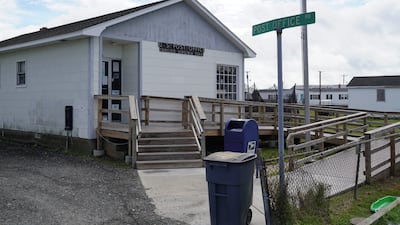
The island's lone post office sits right off Main Ridge Road. -

The Swain Memorial United Methodist Church's cemetery. -
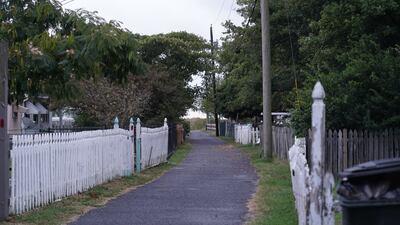
A narrow street on the island's Western Ridge. -
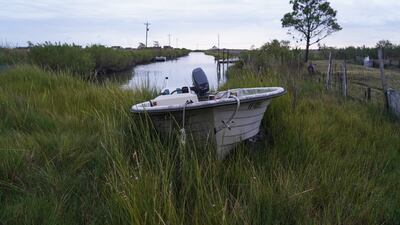
A boat sits on land next to a marshy canal. Boats are everywhere on Tangier. -
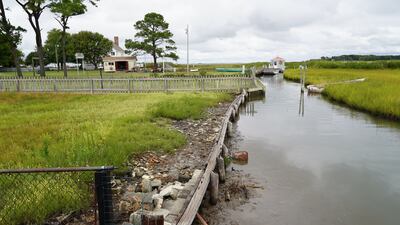
A wooden barricade prevents a yard from falling into the sea. -
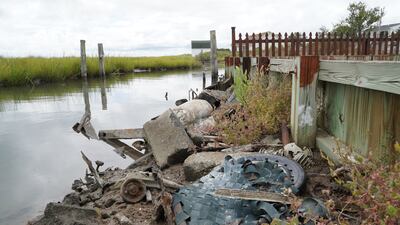
Debris is stacked against the shoreline in an effort to prevent erosion. The island loses as much as nine metres of shoreline a year to erosion. -
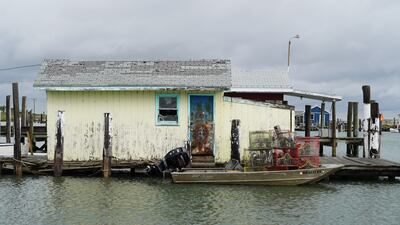
A crabbing boat docked on Tangier Island. -
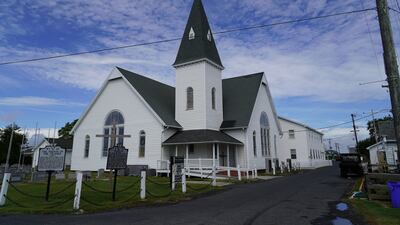
Swain Memorial United Methodist Church, one of two churches on the island. Religion plays a major role in people's lives here. -
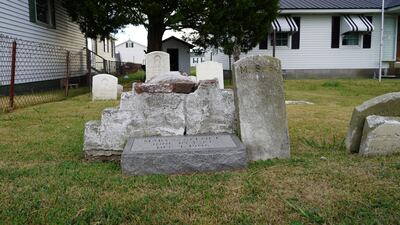
Because land is in such short supply, many families are forced to bury loved ones in their front yards. -

A swing set on Tangier Island. Many residents speak of idyllic childhoods filled with fishing, crabbing and exploring. -
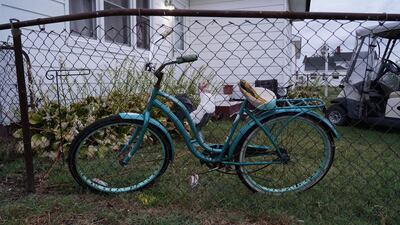
Many people use bicycles to get around the island. -
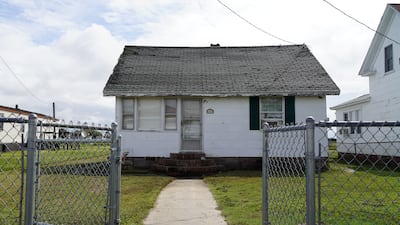
A small house on Tangier Island. -
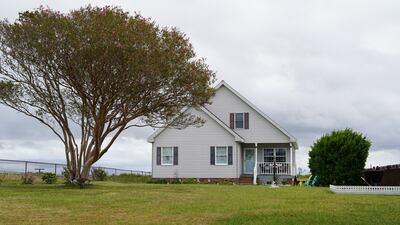
A house on the eastern side of Tangier Island, which is most susceptible to erosion and rising sea levels. -
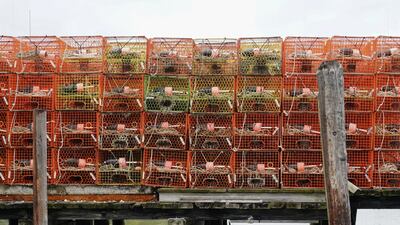
Stacks of crab traps sit on a dock on Tangier Island.


Since the colonial period, the Chesapeake Bay has risen by nearly a metre and the water level is currently climbing at the second-highest rate in the coastal US, behind only Louisiana.
“You can't stop sea level rise. Even if we reduced emissions completely today, sea levels would still rise for at least the next couple 100 years,” said Mr Kirwan.
While the impact of climate change is likely only to increase, many on the island don't accept that rising seas are to blame for their troubles.
“I just don't see it happening,” said Mr Eskridge from his crab shanty, a small space built on stilts where he separates soft and hard shell crabs before selling them to market.
“If it is, it's happening at such a small rate that erosion would take us away from here long before sea level rise destroyed us.”
Mr Eskridge has been working the waters here since he was a child. As mayor, he feels responsible for trying to preserve the fragile island and the unique culture it supports.
“When I'm out here crabbing out on my boat, my son is out here doing this and my father did it, my grandfather and my great-grandfather,” he said.
“We've just been handing it down, each generation working on the water and we love what we do.”
With such a small, isolated population, the watermen and women of Tangier have developed a distinct dialect, which is only spoken within the shifting and shrinking confines of the island.
It is said to be a mix of a Cornish accent from the UK and an American southern accent.
Like the waters that surround it, the accent helps to define the island and makes it special to those who call it home.
But as the island shrinks, it is becoming harder and harder to live here. Its population, which ballooned to 1,100 in the 1930s, has shrunk to about 400.
Mr Evans, the young crabber, recently returned from college in Virginia. His time away made him realise how special life here is.
His was a childhood spent outdoors, exploring the marshy waters and hunting for crabs. By 8 or 9, he had his own boat and by 10, he was already making money selling crabs.
“There was a sense of freedom that we had here that no one else did,” he said.
But every time a storm hits, Mr Evans fears that another piece of his homeland will be ripped away.
“The loss of land, it kind of feels like somebody is slowly dying and you're just watching them getting more and more crippled until the pieces of land just fall right off.”
Joshua Longmore contributed to this report


