


Former US president Donald Trump said he declined to answer questions during a New York state's civil investigation over his family's business practices.
The New York case is focused on The Trump Organisation — the former president's company that manages golf courses, hotels and other real estate — which has been accused of inflating the value of its properties.
-
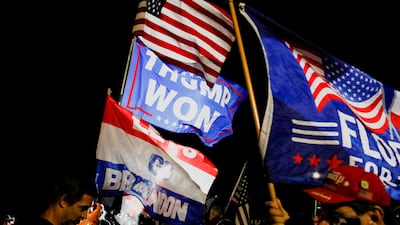
Supporters of former US president Donald Trump gather outside his Mar-a-Lago home in Palm Beach, Florida, after he said FBI agents raided it. Reuters -
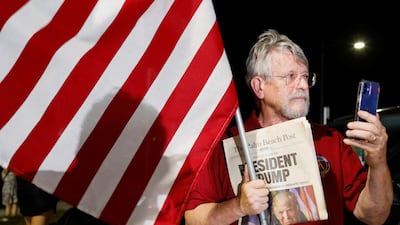
A supporter of Mr Trump holds a flag and an old newspaper outside the former president's Mar-a-Lago home. Reuters -
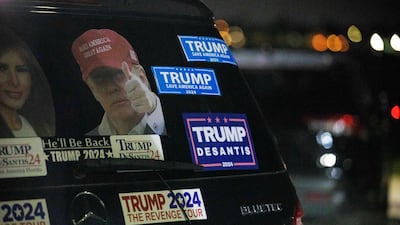
The FBI searched the estate as part of an investigation into whether the former US leader took classified records from the White House to his Florida residence. The Palm Beach Post / AP -
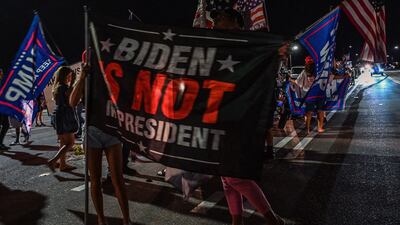
Despite the January 6 hearings and an FBI raid, some still believe that Mr Trump won the 2020 election. AFP -
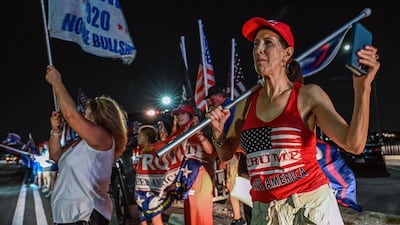
Supporters gathered outside Mar-a-Lago in Florida as it was was being searched by FBI agents in what Mr Trump called an act of 'prosecutorial misconduct'. AFP -
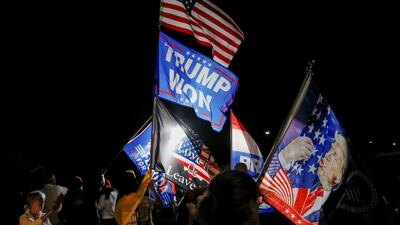
Trump supporters in Palm Beach, Florida outside Mar-a-Lago on Monday night. Reuters -
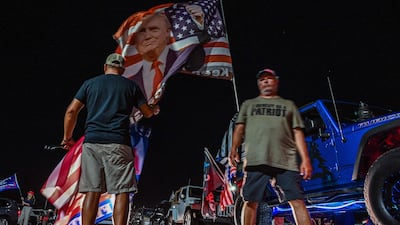
It is claimed that the former US president took documents from the White House and disposed of them at Mar-a-Lago. AFP -
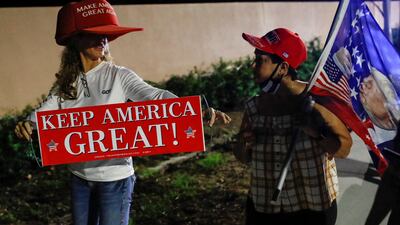
Mr Trump was in New York when the search took place. Reuters -
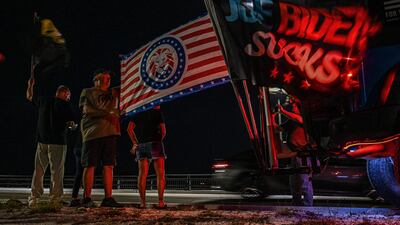
Mr Trump alleges that no other president has been subjected to such treatment. AFP -
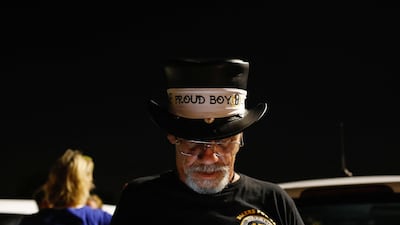
A member of the far-right Proud Boys group outside Mar-a-Lago. Reuters -
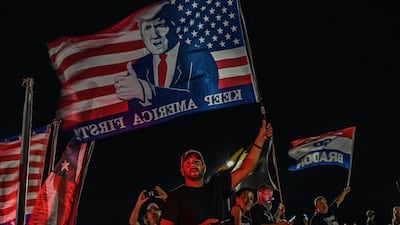
Mr Trump compared the FBI raid to Watergate. AFP


In a statement, Mr Trump said he refused to answer questions “under the rights and privileges afforded to every citizen under the United States Constitution”, thus invoking his Fifth Amendment right — something he once said innocent people shouldn't have to do.
But what is the Fifth Amendment and what does it mean to “plead the Fifth”?
What is the Fifth Amendment?
In its simplest terms, the Fifth Amendment gives people the right to refuse to provide evidence that would incriminate them.
In “pleading the fifth”, a person declares they are exercising the right not to answer a question so as not to implicate themselves. Furthermore, an individual's silence or refusal to answer a question cannot be used against them in a criminal case.
Prosecutors also cannot argue to the jury that an accused person's refusal to answer a question implies guilt.
Witnesses can also plead the Fifth if they believe answering a question would implicate them in a crime.
Although the US Constitution states a person cannot be “compelled in any criminal case to be a witness against himself”, the right is also applicable in civil cases — such as the one facing Mr Trump.
The former president has, in the past, said that pleading the Fifth implies guilt, but it is a tactic that Trump ally Roger Stone and Mr Trump Jr employed when they were subject to questioning by the US House Committee investigating the January 6, 2021, attack on the Capitol.
Mr Trump's refusal to answer questions also signalled that he has changed course on his previously-held belief, citing his anger over an unrelated FBI raid of his Mar-a-Lago estate in Florida.
“I once asked, 'If you're innocent, why are you taking the Fifth Amendment?' Now I know the answer to that question,” he said.
Are there limitations to the Fifth Amendment?
The Fifth Amendment only applies to testimonial acts, so a person may decline to speak, nod their head or write a response.
But other pieces of incriminating information — such as a person's hair, DNA samples, fingerprints and blood — can be used as evidence in a case. Incriminating evidence that the person voluntarily provides is also not protected.
A person also cannot plead the Fifth as blanket protection for any question — answers to questions that would not help prosecutors are not protected by the Fifth Amendment.
Witnesses granted immunity can also be made to give evidence, as they can no longer reasonably fear prosecution.
In a civil case, a person can only invoke their Fifth Amendment right if they fear the evidence given could incriminate them in a later criminal case. If the person only fears being held liable in a civil case, then the protection is not granted.
-
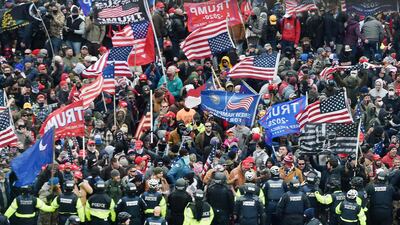
On January 6, 2021, Trump supporters clash with police and security forces as they storm the US Capitol in Washington. AFP -
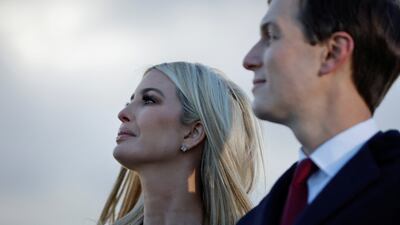
Ivanka Trump and Jared Kushner have already spoken to January 6 investigators. Whether they will appear in primetime is yet to be determined. Reuters -
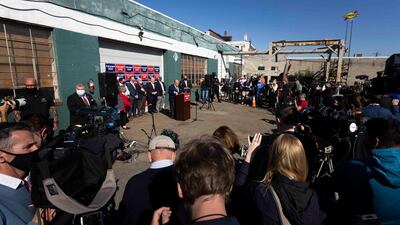
Rudy Giuliani, lawyer for former president Donald Trump, gives a press conference in the car park of the Four Seasons landscaping company in Philadelphia, Pennsylvania, after Joe Biden was declared as winner of the 2020 presidential election, which he claimed was false. As a result of these claims, Mr Giuliani can no longer practice law in the state of New York. EPA -
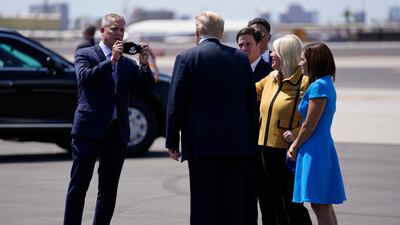
Donald Trump meets Clint Hickman, vice chairman of Arizona's 4th District, Maricopa County Board of Supervisors, at Phoenix Sky Harbour International Airport in Phoenix, Arizona, Mr Hickman said that he refused to take calls from the White House and Mr Trump, who he said was trying to overturn the battleground state's results. AP -

Four days before the Capitol riot, Donald Trump placed a call to Georgia Secretary of State Brad Raffensperger and asked the official to 'find' 11,780 votes to prevent the certification of Joe Biden's victory in the battleground state. The House committee investigators have already interviewed election officials in the state. AP -
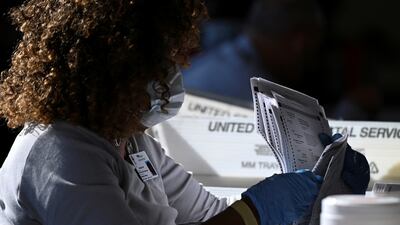
Ruby Freeman was an employee of the Fulton County Board of Registration and Elections in Atlanta, Georgia, during the 2020 presidential election. After the state went to Joe Biden, Donald Trump accused Ms Freeman of stealing ballots in a call with Brad Raffensperger, who told Mr Trump that he was being misled by claims on social media. Reuters -

Kimberly Guilfoyle, engaged to Donald Trump's son, boasted to a Republican operative that she had raised $3 million for the rally that helped fuel the January 6 Capitol riot. She may be called to testify. AFP -
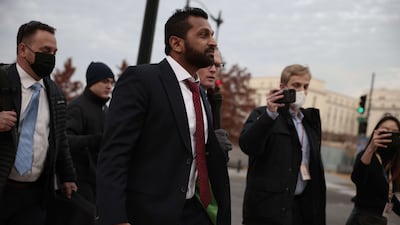
Kash Patel, chief of staff to former acting secretary of defence Christopher Miller, gave a deposition on Capitol Hill to the committee on December 9, 2021. Members of the committee and staff members had been meeting with Mr Patel and 'Stop the Steal' organiser Ali Alexander. Getty Images / AFP -
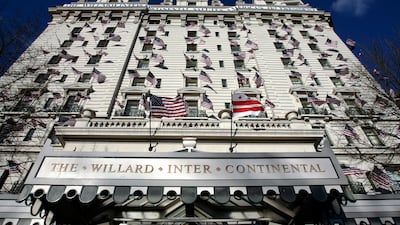
The Willard Hotel in Washington played home to a 'war room' set up by advisers of Donald Trump and has become the focus of the congressional investigation into the January 6 attack. AFP -
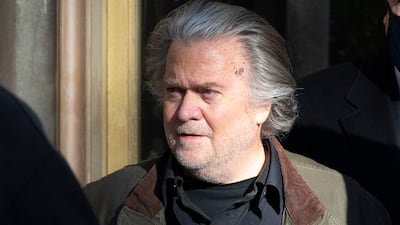
Former White House chief strategist in the Trump administration Steven Bannon leaves a federal courthouse in Washington after being indicted on two counts of contempt of Congress. EPA -
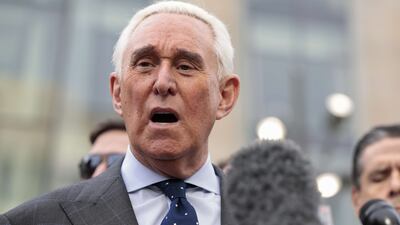
Roger Stone, a former adviser and confidant of Donald Trump, gave a deposition before the committee in which he repeatedly pled the Fifth Amendment when questioned. Getty Images / AFP -
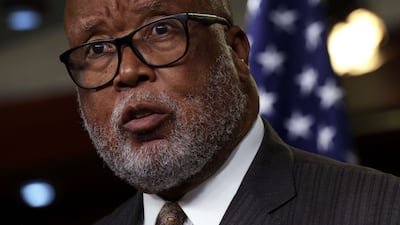
Bennie Thompson was chosen by Speaker of the House Nancy Pelosi to lead the House Select Committee on the January 6 Attack on the US Capitol. Getty Images / AFP -
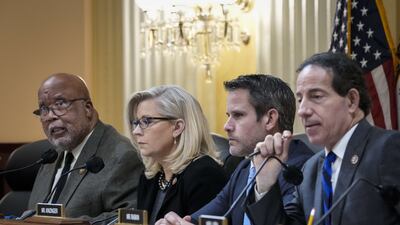
Bennie Thompson meets Liz Cheney, vice-chair of the select committee, Adam Kinzinger and Jamie Raskin on Capitol Hill. The committee voted unanimously to recommend contempt of Congress charges for former Department of Justice official Jeffrey Clark for defying his subpoena, refusing to answer questions and failing to hand over documents to the committee. Getty Images / AFP -

Liz Cheney, committee chairman Bennie Thompson and other members of the committee speak to reporters after meeting with Nancy Pelosi. Reuters -
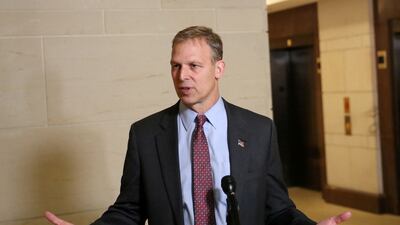
Republican Scott Perry of Pennsylvania helped promote theories that the 2020 presidential election was stolen, resulting in millions of tax dollars spent on recounts in the state. Election workers there were also threatened with violence. Reuters -
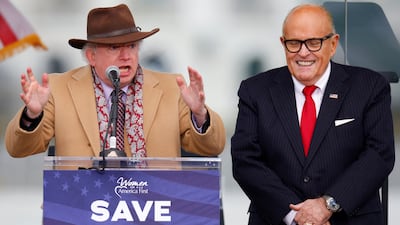
Lawyer John Eastman spoke with Donald Trump's personal legal representative Rudy Giuliani at the January 6 'Stop the Steal' rally in Washington. During the melee, Mr Eastman emailed Greg Jacobs, aid to vice president at the time Mike Pence, to say that it was Mr Pence's fault that the riot was taking place because he refused to block the election's certification results. Reuters -
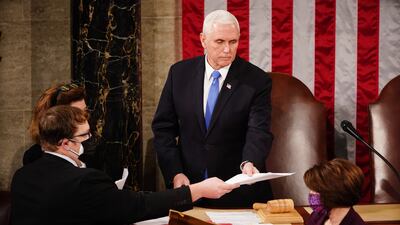
Before Mike Pence could certify the Electoral College votes before Congress, the last step in the process before Joe Biden was to be sworn in, rioters breached the US Capitol. Outside the chamber doors, a person was shot and police officers were beaten and trampled as some rioters yelled: 'Hang Mike Pence!' EPA -
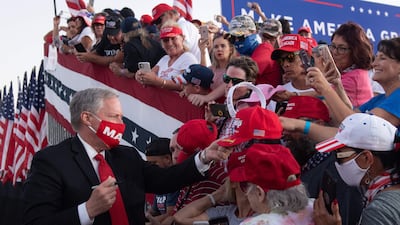
Former White House chief of staff Mark Meadows said he has no intention of complying with a subpoena to appear before the committee and missed a scheduled deposition. Committee members voted unanimously to pursue criminal contempt charges against Mr Meadows for refusing to give evidence. AFP -
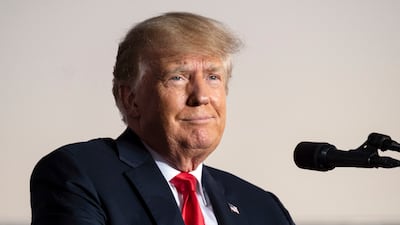
In a legal setback, a federal appeals court ruled against Donald Trump, demanding he turn over White House records to the committee. AP -
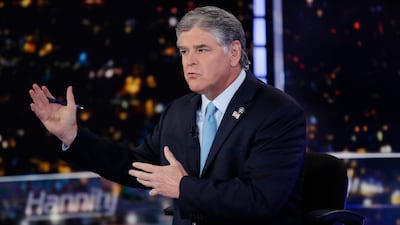
Fox News host Sean Hannity sent text messages to the White House during the January 6 insurrection. AP -
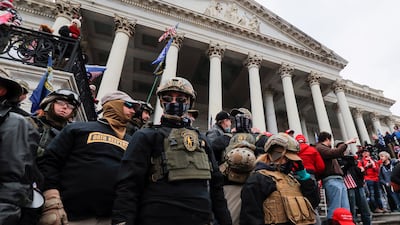
The Oath Keepers is a US militia group that recruits former members of the military and law enforcement, with many participating in the January 6 attack. The committee has sent a subpoena to its founder, Stewart Rhoades, and several members have been arrested. AP -

The select committee subpoenaed Enrique Tarrio, naming him as leader of the Proud Boys, an extremist group that responded to Donald Trump’s call to descend on Washington and which played a central role in the attack on the Capitol. EPA -
US Olympic swimmer Klete Keller can be seen, with arms extended and wearing a blue kerchief covering his face, during the attack on the US Capitol. He pled guilty to one count of obstructing an official proceeding and is co-operating with the committee. AFP -
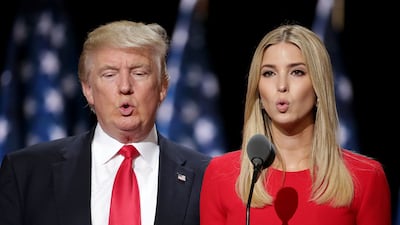
House select committee member Liz Cheney told CNN that a witness said Donald Trump's daughter and former White House adviser, Ivanka Trump, pleaded with her father to put a stop to the violence that took place on January 6. Getty Images / AFP -
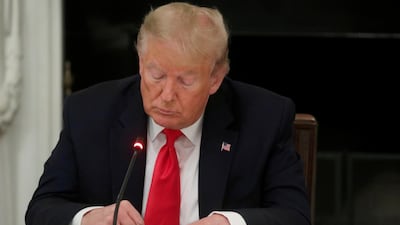
On January 9, 2021, Twitter banned Donald Trump after he tweeted his support for the rioters. Reuters -
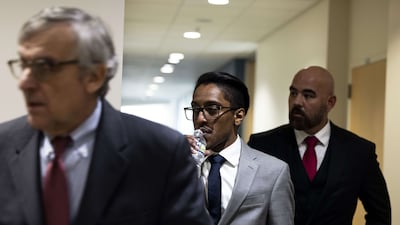
'Stop the Steal' organiser Ali Alexander gave a deposition on Capitol Hill to the committee. Getty Images / AFP -

Stephanie Grisham, former White House Press Secretary under former US president Donald Trump, leaves the O'Neill House office building following a meeting with the Select Committee to Investigate the January 6th attack on the US Capitol. Reuters -
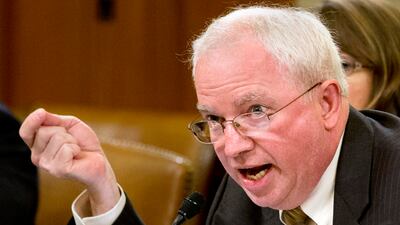
John Eastman, a lawyer for former president Donald Trump, possibly broke legal and ethical rules relating to the 2020 election. AP -
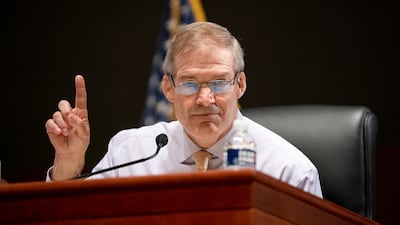
Jim Jordan, a Republican congressman, admitted to speaking with Donald Trump on January 6 but refuses to speak with the committee. Reuters



