
Former White House chief strategist Steve Bannon surrendered on Monday morning to federal authorities to face contempt charges after defying a subpoena from a US House of Representatives committee investigating the January 6 insurrection at the US Capitol.
A defiant Mr Bannon was taken into FBI custody before appearing before Magistrate Judge Robin Meriweather.
Ms Meriweather imposed several conditions on Mr Bannon before releasing him, including requiring him to check in weekly with court officials and surrender his US passport.
Mr Bannon did not enter a plea during the hearing, with an arraignment instead scheduled for Thursday before US District Judge Carl Nichols.
"This is all noise," he said of his indictment as he arrived at the FBI's Washington field office.
"I want you guys to stay focused on the message," he said, promoting his website, War Room.
"We're taking down the [Joe] Biden regime."
Indicted by a federal grand jury last week, Mr Bannon was charged with one count of refusing to appear for a deposition and an additional charge of refusing to provide documents related to the investigation, a statement released by the US department of Justice said.
"Steve Bannon's indictment should send a clear message to anyone who thinks they can ignore the Select Committee or try to stonewall our investigation: no one is above the law," said committee chair Bennie Thompson and vice chair Liz Cheney in a statement.
Contempt of Congress is a misdemeanor punishable by up to one year in jail along with a monetary fine.
The US House Select Committee believes Mr Bannon possesses relevant information pertaining to events surrounding the January 6 insurrection at the Capitol.
The former chief strategist previously claimed that former US president Donald Trump had instructed him not to appear before the committee on the grounds of executive privilege, which permits presidents to keep certain communications with aides confidential.
He left his post as senior adviser to Mr Trump in 2017.
Mr Bannon is one of more than 30 people close to Mr Trump who have been ordered by the House committee to testify about the run-up to January 6, when a mob of Trump supporters stormed the Capitol in a failed attempt to prevent formal congressional certification of Mr Trump's election loss to Mr Biden.
The indictment came as a second expected witness, former White House chief of staff Mark Meadows, defied his own subpoena from the committee on Friday.
-
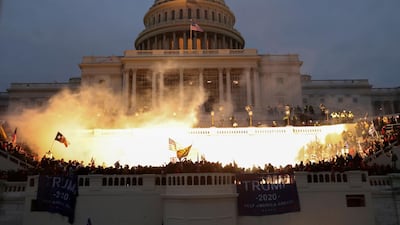
An explosion caused by a police munition is seen while supporters of former president Donald Trump gather in front of the US Capitol Building in Washington, US, January 6, 2021. Reuters -
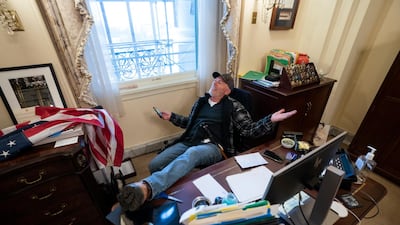
A supporter of US President Donald J. Trump sits on the desk of US House Speaker Nancy Pelosi, after supporters of US President Donald J. Trump breached the US Capitol security in Washington. EPA -
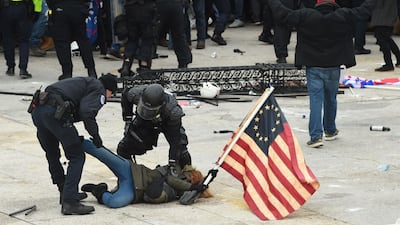
Police detain a person as supporters of US President Donald Trump protest outside the US Capitol. AFP -
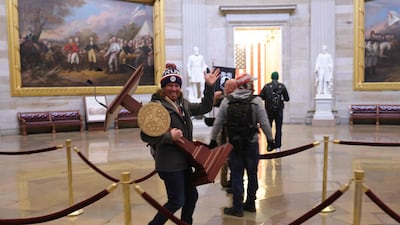
Protesters enter the US Capitol Building. AFP -
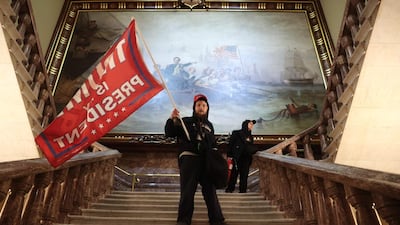
A protester holds a Trump flag inside the US Capitol Building near the Senate Chamber. AFP -
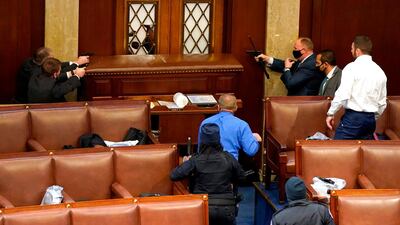
US Capitol police officers point their guns at a door that was vandalized in the House Chamber during a joint session of Congress. AFP -

Members of congress run for cover as protesters try to enter the House Chamber during a joint session of Congress. AFP -
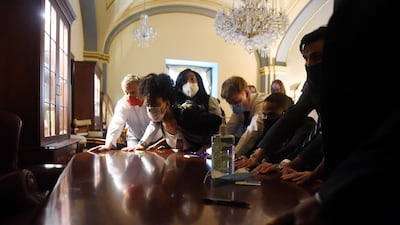
Congress staffers barricade themselves after Trump supporters stormed inside the US Capitol. AFP -
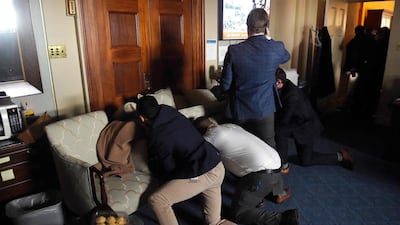
Congress staffers barricade themselves after Trump supporters stormed inside the US Capitol. AFP -
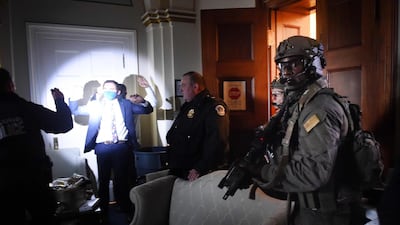
Congress staffers hold up their hands while Capitol Police Swat teams check everyone in the room as they secure the floor of Trump supporters. AFP -
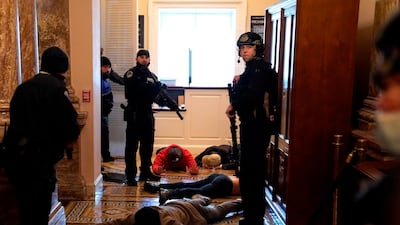
US Capitol Police stand detain protesters outside of the House Chamber during a joint session of Congress. AFP -
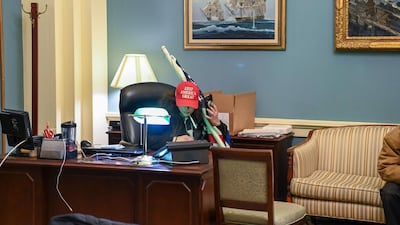
A supporter of US President Donald Trump sits at a desk after invading the Capitol Building. AFP -
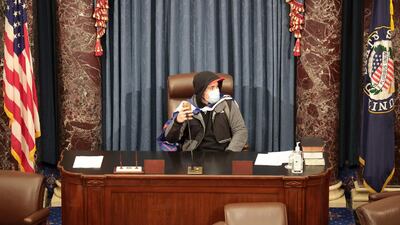
A protester sits in the Senate Chamber. AFP -
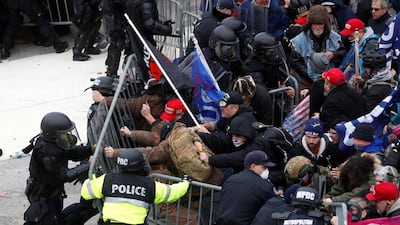
Pro-Trump protesters tear down a barricade as they clash with Capitol police during a rally to contest the certification of the 2020 US presidential election results by the US Congress. Reuters -
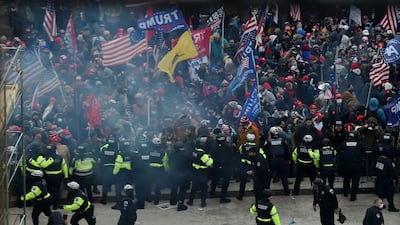
Police hold back supporters of US President Donald Trump as they gather outside the US Capitol's Rotunda. AFP -

Supporters of US President Donald Trump enter the US Capitol's Rotunda. AFP -
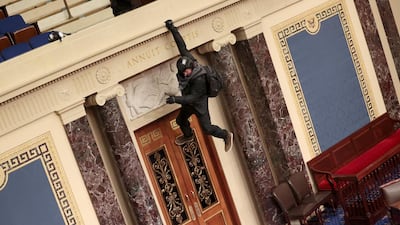
A protester is seen hanging from the balcony in the Senate Chamber. AFP -
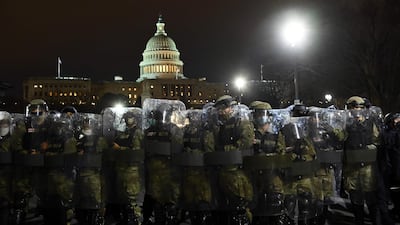
Riot police prepare to move demonstrators away from the US Capitol. AFP -
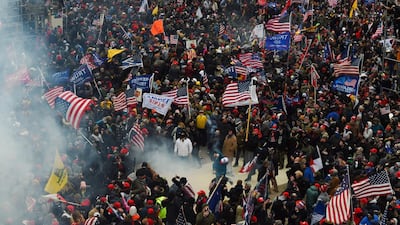
Trump supporters clash with police and security forces as they storm the US Capitol. AFP -
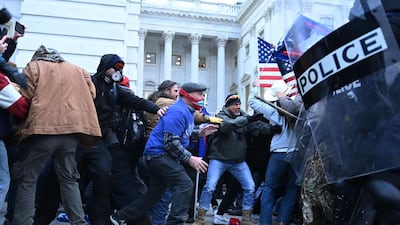
Trump supporters clash with police and security forces, as they storm the US Capitol. AFP -
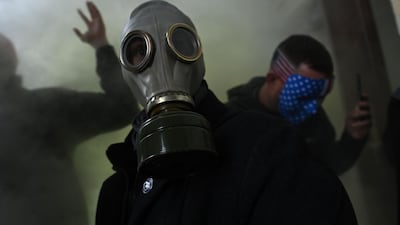
A supporter of US President Donald Trump wears a gas mask as he protests after storming the US Capitol. AFP -
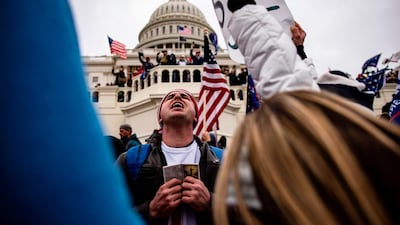
Pro-Trump supporters storm the US Capitol following a rally. AFP -
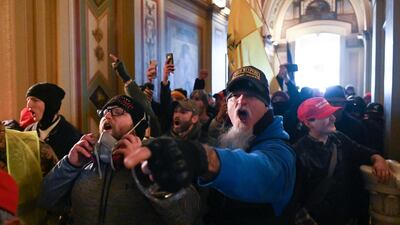
Supporters of US President Donald Trump protest inside the US Capitol. AFP -
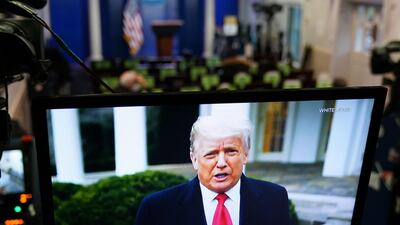
US President Donald Trump is seen on TV from a video message released on Twitter addressing rioters at the US Capitol, in the Brady Briefing Room at the White House in Washington, DC. AFP -
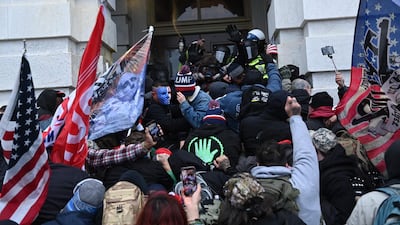
Trump supporters clash with police and security forces as they storm the US Capitol in Washington, DC. AFP -
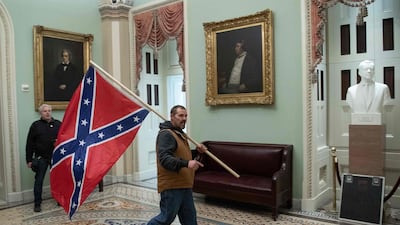
Supporters of US President Donald Trump protest in the US Capitol Rotunda. AFP -
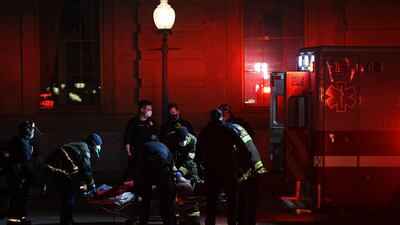
Paramedics perform cardiopulmonary resuscitation on a patient. AFP -
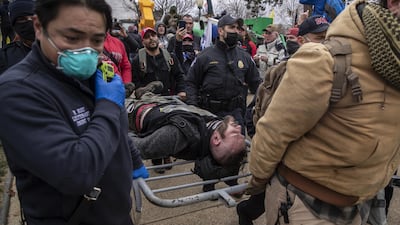
A wounded protester is carried on barricade as demonstrators breach the US Capital building grounds. Bloomberg -
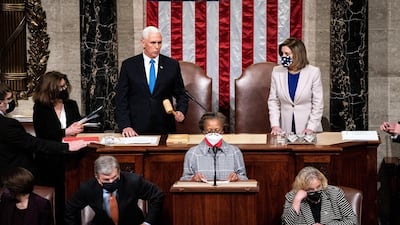
US Vice President Mike Pence and House Speaker Nancy Pelosi preside over a joint session of Congress to certify the 2020 Electoral College results after supporters of President Donald Trump stormed the Capitol earlier in the day on Capitol Hill in Washington, DC. EPA -
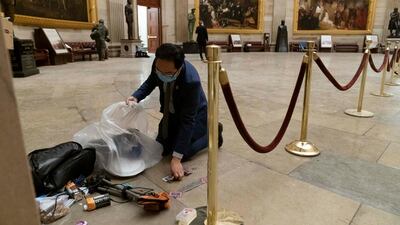
Rep. Andy Kim, D-N.J., cleans up debris and personal belongings strewn across the floor of the Rotunda in the early morning hours of the morning, after protesters stormed the Capitol in Washington. AP


Mr Meadows's lawyer argued it would be inappropriate for him to speak before the committee until a court delivers a ruling on Mr Trump's claim of executive privilege over materials related to the insurrection.
House investigators hope the charges against Mr Bannon will motivate other witnesses including Mr Meadows to testify.
Committee member Adam Schiff on Sunday said that the committee would “move quickly” to refer Mr Meadows for criminal contempt for not co-operating with the investigation.
Mr Trump is fighting the committee's request for documents from his administration now in the National Archives.
After Mr Biden, as serving president, waived privilege over the documents, the federal court in Washington rejected Mr Trump's challenge.
Mr Trump has since appealed, and the case, which could go to the Supreme Court, is now focused on never-before-tested clashing privilege stances by a serving and former president.
Agencies contributed to this report

