


The international community risks fuelling a humanitarian catastrophe in Afghanistan unless it engages with the new Taliban regime and lifts financing and aid restrictions on Kabul, Pakistan's National Security Adviser Moeed Yusuf said on Thursday.
Western nations have been reluctant to engage with the Taliban since the group's takeover of Afghanistan in August and have slashed assistance to the aid-dependent nation while hobbling its economy by limiting access to foreign reserves and enacting strict trade measures.
Nations must “engage with the new political reality immediately and constructively”, Mr Yusuf told the Middle East Institute.
“[The] number one [reason is] for humanitarian assistance, because if there is no humanitarian assistance when winter is around the corner, who's going to suffer? The average of man and woman who we all profess to wanting to protect,” he said.
The current “wait-and-see” approach from the West, he added, was “tantamount to abandonment” that risked creating the same conditions of economic collapse and shattered leadership that allowed the Taliban to gain prominence in the early 1990s.
-
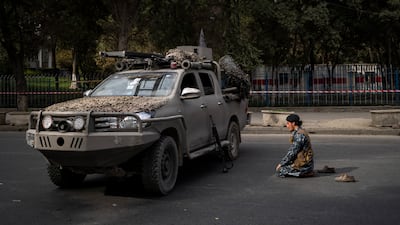
A Taliban fighter prays next to a demonstration organised by the Afghan Society of Muslim Youth, demanding the release of frozen international money in Kabul, Afghanistan. AP Photo -
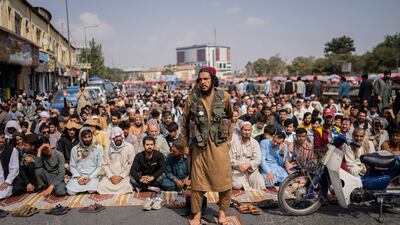
A Taliban fighter and a group of Afghan men attend Friday prayers in Kabul. AP Photo -
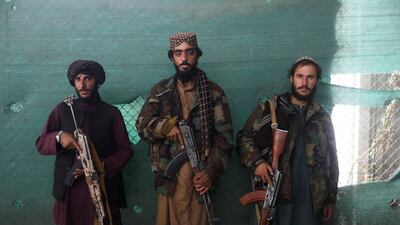
Taliban soldiers in Bagram Air Base in Parwan. Reuters -
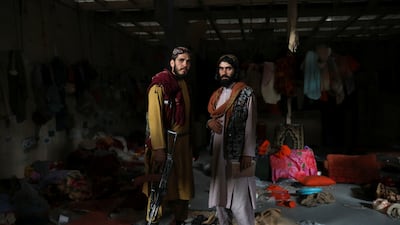
Taliban soldiers Seifatollah and Vasighollah stand in a prison in Bagram Air Base. Reuters -
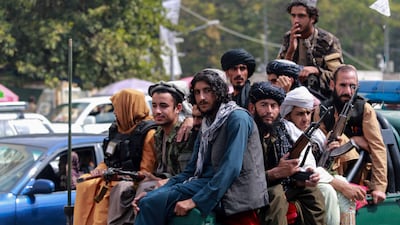
Taliban patrol Kabul. EPA -
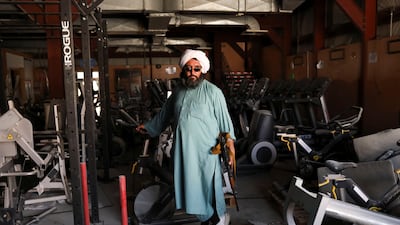
Vahdat, a Taliban soldier and former prisoner, stands next to exercise equipment in Bagram Air Base. Reuters -
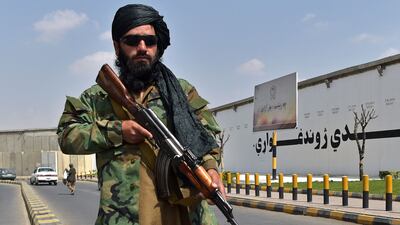
A Taliban fighter stands guard near Zanbaq Square in Kabul. AFP -
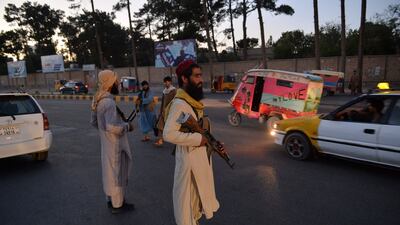
Taliban fighters police a road in Herat. AFP


Two UN food agencies recently said 22.8 million people would face “acute food insecurity” in Afghanistan in November, including 8.7 million who could face “emergency-level” food shortages. Already, reports from rural areas show some infants are malnourished and even dying of hunger.
Pakistan has long engaged with the Taliban and was one of three nations to recognise the group when they last ruled in Afghanistan from 1996-2001.
Western nations have for decades accused Islamabad of playing a double game in Afghanistan by providing financial and logistical support to the Taliban while also accepting US military aid.
Islamabad has long denied the assertions. Mr Yusuf said it was not in his country's interest to have an exclusively Taliban regime in Kabul and he instead called for an “inclusive” and “moderate” regime.
He said Pakistan would have to be “mad” to want an outcome where it has a “neighbour that has no money to run the country, no real experience to govern and I'm left with a border of 1,600 miles that for four decades has cost me millions of refugees, a terrorism problem, internally displaced people and just since 9/11, over 80,000 casualties".
“[The] idea that this is what Pakistan would have hoped for is irrational, it doesn't make any sense.”
All major countries, including the US, need to ensure Afghanistan's stability or else groups like the country's ISIS affiliate will expand their reach and attack other nations, he added.

