Pentagon chief Lloyd Austin to visit Middle East next week


  • English
  • Arabic

Follow the latest updates on Afghanistan here

US Secretary of Defence Lloyd Austin said on Wednesday that he would visit the Middle East next week to thank partners for sheltering Afghan evacuees.

Mr Austin said that after Monday's completion of the airlift operation from Kabul, the Pentagon would now focus on helping the thousands of rescued Afghan civilians resettle in the US and elsewhere.

“We are part of an urgent team effort to move Afghan evacuees out of temporary housing in intermediate staging bases in the Gulf and in Europe and on to begin new lives,” Mr Austin told reporters.

“I’ll be travelling to the Gulf next week to thank our partners there who have done so much to help save and shelter Afghan civilians.”

Reflecting on the end of the war, Mr Austin said his thoughts have been with the “brave Americans who stood up after Al Qaeda attacked us on September 11, 2001, and my heart is with their families and loved ones”.

Mr Austin was joined at the briefing by Gen Mark Milley, Chairman of the Joint Chiefs of Staff, who shared the “pain and anger” he was feeling over how America's longest war has ended with a Taliban victory.

“This is tough stuff. War is hard. It’s vicious, it’s brutal, it’s unforgiving,” the four-star general said.

“And yes, we all have pain and anger and when we see what has unfolded over the last 20 years — and over the last 20 days — that creates pain and anger. Mine comes from 242 of my soldiers killed in action over 20 years in Iraq and Afghanistan.

“But I am a professional soldier, I am going to contain my pain and anger and continue to execute my mission,” he said.

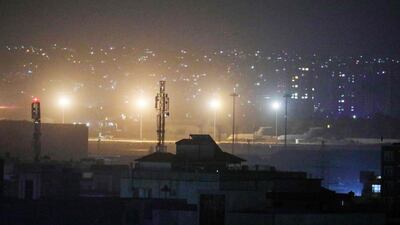
  • Celebratory gunfire light up part of the night sky after the last US aircraft took off from the airport in Kabul early on August 31, 2021. AFP
    Celebratory gunfire light up part of the night sky after the last US aircraft took off from the airport in Kabul early on August 31, 2021. AFP
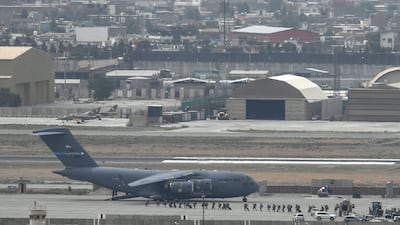
  • Planes are seen on the tarmac at the airport in Kabul late on August 30, 2021, hours ahead of a US deadline to complete its frenzied withdrawal from Afghanistan. AFP
    Planes are seen on the tarmac at the airport in Kabul late on August 30, 2021, hours ahead of a US deadline to complete its frenzied withdrawal from Afghanistan. AFP
  • Planes are seen on the tarmac at the airport in Kabul late on August 30, 2021, hours ahead of a US deadline to complete its frenzied withdrawal from Afghanistan. AFP
    Planes are seen on the tarmac at the airport in Kabul late on August 30, 2021, hours ahead of a US deadline to complete its frenzied withdrawal from Afghanistan. AFP
  • Celebratory gunfire light up part of the night sky after the last US aircraft took off from the airport in Kabul early on August 31, 2021. AFP
    Celebratory gunfire light up part of the night sky after the last US aircraft took off from the airport in Kabul early on August 31, 2021. AFP
  • Celebratory gunfire light up part of the night sky after the last US aircraft took off from the airport in Kabul early on August 31, 2021. AFP
    Celebratory gunfire light up part of the night sky after the last US aircraft took off from the airport in Kabul early on August 31, 2021. AFP
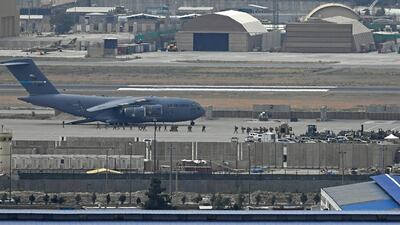
  • US soldiers arrive board an US Air Force aircraft at the airport in Kabul on August 30, 2021. AFP
    US soldiers arrive board an US Air Force aircraft at the airport in Kabul on August 30, 2021. AFP
  • US soldiers arrive to board an US Air Force aircraft at the airport in Kabul on August 30, 2021. AFP
    US soldiers arrive to board an US Air Force aircraft at the airport in Kabul on August 30, 2021. AFP
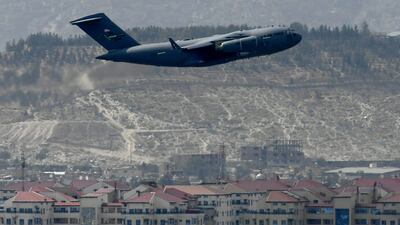
  • An US Air Force aircraft takes off from the airport in Kabul on August 30, 2021. AFP
    An US Air Force aircraft takes off from the airport in Kabul on August 30, 2021. AFP
  • An US Air Force aircraft takes off from the airport in Kabul on August 30, 2021. AFP
    An US Air Force aircraft takes off from the airport in Kabul on August 30, 2021. AFP
Ten tax points to be aware of in 2026

1. Domestic VAT refund amendments: request your refund within five years

If a business does not apply for the refund on time, they lose their credit.

2. E-invoicing in the UAE

Businesses should continue preparing for the implementation of e-invoicing in the UAE, with 2026 a preparation and transition period ahead of phased mandatory adoption. 

3. More tax audits

Tax authorities are increasingly using data already available across multiple filings to identify audit risks. 

4. More beneficial VAT and excise tax penalty regime

Tax disputes are expected to become more frequent and more structured, with clearer administrative objection and appeal processes. The UAE has adopted a new penalty regime for VAT and excise disputes, which now mirrors the penalty regime for corporate tax.

5. Greater emphasis on statutory audit

There is a greater need for the accuracy of financial statements. The International Financial Reporting Standards standards need to be strictly adhered to and, as a result, the quality of the audits will need to increase.

6. Further transfer pricing enforcement

Transfer pricing enforcement, which refers to the practice of establishing prices for internal transactions between related entities, is expected to broaden in scope. The UAE will shortly open the possibility to negotiate advance pricing agreements, or essentially rulings for transfer pricing purposes. 

7. Limited time periods for audits

Recent amendments also introduce a default five-year limitation period for tax audits and assessments, subject to specific statutory exceptions. While the standard audit and assessment period is five years, this may be extended to up to 15 years in cases involving fraud or tax evasion. 

8. Pillar 2 implementation 

Many multinational groups will begin to feel the practical effect of the Domestic Minimum Top-Up Tax (DMTT), the UAE's implementation of the OECD’s global minimum tax under Pillar 2. While the rules apply for financial years starting on or after January 1, 2025, it is 2026 that marks the transition to an operational phase.

9. Reduced compliance obligations for imported goods and services

Businesses that apply the reverse-charge mechanism for VAT purposes in the UAE may benefit from reduced compliance obligations. 

10. Substance and CbC reporting focus

Tax authorities are expected to continue strengthening the enforcement of economic substance and Country-by-Country (CbC) reporting frameworks. In the UAE, these regimes are increasingly being used as risk-assessment tools, providing tax authorities with a comprehensive view of multinational groups’ global footprints and enabling them to assess whether profits are aligned with real economic activity. 

Contributed by Thomas Vanhee and Hend Rashwan, Aurifer

Groom and Two Brides

Director: Elie Semaan

Starring: Abdullah Boushehri, Laila Abdallah, Lulwa Almulla

Rating: 3/5

Key figures in the life of the fort

Sheikh Dhiyab bin Isa (ruled 1761-1793) Built Qasr Al Hosn as a watchtower to guard over the only freshwater well on Abu Dhabi island.

Sheikh Shakhbut bin Dhiyab (ruled 1793-1816) Expanded the tower into a small fort and transferred his ruling place of residence from Liwa Oasis to the fort on the island.

Sheikh Tahnoon bin Shakhbut (ruled 1818-1833) Expanded Qasr Al Hosn further as Abu Dhabi grew from a small village of palm huts to a town of more than 5,000 inhabitants.

Sheikh Khalifa bin Shakhbut (ruled 1833-1845) Repaired and fortified the fort.

Sheikh Saeed bin Tahnoon (ruled 1845-1855) Turned Qasr Al Hosn into a strong two-storied structure.

Sheikh Zayed bin Khalifa (ruled 1855-1909) Expanded Qasr Al Hosn further to reflect the emirate's increasing prominence.

Sheikh Shakhbut bin Sultan (ruled 1928-1966) Renovated and enlarged Qasr Al Hosn, adding a decorative arch and two new villas.

Sheikh Zayed bin Sultan (ruled 1966-2004) Moved the royal residence to Al Manhal palace and kept his diwan at Qasr Al Hosn.

Sources: Jayanti Maitra, www.adach.ae

Sour%20Grapes
%3Cp%3E%3Cstrong%3EAuthor%3A%20%3C%2Fstrong%3EZakaria%20Tamer%3Cbr%3E%3Cstrong%3EPublisher%3A%20%3C%2Fstrong%3ESyracuse%20University%20Press%3Cbr%3E%3Cstrong%3EPages%3A%20%3C%2Fstrong%3E176%3C%2Fp%3E%0A
First-round leaderbaord

-5 C Conners (Can)

-3 B Koepka (US), K Bradley (US), V Hovland (Nor), A Wise (US), S Horsfield (Eng), C Davis (Aus);

-2 C Morikawa (US), M Laird (Sco), C Tringale (US)

Selected others: -1 P Casey (Eng), R Fowler (US), T Hatton (Eng)

Level B DeChambeau (US), J Rose (Eng) 

1 L Westwood (Eng), J Spieth (US)

3 R McIlroy (NI)

4 D Johnson (US)

How to watch Ireland v Pakistan in UAE

When: The one-off Test starts on Friday, May 11
What time: Each day’s play is scheduled to start at 2pm UAE time.
TV: The match will be broadcast on OSN Sports Cricket HD. Subscribers to the channel can also stream the action live on OSN Play.

Updated: September 02, 2021, 4:00 AM