


On Tuesday, the US Senate pushed through President Joe Biden’s $1.2 trillion infrastructure bill.
The bill, which has been a major focus of the Biden administration so far, aims to improve the country’s crumbling infrastructure, provide jobs to millions of Americans and set the country on a sustainable path.
But how and where will the more than a trillion dollars be spent?
Here’s a snapshot of the sectors that will receive the most money from the largest infrastructure bill in US history.
Transport
Unsurprisingly, a huge chunk of the money will go to transport-related issues, with $312 billion being invested in transport in general and $109bn going towards rebuilding roads, bridges and other major works.
Another $15bn has been earmarked for electric-powered transport, with $7.5bn going towards a nationwide network of electric-vehicle charging stations, while another $7.5bn will be invested in electric buses and transit.
Water
Another huge benefactor of the bill will be the nation's water system.
The Biden administration will invest $55bn in the country’s water infrastructure.
In the western US, which is currently experiencing a devastating, decades-long drought, the administration is investing $5bn in water storage alone.
Environment
A major part of the bill is focused on the environment.
About $21bn is going towards environmental projects, such as cleaning up polluted waterways.
-
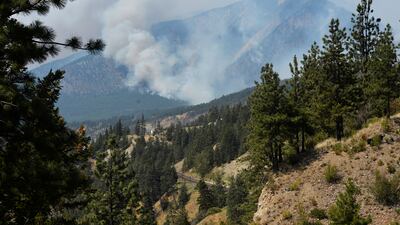
A wildfire burns outside of the town of Lytton, where a wildfire raged through and forced everyone to evacuate, in British Columbia, Canada, July 1, 2021. -
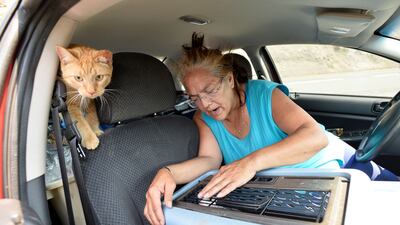
Martha Van Dyke of Lytton sits in her car with her cats, Tigger and Kona, after a wildfire that raged through her town forced residents to evacuate, outside of Lytton, British Columbia. -

Structures destroyed by a wildfire are seen in Lytton, British Columbia. -

A wildfire burns outside of the town of Lytton. -

The roughly 1,000 residents of Lytton had to abandon their homes with just a few minutes notice Wednesday evening, after searing the previous day under a record high of 121. 2 F (49. 6 C). -

The sign for the town of Lytton, where a wildfire raged through and forced residents to evacuate, is seen in Lytton, British Columbia. -
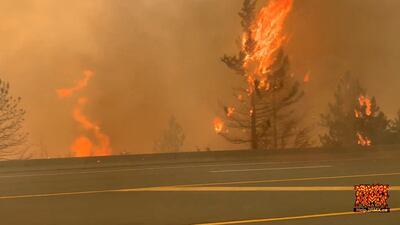
Trees burn along a street during a wildfire in Lytton, British Columbia, June 30, 2021 in this still image obtained from a social media video. -
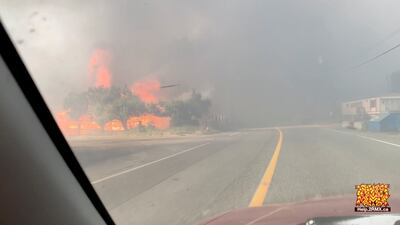
Flames are seen along a street during a wildfire in Lytton, British Columbia in this still image obtained from a social media video. -
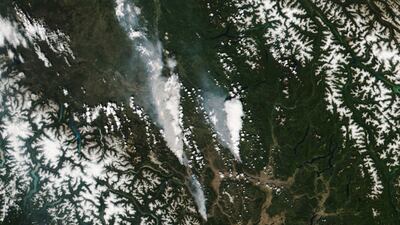
A handout satellite image made available by the National Aeronautics and Space Administration (NASA) shows the McKay Creek fire, left; the Sparks Lake fire, right; and smaller fire, visible just south of the town of Lytton, British Columbia. -
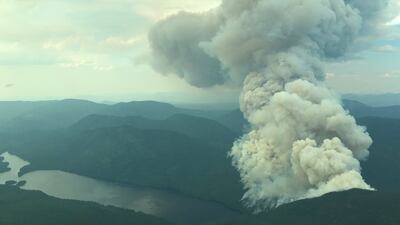
The plume of smoke from wildfire C31056, near McKinley Lake and about 35 kilometres east of Horsefly, British Columbia. -

Two plumes of smoke from the Long Loch wildfire (K51040) and the Derrickson Lake wildfire (K51041), British Columbia. -

A wildfire is seen from an airplane, in Lytton, British Columbia. -
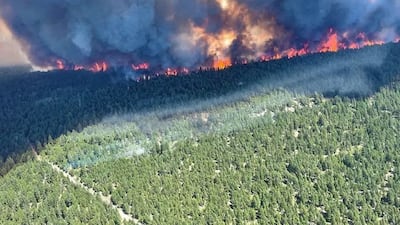
The Sparks Lake wildfire, British Columbia, is seen from the air on June 29, 2021.


More than $3bn will go towards helping reduce and fight bushfires, which have ravaged the western US this summer.
Internet
Another $65bn has been committed to providing Americans across the country with high-speed broadband internet.
Access to the internet will be expanded in underserved areas, ensuring pupils and students engaging in hybrid learning during the pandemic will be able to use online educational materials.

