


Julian Assange cannot immediately be extradited to the US on espionage charges, UK judges said today, in a partial victory for the WikiLeaks founder.
Two High Court judges extended his long legal saga, saying they would grant him a new appeal unless US authorities give further assurances, including that he will not face the death penalty.
The Americans have a three-week deadline to provide the assurances, which would also include that he can rely on the First Amendment to the United States constitution, which protects free speech, and that his trial and sentencing will not be prejudiced by his Australian nationality.
However, judges Dame Victoria Sharp and Mr Justice Johnson dismissed most of Mr Assange's legal arguments, which they said amounted to a reassertion of his case.
If the US provides the assurances and UK courts are satisfied, then only a successful appeal to the European Court of Human Rights (ECHR) can prevent his extradition.
The 52-year-old faces extradition to the US over an alleged conspiracy to obtain and disclose national defence information following the publication of hundreds of thousands of leaked documents relating to the Afghanistan and Iraq wars.
Mr Assange has been indicted on 17 espionage charges and one charge of computer misuse over his website’s publication of the trove of classified US documents almost 15 years ago. American prosecutors allege that he encouraged and helped US Army intelligence analyst Chelsea Manning steal diplomatic cables and military files that WikiLeaks published.
During a two-day hearing in February, lawyers for Mr Assange asked for the go-ahead to challenge the original judge’s dismissal of other parts of his case to prevent his extradition.
The Australian computer expert has been held in a high-security prison for the past five years.
His family and supporters say his physical and mental health have suffered during more than a decade of legal battles, which included taking refuge in the Ecuadorian Embassy in London from 2012 to 2019.
His wife, Stella Assange, said the WikiLeaks founder “is being persecuted because he exposed the true cost of war in human lives”.
Speaking outside High Court in London after the latest ruling, she said the “Biden administration should not issue assurances” but instead “should drop this shameful case, which should never have been brought”.
Mr Assange’s lawyers say he could be sentenced to up to 175 years in prison if convicted, although American authorities have said the sentence is likely to be much shorter.
Julian Assange through the years – in pictures
-
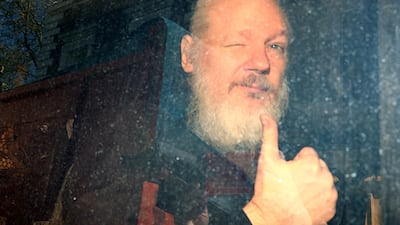
WikiLeaks founder Julian Assange arrives at Westminster Magistrates' Court after he was arrested in London in April 2019. Reuters -
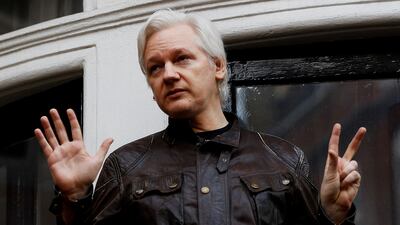
Mr Assange on the balcony of the Ecuadorian embassy in London, in May 2017. Reuters -
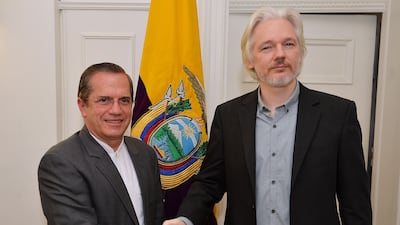
The WikiLeaks founder shakes hands with Ecuadorian Foreign Minister Ricardo Patino after a press conference, at which he confirmed he "will be leaving the embassy soon", in August 2014. Getty Images -
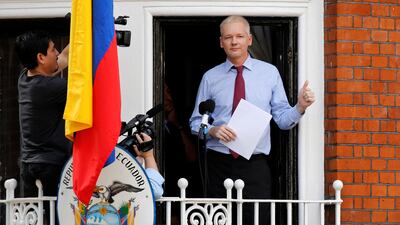
Mr Assange prepares to speak from the balcony of Ecuador's embassy in August 2012. Reuters -
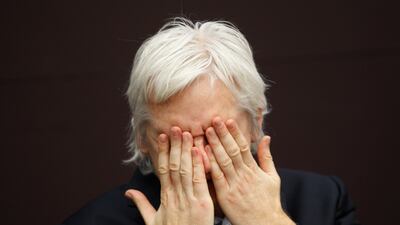
He covers his eyes during a news conference in central London, in December 2011. AP Photo -
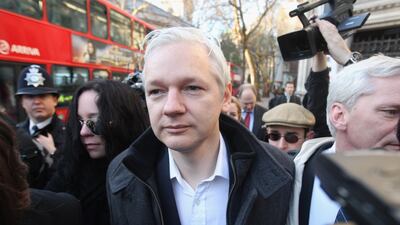
Mr Assange arrives at the High Court in London in December 2011. Getty Images -
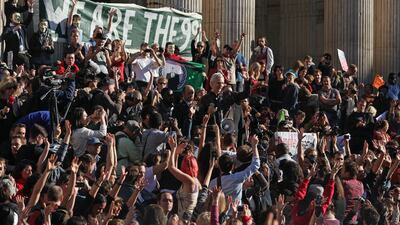
Protesters cheer as Mr Assange, centre, speaks outside St Paul's Cathedral during the 'Occupy London' protest in October 2011. Getty Images -
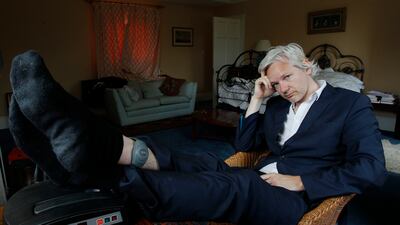
Wearing an ankle tag, Mr Assange at the house where he was required to stay in Suffolk, England, in June 2011. AP Photo -
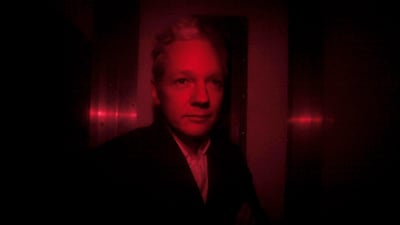
Mr Assange arrives at Westminster Magistrates' Court in a prison van with red windows in December 2010. Getty Images -
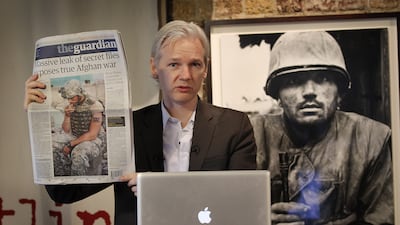
He holds up a copy of 'The Guardian' newspaper in London in July 2010, after WikiLeaks published 90,000 secret US military records. Getty Images -
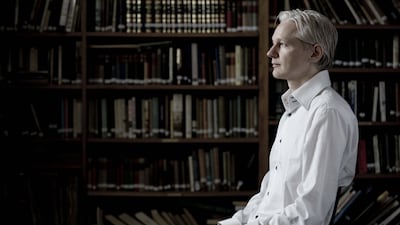
The Australian is photographed for a portrait in May 2010 in Melbourne. Getty Images -

A young Julian Assange leaves a Melbourne court after facing charges of computer hacking in May 1995. Getty Images



