


British Prime Minister Rishi Sunak was dealt a new blow to his authority on Tuesday as 68 MPs, including 60 Conservatives, voted in favour of changes to the Safety of Rwanda Bill put forward by Tory backbencher Sir Bill Cash.
The amendment seeks to ensure UK and international law cannot be used to block a person being removed to Rwanda and was rejected by a majority of 461,
But the rebellion gives an indication of the scale of unease within the Conservative Party during an election year.
Former immigration minister Robert Jenrick had aimed to change the Bill to severely limit asylum seekers’ ability to appeal against being put on a flight to Kigali.
The Commons later rejected his amendment 525 to 58.
About 40 Tory backbenchers, including former prime minister Liz Truss, former ministers Suella Braverman, Sir Jacob Rees-Mogg and Sir Simon Clarke, and former leader Sir Iain Duncan Smith earlier met to agree on backing the changes.
Opposition critics accused the Prime Minister of weakness and said the resignations showed that “even senior Tories think the Conservatives have failed.”
“Rishi Sunak is too weak to lead his party and too weak to lead the country,” said Pat McFadden, Labour’s national campaign co-ordinator.
The Liberal Democrats said Mr Sunak has “again been embarrassed by his own MPs”.
“If the Prime Minister can’t even settle squabbles in his own party, how can he be expected to run the country?” LibDem home affairs spokesman Alistair Carmichael said.
Rwanda's migration centre facilities - in pictures
-

The Hope Hostel in Kigali, Rwanda, was due to house asylum seekers under the British government's plan. PA -

Bedroom accommodation at the Hope Hostel in Kigali. PA -
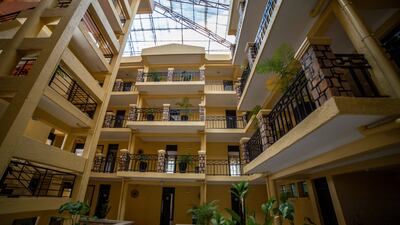
Inside the Hope Hostel in Kigali. Reuters -

A computer room in the accommodation block at the Hope Hostel. PA -

Then home secretary Suella Braverman visits a newly built house earmarked for asylum seekers with Rwanda's Minister for Information, Communication and Technology, Claudette Irere, on the outskirts of Kigali in March. PA -

The accommodation block at Gashora Refugee Camp Transit Centre, south of Kigali. PA -
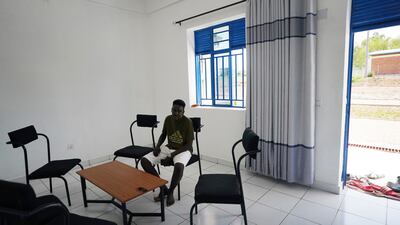
A resident sits in a communal room in the Gashora Refugee Camp Transit Centre. The camp is designed to provide short-term accommodation for people evacuated from Libya after fleeing persecution from a number of countries. PA


Deputy chairmen Lee Anderson and Brendan Clarke-Smith stepped down to vote for two amendments that right-wing MPs claim will protect the government’s flagship asylum policy from legal challenge.
Jane Stevenson also quit her role as a parliamentary private secretary in the Department for Business and Trade to back changes put forward by Conservative backbenchers.
Mr Anderson and Mr Clarke-Smith backed amendments tabled by Mr Jenrick and Sir Bill “not because we are against the legislation, but because like everybody else we want it to work".
In a joint letter, they told Mr Sunak that “whilst our main wish is to strengthen the legislation, this means that in order to vote for amendments we will therefore need to offer you our resignations from our roles”.
Mr Sunak accepted the resignations.
"The PM accepts their resignation and thanks both Lee and Brendan for their dedication and hard work for the Conservative Party," a Downing Street source said.
“This is the toughest legislation ever brought before Parliament to tackle illegal migration.
“This Bill will make it clear that if you come here illegally you will not be able to stay.
"We must pass this Bill to deliver what all Conservatives want – a credible plan to stop the boats.”
Under the government’s plan, migrants who cross the English Channel on small boats could be sent on a one-way trip to Rwanda rather than being allowed to try to seek asylum in the UK.
The legislation and the treaty are intended to make the government’s plan legally watertight after a Supreme Court ruling against it last year.
Some senior figures have threatened to vote down the Bill if it is not changed before it faces its final Commons hurdle – the third reading – which is due on Wednesday.

