


With an eye to a general election next year, Prime Minister Rishi Sunak adopted an apparent fresh approach to politics this week, stating that he was going to look the British people “in the eye” and be honest with them.
In this vein, he announced the difficult decision to reverse the UK’s zero-carbon targets, knowing the opprobrium that would ensue.
During a snap press conference in Downing Street precipitated by a leak of the about-turn on the policy, he confirmed that Britain’s targets for no longer building petrol and diesel cars would be pushed back by five years to 2035.
While making big changes in domestic commitment, he said the UK would playing a leading role at the UN climate conference in the UAE, opening on November 30.
“In the coming weeks ahead of my attendance at Cop28, I will set out the next stage in our ambitious environmental agenda,” he said.
The Prime Minister, speaking in his soft, measured voice, appeared sincere in his desire to be realistic with the public despite the political cost of the existing road map to Net Zero by 2050.
The line of “being straight with the people” will be frequently repeated in the coming year, with Mr Sunak positioning himself as the honest politician, even if it hurts him.
“We have to be brave even when there is political cost,” he affirmed, while condemning those politicians who “tell people what they want to hear” or take the “easy way out”.
Green energy sources - in pictures
-
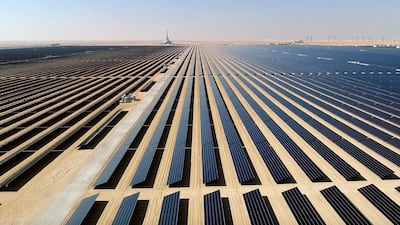
The Mohammed bin Rashid Al Maktoum Solar Park is located about 50 kilometres south of Dubai. AP -
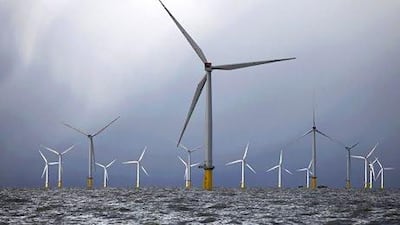
Masdar, the Abu Dhabi clean energy company, owns a one-fifth stake in London Array, the offshore wind farm in the Thames estuary. Chris Ratcliffe / Bloomberg News -

A hydro plant in Himachal Pradesh, India. Photo: Abu Dhabi National Energy Company (TAQA) -
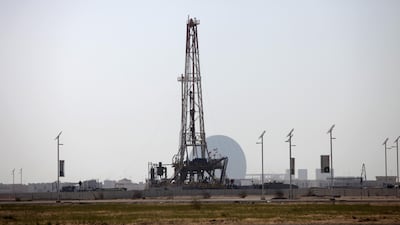
The Geothermal Pilot Project drills 4km beneath Masdar City in search of boiling temperatures to generate electricity and fuel the city's cooling system. Nicole Hill /The National -
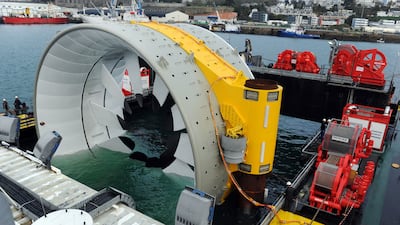
A hydroelectric motor at a tidal farm in the harbour of Brest, in western France. AFP


Among those disagreeing with the policy reversal was disgraced former prime minister Boris Johnson, who set the 2030 dates and whose trait for over-promising has been long recognised.
But Zac Goldsmith, who quit as environment minister in June, described the net-zero decision as “a moment of shame” for Britain and called for an immediate general election.
However, it appeared that Mr Sunak had the support of his cabinet with a dozen ministers assembled in Downing Street's media briefing room, including Leader of the House Penny Mordaunt, Trade Secretary Kemi Badenoch and chief whip Simon Hart.
His sincerity and arguments may help avoid some reputational damage to Britain losing its place as the world’s renewable energy leader, although the criticism of the changes had been trenchant on Wednesday.
As the deadly floods in Libya and extraordinary summer heatwave in Europe demonstrated, there can be no doubt climate change was happening. But the net-zero policies in Britain were going too fast for the average household and at too high a cost, he argued.

The new policy of forcing households to turn away from gas boilers to the more environmentally friendly heat pumps was going to cost households “£10,000, £15,000 or £20,000”.
Hence his promise that some homes would never need to turn away from gas boilers, even when the 2035 date passes.
He also announced a 50 per cent increase in helping bring about the conversion to heat pumps to a limit of £7,500 – not a penny of which needed to be paid back, he said, without mentioning future taxes.
The changes were necessary because “we risk losing the consent of the British people”.
With its stringent green policies that has included the opening of four of the world’s biggest offshore wind farms, Britain had already “over-delivered” on its carbon budget, he argued.
The 2035 date now put in on a par with Germany, France, Sweden and California.
Mr Sunak also firmly cut some apparent policy proposals such as a tax on meat, mandatory car sharing and forcing households to have seven recycling bins.
In a light-hearted moment, Mr Sunak admitted that the policy reversal had been campaigned heavily by the Conservative-leaning Sun newspaper, when questioned by its political editor.
Its readers have often been the key voters in electing governments, something Mr Sunak appeared – in his honest approach – to have recognised.
The change of tack was also probably inspired by a surprise by-election victory in July in which the Conservatives tied Labour due to an unpopular low-emission vehicle policy.
Mr Sunak is wily enough to know that to have any chance of closing the 20-point gap on the Labour opposition, he has to position himself as an appealing and different leader.
In that, he played to his strengths, being calm, sincere, on top of the details and, as he said, honest.

