


Prince Harry will attend the coronation of his father King Charles III at Westminster Abbey on May 6, Buckingham Palace announced on Wednesday.
But his wife Meghan and their children will not make the trip from their home in California, the palace added.
The news ends months of speculation about whether the couple would appear on the king's big day, but the Duchess of Sussex will undoubtedly be accused by some of snubbing the monarch and the royal family.
“Buckingham Palace is pleased to confirm that the Duke of Sussex will attend the Coronation Service at Westminster Abbey on 6th May,” the palace said in a statement.
“The Duchess of Sussex will remain in California with Prince Archie and Princess Lilibet.”
Archewell, the Sussexes' charitable foundation, issued a near identical statement to that of the palace confirming the duke would join guests at the coronation.
May 6 is also Prince Archie's fourth birthday.
Omid Scobie, a trusted contact of the couple, tweeted: "I understand that Archie's fourth birthday (also on May 6) played a factor in the couple's decision."
"Expect it to be a fairly quick trip to the UK for Prince Harry, who will only be attending the coronation ceremony at Westminster Abbey," he added.
Prince Harry's indecision about attending has been a particular concern for organisers who could not finalise seating arrangements, transport and security for VIPs.
Organisers were “exasperated” with the couple, who have publicly complained about the family over the past three years in a string of documentaries, interviews and a book, the Mirror reported.
The paper claimed the duke and duchess have been in “email correspondence” with the palace about their attendance, but the prince reportedly was in a “predicament” about whether or not to confirm their place.
Prince Harry’s attendance comes despite the family rift that was revealed in his bestselling book, Spare.
The revelations, including details of private conversations with his father and brother, Prince William, fanned tension.
Spare also included allegations that members of the royal family regularly feed the press unflattering information about other members of the House of Windsor in exchange for positive coverage of themselves.
Details of the coronation have been emerging as the date creeps closer.
-
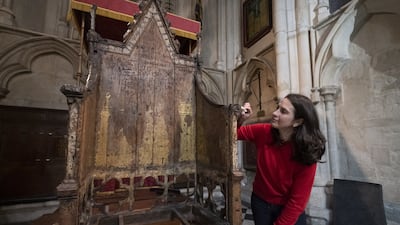
Conservator Krista Blessley works on the restoration of the Coronation Chair at Westminster Abbey in London, before the coronation of King Charles III. All photos: PA -
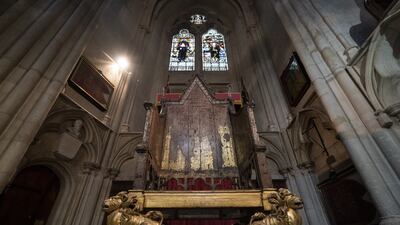
The chair was made around the year 1300 for King Edward I -
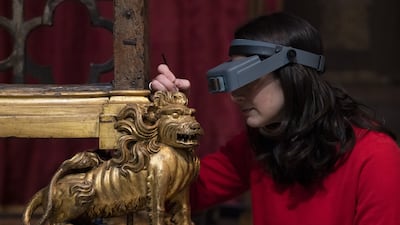
Experts debate about when the chair was first used to crown a monarch: It had featured in coronation ceremonies since 1308 but the first confirmed use was to crown Henry IV in 1399 -
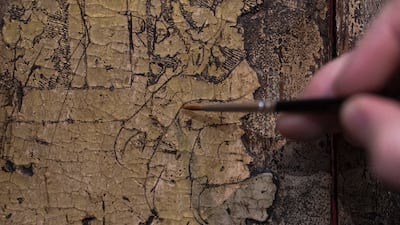
Ms Blessley has spent four months meticulously preserving the flaking gilding and cleaning the chair’s surface using sponges and cotton swabs -
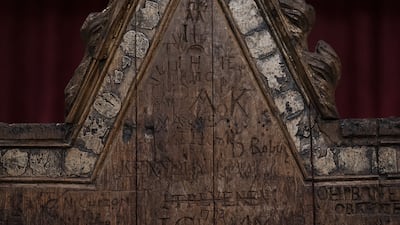
Much of the graffiti on the inside of the chair’s back rest was carved by Westminster schoolboys and visitors to Westminster Abbey during the 18th and 19th centuries -
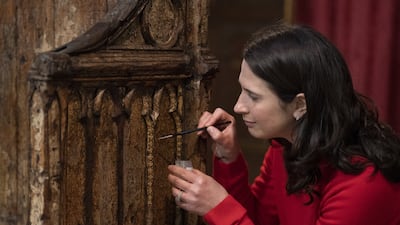
Pieces of wood were also taken as souvenirs and during a 1914 bomb attack, thought to be the work of the suffragettes, a small corner was knocked off


The procession after the ceremony will be significantly shorter than that of Queen Elizabeth II in 1953. The king’s coronation procession will be 2km — roughly a quarter of the queen's celebratory journey.
The newly crowned King Charles and Queen Consort Camilla will make their way back from Westminster Abbey on a tried and tested royal route.
They will travel through Parliament Square, along Whitehall, around Trafalgar Square, through Admiralty Arch, and down The Mall back to Buckingham Palace.
Queen Elizabeth's route was an 8km trip around central London, with the 27-year-old monarch waving to crowds along Piccadilly, Oxford Street and Regent Street.
-
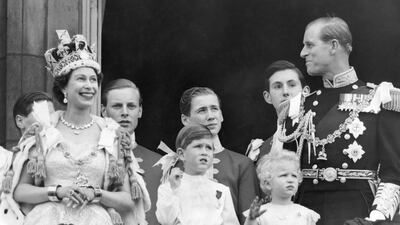
Queen Elizabeth II, Prince Charles, Princess Anne and the Duke of Edinburgh at Buckingham Palace after the Queen's coronation in June 1953. All photos: PA -
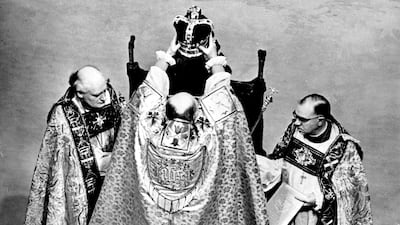
Queen Elizabeth sitting on the St Edward's Chair, as she is crowned by the Archbishop of Canterbury. -

The Duke of Norfolk, the Earl Marshall, paying homage to Queen Elizabeth after her coronation at Westminster Abbey. -
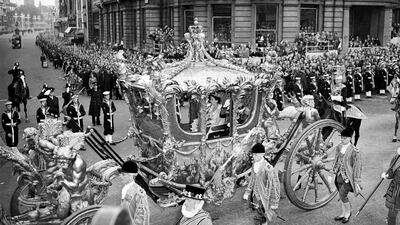
Queen Elizabeth riding with the Duke of Edinburgh in the state coach through Trafalgar Square on the way from Buckingham Palace to Westminster Abbey for her coronation. -
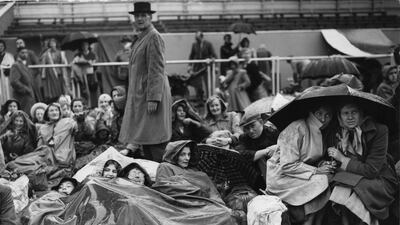
People waiting on The Mall for an all-night vigil before the coronation procession of Queen Elizabeth. -
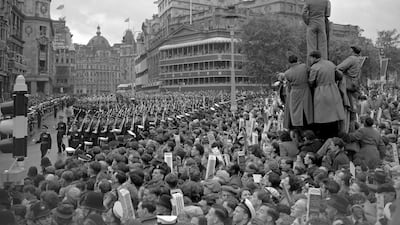
A crowded Trafalgar Square in the rain as troops march past on the return from Westminster Abbey after the coronation of Queen Elizabeth. -
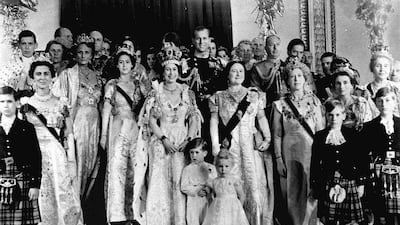
Queen Elizabeth and Prince Philip with son Prince Charles and daughter Princess Anne, other members of the royal family and guests at Buckingham Palace on return from the coronation ceremony at Westminster Abbey. -
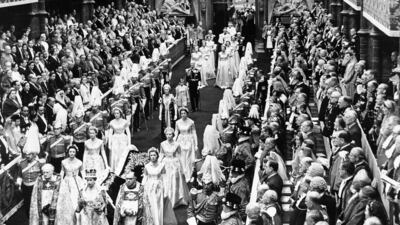
Queen Elizabeth at her coronation in Westminster Abbey. -

The view from the roof of Buckingham Palace showing the state coach carrying Queen Elizabeth to Westminster Abbey. -
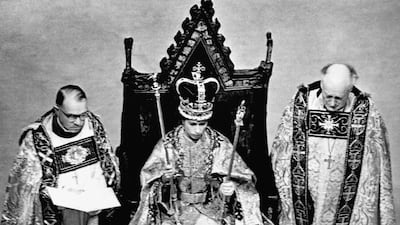
Queen Elizabeth wearing the St Edward Crown and carrying the sceptre and rod after her coronation.


More than 850 community and charity representatives from across the UK have been invited to the coronation.
Invitations to the May 6 service at Westminster Abbey in central London have been extended to more than 450 British Empire Medal recipients in recognition of their contributions to the country.

