


US President Joe Biden's five-day trip to Ireland and Northern Ireland is set to begin north of the border.
Joe Biden will fly into Northern Ireland on April 11 before a day of engagements in Belfast on April 12, the PA news agency understands.
Later that day Mr Biden will travel south to spend the rest of the week in Ireland, before leaving on Saturday April 15.
As well as official engagements in Dublin, Mr Biden is expected to travel beyond the capital for visits related to his Irish ancestry.
The Democratic politician can trace his ancestry to Ireland’s west and east coasts, specifically Ballina in County Mayo and the Cooley Peninsula in County Louth.
His great-great-grandfather Owen Finnegan emigrated to the US from the Cooley Peninsula, while another great-great-grandfather, Patrick Blewitt, was born in Ballina, leaving during the famine in 1850 to sail to America.
Distant relatives celebrated his election win in November 2020 in Ireland and gathered again in January 2021 to mark his inauguration.
Joe Biden through the years - in pictures
-
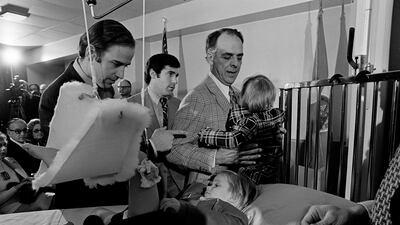
Joe Biden speaks with his bedridden son, Beau, before he was sworn in as the US senator from Delaware in January 1973. Mr Biden's first wife and daughter were killed in the car accident that injured his two sons. AP -
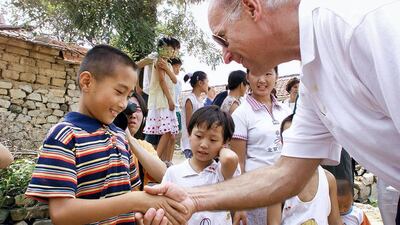
Mr Biden on a trip to China while he was the US Senate Foreign Relations Committee chairman in 2001. AFP -

Mr Biden, then a senator, tours ground zero with fellow Senate members Ted Kennedy and Barbara Mikulski. AFP -
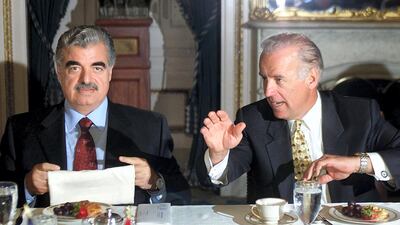
Mr Biden meets Rafic Hariri, the assassinated prime minister of Lebanon, in April 2002 in Washington. AFP -
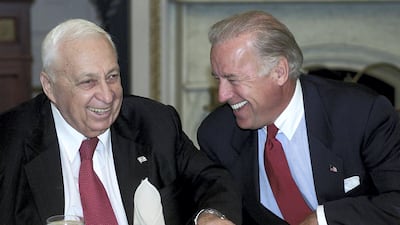
Mr Biden meets late Israeli prime minister Ariel Sharon in June 2002. AFP -
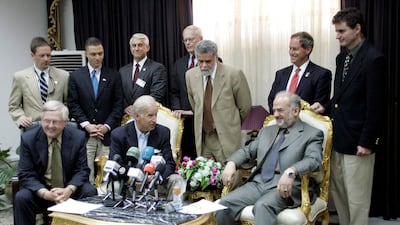
Mr Biden meets Ibrahim Jaafari, who was Iraqi prime minister at the time, in Baghdad in May 2005. AFP -

Mr Biden and his wife Jill celebrating their son Beau's election as attorney general of Delaware. AP -
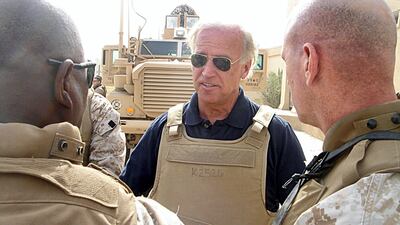
Mr Biden in Ramadi, Iraq, in 2007. AFP -
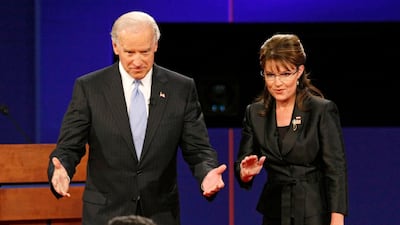
Mr Biden squares off against Sarah Palin during the vice presidential debate at Washington University in St Louis, Missouri, in October 2008. Reuters -
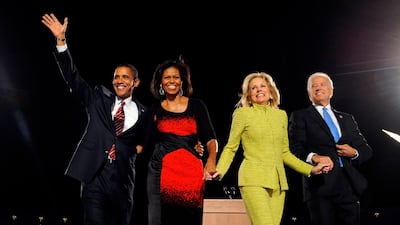
The Bidens and Barack and Michelle Obama arrive for an election night party in Chicago, Illinois, in November 2008. AFP -
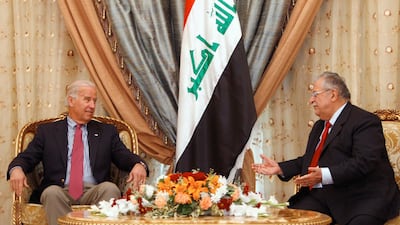
Mr Biden meets Jalal Talabani, the Iraqi president at the time, in Baghdad in January 2009. AFP -
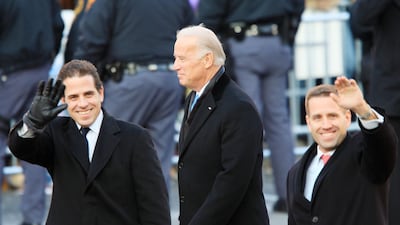
Mr Biden and sons Hunter, left, and Beau walk in the Inaugural Parade in January 2009 in Washington. AFP / Getty Images


The presidential visit to the island will have a strong focus on the 25th anniversary of the Good Friday peace agreement.
This week Mr Biden made it clear that an increase in activity by violent dissident republicans opposed to the peace process in Northern Ireland would not deter him.
“No. They can’t keep me out,” he said.
UK Prime Minister Rishi Sunak invited Mr Biden to Northern Ireland to mark the agreement’s anniversary.
This month, Taoiseach Leo Varadkar told the President that his trip to Ireland would be “a visit like no other”.
“I promise you that we’re going to roll out the red carpet,” Mr Varadkar told Mr Biden during their St Patrick’s Day meeting in Washington.
White House officials and Secret Service personnel have already visited proposed locations as part of planning for the visit.
Former US president Bill Clinton and his wife and former secretary of state Hillary Clinton will be in Belfast the week after Mr Biden for more events to commemorate the landmark accord that largely ended the Troubles.
Other key figures involved in securing the deal are also due to travel to the city.

