


A leading Ukrainian politician has said President Volodymyr Zelenskyy’s corruption crackdown is vital to retaining the support of Kyiv’s allies.
Speaking during a visit to London, Dmytro Natalukha, who heads the economic affairs committee in the Ukrainian parliament, admitted his country’s prewar reputation on the world stage was flawed.
He cited the widespread abuses of power for personal gain and a lack of transparency in tracing systems as things that fuelled corruption.
Rooting out those engaged in dishonest practices is one of the government’s priorities, he said, stressing it was crucial to maintaining support from other countries.
“What we have right now at stake is basically independence of our country,” he told journalists at a briefing in London.
“And we understand that the assistance from our partners and allies and the support from the regular people in different countries depend on our credibility and trustworthiness.
“So we have a moral side of the story when we, unlike Russia, have proof that we are being transparent, that we are being predictable and that we deliver and that we stick to our word.
“In a way, this means that apart from having a military front we have an internal front at home. A struggle against people who with directions might undermine this trustworthiness of ours, this predictability and just transparency.
“So this is why it is so critical for us to have the struggle not just on the front line, but also inside the country.”

Referring to Mr Zelenskyy’s recent dismissal of several top officials as part of an anti-corruption clear-out, Mr Natalukha said Kyiv had adopted a “zero-tolerance” approach to the issue.
Vasyl Lozinskyi was last month fired as deputy minister of infrastructure after being detained by anti-corruption investigators, having been accused of inflating the price of winter essentials and allegedly stealing $400,000 (£320,000) intended for purchasing aid.
Investigators also found $38,000 in cash in his office.
Mr Zelenskyy said the tough new approach was needed.
“We need a strong state and Ukraine will be just that,” he said.
Following Mr Lozinskyi’s arrest, Mr Zelenskyy said Ukraine had turned a corner on corruption, a vice that has plagued the country since independence.
“I want it to be clear: there will be no return to the way things used to be,” the President declared.
Mr Natalukha said the clampdown would continue to help clean up Ukraine’s image abroad.
“I don't want to call it a purge, but in a way [we are] getting rid of people who have not understood yet that it is already a very different country,” he said.
“It is nothing that it has been before the war. We simply cannot allow ourselves by any means to allow the same level of tolerance towards very controversial and dubious issues and schemes.
“We have to demonstrate zero tolerance to corruption, zero tolerance to mismanagement of money, because otherwise, our trustworthiness will be questioned, not by just the population of Ukraine, but by our allies, our partners and our soldiers.
“And we don't want that in the first place. So this is why you're hearing that people are being constantly sacked from their positions, because their activity was in question.”
Ukraine ranked 116th out of 180 countries on the annual Corruption Perceptions Index released on Tuesday by Transparency International, up one ranking from last year.
Its score on the index was 33 on a scale of 0-100, in which 0 means highly corrupt and 100 means very clean.
The US government said last week it had no evidence its funds had been diverted to corruption schemes after going to Ukraine.
“We have no indication that US funds have been misused in Ukraine,” Treasury spokeswoman Megan Apper said.
“We welcome the ongoing efforts by the Ukrainian authorities to work with us to ensure appropriate safeguards are in place so that US assistance reaches those for whom it is intended.”
World Bank funds are disbursed to Ukrainian authorities a month after bank officials have verified that they have paid salaries to teachers and civil servants and pension payments, which helps safeguard against problems.
One year of the Russia-Ukraine war — in pictures
-
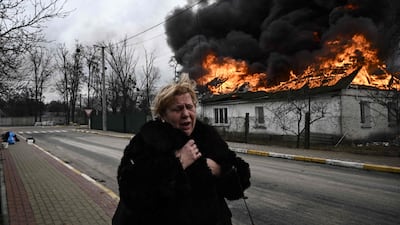
February 24 will be a year since Russia started the Ukraine war. The National picks out the most powerful images from the conflict. AFP -
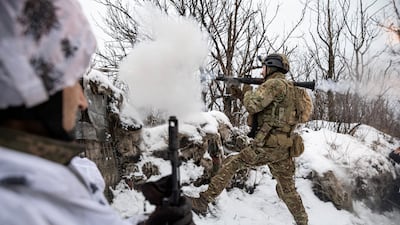
A member of Ukraine's 79th Air Assault Brigade fires a rocket-propelled grenade at Russian positions near Marinka in February. Reuters -
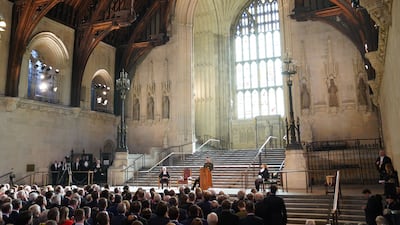
Ukrainian President Volodymyr Zelenskyy addresses MPs in Westminster Hall, London, in February 2023. Getty Images -

Destroyed buildings 32km west of the front lines in Donetsk in January. Getty Images -
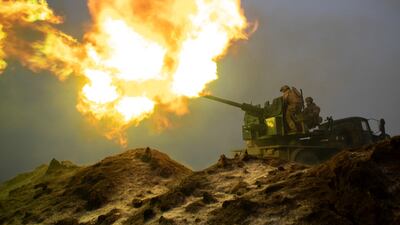
An anti-aircraft gun in January fires at Russian positions near Bakhmut, Donetsk. Reuters -
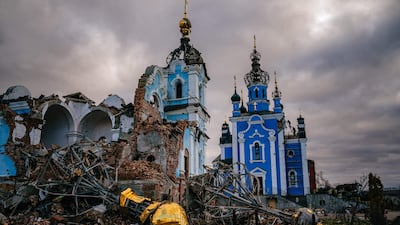
Destruction in the village of Bohorodychne, Donetsk. AFP -

A Ukrainian artilleryman discards an empty shell on the outskirts of Bakhmut, eastern Ukraine, in December 2022. AFP -
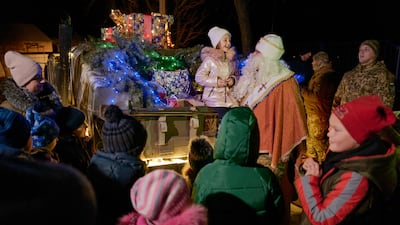
Children receive presents from a Ukrainian soldier dressed as Santa on Christmas Eve in Sloviansk. Getty Images -
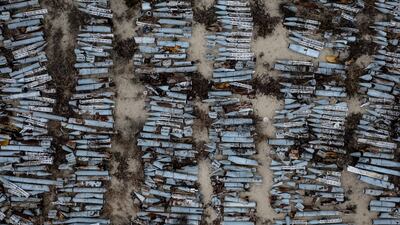
More than 1,000 missiles and rockets fired by Russian forces collected for cataloguing in Kharkiv in December 2022. Getty Images -
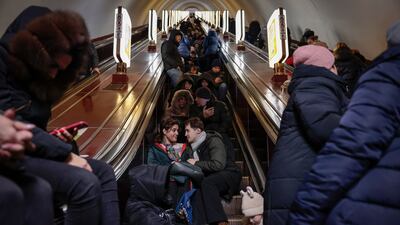
The Metro provides shelter as Russia launches another missile attack on Kyiv, Ukraine's capital, in December 2022. Getty Images -

Children at a PE class in Kyiv after Russia abandoned its attempt to seize the capital in November 2022. Getty Images -
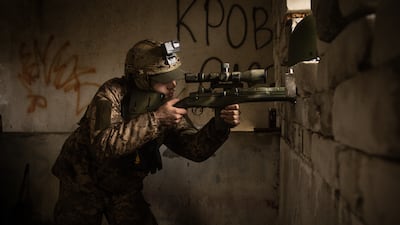
A sniper searches for Russian positions on the bank of the Dnipro river in Kherson in November 2022. Getty Images -
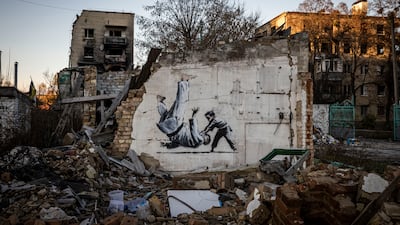
Graffiti by Banksy on a wall among the debris in Borodyanka in November 2022. Getty Images -
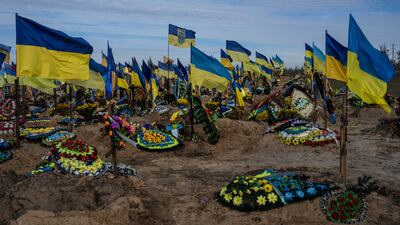
Ukrainian flags flutter around graves in a cemetery for soldiers killed in action in Kharkiv in October 2022. Getty Images -
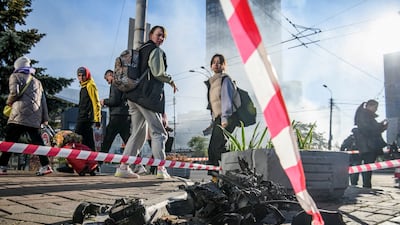
Parts of a drone, which Ukrainian authorities said was Iranian-made, after a Russian strike in Kyiv in October 2022. Reuters -
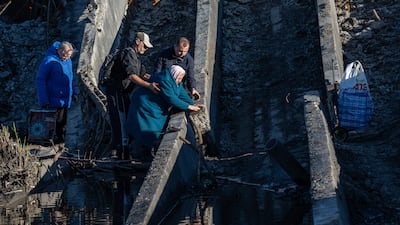
An elderly woman is helped across a damaged bridge in Bakhmut in October 2022. Getty Images -
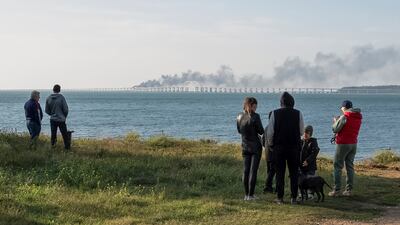
Fuel tanks ablaze on damaged sections of the Kerch bridge in Crimea, in October 2022. Reuters -

A destroyed bridge makes crossing the Donets river difficult, in Staryi Saltiv, east of Kharkiv, in September 2022. AFP -
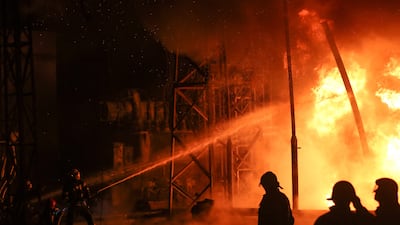
Firefighters at a thermal power plant in Kharkiv damaged by a Russian missile strike in September 2022. Reuters -
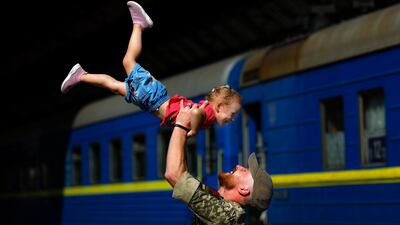
Ukrainian soldier Oleksandr with his daughter Nikole at Lviv railway station in August 2022. Getty Images -
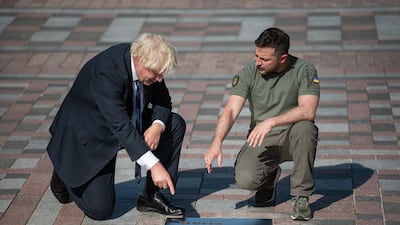
Ukrainian President Volodymyr Zelenskyy and then-British prime minister Boris Johnson read a plaque in Kyiv in August 2022 dedicated to the latter for his support. Getty Images -
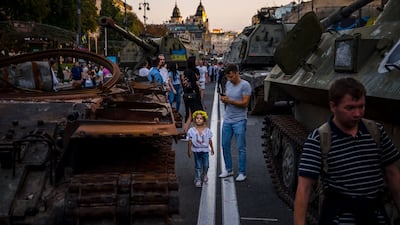
Destroyed Russian military equipment on Khreshchatyk street in Kyiv. The materiel was turned into an open-air military museum ahead of Ukraine's Independence Day on August 24. AFP -
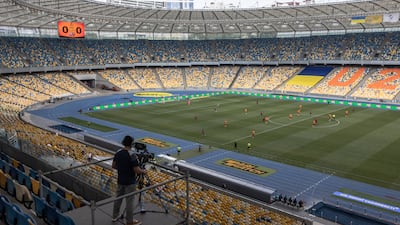
Shakhtar Donetsk v Metalist Kharkiv kicks off the Ukrainian Premier League season in August 2022 amid fears of bomb and missile alerts. EPA -
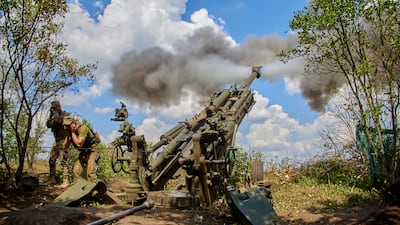
Ukrainian servicemen fire an American-made 155mm M777 howitzer in July 2022 in the Kharkiv area. EPA -
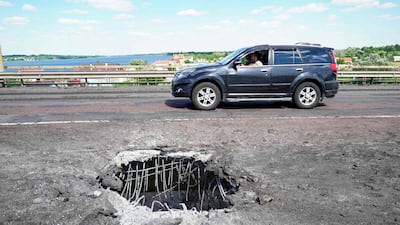
A bomb crater on the Antonovsky bridge across the Dnipro river in Kherson, July 2022. AFP -

Maksym and Andrii with plastic guns at a 'checkpoint' they set up while playing in Kharkiv, July 2022. AP -
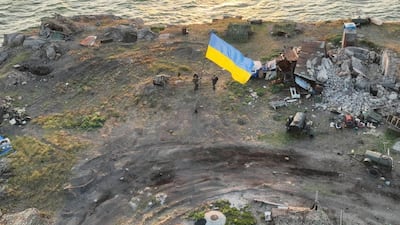
Ukrainian troops on Snake Island in June 2022. Reuters -
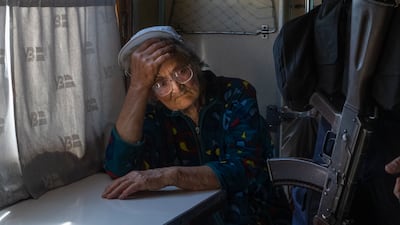
A woman evacuated from an area of conflict in June 2022 contemplates what the next move might be. AP -
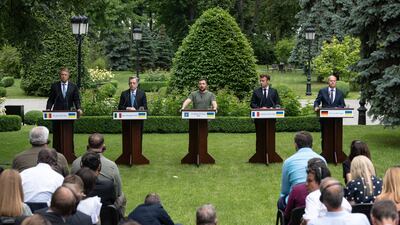
Romanian President Klaus Iohannis, Italian Prime Minister Mario Draghi, Ukrainian President Volodymyr Zelenskyy, French President Emmanuel Macron and German Chancellor Olaf Scholz in Kyiv in June 2022. Getty Images -
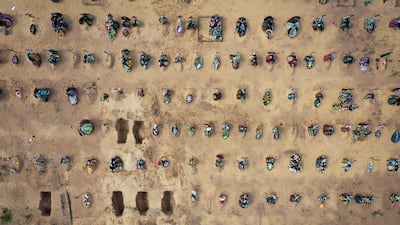
Graves in Irpin cemetery, May 2022. Getty Images -
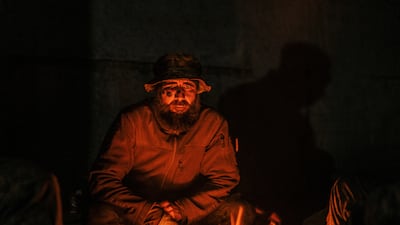
A Ukrainian soldier trapped within the besieged Azovstal Iron and Steel Works complex in Mariupol in May 2022. Reuters -
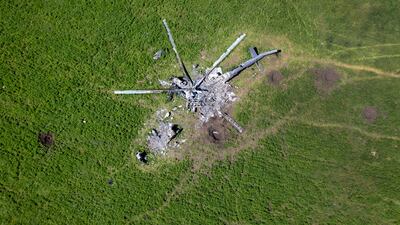
The wreckage of a Russian helicopter in a bomb-cratered field in Biskvitne, May 2022. Getty Images -
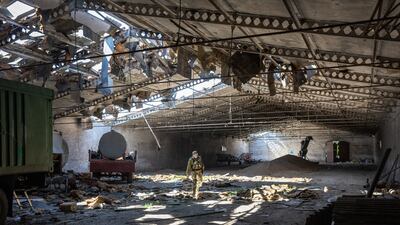
A Ukrainian army officer inspects a grain warehouse shelled by Russian forces in May 2022 near Novovorontsovka, Kherson. Getty Images -
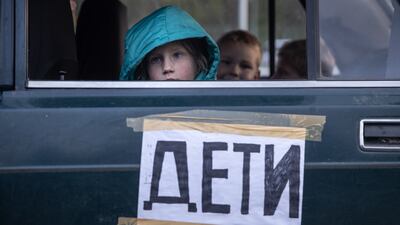
A boy from Mariupol arriving at an evacuation point in Zaporizhzhia in May 2022. Getty Images -
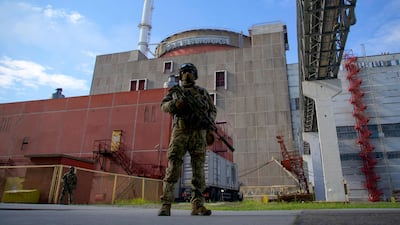
A Russian serviceman on guard outside Zaporizhzhia nuclear power station in May 2022. AFP -
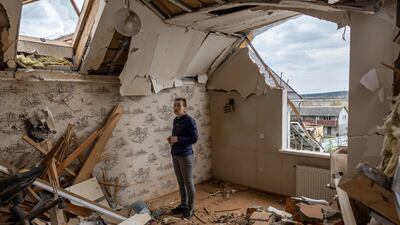
Oksana searches for salvageable items on the destroyed second floor of her home in Hostomel, April 2022. Getty Images -

A floral memorial wall in Lviv for Ukrainian civilians killed during the Russian invasion, April 2022. Getty Images -
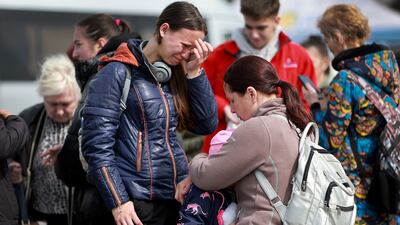
People fleeing Lviv, eastern Ukraine, in April 2022, wait for a bus that will take them to Poland. Getty Images -
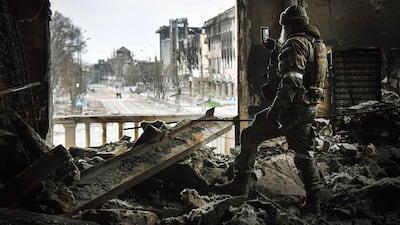
A Russian soldier patrols a bombed Mariupol theatre in April 2022, as Moscow intensified its campaign to take the strategic port city. AFP -
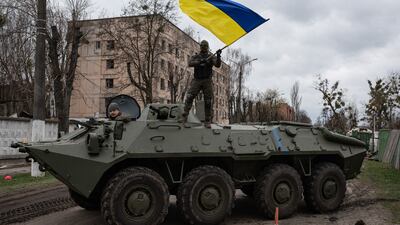
A Ukrainian celebrates success in Hostomel in April 2022. Getty Images -
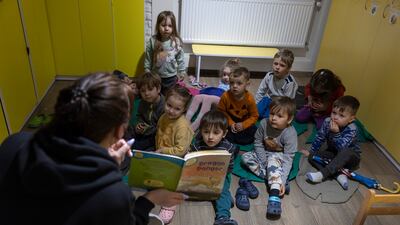
Julia Palovskaya reads to children during an air raid drill in the basement shelter at a preschool in Lviv, April 2022. Getty Images -
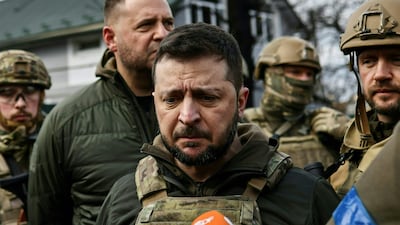
Volodymyr Zelenskyy in Bucha in April 2022, where hundreds of bodies were found in the street and it was claimed the Russian leadership was responsible for killing civilians. AFP -
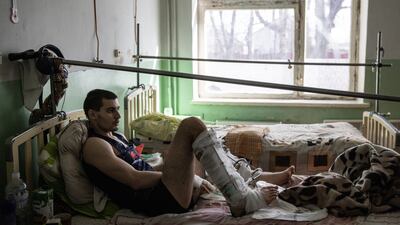
Oleh Smolin, 23, who suffered leg injuries from Russian shelling in April 2022, in hospital in Chuhuiv. Getty Images -
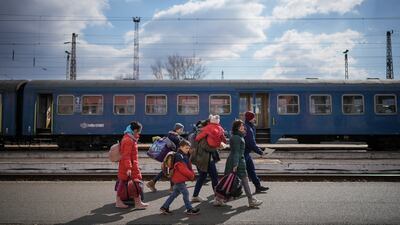
Fleeing refugees arrive at the border train station of Zahony, Hungary, in March 2022. Getty Images -
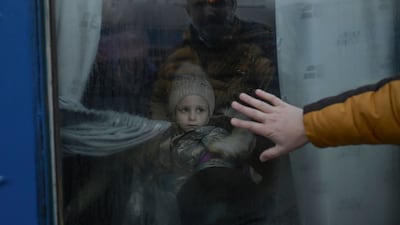
A father says goodbye to his daughter on an evacuation train about to leave Odesa in March 2022. AFP -
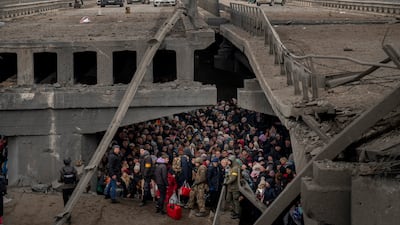
Ukrainians under a destroyed bridge as they try to cross the Irpin river on the outskirts of Kyiv in March 2022. AP -
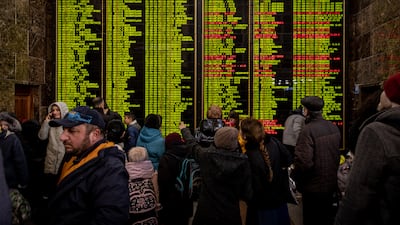
People cram into Kyiv station to catch trains to Poland or to western parts of Ukraine, shortly after the initial invasion in February 2022. Getty Images -
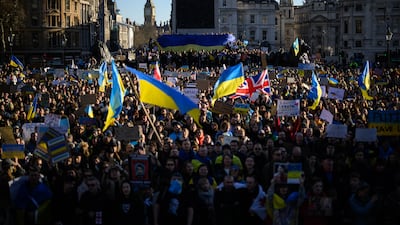
A demonstration in support of Ukraine in Trafalgar Square, London, February 2022 . Getty Images -
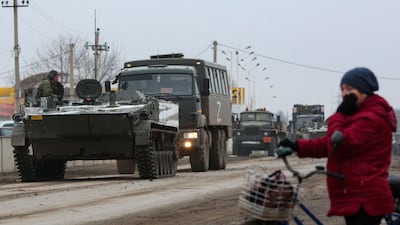
Russian army vehicles in Armyansk, Crimea, in February 2022. AFP -
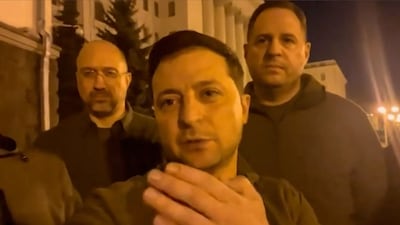
Volodymyr Zelenskyy in Kyiv on February 25, 2022, in a video on Facebook. He said 'we are all here', shortly after the Russian invasion began. AFP -
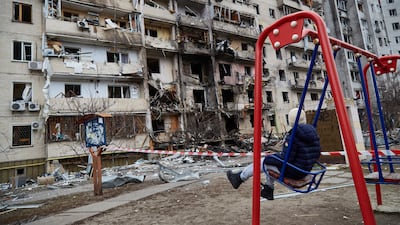
A residential building damaged by a missile strike in Kyiv in February 2022. Getty Images -

A metro station in Kyiv in February 2022, crowded with people trying to escape the invasion. AFP -
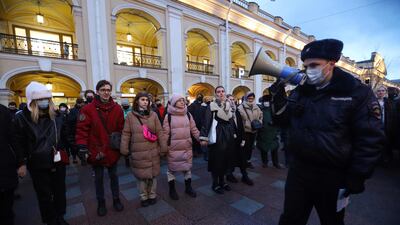
A police officer addresses people gathered to protest against the invasion of Ukraine, in central Saint Petersburg, Russia, February 2022. AFP -
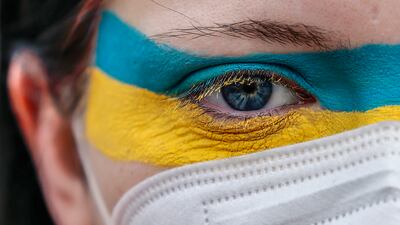
A protester in support of Ukraine, in Berlin, Germany, in February 2022. Getty Images -
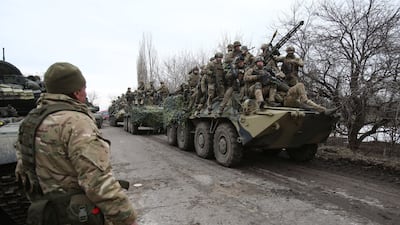
Ukrainian soldiers prepare to repel an attack in Ukraine's Lugansk region on February 24, 2022. AFP -
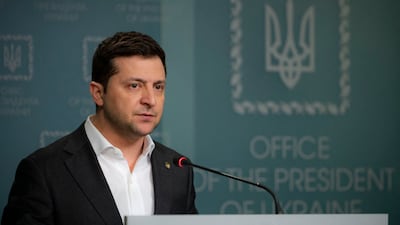
Volodymyr Zelenskyy in Kyiv on February 24, 2022, after Russia launched a full-scale invasion. AFP -
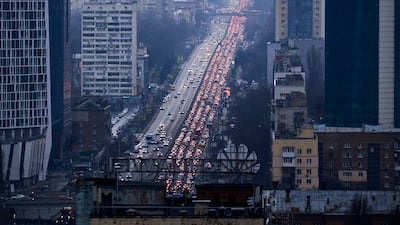
A mass exodus from Kyiv after pre-offensive missile strikes by Russian armed forces on February 24, 2022. Getty Images -
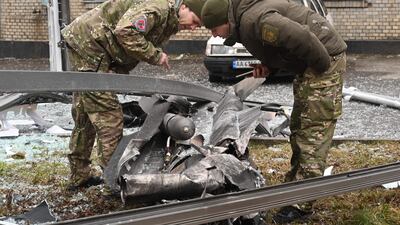
Security personnel inspect the remains of a shell in Kyiv on February 24, 2022, soon after Russian President Vladimir Putin announced a military operation in Ukraine. AFP -
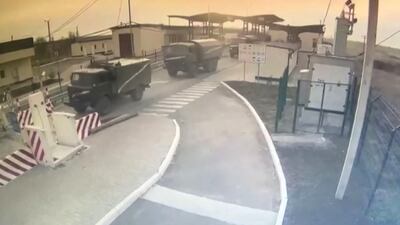
CCTV footage shows Russian military equipment crossing a Crimea border checkpoint on February 24, 2022. AFP -
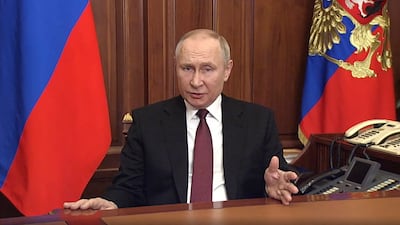
Russian President Vladimir Putin in the Kremlin early on February 24, 2022, when he announced a 'military operation' in Ukraine. AFP



