


Britain can expect a chilly spell as cold Arctic air moves across the UK, with overnight temperatures predicted to plunge to as low as minus 10ºC.
Forecasters say frost will hit some areas from Tuesday evening, with snow predicted in parts of Scotland.
It anticipation of the arrival of the chilly Arctic air, the Met Office and UK Health Security Agency issued a severe cold weather alert for England and warned that plummeting temperatures could increase health risks to vulnerable people and disrupt deliveries.
“We’ve got a spell of showers feeding into North Sea coastal areas during Tuesday," said Met Office forecaster Dan Stroud.
"They will turn increasingly wintry across parts of northern Scotland, with accumulations on higher ground.
“Elsewhere, while sunny, there will be a cold feel, with temperatures just below average.
“But with some strong winds it’s going to feel a lot cooler than it actually is.
“Into Tuesday night an organised band of showers will sink south, with that wind changing direction and coming in from the north, turning it colder with an increasing risk of some frost, mainly in central and western areas.
“Once that wind rears around to the north, we’re going to pull in that colder Arctic air, so the story will be about cold and frost.”
Cold weather in the UK – in pictures
-
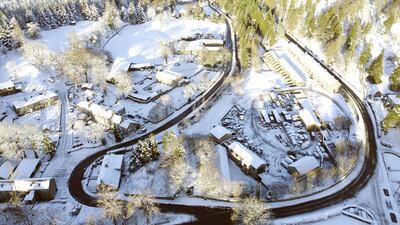
Snow covered fields and rooftops in Allenheads in the Pennines to the north of Weardale in Northumberland. More snow is forecasted to fall in the UK on Thursday. PA -
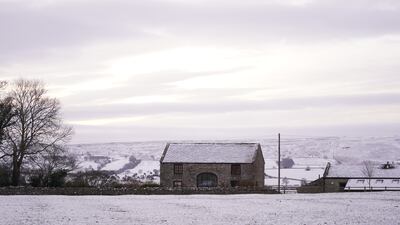
Daybreak on Thursday morning near Leyburn in Wensleydale, North Yorkshire. PA -
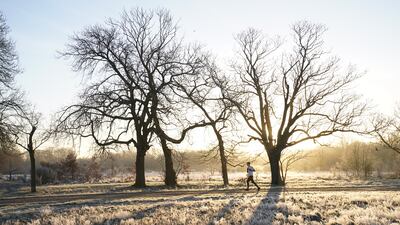
A frosty morning run in Wansted Park in London. PA -

A morning jogger passes the Diana Fountain in Bushy Park in south-west London after a night of low temperatures in Britain's capital. PA -

A skier on the slopes at Allenheads in the Pennines. PA -
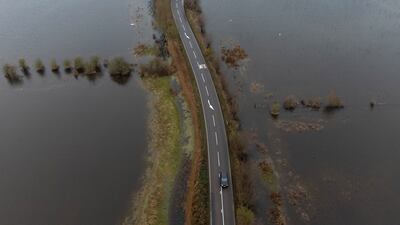
The A1101 in Welney on the Cambridgeshire-Norfolk border, where the River Delph and New Bedford River flooded the surrounding area. PA -
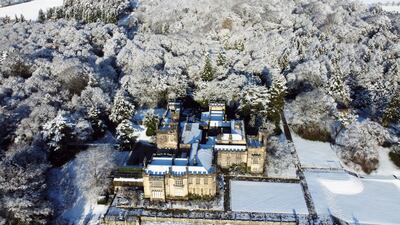
New snow covers Beaufront Castle near Hexham in Northumberland. PA -
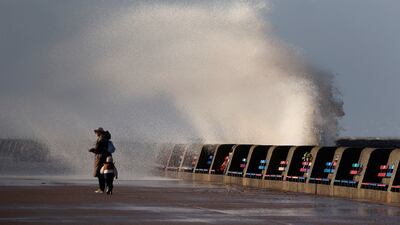
Waves break over the sea wall in strong winds at New Brighton. Reuters -

A young trials rider takes on a snowy incline near Castleside, County Durham. PA -
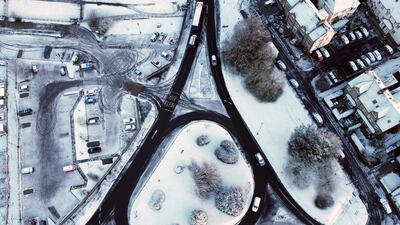
Snow covers a roundabout in Corbridge, near Hexham in Northumberland. PA -
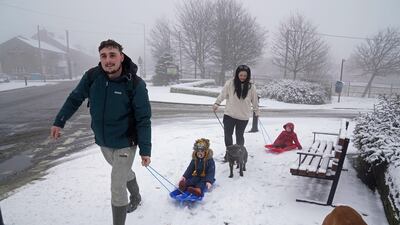
A family take advantage of the weather to have some fun on sledges in Tow Law, County Durham. PA -

A man snowboarding at the volunteer ran Ski-Allenheads as the cold weather continues in Northumberland. Reuters -
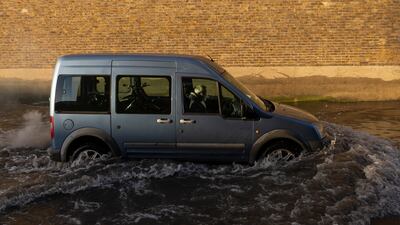
Flooding near Faversham at high tide after Faversham Creek burst its bank. Getty Images


Mr Stroud said day temperatures would range between 4ºC and 6ºC in the north, reaching highs of 8ºC in the south, while it will drop to as low as minus 6ºC overnight.
A level three, or amber, cold weather alert was issued on Monday morning, warning of severe conditions in England between 6pm on Wednesday and 9am on Monday December 12.
The alert requires social and healthcare services to take action to protect high-risk groups.
Temperatures are expected to turn colder across much of the UK late on Wednesday and through Thursday as air from the Arctic spreads south across the country.
“Into Wednesday, [there will be] frequent showers across north Scotland, some of those locally heavy, with snow away from the coast. Some accumulations are possible," Mr Stroud said.
“It will start to feel very cold, with wintry showers moving in to parts of Northern Ireland and eastern England."
Met Office deputy chief meteorologist Rebekah Sherwin said: “We can expect to see some snow and wintry showers further south as the week progresses, particularly in coastal areas or over higher ground.
“There will be widespread frosts with temperatures falling to as low as minus 10ºC overnight in isolated spots by the end of the week.”
Weather warnings issued in the UK - in pictures
-
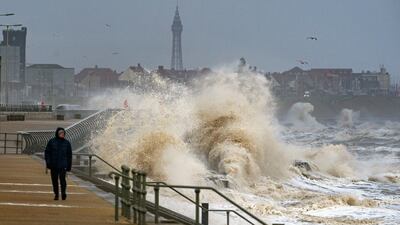
Waves crash on to the seafront in Blackpool. Storm Dudley hit the north of England and southern Scotland from Wednesday night into Thursday morning. PA -
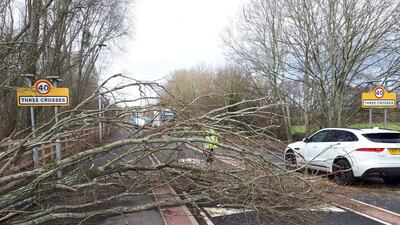
A fallen tree on the road in Ross-on-Wye, near England's border with Wales, during Storm Dudley. PA -
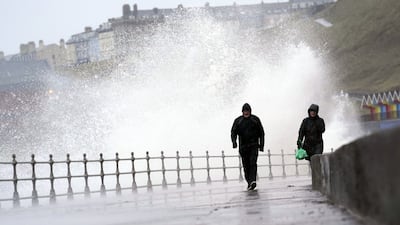
Big waves hit the sea wall at Whitby in Yorkshire. Storm Eunice was expected to bring strong winds and the possibility of snow on Friday. PA -
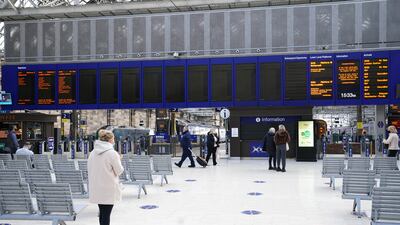
An empty departure board at Glasgow Central Station before Storm Dudley hits. PA -

A man struggles against strong wind in Clontarf, Dublin, as Storm Dudley makes its way over Ireland. PA -
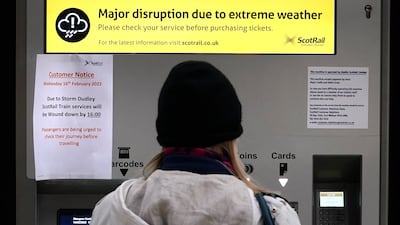
Weather warnings on a ticket machine at Glasgow Central Station. PA -
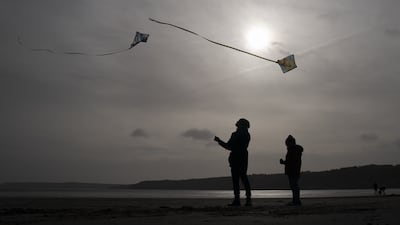
People take advantage of the winds and fly Kites on Scarborough beach in North Yorkshire. PA


Downing Street on Monday said it was confident the UK has sufficient energy supplies to get through the cold snap.
Dr Agostinho Sousa, consultant in public health medicine at the UK Health Security Agency, said older people and those with heart or lung conditions are particularly at risk from the cold weather.
“If you have a pre-existing medical condition, you should heat your home to a temperature that is comfortable for you," Dr Sousa said.
“In rooms you mostly use, such as the living room or bedroom, try to heat them to at least 18ºC if you can.
"Keep your bedroom windows closed at night. Wearing several layers of clothing will keep you warmer than one thicker layer.”
The RAC has advised motorists to check that their vehicles are “winter ready”, with properly inflated tyres that have good tread.
“With temperatures plummeting this week, many drivers might be taken aback by the cold after an exceptionally mild autumn," said spokesman Rod Dennis.
“Drivers with older batteries in their cars might also wish to give their vehicle a 20-minute drive before colder conditions arrive to ensure the battery can cope with sub-zero temperatures.”
The Met Office’s cold weather alert system operates in England from November 1 to March 31 in association with the UKHSA.
The system has five levels of response based on cold weather thresholds designed to trigger an alert when severe cold weather is likely to significantly affect people’s health.

