


Applications for asylum in the UK have soared by more than 20,000 in three months, leaving more than 140,000 people waiting for a decision on their claims.
Figures provided by the Home Office for the year to September 2022 show 143,377 asylum applications were yet to be determined, of which 97,717 had been waiting for more than six months.
This is at least three times higher than the 45,255 applications awaiting an initial decision at the same period in 2019, when 26,125 had been waiting for more than six months.
Other figures show decisions have been made on only 139 (2 per cent) applications from more than 35,000 migrants who crossed the Channel between October 2021 and August this year.
Campaigners described the asylum system as being in “complete disarray” and said the long waiting times were “destroying lives”, while politicians claimed the Home Office was a “disaster zone”.
Home Secretary Suella Braverman set a target for caseworkers to make three decisions a week by May and an “ambition” to get to four.
Migrants at immigration processing centre in Manston - in pictures
-

A person gestures through a fence at the immigration processing centre in Manston, Kent in southern England. Reuters -
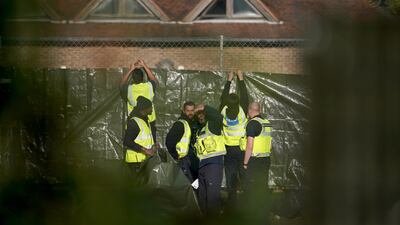
Security staff work to cover the view of people thought to be migrants in the Manston centre. PA -
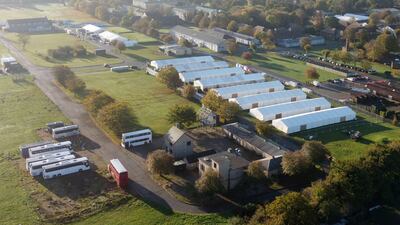
An aerial view of the facility in Manston. PA -

Seven hundred people were moved to the centre for safety reasons after incendiary devices were thrown at a Border Force migrant centre in Dover on Sunday. Reuters -

A man holds up a baby in the immigration processing centre. Reuters -

A woman at the Manston centre. Reuters -

A tent inside the processing centre. Reuters -
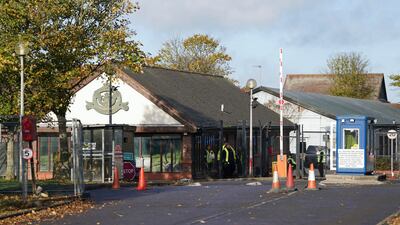
The entrance to the Manston immigration holding facility. AP


The current rate of processing asylum claims is too low and the system is too slow, with caseworkers making just one decision a week on average, Ms Braverman told MPs.
Meanwhile, the Home Office is paying staff bonuses to stop them leaving in a bid to help cut the backlog, the department’s permanent secretary Matthew Rycroft said.
The department has about 1,000 asylum caseworkers but is hiring more. There are due to be about 1,500 by March, depending on staff turnover.
About 85,902 people applied for asylum in the year to September — the highest number for almost two decades since the 87,160 applications recorded in the 12 months to June 2003.
Migrant crossings on the English Channel surge amid heatwave - in pictures
-
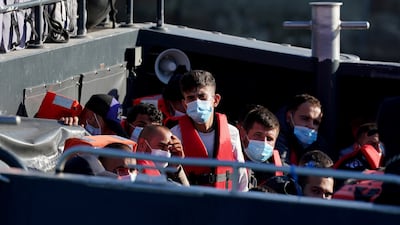
The number of migrants crossing the English Channel from northern Europe has reached record-breaking figures as people in Britain are experiencing an exceptionally hot summer. PA -
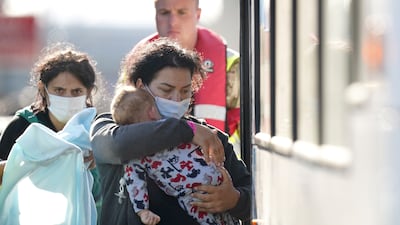
A lady carries a toddler to a bus after a group of people thought to be migrants were brought in to Dover, Kent, on the south-east English coast. PA -
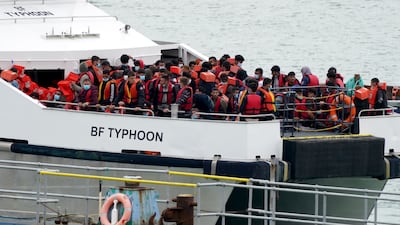
A group of migrants are brought in to Ramsgate, Kent, on August 1 - the day on which almost 700 migrants crossed the Channel to the UK in a single day, a record for the year so far. PA -
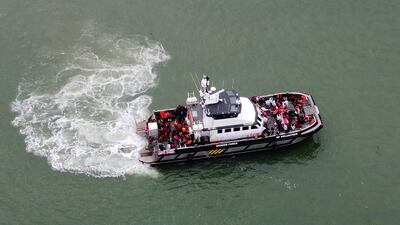
It was only the second time in 2022 that the daily figure has topped 600. PA -

A woman carries a newborn baby in a life cradle as she is brought in to Dover on a Border Force vessel in July. PA -
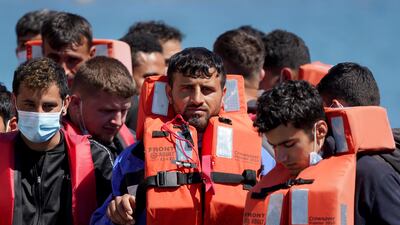
About 3,683 migrants made the crossing on 90 boats in July, the highest monthly total this year. PA -

A warehouse in Dover for boats used by people trying to cross the Channel. PA -
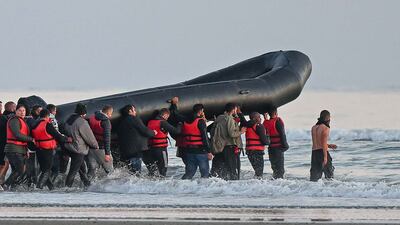
Migrants hold up an inflatable boat before attempting to cross the Channel to Britain, near the northern French city of Gravelines, in July. AFP -
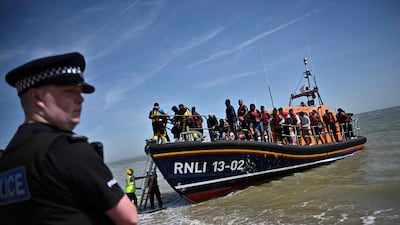
A police officer stands guard on the beach at Dungeness, England, as migrants get off a lifeboat after they were picked up at sea in June. AFP -
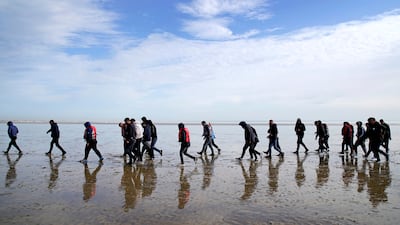
A group of people thought to be migrants walk up the beach after being brought in to Dungeness in May. AP -
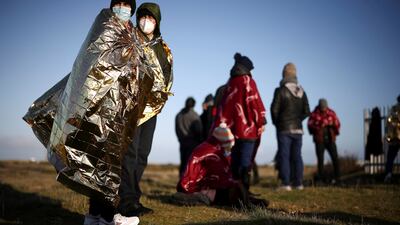
Migrants on the beach at Dungeness, after crossing the English Channel in an inflatable dinghy in January. Reuters


The latest figure is almost double the number of applications made for the same period in 2019 (44,145).
But it is still lower than the previous peak in 2002 when there was conflict and political unrest in Iraq, Afghanistan, Zimbabwe and Somalia.
Labour’s shadow home secretary Yvette Cooper accused the government of having “no proper grip or control”.
Liberal Democrat home affairs spokesman Alistair Carmichael claimed the Home Office was a “disaster zone” wasting millions of pounds of taxpayers’ money every day.
The Institute for Public Policy Research said the asylum system was in “serious peril”, while the British Red Cross said the backlog was rising at an “alarming rate.”
Amnesty International UK said the system was in “complete disarray” and urged Ms Braverman to “completely overhaul her disastrous asylum policy.”
Ministers must set up a “dedicated and well-resourced” taskforce to improve the processing of asylum claims, Refugee Council chief executive Enver Solomon said.
Nearly 700 migrants cross English Channel beating 2022 record - in pictures
-
A group of migrants are brought in to Ramsgate, Kent, on August 1 - the day on which almost 700 migrants crossed the Channel to the UK in a single day, a record for the year so far. PA -
It is only the second time in 2022 that the daily figure has topped 600. PA -

The latest crossings saw large groups of people, including young children, brought ashore in Ramsgate before leaving the Kent port on double-decker buses. PA -
A woman carries a newborn baby in a life cradle as she is brought in to Dover, Kent, on a Border Force vessel in July. PA -
About 3,683 migrants made the crossing on 90 boats in July, the highest monthly total this year. PA -
A warehouse facility in Dover, Kent, for boats used by people trying to cross the Channel. More than 17,000 people have arrived in the UK from France in small boats such as dinghies so far in 2022. PA -
Migrants hold up an inflatable boat before attempting to cross the Channel to Britain, near the northern French city of Gravelines, in July. AFP -
A police officer stands guard on the beach at Dungeness, England, as migrants get off a lifeboat after they were picked up at sea in June. AFP -
A group of people thought to be migrants walk up the beach after being brought in to Dungeness in May. AP -
Migrants on the beach at Dungeness, after crossing the English Channel in an inflatable dinghy in January. Reuters

Maria Stephens, head of campaigns at Refugee Action, said: “Snowballing delays in processing asylum claims are destroying lives.”
Ms Stephens renewed calls for the government to give people the right to work while they are awaiting a decision.
She said this would be a boost for businesses, provide millions of pounds in tax and national insurance, and help the well-being of asylum seekers.
The sharp rise in the number of asylum applications is probably linked to the growing number of migrants crossing the channel to the UK, with 90 per cent of arrivals in the 12 months (31,891) claiming asylum or being recorded as a dependant on an application.
Albania was the top nationality claiming asylum, with 13,650 applications made in the period. Of these, 6,624 were from Albanians who had crossed the Channel.
The data published on Thursday also shows the grant rate for asylum applications has reached its highest level for more than 30 years.
Afghan migrant documents dangerous journey across Channel - video
About 77 per cent of applications were granted some form of refugee status or other humanitarian protection at the initial decision stage.
This is the highest grant rate since 82 per cent in 1990. But the volume of applications was lower at the time, amounting to 3,320 grants of asylum or other forms of protection.
Higher grant rates are thought to be due to a rise in applications from nationalities that typically have applications approved because of their circumstances, and a greater need for protection for those facing instability in their homeland, such as Afghans, and vulnerable cases given priority during processing.
About half of Albanian asylum claims were granted. The grant rate is particularly high for women from the Balkan state, at about 82 per cent, but only about 10 per cent for Albanian men, officials say.
Does the UK have a migrant crisis? - video
Albanians crossing the Channel to the UK this year are said to have mainly been men.
Grant rates are also high for people from Afghanistan, Syria and Eritrea, about 98 per cent, while Indians had the lowest grant rate with about 4 per cent.
Meanwhile, more than 9,000 Afghan refugees are living in hotels 15 months after the Taliban takeover of their homeland and half of them are children, figures show.
The Home Office said 9,242 Afghans were in temporary accommodation as of November 4, living in 63 hotels and “around half” were children.
This suggests there are at least 4,000 children and that there is an average of about 147 people staying in each hotel.
There are also 7,572 people who have moved into private homes, with 779 who have been found a place to live and are waiting to move in.
This does not include families who have made their own accommodation arrangements. About 217 people have also refused offers of accommodation, the latest report said.
More than 200 migrants cross English Channel after pause in journeys - video
This is because some have been offered jobs or have ties to other areas.
But some have been “concerned about moving to an unfamiliar area that they perceive to be remote or with limited access to services/amenities and job opportunities”.
“We are working hard to identify and address the concerns which are impacting on the willingness of families to move to properties allocated to them, and we’re providing them with information about the property they’ve been offered, and the area, to reassure them,” the Home Office said.
The government pledged to resettle 20,000 refugees, with as many as 5,000 in the first year under the Afghan Citizens Resettlement Scheme after the Taliban takeover of Kabul in August last year.
The figures show that overall 22,833 people have arrived in the UK, including British nationals, their families and Afghans who worked for the UK.
Indefinite leave to remain has been granted to 12,296 people, 6,314 of whom are under the ACRS scheme.
There are 5,982 under the existing Afghan Relocations and Assistance Policy, which was set up to bring current or former locally employed staff who were assessed to be under serious threat to life to the UK.
Families of migrants who died crossing English Channel speak out - video
Afghans are now the second highest nationality of migrants crossing the Channel to the UK.
About 4,781 made the journey between January and September compared to 1,437 during the whole of 2021, Home Office figures show.
It is not known whether any of them have applied for either of the Afghan resettlement schemes.
Officials believe these are mostly Afghans who have been in Europe for some time, rather than travelling directly from their homeland after fleeing the Taliban takeover.

