


Limits on liquids in cabin baggage could be removed by summer 2024 at major UK airports due to the use of advanced scanners.
Since 2006, passengers have been required to restrict liquids in bags carried on board flights to containers of no more than 100ml, which must be stored in clear plastic bags, amid security concerns.
Laptops must also be removed for inspection.
Passengers failing to remove items such as creams, bottles and laptops from their bags for inspection is the biggest cause of delays at airport security.
But both restrictions are now set to go, according to reports.
Large UK airports have been told to install advanced computerised tomography (CT) scanners, like those used in hospitals, which will allow airports to examine the items inside bags, by mid-2024.
A trial of the technology was announced in 2019, but the pandemic delayed the roll-out.
Former transport secretary Grant Shapps said at the time it could “mean an end to passengers having to use plastic bags or rationing what they take away with them” if it was successful.
Heathrow’s chief executive told The Times the airport was slowly rolling out the scanners.
John Holland-Kaye said: “We have just started the expansion of the security area in Terminal 3 which will have more CT scanners and have a deadline of mid-2024 from the DfT. By then the normal passenger experience will be that liquids stay in bags.”
The scanners, which are also currently being trialled at Gatwick, allow operators to inspect bags from every angle.
An official announcement is expected before Christmas.
The restrictions were brought in following a foiled plot in August 2006 to bring down as many as 10 passenger planes using explosives which were disguised as soft drinks.
For weeks almost all cabin baggage was banned on flights, except passports and wallets, and a total ban on liquids was in place for longer.
By November, liquids were again permitted in carry on bags, however, they had to be restricted to 100ml and fit in a clear plastic bag measuring no more than 20cm by 20cm.
Decades of flight: Heathrow through the years — in pictures
-
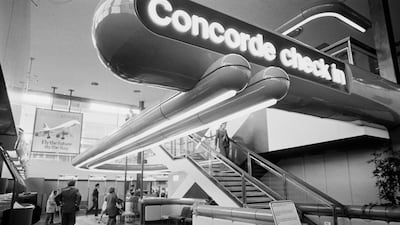
Heathrow Airport in London, the UK's busiest, has been a travel hub for decades. Here The National takes a look back at Heathrow through the years. All photos: Getty Images -
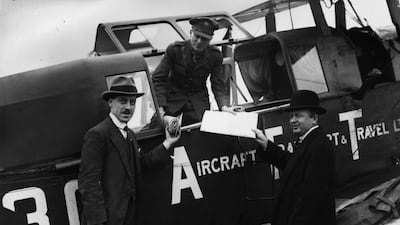
An Airco De Havilland biplane of the British airline, Aircraft Transport and Travel Limited, about to leave on the company’s inaugural flight from Hounslow Heath Aerodrome, later known as Heathrow, to Le Bourget, Paris, in August 1919 -
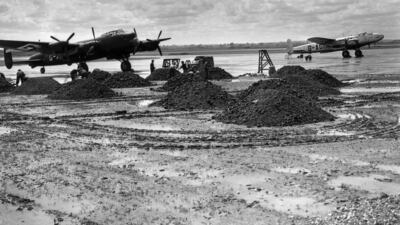
Waterlogged runways at London Airport - Heathrow's original name - one week before it became Britain's main aerial gateway to the US in 1946 -
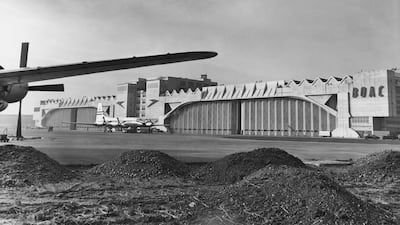
The new BOAC maintenance headquarters at London Airport circa 1955 -
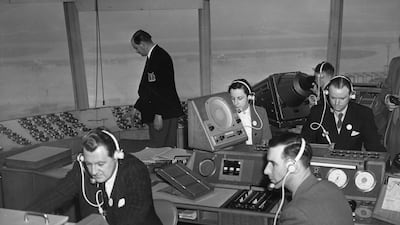
The air traffic control room at the airport's new terminal in 1955 -
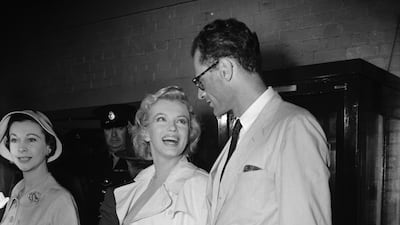
US film star Marilyn Monroe with her husband, playwright Arthur Miller, after arriving at the airport in July 1956 -
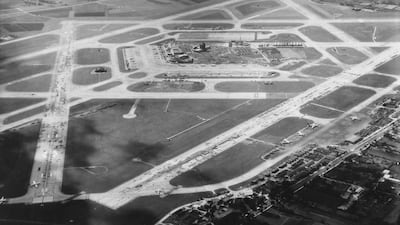
An aerial view showing the runways in 1958 -

The arrivals and departures board in 1960 -

A new airport gift shop, selling items by Chanel, Wedgwood and Pringle of Scotland, in 1961 -
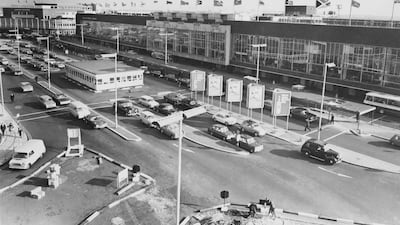
The Queen's Building and the No. 1 Building Europa at Heathrow in 1965 -
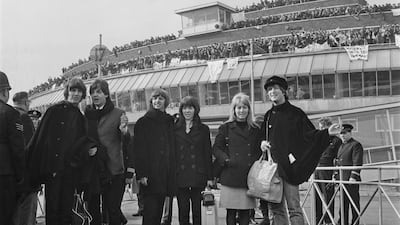
The Beatles leave Heathrow for Salzburg in Austria, to resume filming of the movie Help!, in 1965 -
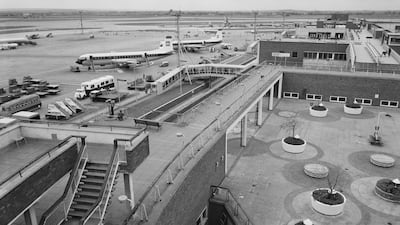
Passenger terminal gates at Heathrow in 1966 -
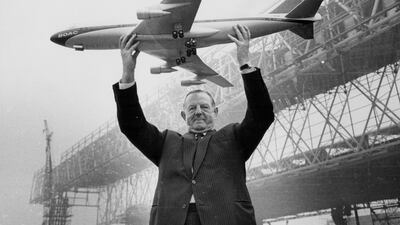
Keith Granville, managing director of BOAC, holding up a model of the Boeing 747 jet, with the new aircraft hangars under construction in the background, at Heathrow in 1969 -
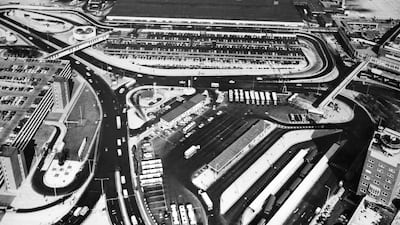
An aerial view of Heathrow in 1970 -
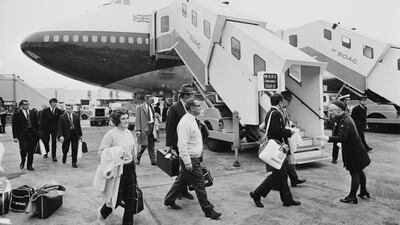
Passengers boarding the first BOAC Jumbo Jet 747 used for a commercial flight, from London Heathrow to New York, in 1971 -
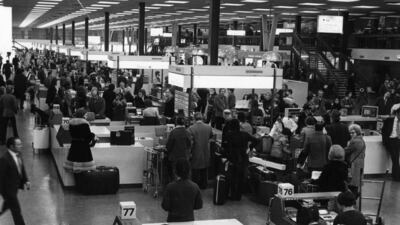
Passengers going through the departure lounge at Heathrow in 1973 -
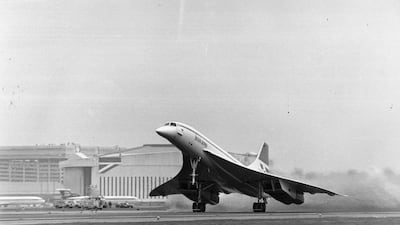
Concorde takes off from Heathrow on her first commercial flight for British Airways in 1976 -
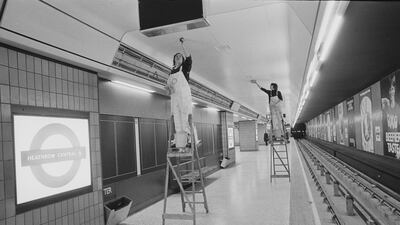
Men at work finalising the Heathrow Central underground station before its opening in 1977 -
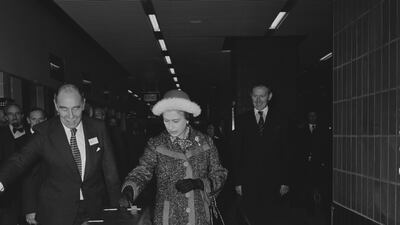
Queen Elizabeth II passing though the Tube gates at Heathrow Central station on its opening in 1977 -
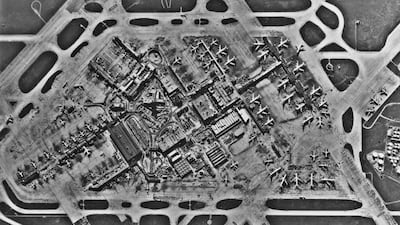
An aerial view of Heathrow in 1978 -

Passengers waiting near a departures board in 1979 -
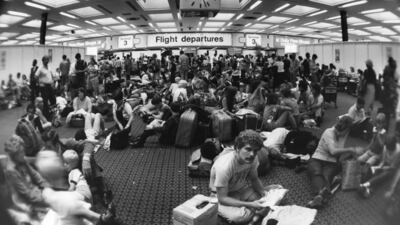
Holidaymakers waiting in the departure lounge at Terminal 3 of Heathrow in 1981 -
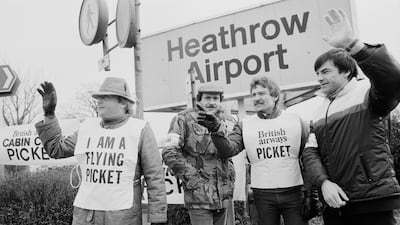
British Airways employees protesting at Heathrow in 1984 -
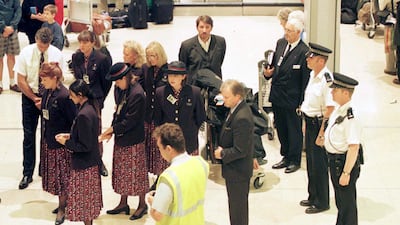
Passengers and staff observe a silence in Heathrow's Terminal One to mark the beginning of the funeral of Diana, Princess of Wales, in 1997 -
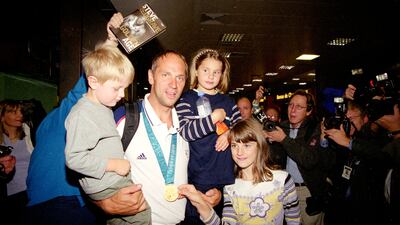
Rower Steve Redgrave at Heathrow with daughters Sophie and Natalie and son Zak after returning from the Sydney 2000 Olympic Games with his gold medal -
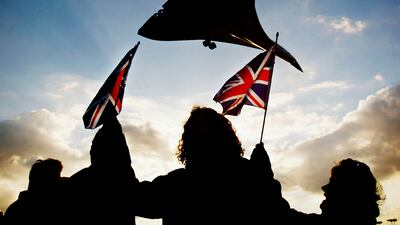
Spectators watch the last Concorde land at Heathrow in 2003 -
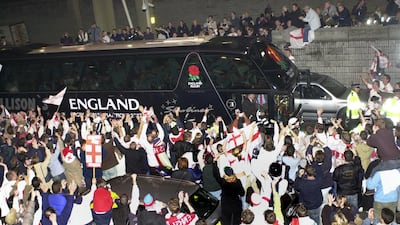
Fans surround the coach carrying the England rugby team at Heathrow, as they arrived from Sydney after winning the World Cup in 2003 -
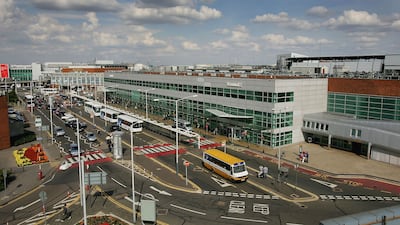
Heathrow's Terminal 2 in 2004 -
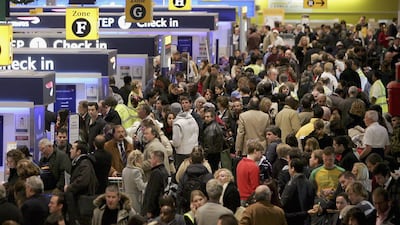
Passengers queue to check in at Terminal 1 of Heathrow Airport during the Christmas 2006 and New Year period -
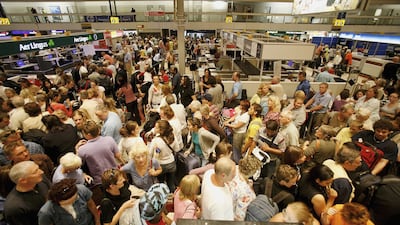
Passengers wait at Terminal 1 on August 10, 2006, after airport security was raised to critical when a terrorist plot to blow up planes in mid-flight from the UK to the US was disrupted by police -
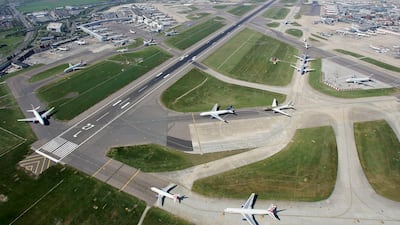
Planes queueing to take off at Heathrow in 2007 -
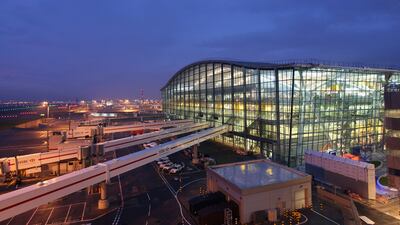
The new Terminal 5 at Heathrow in 2008 -
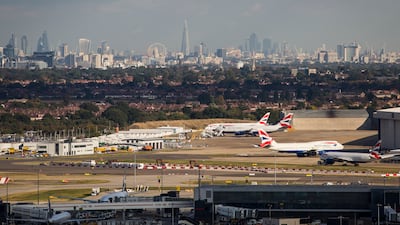
Aircraft at Heathrow Airport in front of the London skyline in 2016 -
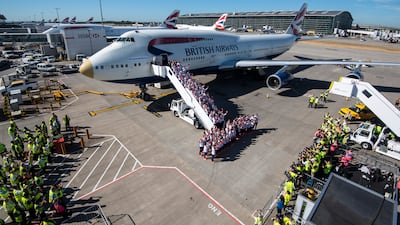
Members of Team GB arrive from Rio de Janeiro at Heathrow, after returning from the 2016 Olympics, which saw Great Britain's strongest performance at the Games in over a century -

A composite photo shows planes taking off from Heathrow in November 2016. Forty-two planes were captured between 10.17am and 11.17am and a montage was created from those single images -
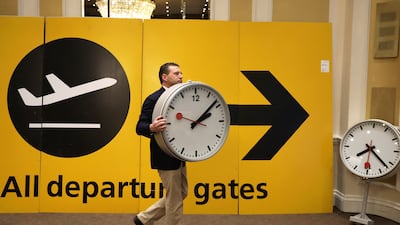
Items are arranged during an auction preview at Heathrow in 2018. The contents of Terminal 1, which closed in 2015, were being sold -
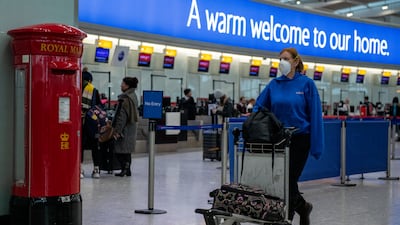
An airline passenger wearing a face mask pushes her bags through Heathrow's Terminal 5 during the coronavirus pandemic in 2020 -
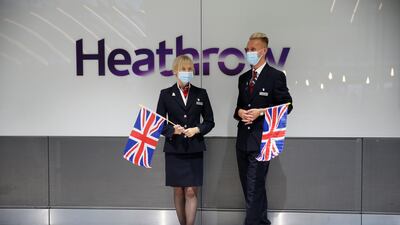
British Airways employees welcome Olympians returning from the Tokyo Olympics in 2021 -
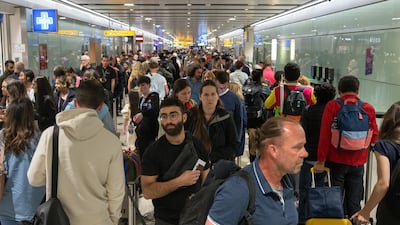
Travellers wait in a long queue to pass through the security check in 2022


Laptops, tablets and cameras must also currently be removed from cabin bags.
The technology is already in use at Shannon airport in Ireland, where the 100ml rule has been scrapped. It said the introduction has halved the time passengers spend in security screening.
Consumer champion Which? recently revealed a list of the UK's worst airports for security queues.
Leeds Bradford was named the worst, with an estimated average wait time of 35 minutes.
London City was the best performing of the airports studied, with an average estimated security queue time of only 12 minutes. Half of its users reported a wait time of between five and 10 minutes.
Researchers asked about 1,300 people who travelled from a UK airport between February and August how long they had queued for security.
Airports and average waiting times
- 1 Leeds Bradford: 35 minutes
- 2 Bristol: 30 minutes
- 3= Birmingham: 24 minutes
- 3 = Manchester: 24 minutes
- 5 Heathrow: 20 minutes
- 6 Luton: 19 minutes
- 7= Stansted: 18 minutes
- 7= Belfast International: 18 minutes
- 9= Gatwick: 16 minutes
- 9= Edinburgh: 16 minutes
- 10 Newcastle: 15 minutes
- 11 Glasgow International: 13 minutes
- 12 Belfast City: 13 minutes
- 13 London City: 12 minutes

